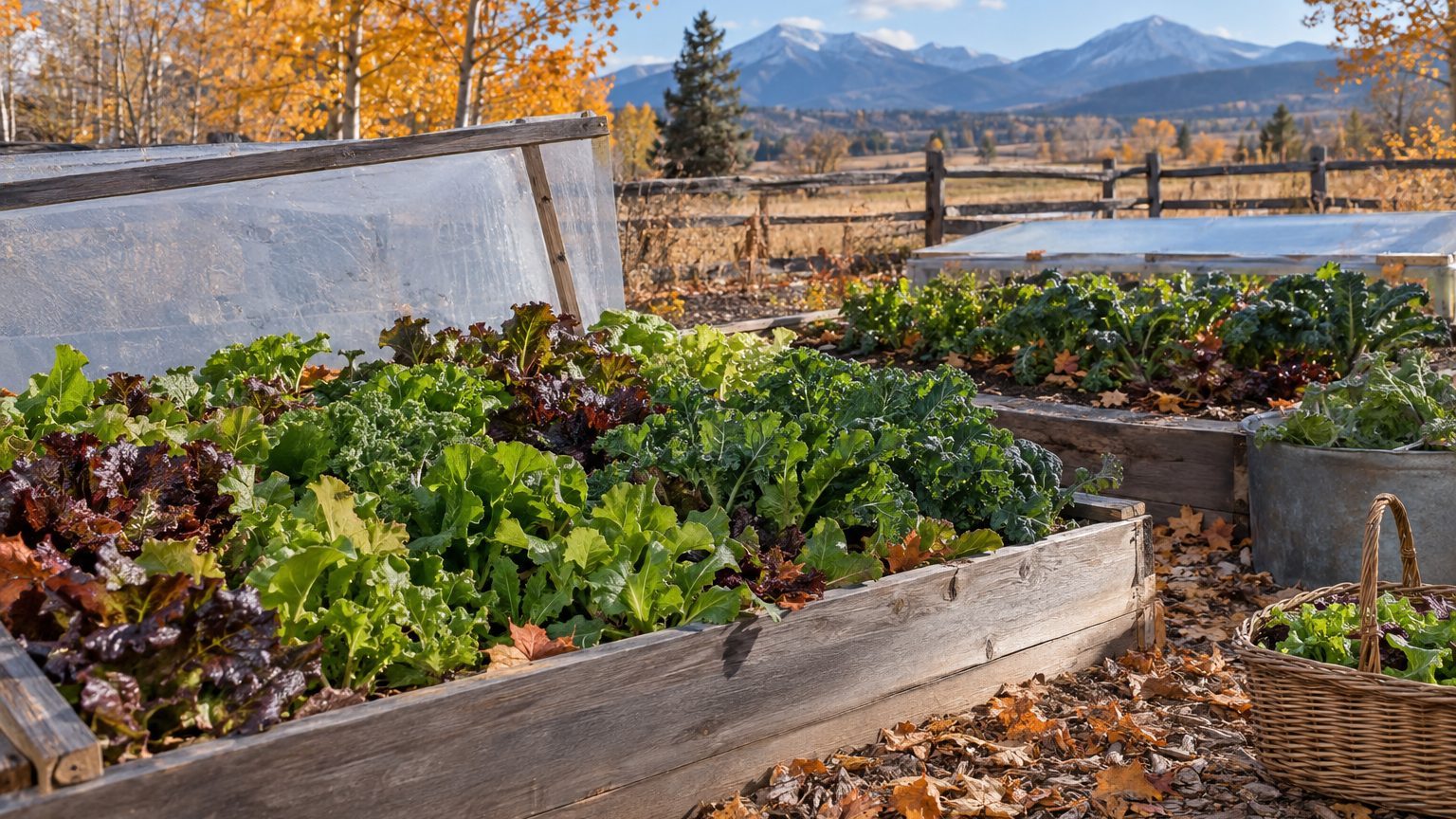

St. John’s gives a winter-salad grower a short, cool, foggy run, and hardy leaf crops use it better than almost anything else you could sow. Plan on two sowings, one in late spring and one in late summer, and treat the second as your winter crop. Before you open a single seed packet, mark late summer on the calendar, because that date matters more than the spring one.
When the soil is warm enough in Newfoundland and Labrador

Environment and Climate Change Canada’s 1981-2010 normals put the last spring frost at the ST JOHN’S A station on average at May 30. That is a mean, not a safe date. In one year out of two the last frost falls later, so read May 30 as the middle of a window that opens earlier and closes later.
Why the frost date is only a proxy
Winter salads are sown into soil, and soil lags the air. Ground that spent months cold and saturated needs days of drier, milder weather after the last frost before seed germinates briskly. On a foggy coast with onshore wind the lag runs longer, because the topsoil stays cool well after the calendar says spring. Sow after the frost risk ends and after the bed has warmed and drained, not on the frost date itself.
Seed that goes into cold, wet ground does not simply wait. It sits, and it rots or gets eaten. Waiting an extra week costs you almost nothing with hardy greens, because a sowing made into warmed soil overtakes one made into cold soil within days.
Reading the bed
You do not need a gadget. Dig a handful from a few inches down and squeeze it. If it crumbles when you poke it, the bed is ready. If it holds as a slick, glossy ball, wait. Raised beds and containers drain and warm first, and heavy or peaty ground comes last. A sheet of fabric row cover pinned over the bed for some days beforehand takes the chill off the surface and keeps the rain from re-soaking it.
Hardy types such as spinach, mustards, mizuna, claytonia and corn salad germinate in cool soil and can go in ahead of tender lettuce. If you are still sorting out which crops count as winter salads at all, the main guide, Winter Salads: What Grows When Lettuce Will Not, lays out the field. Everything on this page is grown from seed in beds and containers, never gathered from the wild.
The May 30 figure describes St. John’s. Labrador, northern districts and upland ground run weeks behind, so growers there should push every date later and lean on the squeeze test rather than the station figure. Canadian normals also cover 1981-2010, a different span from the 1991-2020 figures used for US states, so do not line the two up date for date. This page talks in crop types rather than cultivar names, and the reason is set out at the end.
How long the season lasts here
The window in numbers
The same Environment and Climate Change Canada 1981-2010 normals, for the same St. John’s A station, put the first fall frost on average at October 17. Count from May 30 to October 17 and you get about 140 days, or 20 weeks. Both dates are means. A late spring frost shortens the window, and a fall that holds off lengthens it. Northern and upland districts have less than this.
What 140 days allows
Twenty weeks is enough for two sowings, not three. A spring sowing of quick crops such as baby-leaf mustards, spinach and lettuce can be cut and finished by midsummer. Then the bed empties, gets a dose of compost, and takes the late-summer sowing that becomes your winter crop. Trying to squeeze in a third round between them mostly produces bolted plants and a bed that never rests.
Transplanting is a fair question with a window this size. For cut-and-come-again baby leaf, seedlings started indoors gain little, because the root check when you move them costs about what the head start earns. Sow those directly. For heading lettuce and for kale you plan to grow larger, transplants are worth the trouble in spring, since a head start counts when the season is short. Set them out when the bed passes the squeeze test, not when the frost date arrives.
Timing the second sowing is the harder job, and our succession sowing guide walks through the staggered dates. Here is the arithmetic in outline. Take the days to harvest printed on the seed packet (these are counted from sowing or from transplant, so read which one). Add a generous margin, because growth slows as the days shorten and the soil cools. Then count back from the October 17 mean frost. That mean is only the midpoint, so in half the years the frost comes earlier and your margin is what saves the crop.
A winter salad does not need to be finished by the first frost. Hardy greens sit through frost, and under cover they keep going slowly. What it needs is to be near harvest size before the light fails, because once days are short the plants hold rather than grow. If you are curious how a long, warm fall changes the calendar, Winter Salads for Alabama Gardens shows a very different rhythm. Here the light, not the thermometer, is what closes the door.
Heat and water in Newfoundland and Labrador

Summers are not the problem
The facts behind this page do not include a count of hot days or a summer rainfall total, so this page quotes neither. What matters is the character of the season. St. John’s summers are cool, damp and often foggy, and heat stress on leaf crops is not the main threat. Bolting in a heat spell is far less of a worry here than it is in most of the continent. The trouble is what cool, humid weather brings instead: downy mildew, gray mold and slugs, and slow growth in weeks without sun.
The winter low decides the rest
Environment and Climate Change Canada’s 1981-2010 normals give the mean daily minimum of the coldest month at St. John’s as -8.7 °C. That is an average across the nights, so the coldest nights run below it. Natural Resources Canada places St. John’s in Canadian plant hardiness zone 6a on its 1991-2020 normals. That is the Canadian system, built from seven climate variables, and it does not convert to a USDA zone. It also describes perennials rather than salad, so use it as background and let the mean minimum guide the leaf crops.
At that cold, in general, the crops sort themselves into three groups:
- Stand uncovered through mild stretches: the hardiest greens, such as kale, spinach, claytonia and corn salad, though wind and wet still scorch the leaves.
- Need a cover to stay edible: lettuce, mizuna, mustards and arugula, under a cold frame or a low tunnel of clear plastic or fabric.
- Cannot manage at all: anything tender, including basil and other heat lovers, and lettuce left in exposed ground.
Managing the damp
Cool, damp air is where mildew and gray mold take hold, and a cover makes it worse if you shut it up. Give plants room, thin seedlings early, and water in the morning so the leaves dry before night. On mild days open the ends of the tunnel or lift the frame lid. Slugs are the other reliable problem in a wet coastal garden. Handpicking at dusk, boards laid down as traps and clearing debris from the bed edges all work without a spray.
If you garden on the wet side of Washington you will recognize much of this, and Winter Salads for Washington Gardens shows how a milder, rainy winter changes the choices. St. John’s is colder and windier, so the cover matters more here and the crops must be hardier.
Which winter salads suit Newfoundland and Labrador
Choose by type, and let the territory do the reasoning. A season of about 140 days favors quick, hardy types that finish before the light fails. Cool, damp summers put disease resistance first, above flavor or novelty, so look at the packet for downy mildew resistance and pick types that tolerate a wet leaf. Shade at the root, which matters in hot places, hardly matters here. Airflow and drainage matter far more.
| Type | Best slot in the year | Winter protection |
|---|---|---|
| Spinach | Spring, and late-summer sowing | Hardy, but holds better under a low cover |
| Corn salad (mâche) | Late-summer sowing | Very hardy, often fine with light cover |
| Claytonia | Late-summer sowing | Very hardy, thrives in cool, low light |
| Kale (baby leaf) | Spring, and late-summer sowing | Hardy, still gains from wind protection |
| Mustards and mizuna | Quick spring and late-summer crops | Need cover in the coldest stretches |
| Lettuce and arugula | Spring, then a covered fall crop | Need a cold frame or tunnel |
Start with the hardy end of that table for anything that has to sit through the coldest weeks: claytonia, corn salad, spinach and kale. Keep lettuce and arugula for the spring sowing and for a covered fall crop you expect to cut before the deepest cold. Mustards and mizuna are quick enough to fit a gap and are the easiest to cover.
Why this page names no cultivars
You will not find a variety name here, and that is deliberate. Which cultivars stand up to Newfoundland wind, fog and cold is settled by trials run in the province, and this page does not have those results. Any name it offered would be a guess dressed as advice, and a wrong guess costs you a season. Ask the provincial Department of Fisheries, Forestry and Agriculture for the varieties that have performed locally and for timing advice for your own district.
Keep your own notes as well. Each year, write down the date your bed first passes the squeeze test and the date of your first hard frost. Two seasons of that record describe your particular yard better than any station normal, and they tell you how far your late-summer sowing date can move.
Common questions
Can I leave winter salad in the ground all winter in St. John’s?
Only the hardiest types, and only with protection. Spinach, claytonia, corn salad and kale can survive in the ground under a cover, but growth stops in the short days, so you harvest what you grew in fall. Uncovered plants are more likely to be scorched by wind and cold than to fail outright.
Does snow help or hurt a winter salad bed?
A steady snow layer insulates the plants and protects them from wind. Heavy, wet snow can flatten a low tunnel, so use sturdy hoops and knock the load off before it builds. Do not rely on snow as your only cover on an exposed site.
Why are my greens turning slimy under the cover?
Trapped moisture is the usual cause. Condensation and a shut tunnel are ideal for gray mold and rot in damp weather. Open the ends or lift the lid on mild days, thin the plants, and water in the morning rather than at night.
Can I use the St. John’s dates in Labrador or on the Northern Peninsula?
No, use them only as a rough starting point. The figures on this page come from the St. John’s A station, and northern and upland districts run weeks behind. Start from the squeeze test and your own first-frost notes, and ask the provincial agriculture department for local timing.