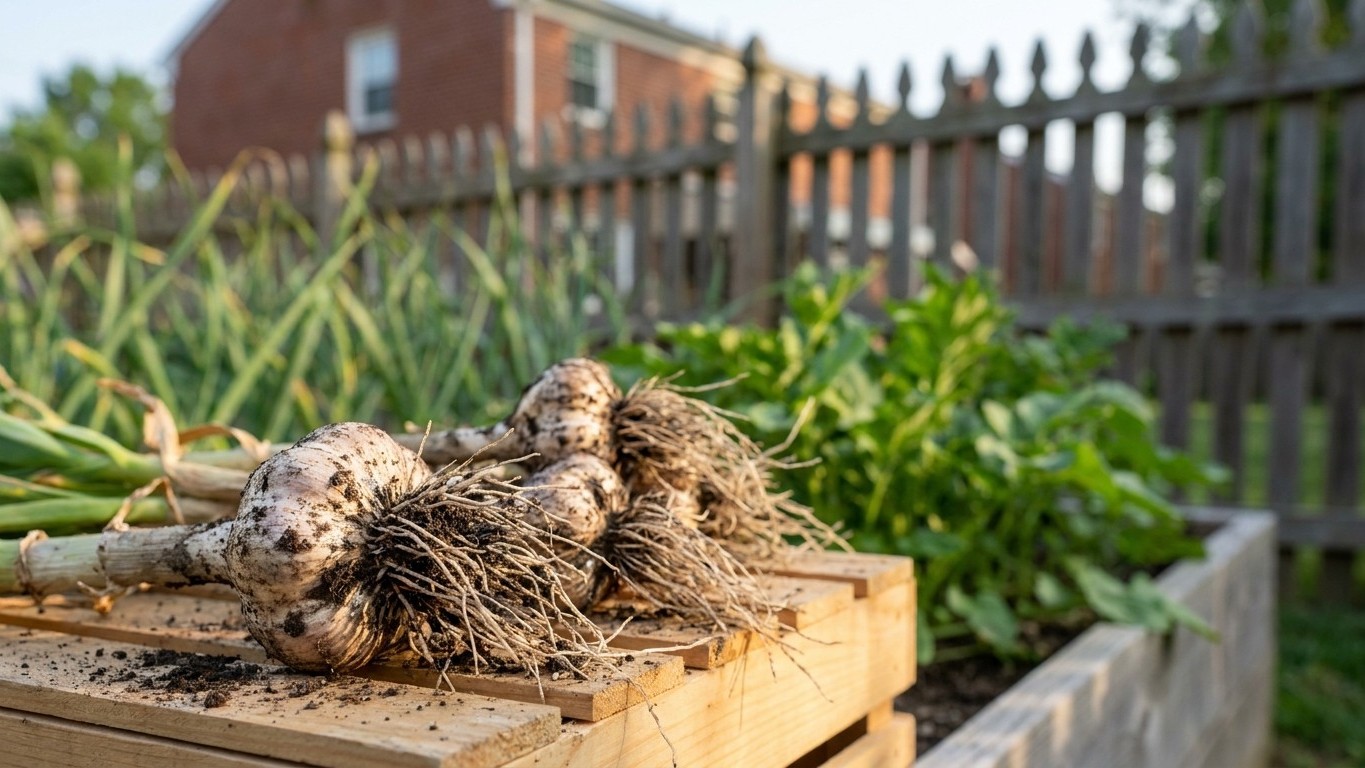

Plan on sowing the hardy roots in the weeks after May 21 and treat the rest of the group as a bet against the calendar. That date is the average last spring frost at the Calgary International Airport station, and the soil warms later than the air. From there to the average first fall frost on September 16 is about 118 days, workable for most unusual roots. Celeriac is the one that tests it.
When the soil is warm enough in Alberta
Environment and Climate Change Canada puts the average last spring frost at May 21, from the Canadian Climate Normals for 1981-2010 at the Calgary Int’l A station (climate ID 3031093). Treat it as the middle of a window rather than a safe date. In one year out of two the last frost falls later, so a gardener who sows on May 21 is betting on a coin flip. The station is also one point on a large map. Northern and upland districts of the province run weeks behind it, so a garden in the foothills or north of Edmonton should shift every date in this article later.
Frost is a proxy, though, and not the thing these crops are waiting for. They want warm soil. Soil is slower than air: it holds winter cold at depth, and in a cool spring it can sit well below what a seed needs even after the last frost has come and gone. A cheap soil thermometer pushed in to seeding depth, read in the morning, tells you more than any normal. Seed in cold, wet ground sits and rots, or germinates unevenly and bolts later.
Which crops go first and which wait
The crops split by type. Kohlrabi, turnip and rutabaga tolerate cool soil and can go in as soon as the ground is workable and no longer soggy, even before the average last frost has passed. A light cover on a cold night handles the risk. All three are brassicas, which matters later for disease and rotation.
Celeriac is the opposite. It is the slowest crop in the group and wants a head start indoors, with transplants going out only after frost risk has truly ended and the soil has warmed. Horseradish goes in as root pieces once the ground can be worked in spring. Jerusalem artichoke tubers go in at about the same time, and that one comes with a warning.
Site the Jerusalem artichoke before you plant it
Jerusalem artichoke is effectively permanent once planted. Every fragment of tuber left in the soil regrows, and digging a patch out never gets them all. It is the single most regretted planting in a vegetable garden. Give it a corner you are happy to surrender, bounded by a lawn edge, a path or a fence, and well away from beds you dig and replant each year. Many gardeners use a sunken barrier or a dedicated raised bed with a solid bottom. Choose the site first, then the tubers.
The vegetable has another trait worth knowing before you grow a whole row. It stores inulin instead of starch, and in many people that causes digestive discomfort. That is a plain fact of the plant, not a health claim in either direction. A small first portion is the sensible way to find out where you stand.
How long the season lasts here
The average first fall frost at the same Calgary station is September 16. Count from May 21 and you get about 118 days between the two mean dates. Both come from the same Environment and Climate Change Canada normals for 1981-2010, so the subtraction is honest, but it describes an average year. Half of all years bring the first frost earlier than September 16, and a real season is the gap between the actual last frost and the actual first, not the midpoint of both.
What does 118 days allow? Think of it as room for one long crop or two quick ones, but rarely both. Quick types such as turnip and kohlrabi can be sown twice, with a second sowing a few weeks after the first, so the harvest does not arrive all at once and the later batch matures in the cooler weeks of late summer. The succession sowing guide on this site covers how to space those sowings. Rutabaga and celeriac do not fit that pattern, because each needs most of the window to itself.
The length also decides whether transplanting is worth the risk to the roots. A seedling that gets its roots disturbed or is held back by cold sets the crop behind, and with 118 days to spare, there is little slack to absorb a setback. For celeriac the head start indoors is the only way to finish, and the transplant should go out into warm soil, handled gently. For crops sown where they will grow, such as kohlrabi and turnip, skipping the transplant removes the setback altogether.
Perennials ignore the arithmetic. Horseradish and Jerusalem artichoke work on a longer clock than one season, and a short window does little to them beyond limiting how much they bulk up in their first year. The comparison with neighbors is useful, since a colder prairie garden gives up more of this window. Growing Unusual Root Crops in Saskatchewan covers a place where the margin is tighter again, while Growing Unusual Root Crops in New Hampshire shows a humid climate with a different set of risks.
Heat and water in Alberta
This page does not carry a count of days above 90 °F (32 °C) or a summer rainfall total, and it will not guess at them. Any figure would be invented, and a gardener would be planning around it. What the verified numbers do say is enough to set priorities. Two facts govern this group here: the length of the season, and the depth of the winter cold.
Season length comes first. About 118 days between mean frost dates says whether celeriac, the slowest of the group, can finish at all. It can finish in an ordinary year only with an early start indoors, and a cold spring or an early fall frost can cut it short. If a summer runs cool and damp rather than hot, expect slow ripening, mildew on foliage and more rot in the root zone. Mulch and watering that wets the soil but not the leaves help, as does spacing wide enough that foliage dries between rains.
The winter low decides the other question: what stays in the ground and what comes out. The mean daily minimum of the coldest month is -13.2 °C (8.2 °F) at Calgary, from the 1981-2010 normals. It is an average, so individual nights fall lower, and a cold snap with no snow cover behaves very differently from the same temperature under a blanket of snow. The reference city’s hardiness zone is 4a in the Canadian system, from Natural Resources Canada’s Plant Hardiness Site. That is not a USDA zone, and the two do not convert. The Canadian system draws on seven climate variables, and its 4a overlaps nine USDA zones, from 3a to 7a.
For the perennials the conclusion is encouraging. Horseradish and Jerusalem artichoke are meant to overwinter, and a heavy mulch makes it easier. Hardy roots can sometimes stay under thick mulch and be dug as the ground allows, but celeriac, rutabaga and kohlrabi are safer lifted and stored before the soil freezes. Do not count on the garden as a freezer in a year with a hard, snowless December.
Storage touches food safety, so inspect everything before it goes into the cellar and again as it sits. A root that looks sound is not therefore safe, and no keeping time can be promised. A soft patch, a weeping spot or a moldy crown ends the question, and that root goes out.
Horseradish needs a separate warning, because the vapour is genuinely irritant. Grating a fresh root releases compounds that burn the eyes and airways, so ventilate the kitchen well and keep your eyes away from the bowl. Turnip and rutabaga are brassicas, and they share their pests and diseases with cabbage, kale and mustard. Rotating them into a cabbage bed rotates nothing, so check the rotation page on this site before planning next year’s beds.
Which these root crops suit Alberta
The choice comes down to type, because the facts for Alberta point in a clear direction. A season of about 118 days between mean frost dates favors the earliest types, the ones that mature fast and tolerate cool soil. The winter low favors perennials that can overwinter under mulch. The reference station tells nothing about humidity, so disease resistance is a sensible tiebreaker rather than the first filter.
| Type | Fit with Alberta’s facts | Main caution |
|---|---|---|
| Kohlrabi and turnip | Quick types, sown in cool soil, can be sown twice in the window | Brassicas, so share cabbage-family problems |
| Rutabaga | Takes most of the season, tolerates cool weather | Brassica; lift and store before the soil freezes |
| Celeriac | Marginal; needs an indoor start and warm soil at transplanting | Can run out of season in a cool year |
| Horseradish | Perennial, suits a zone 4a winter under mulch | Irritant vapours when grated |
| Jerusalem artichoke | Perennial and very hardy | Permanent once planted; digestive discomfort for many |
This page names no varieties, and that is deliberate. The cultivars worth growing are the ones trialled locally, and this page has no trial data from Alberta. Naming a variety from memory would be a guess, and a gardener who has grown the crop will spot the error at once. Alberta Agriculture and Irrigation is the right place to ask for recommended varieties for your part of the province, and local garden clubs and seed suppliers that test in prairie conditions can fill in the rest.
For a first year, a sensible plan is modest: a short row of kohlrabi or turnip sown in spring, a few celeriac transplants as an experiment, and one horseradish crown in a spot that can stay put. Add Jerusalem artichoke only after settling where it can live forever. The wider picture, including the crops this page leaves out, is in Celeriac, Kohlrabi, Horseradish and Jerusalem Artichokes.
Last, a note on the data. The Canadian frost and winter figures here cover 1981-2010, while the hardiness zone uses 1991-2020 normals, and the US figures elsewhere on this site follow the 1991-2020 period. Treat any comparison across the border as approximate.
Common questions
When can I plant unusual root crops in Calgary?
Cool-soil types such as kohlrabi, turnip and rutabaga can go in once the ground is workable and no longer waterlogged. Celeriac transplants and warmth-loving plantings wait until the soil has warmed after the average last frost of May 21, which is a midpoint and not a guarantee.
Can celeriac finish in Alberta?
It can in an ordinary year if it starts indoors and goes out into warm soil, because about 118 days sit between the mean frost dates. A late spring or early fall frost can cut the crop short, so treat it as an experiment.
Can I leave Jerusalem artichokes and horseradish in the ground over winter?
Both are perennials, and with a mean coldest-month minimum of -13.2 °C at Calgary and Canadian hardiness zone 4a, mulch generally suits them. Remember that Jerusalem artichoke regrows from any tuber left behind, so site it where it can stay.
Can I rotate turnips into a bed that held cabbage?
No. Turnip and rutabaga are brassicas and share their pests and diseases with cabbage, kale and mustard, so that move rotates nothing. Follow them with a non-brassica crop and consult the rotation page on this site.