
Plant Winter Squash transplants outdoors around late May in most of Alberta, timed to the province’s average last spring frost of May 21, and choose varieties that mature in under 100 days so they finish before the average first fall frost of September 16. That’s the calculation. What follows is the math behind it, and where it breaks.
The short answer for Alberta
Environment and Climate Change Canada puts the average last spring frost at Calgary Int’l A at May 21 and the average first fall frost at September 16, based on the 1981-2010 normals. That’s a mean, not a guarantee: half of the years on record saw frost arrive later than May 21 in spring, or earlier than September 16 in fall. Treat both dates as the midpoint of a moving target, not a line you can plant right up against.
Run the subtraction and you get roughly 118 days between those two averages. Winter squash types most gardeners recognize, from acorn to butternut to hubbard, typically need somewhere between 80 and 110 days from seed to harvest, and that’s counting from a direct-sown seed, not a transplant. Once you build in a buffer for the years frost runs late, and another for the years it arrives early, the workable window in Alberta shrinks to something closer to 90-100 safe days in an average year, and tighter in a cold one.
| Metric | Value | Source period |
|---|---|---|
| Average last spring frost | May 21 | 1981-2010 |
| Average first fall frost | September 16 | 1981-2010 |
| Mean frost-free span | ~118 days | 1981-2010 |
| Hardiness zone (reference station) | 4a, Canadian system | 1991-2020 |
That zone number, 4a, comes from Natural Resources Canada’s plant hardiness mapping and it is a Canadian zone, built from seven climate variables, not the single-variable USDA system used elsewhere on this site. NRCan is explicit that there’s no clean conversion between the two: a Canadian 4a can overlap anywhere from USDA 3a to USDA 7a depending on which factors dominate locally. Don’t try to translate it. Use it only as a relative marker of how short and cool the growing season runs at the reference station.
Practically, that means starting seed indoors 3 to 4 weeks before the average last frost, so transplants go into the ground with a head start instead of germinating from scratch after May 21. Direct-seeding outdoors is the slower path and, in a season this compressed, it’s the path with the least room for error.
What will not work here

The long-season winter squash types, the kind bred for 100-plus days to full maturity and a hard, storage-ready shell, are the first thing to cross off the list for most of Alberta. Even started as transplants right at the average last frost, a squash needing 110 days to mature is asking to finish around September 8, just eight days ahead of the average first fall frost, with zero margin for a cool July or an early September cold snap. In a year where frost arrives on the early side of the average, that plant loses its rind hardening and its storage life along with it.
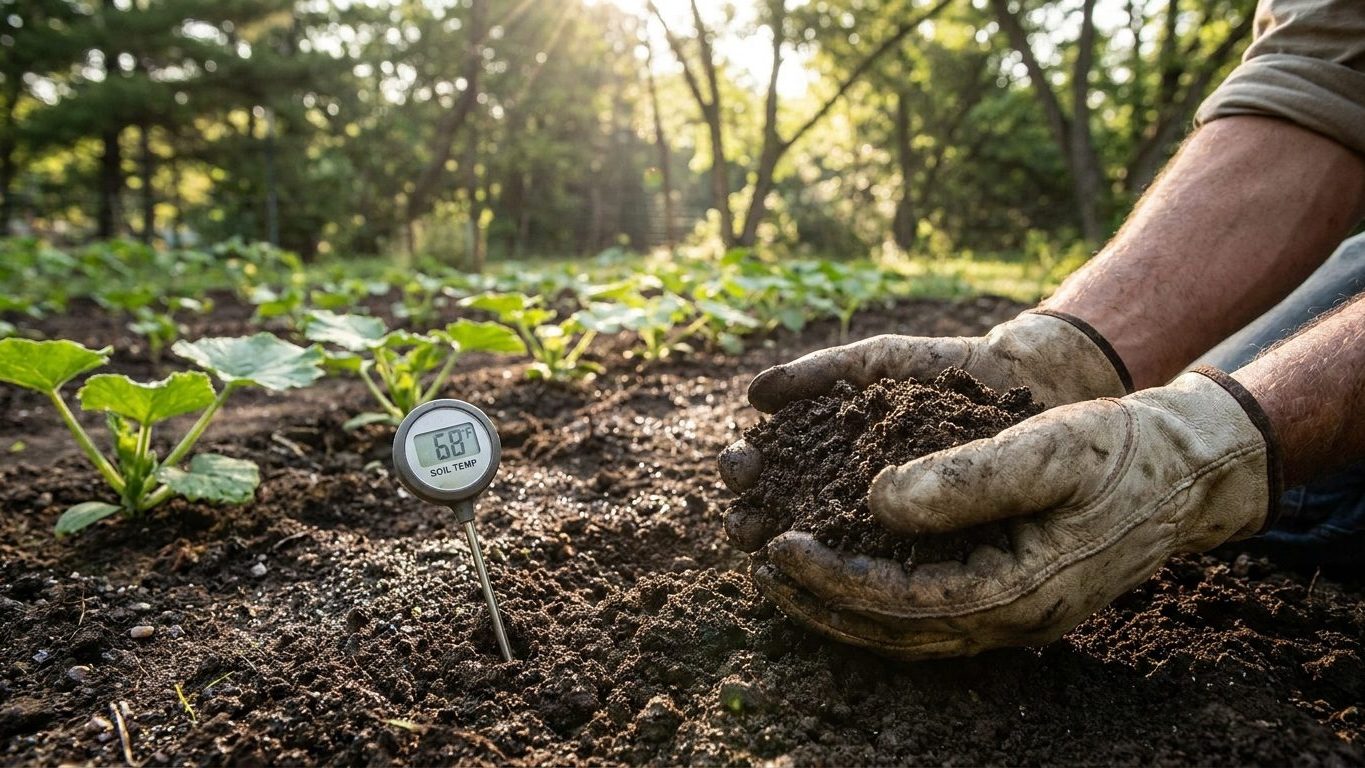
Direct-seeding outdoors without any indoor head start is the second failure mode, and it’s a scheduling problem, not a hardiness one. Squash seed needs consistently warm soil to germinate promptly, and soil at 3031093 doesn’t reliably hit that mark until well after the calendar says spring has arrived. Every week lost to slow germination is a week subtracted from an already tight 90-to-100-day working season.
What’s absent from Alberta’s climate profile, compared to territories where winter squash is an easier crop, is heat. The reference station records an average of 0.0 days a year at or above 90°F. That’s not a typo, and it matters because winter squash is a heat-loving vine at heart, native to warm climates, and fruit set and rind maturation both slow down without real summer heat driving them. A gardener who assumes Alberta’s problem is drought and waters accordingly is solving the wrong issue; the actual constraint here is accumulated warmth, not moisture stress from evaporation.
On the moisture side, the numbers cut the other way from what a hot-summer state would show. Alberta averages about 8.5 inches of rain across June, July and August, with August, prime fruit-fill month for many squash varieties, running the driest of the three at 2.24 inches. Without supplemental watering through that stretch, a vine that’s finally sizing fruit in the year’s only real heat window can stall out from underwatering just when it needs consistency most. Skipping irrigation in August because “it usually rains enough” is a bet this data doesn’t support.
What changes across Alberta
Every figure above comes from one station, Calgary Int’l A, and Alberta is not one climate wearing a single label. The province runs from Peace Country in the north, where the growing season is shorter and cooler than anything the Calgary figures describe, down through the chinook-influenced pockets around Lethbridge in the south, where warm winter winds and a milder microclimate push the practical season further than the provincial average suggests. Elevation adds another layer: foothill and mountain-adjacent communities sit at higher altitude than Calgary and run correspondingly further behind it in spring warm-up.
Zone or frost data for other locations is not available, and it would be a mistake to borrow the Calgary numbers and apply them province-wide. What can be said honestly is that Alberta’s hardiness zones span a wide range from north to south and low to high ground, and there is no single answer that covers a county near the Northwest Territories border and a county on the southern prairie with the same confidence.
Natural Resources Canada maintains a searchable hardiness zone map built on the same 1991-2020 methodology referenced above, organized by municipality rather than by province-wide average. A reader gardening north of Edmonton or up in foothill country should look up their own municipality there rather than assume the Calgary-based May 21 and September 16 dates apply unchanged. The map is at planthardiness.gc.ca, and it’s the tool built for exactly this question.
The general shift to expect: further north or higher up, push the transplant date later and lean harder toward the shortest-season squash varieties available. Further south, particularly in chinook-affected areas, the window can open earlier and stretch a little longer than the provincial reference suggests, though still without the heat load a hot-summer state provides.
Where to check this for your own county
Alberta’s provincial agriculture service is the right next stop, and it’s at alberta.ca/agriculture-and-irrigation. What to look for there is specific: a local or regional planting calendar that reflects your county’s actual frost dates rather than the single Calgary reference station, and any list of squash or vegetable varieties that have been trialled in your part of the province.
Variety trial results matter more than they might seem. A squash variety that performed well in a multi-year trial near your county has already survived your actual growing season length, your actual summer rainfall pattern and your actual frost timing, not the provincial average of them. That’s a level of specificity no province-wide page, including this one, can offer.
Say this plainly: a county-level or regional recommendation will beat a province-wide one every time, because it’s built on data closer to your actual garden. The Calgary figures rest on one weather station’s normals and one province’s average zone rating. It’s a reasonable starting point for a first-time Alberta gardener figuring out roughly when to start seed indoors, but it is not a substitute for what your county’s extension office or regional master gardener program has already tested on your own ground.
If your county publishes its own frost-date data or a local seed-starting chart, that number should override the May 21 and September 16 dates used here. Provincial averages smooth over exactly the kind of local variation, chinook winds, elevation, proximity to river valleys, that decides whether a squash plant makes it to harvest.
Checking this against your own garden
None of the dates above outrank what your own soil and plants are telling you, because a calendar average can’t see your specific yard, its slope, its wind exposure or the microclimate a fence line creates. Three direct observations will tell you more than any provincial normal.
- Soil warmth by feel: push a bare hand a few inches into the planting bed. Squash seed wants soil that feels consistently warm, not just air-temperature mild, to germinate promptly. Cold soil that feels cool to the touch in late May is a sign your specific spot is running behind the provincial average, regardless of what the calendar says.
- The first flush of male flowers: winter squash produces male blossoms before female ones, usually by a week or two. Their appearance tells you the plant has moved from vegetative growth into reproductive mode, and it’s a signal that fruit-bearing female flowers, and the pollination window that matters most, are close behind.
- The first true leaves: the initial seed leaves look nothing like the lobed, vine-pattern leaves that follow. Once true leaves appear and start multiplying steadily rather than sitting still, the plant has cleared its slowest, most frost-vulnerable stage and is establishing at a pace that matches your particular garden’s warmth, not the reference station’s.
Track those three signs against the same calendar window each year, and your own garden’s timing, not Calgary’s average, becomes the record worth trusting.
If you follow the almanac, here is when to plant winter squash by the moon. It is a tradition, not a proven method.