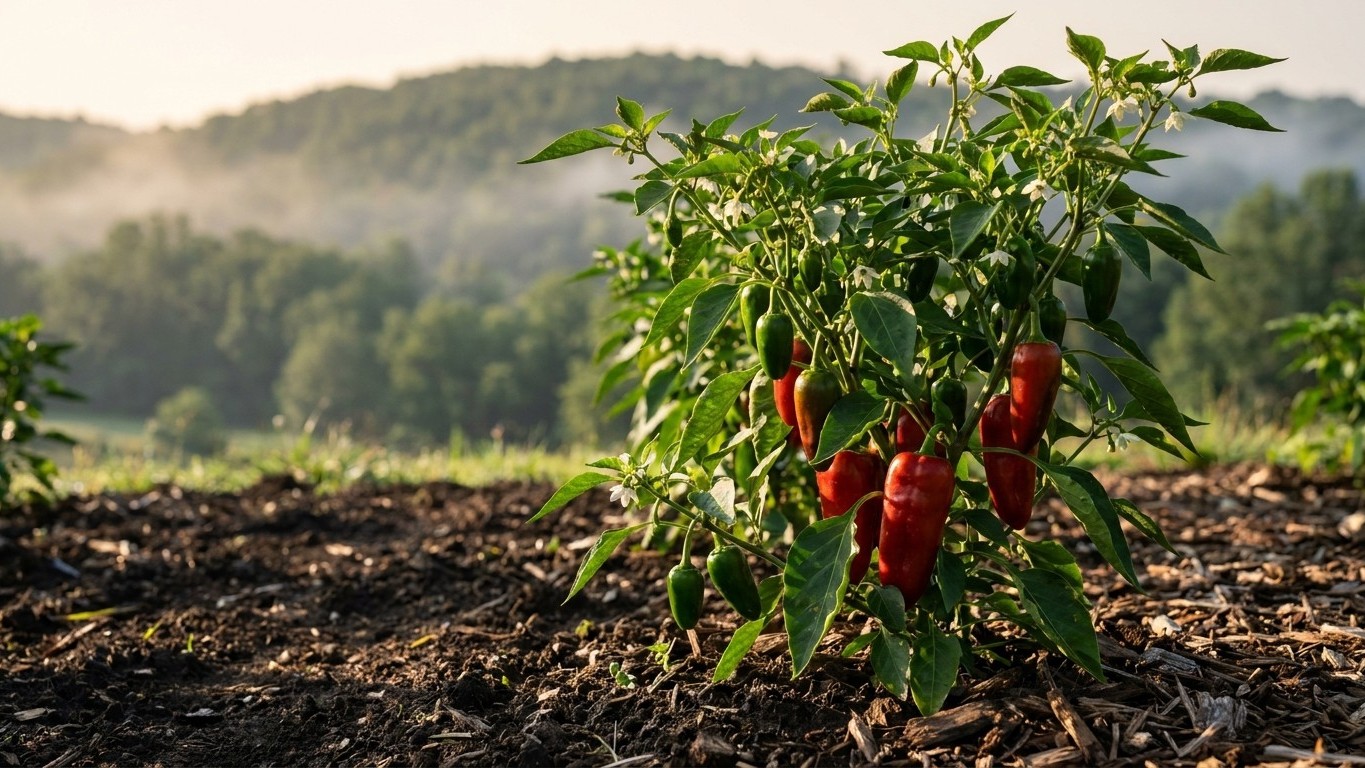

Most of what eats a pepper plant in a short, high-elevation season shows up in two windows. The first is right after transplanting, when stems are tender. The second is once flowers open and fruit starts to form. Between them, cool nights and the occasional hot afternoon cause damage that looks like insect work but isn’t. Match what you see to the timing below, then have University of Wyoming Extension confirm the species before you act.
Which pests attack pepper in Wyoming
University of Wyoming Extension is the service that names the insects found in the state’s gardens. On peppers, their damage sorts into four groups. Which species sits behind each group changes from county to county, so treat this list as a map of symptoms.
- Stem cutters chew through the base of a young plant at or just above the soil line, usually overnight, and leave the top lying beside the stub.
- Leaf chewers leave ragged holes and notched edges, often with droppings or the insect itself on the leaf.
- Sap feeders cluster on new growth and leaf undersides. They leave curled, puckered leaves and a sticky film.
- Fruit feeders gouge or bore into the pepper, leaving a soft, rotting area around the wound.
Some insects documented across the state do not belong on this list. Pests of shade trees and shelterbelts feed on bark, needles and woody shoots, and pests of small grains and rangeland feed on grass blades. One found on a pepper bed is almost certainly passing through. Browsing animals are a separate case. They take the whole top of a transplant and leave a clean, angled cut, unlike the ragged chewing of an insect.
The short season squeezes all of this together. NOAA NCEI Climate Normals put the mean last spring freeze between May 7 and May 18 (the 30 to 70 percent probability band for 32 F). At about 6,000 feet, that leaves roughly 130 frost-free days, and frost is possible in any month at higher elevations. Utah State University Extension says transplants need 8 to 10 weeks indoors and should go out when the soil reaches 60 F, after frost. Plants set out on that schedule are young and soft just when everything that feeds on them is active.
When each one shows up, and what it does first
Count from the day the transplant goes into the ground. Clemson Cooperative Extension puts harvest at about 70 to 85 days after transplanting, so the plant is exposed to insects for that whole stretch. The order of arrival is fairly predictable, even though the dates move with your elevation and your planting day.
What shows up right after transplanting?
Stem cutters come first. The first sign is a transplant that stood upright yesterday and lies flat today, or has vanished. Look at the base. A stub with a clean, chewed edge points to a cutting insect, and an angled slice points to a browsing animal. Leaf chewers can appear in the same early days, with a few small round or ragged holes in the lowest leaves.
The stem stays soft for a while after hardening off, even on sturdy transplants. The first days after transplanting are when a single night can cost you a plant.
What shows up once the plants flower?
Sap feeders tend to build up as new growth flushes. The first sign is a tip where the youngest leaves are curled or puckered, then leaves that feel tacky when you touch them. Check the undersides before anything else.
Fruit feeders arrive last, since they need fruit. The first sign is usually one pepper with a small hole or soft spot that looked fine a few days earlier. Cut it open and look inside. Peppers showing damage late in the season were often set late too, which is one reason a variety that ripens early shortens your exposure. The list in Pepper Varieties That Ripen in a Wyoming Season is a good place to start.
One flowering-stage problem is not an insect at all. Utah State University Extension says fruit set fails at both ends: nights below 55 F or days above 90 F. The reference station in Cheyenne averages 10.4 days a year at 90 F or more (NOAA NCEI Climate Normals), so heat is usually the smaller risk. Cool nights are the one to watch, and only your own thermometer can tell you how cold your garden gets. When flowers drop with no chewing anywhere on the plant, read Why Peppers Fail to Set Fruit in Wyoming before blaming a bug.
Telling the damage apart from everything else
Most wrong diagnoses come from treating a weather or watering problem as an insect problem. The table pairs common symptoms with their likely causes and the sign that separates them. It points you toward a cause, and your county extension office is the one to confirm it.
| What you see | Possible causes | What settles it |
|---|---|---|
| Seedling cut off at the soil line | Cutting insect, browsing animal, or wind and handling damage | A chewed edge means insects. A crushed or twisted stem means mechanical damage. |
| Ragged holes in leaves | Chewing insects or hail | Hail tears many plants on the same side right after a storm. Insect damage is scattered and comes with droppings. |
| Curled, puckered new leaves | Sap feeders, drift from a lawn or weed treatment, or water stress | Turn the leaves over. Drift hits many kinds of plants at once. |
| Yellowing leaves, nothing on the undersides | Cold or waterlogged soil, or a nutrient shortage | Check whether the soil is cold and wet, and whether older or newer leaves yellow first. |
| Flowers drop, no fruit forms | Nights below 55 F or days above 90 F | No chewing marks anywhere, and the flowers fall clean. |
| Pitted, soft spots on a harvested pepper | Chilling injury, or rot | The spots appeared after refrigerator storage rather than on the plant. |
Find the insect, or its droppings or shed skins, on the plant before calling it a pest problem. The simplest way is a dusk check with a flashlight, since stem cutters and many leaf chewers feed at night. Look at the soil surface, the stem base and the leaf undersides. If you find nothing across several evenings, the cause is probably weather, water or a nutrient shortage.
Damage that stops spreading after a cold snap or a storm is rarely an insect. Damage that keeps advancing from plant to plant over a week usually is. When you can’t tell, take a photo of the whole plant and a close-up to your county office.
What actually works here, and what is a waste of time
On a season this short, timing and physical barriers do more than any treatment. Put the barrier on the day the transplant goes in, because stem cutters strike in the first nights. A collar around each stem, such as a bottomless paper cup or a ring of stiff cardboard pushed an inch or so into the soil, blocks them. Floating row cover over the transplants keeps leaf chewers and sap feeders off while the plants are small, and it also holds a little warmth on cool nights.
Remove the cover once flowers open or when hot afternoons make the air under it much warmer than outside. Peppers under cover on a sunny day can get hotter than the air in the shade.
Several common habits waste effort. Spraying at the first sign of damage, before you know the cause, treats weather problems with chemicals that cannot fix them. Spraying while flowers are open can also harm the bees and other insects that visit them. The county extension office can tell you what is registered for home use in Wyoming, and what is allowed on a food crop, before you buy anything.
Planting early to get ahead of insects is another trap. At about 6,000 feet, frost can return after soil has warmed, and cold soil stalls a pepper whether or not insects are around. Wait for the 60 F soil Utah State University Extension recommends. Hand-picking works when the pests are large enough to see and the plants are few, as in most home beds. It stops working once the plants are large and the insects are small.
Where to check this for your own county
The University of Wyoming Extension office in your county is the right place to confirm what is feeding on your plants. Extension educators there know which insects have been showing up locally, and they can match a photo or a specimen to a species. They can also say how the local transplant window compares with the statewide dates.
That local check matters because pests vary inside the state. A garden at 6,000 feet and one a few hundred feet higher or lower can have different insects, different frost dates and different nights. Neither the statewide record nor a neighbor’s report from a few miles away, especially across a ridge, tells you what is in your bed.
When you call or stop by, bring a clear photo of the whole plant and a close-up of the damage. If you found an insect, put it in a sealed container or a small jar with a damp paper towel, and note the date and time you found it. Write down the transplant date and the lowest night temperature you have recorded. For the broader picture of the season, see Growing Peppers in Wyoming.
This week, before the next set of transplants goes out, call the county office and ask what has been seen locally and when it started. Then cut your collars and have the row cover ready.
Common questions
What eats pepper seedlings overnight?
Stem cutters and browsing animals are the usual suspects. Look at the base of the plant. A chewed stub points to an insect, and a clean angled cut points to an animal. A dusk check with a flashlight and a photo for your county extension office will settle it.
Is it an insect or cool nights when flowers drop?
If the plant shows no chewing, no sticky film and no insects on the leaf undersides, weather is the likelier cause. Utah State University Extension says fruit set fails when nights fall below 55 F or days climb above 90 F. Watch your own nights with a thermometer, since the cool end varies from garden to garden.
Should I spray as soon as I see holes in the leaves?
No. Hail, wind and handling make similar holes, and spraying does nothing for those. Confirm that an insect is present first, then ask your county extension office what is registered for home use in the state on a food crop.
Where should I store harvested peppers?
Clemson Cooperative Extension gives the best conditions as 45 to 50 F with 80 to 90 percent relative humidity, for two to three weeks at most. A household refrigerator is colder than that. Below about 45 F peppers pit and soften from chilling injury, so a cool pantry or basement usually keeps them better than the fridge.