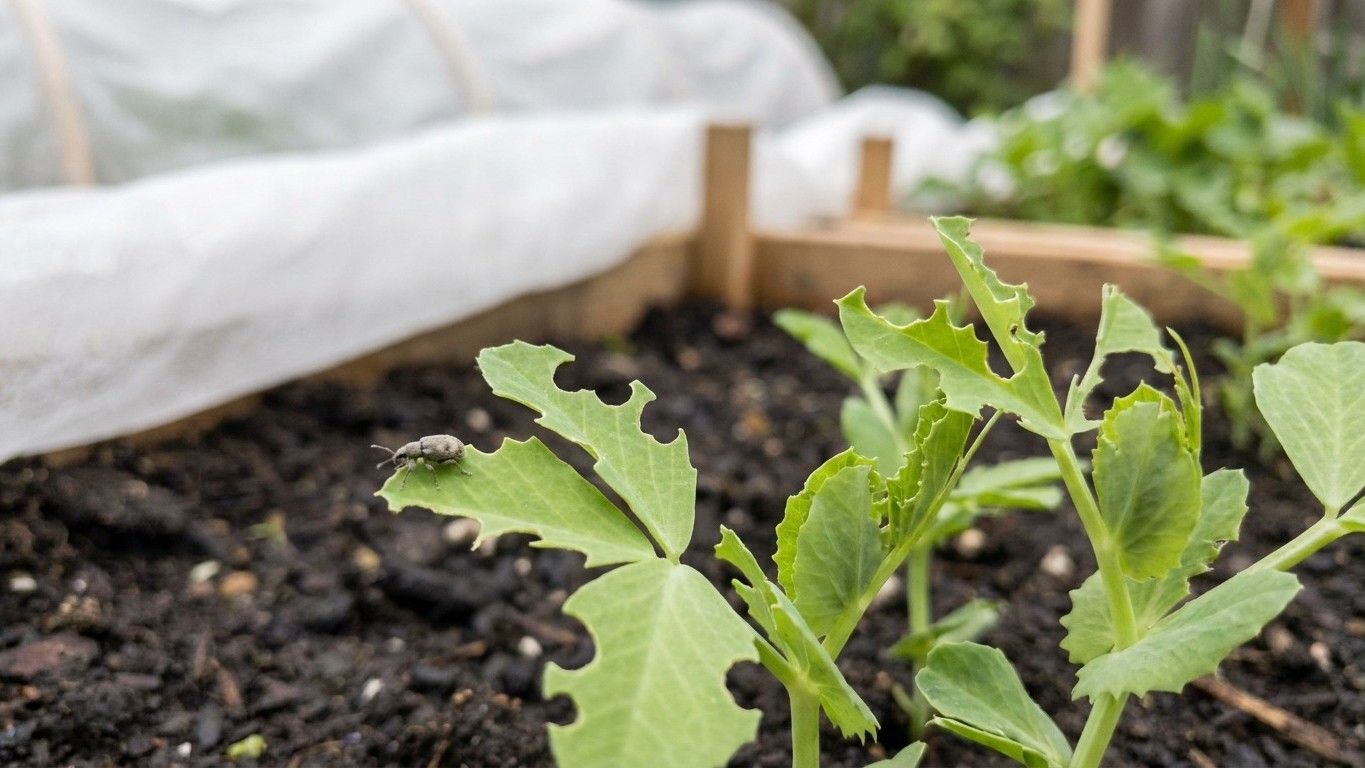

Sow Asian greens twice in Colorado. Sow once in spring, starting as the soil can be worked and ahead of the May 1 to May 11 last-frost window. Sow again in late summer, timed so the crop finishes before the first fall frost, which falls between September 30 and October 12 at Denver. Midsummer is the gap. These dates describe Denver’s plains, not the whole state.
The short answer for Colorado
Those two date ranges are probabilities, not deadlines. They come from the NOAA NCEI 1991-2020 Climate Normals for the Denver station (USW00003017), and each marks the 30-70% band of probability for a 32°F freeze. Inside the May 1 to May 11 band, a spring freeze is still a real possibility, neither certain nor ruled out. The same logic applies to September 30 to October 12 in the fall. Treat each as a zone of uncertainty and plan around it.
Bok choy, tatsoi, mizuna and komatsuna are cool-season crops. They tolerate light frost far better than tomatoes or beans do, so spring seed can go in before the spring band rather than after it. Sow small batches every week or two while the weather stays cool. A single big sowing will bolt together when the heat arrives.
Fall works backward. Start at the September 30 to October 12 band and subtract the days to maturity printed on the seed packet. Then add a cushion, because growth slows as days shorten and nights cool. A variety that matures in a month on a May packet needs more room on a September calendar. The Best Asian Greens for Colorado covers which types finish fastest.
| Fact (Denver reference) | Value | What it means for sowing |
|---|---|---|
| Last spring frost (32°F, 30-70% band) | May 1 to May 11 | Sow hardy greens ahead of this band, with cover on hand for cold nights |
| First fall frost (32°F, 30-70% band) | September 30 to October 12 | Count back from here using days to maturity |
| Mean daily minimum, coldest month | 18.4°F | Treat these greens as annuals, not winter crops |
This page has no week-by-week dated schedule beyond these frost bands. It does not give county-level dates either.
What will not work here
Sowing in the heat of summer is the first thing to fail. Asian greens sown in midsummer on the plains tend to bolt, which means they send up flower stalks before the leaves size up. Colorado’s long, intense summer days push them toward seed. The reliable fall window opens once the worst heat has passed, not on the first free weekend in July.
Weekly watering fails next. The plains are semi-arid, and shallow-rooted leafy greens dry out between soakings. A once-a-week deep watering that suits a tomato leaves bok choy stressed and bitter. Short, frequent watering and a layer of mulch do better, especially in raised beds, where soil dries faster still.
Slow, heading types also struggle. A variety that needs most of the fall to size up, such as a full-size heading cabbage type, can get caught when the September 30 to October 12 band arrives. Those frost dates are 30-70% probabilities, so a few years in ten they come sooner than you planned. Quick baby-leaf types cut young are a much safer bet than anything that needs a long, steady finish.
Winter survival is the other myth. The mean daily minimum of the coldest month at Denver is 18.4°F. That is an average night, not the record low, and real cold snaps run well below it. Uncovered Asian greens will not carry through, so plan on replanting each year. A cold frame can stretch the season at both ends, though it will not turn these into a winter crop.
Finally, Denver’s calendar fails in the mountains. Mountain towns run far shorter seasons and can frost in July. Applying the plains dates there means seedlings sown in a warm spell and killed by a summer frost.
What changes across Colorado
Colorado is not one garden. On the USDA Plant Hardiness Zone Map 2023, the state runs from zone 3b to 7b. That is four full zones apart, and the system measures one thing only: the average annual extreme minimum temperature. So there is no single answer for the state, and the Denver dates are a reference point, not a rule.
Readers in the north or at altitude should shift the whole calendar. Spring sowing moves later, since the soil stays cold longer and frost lingers. The fall window closes earlier, so count back from a first frost that may arrive weeks ahead of Denver’s. In the coldest mountain gardens, the season may be short enough that the main question becomes whether a quick baby-leaf crop can finish at all. Cool summers up there may take some pressure off the midsummer gap, but treat that as something to test in your own bed, not a promise.
The western slope differs again from both the plains and the high country. Do not borrow Denver’s numbers there without checking local frost data first.
The map is the right place to find your own zone, and this page will not guess it for you. Look up your location on the USDA Plant Hardiness Zone Map, then read it as a measure of winter cold. It says little about when your last spring frost or first fall frost arrives. For the wider picture, Growing Asian Greens in Colorado covers the state’s growing conditions.
Where to check this for your own county
Start with Colorado State University Extension, the state’s land-grant extension service. It has county offices staffed by people who know the local frost pockets, the local soil, and which crops fail in your valley.
Look for two things. The first is a local planting calendar, ideally one built for your county or your nearest town, with sowing windows for cool-season vegetables. The second is a list of varieties trialled in your county, meaning someone grew them there and recorded what bolted, what sized up, and what survived a cold snap. A trial result from your elevation is worth more than any general recommendation.
A county recommendation beats a state one, and this page is the state one. Its dates come from a single station on the plains, and Colorado’s elevation range makes any single set of dates imperfect for most gardens. This page does not have a Colorado extension calendar for Asian greens to cite, so check what your county office publishes. If the office has nothing specific, ask which cool-season vegetable calendar they use for your area. That will serve as a close stand-in.
Checking this against your own garden
Your own observations outrank every date above. Three are worth watching, and none needs equipment.
Soil warmth by feel. Push your hand into the bed in the morning. Soil that feels cold and heavy is not ready for tender seedlings. Soil that feels mild and crumbly will germinate seed quickly. Compare a sunny, sheltered bed with a shaded one and you will see how much your microclimate varies from the nearest weather station.
The first male flowers on squash. If you grow squash, the first male flowers signal that warm weather has settled in. For Asian greens, that is the sign to stop spring sowing, because plants started now will bolt. Gardens that reach that point early are warm, and those that reach it late have a longer cool season.
The first true leaves. After the rounded seed leaves, the first true leaves show how the seedling is doing. If they appear quickly and stay compact, conditions suit the crop. If growth stalls, the bed is cold or shaded. If the plants stretch pale and thin, they are too warm or too dim.
Keep notes for a season: sowing dates, first true leaves, and the day plants bolted. After one year, you will have a calendar that fits your own backyard.
Common questions
Can I sow Asian greens in Colorado in July?
On the plains, midsummer sowing is risky because the heat and long days push these greens to bolt. Fall sowing works better once the worst heat has passed, counted back from the September 30 to October 12 frost band.
Should I wait until after May 11 to sow in spring?
Not for hardy types. May 1 to May 11 is the 30-70% band for a 32°F freeze at Denver, and Asian greens tolerate light frost better than most vegetables. Sow ahead of that band, and keep row cover handy for hard freezes.
Will Asian greens survive a Colorado winter?
Plan for no. The mean daily minimum of the coldest month at Denver is 18.4°F, an average night with colder extremes below it. Treat them as annuals, with a cold frame to stretch the season.
Do the Denver dates apply in the mountains?
No. Mountain towns run far shorter seasons and can frost in July, and the western slope differs again. Use Denver as a reference only, and check your county’s extension office for local dates.