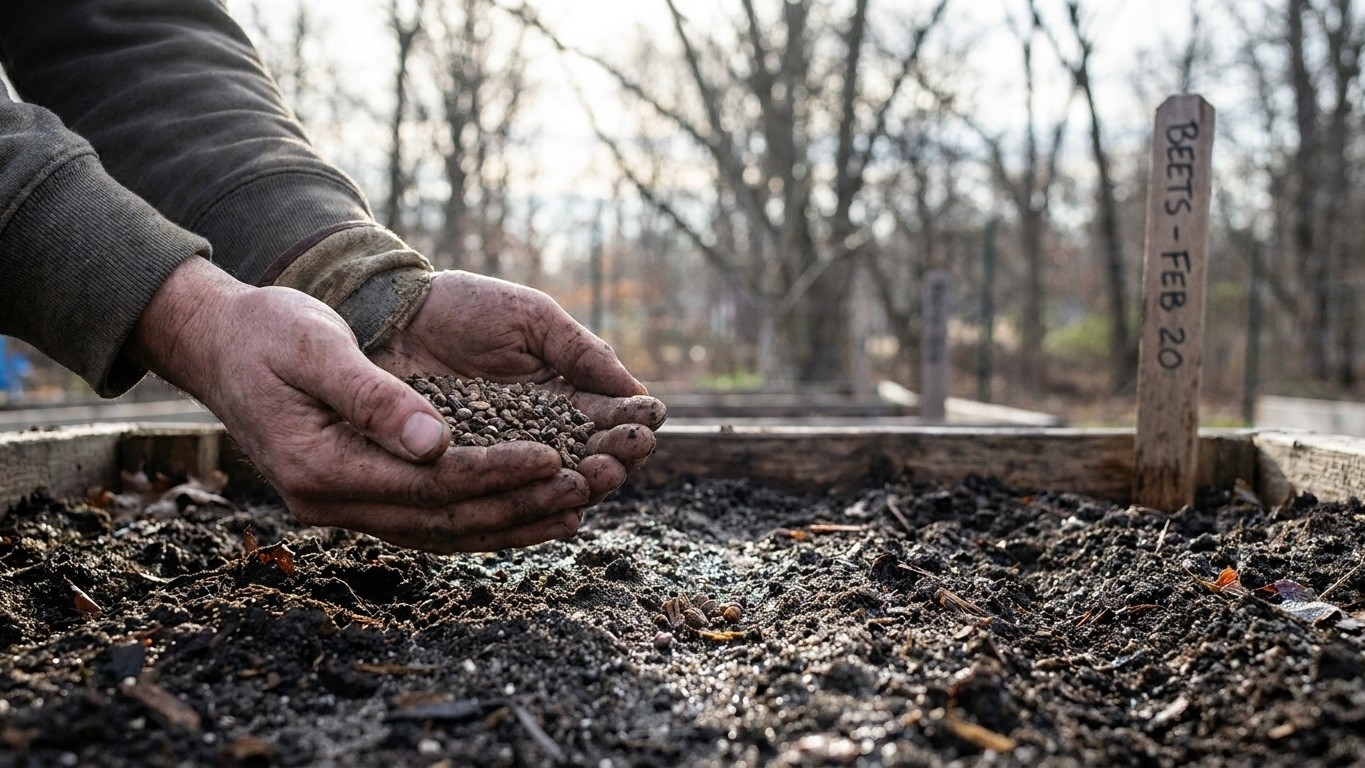

The straightforward answer: sow beet seed directly in the ground two to three weeks before your local last frost date. In the Denver area, that frost date falls between May 1 and May 11, which puts seeding in mid-to-late April for most of the plains. But that window only holds if the ground and the summer ahead cooperate, and in Colorado neither is a given.
The short answer
Start with the dirt itself. USDA’s representative soil for Colorado is the Seitz series, an Alfisol, the kind of forest soil that holds nutrients reasonably well without being especially rich. The surface runs slightly acid at a pH near 5.6, and the texture sits in loam-to-silt territory: 42 percent sand, 21 percent clay, 37 percent silt. Drainage is classified as well drained. That combination matters for beets, which want deep, sandy, well-drained ground loaded with organic matter. Seitz gets the drainage right but falls short on sand, meaning a garden bed that mirrors this profile will hold moisture a bit longer and pack down a bit more than a beet root prefers as it pushes through the soil.
One number needs a caveat before you use it for anything. The organic matter figure for this series runs about 70 percent at the surface, and that is not a typo you should aim for in a raised bed. A figure that high in a mapped soil survey almost always means the surface layer sampled was a natural organic layer, forest litter or a similar buildup, not a cultivated garden bed. Utah State University Extension, the authority behind the beet growing guidance used throughout this cluster, recommends amending with no more than 1 inch of composted organic matter per 100 square feet. That’s the number to work from, not the survey figure.
On heat, this page doesn’t have a published day-count of how often the reference city crosses 90 F, so that specific figure isn’t offered here. What is documented is the threshold that actually threatens the crop: once temperatures climb above 85 F and the plant is also short on water, the root turns woody. Colorado’s high plains reach that mark repeatedly through the summer, which is exactly why the sowing date and the first six weeks of watering carry so much weight in this state.
None of this is a diagnosis for your own yard. Colorado spans hundreds of distinct soil series, and the Seitz profile is simply the one USDA lists as representative of the state as a whole. A backyard on decomposed granite in the foothills, a plot on river-bottom silt, or any ground a builder has scraped and refilled will behave nothing like the numbers above. Treat this section as a starting point for how the region’s soil tends to hold or shed water, and pull a soil test for the number that actually applies to your bed.
The six weeks that decide it here
Sowing two to three weeks ahead of the May 1 to May 11 frost window means the first six weeks of a beet’s life, the seedling stage where its future is largely written, run through mid-April into early June across most of the state. That stretch is when the bolting decision gets made, and it happens quietly. Beets that dry out early don’t wilt and die. They flower prematurely instead, a response called bolting, and once a beet bolts the root stops bulking up. Utah State University Extension is specific on this point: water stress during those first six weeks is the trigger, full stop.
Colorado’s spring on the plains tends to swing rather than settle. Dry, windy stretches with low humidity are common in April and May, punctuated by sudden cold snaps or late-season snow that can arrive well after the soil has warmed enough to work. That swing is the risk profile that matters here. A gardener who sows on schedule but then lets a dry windy week in late April go unwatered has already set the bolting clock running, even though nothing above ground looks wrong yet. The plains climate doesn’t punish beets with a single hard freeze so much as it punishes inattentive watering during a stretch that looks, from the porch, like perfectly pleasant spring weather.
This is also why the frost date itself needs a caveat. NOAA’s 1991-2020 climate normals put the last spring freeze probability for the Denver-area station in the May 1 to May 11 band, but Denver sits at 5,280 feet on the plains. Mountain towns run dramatically shorter seasons, with frost possible into July in some years, and the western slope runs on its own separate pattern entirely. If you garden outside the Front Range corridor, treat the date as a reference point, not your planting calendar.
What goes wrong here
- Bolting from a dry start. A dry, windy stretch in the first six weeks after sowing pushes beets into premature flowering before the root has bulked up. The remedy is consistent moisture through that window specifically, not just watering whenever it’s convenient; a soaker hose on a timer through April and May does more good here than any fertilizer.
- Woody roots from summer heat. Once temperatures pass 85 F and the plant is also short on water, the root turns fibrous and tough. This is a separate failure from bolting, tied to later-season heat rather than early-season dryness, and the fix is mulch plus steady watering through the hot stretch, not a change to the sowing date.
- Heavier-than-expected soil slowing root growth. Because the state’s representative soil runs to loam and silt rather than true sand, many Colorado beds hold water and compact more than a beet root wants. Working in compost, capped at 1 inch per 100 square feet as Utah State recommends, loosens the bed without overloading it with organic matter.
- Acidic or unknown soil pH. The representative soil for the state runs slightly acid at 5.6, but that number describes a mapped forest soil, not your garden. Pull a soil test before amending blind, since guessing at pH swings can do more harm than the acidity itself.
- Sowing by the calendar instead of the ground. The May 1 to May 11 frost window applies to the Denver-area station. Gardeners in the mountains or on the western slope who use that date without adjusting for their own elevation risk sowing into a frost that hasn’t finished for their location yet.
Common questions
What month should I sow beet seeds in Colorado?
For the Denver area, that means sowing roughly two to three weeks before the May 1 to May 11 last frost date, which lands most seeding in mid-to-late April. Mountain and western slope gardeners should adjust later, since their frost season runs longer.
Do beets need to be started as transplants in Colorado?
No. Beets are sown directly in the ground, and any harvest timeline you see for the crop counts days from that direct seeding, not from a transplant date.
How much should I water beets after sowing?
Keep the bed consistently moist for the first six weeks after sowing to avoid bolting, then continue steady watering through summer heat above 85 F to prevent the roots from turning woody. These are two different risks at two different points in the season, and both call for the same basic discipline: don’t let the bed dry out.
Is Colorado’s soil good for growing beets?
The state’s representative soil, the Seitz series, is well drained but runs to loam and silt rather than the deep sandy ground beets prefer, and it tests slightly acid at the surface. That’s a statewide reference point only; a soil test of your own bed will tell you what you’re actually working with.