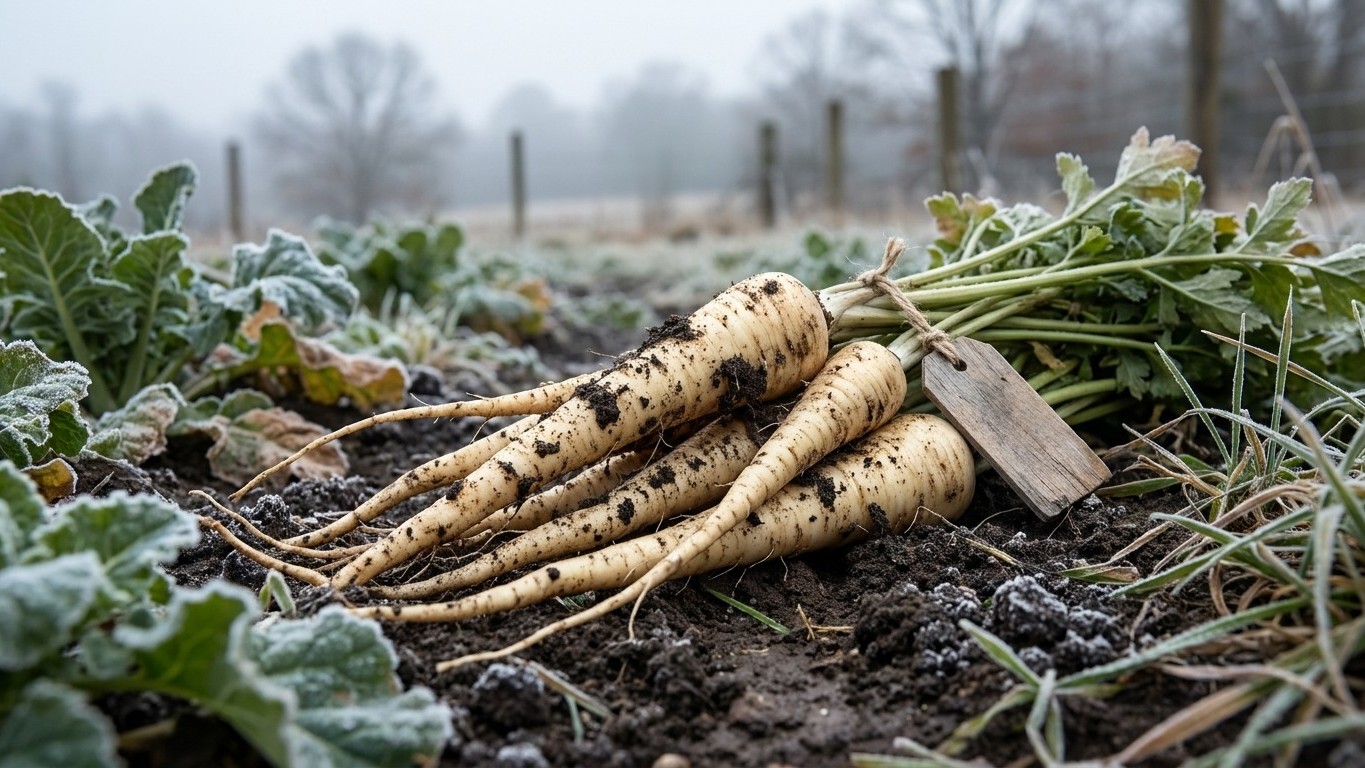

Yes, parsnips will sweeten in Colorado, at least along the Front Range where Denver’s climate data applies. The region delivers a genuinely cold winter, with the coldest month averaging a minimum of 18.4°F, more than enough freezing exposure to turn stored starch into sugar. The real question isn’t whether the cold shows up. It’s whether the growing season gives the root enough time to size up before that cold arrives.
The short answer
Sweetening in parsnips has nothing to do with what hardiness zone a map assigns to your yard. It comes from direct exposure to repeated frost, the kind that chills the root enough to trigger a starch-to-sugar conversion. A zone number tells you what survives winter. It tells you nothing about whether a vegetable actually experiences the frosty weeks it needs.
Denver’s coldest month averages a minimum of 18.4°F, based on NOAA’s 1991-2020 climate normals for the reference station there. That’s not a record low or a one-night dip. It’s the average nightly floor across the coldest month of the year, which means freezing temperatures aren’t an occasional event here. They’re the norm for weeks at a stretch. For a root vegetable that needs sustained cold to convert starch into sugar, that’s exactly the kind of exposure that does the job.
So a parsnip grown along Colorado’s Front Range, in a spot resembling Denver’s climate, will do more than just grow. Left in the ground through the first hard frosts of fall and into the start of winter, it has every opportunity to sweeten the way the crop is supposed to. That’s a meaningfully different outcome than what happens in a mild-winter region, where a parsnip can reach full size and still taste flat, starchy, and unremarkable because it never got the cold snap it needed.
Worth being clear about the caveat here, too. This 18.4°F figure comes from a single reference station on the Denver plains, at roughly 5,280 feet. Colorado is not one climate. Mountain towns can see frost in July and carry a much shorter, colder season overall. The western slope runs on its own pattern entirely. If you’re gardening outside the Front Range, treat the Denver figures as a reference point, not a guarantee for your particular yard. But for the plains climate this data represents, the answer holds: the winters here are cold enough, and long enough, for parsnips to genuinely sweeten, not just survive.
Does the season fit?
Parsnips are sown directly in the ground, not transplanted, and they need 100 to 120 days from seeding to reach a harvestable root, according to Utah State University Extension. Lining that requirement up against Denver’s frost calendar shows how the math actually plays out.
- Start with the last spring frost window, which runs from May 1 to May 11 based on NOAA’s 32°F freeze probability data. Parsnip seed should go into the ground 2 to 3 weeks before that window opens, which lands sowing in the mid-to-late April range.
- Factor in germination before counting maturity days. Parsnip seed is notoriously slow, taking 14 to 21 days just to sprout. Don’t assume a bare patch of soil three weeks after sowing means the seed failed. It’s often just doing what parsnip seed does.
- Once germinated, the clock on the 100 to 120 day maturity window is already running from the original seeding date, not from when the seedlings emerge. A mid-to-late April sowing puts the 100-day mark around late July, and the 120-day mark around mid-August.
- Compare that maturity window against the first fall frost, which arrives between September 30 and October 12 on the Front Range. Roots reach mature size somewhere between six and ten weeks before that first frost even shows up.
- That gap is the buffer. It means a late sowing, a slow germination stretch, or a cool spring that delays growth still leaves enough runway to reach harvestable size before frost season begins.
- Once the first frosts do arrive, parsnips don’t need to come out of the ground right away. Left in place through the early cold snaps and into the start of winter, they sit through exactly the kind of sustained chill that Denver’s coldest-month average of 18.4°F represents, which is what finishes the sweetening process.
Put together, the season here doesn’t just fit. It fits with room to spare, which is unusual for a vegetable that takes this long to mature and still needs weeks of cold afterward to taste right.
What goes wrong here
- Forked or split roots from heavy or stony ground. Front Range soil often runs clay-heavy or rocky, and a parsnip root pushing through compacted or obstructed soil will fork around whatever it hits instead of growing straight. Utah State University Extension recommends deep sandy soil for parsnips, and where that’s not naturally available, double digging the bed to break up compaction before sowing gives the root a clear path down.
- Forked roots from overwatering. This is a separate cause from soil texture, and it’s easy to conflate the two. Too much water, applied too often, encourages the root to branch rather than grow as one straight taproot. The fix is consistent, moderate moisture rather than heavy, frequent watering, especially once the root system is established.
- A season that runs out before the root matures. This isn’t a Denver-plains problem given the buffer described above, but it’s a real risk in Colorado’s mountain towns and on parts of the western slope, where frost can arrive in July and the growing window is far shorter. Gardeners outside the Front Range plains should check local frost timing rather than assume Denver’s calendar applies, and may need to sow earlier or choose a shorter-season approach.
- A winter too mild to finish the sweetening. This isn’t the Front Range’s problem either, given a coldest-month average minimum of 18.4°F. But it’s worth naming as a general failure mode: in a region where winter stays mild, a parsnip can grow a perfectly normal root that never converts its starch to sugar, because the exposure that triggers sweetening simply doesn’t happen. That’s a climate limitation, not a growing mistake, and no amount of soil prep or watering discipline fixes it.
Common questions
Can I harvest parsnips after the ground freezes?
Once the ground freezes hard, digging roots out becomes difficult regardless of how sweet they’ve gotten. A layer of mulch over the bed once frost arrives helps keep the soil workable longer, giving you a wider window to dig roots as needed through the early cold weeks.
Why hasn’t my parsnip seed sprouted after two weeks?
That’s normal. Parsnip seed germinates slowly, typically taking 14 to 21 days. Resist the urge to dig up the row and re-sow before that window has passed.
Does the sweetening happen while the root is still growing, or only after frost?
The starch-to-sugar conversion is triggered specifically by frost exposure. A root can reach full size in warm weather and still taste starchy until it’s been through several weeks of cold, which is why leaving mature roots in the ground through early frosts matters more than rushing to harvest.
Does soil type matter as much as climate for parsnips?
Both matter, but they solve different problems. Soil determines whether the root grows straight or forks. Climate, specifically sustained frost exposure, determines whether the root tastes sweet once it’s grown. Getting one right doesn’t compensate for getting the other wrong.