
By October, Denver’s first fall frost has either just landed or is about to, based on the September 30 to October 12 window recorded at the Denver station. That single fact reshapes the whole month: this isn’t a planting month for anything tender. It’s garlic, bulbs, cleanup, and protecting what’s already in the ground before winter settles in across the state’s 3b-7b range.
What goes in the ground in October

The calendar says fall. The soil, at Denver’s elevation of 5,280 feet, says something closer to the season’s last exit ramp. With first frost falling anywhere from September 30 to October 12 according to NOAA’s 1991-2020 normals, most of what goes into the ground this month isn’t there to grow this season. It’s there to root quietly and wait.
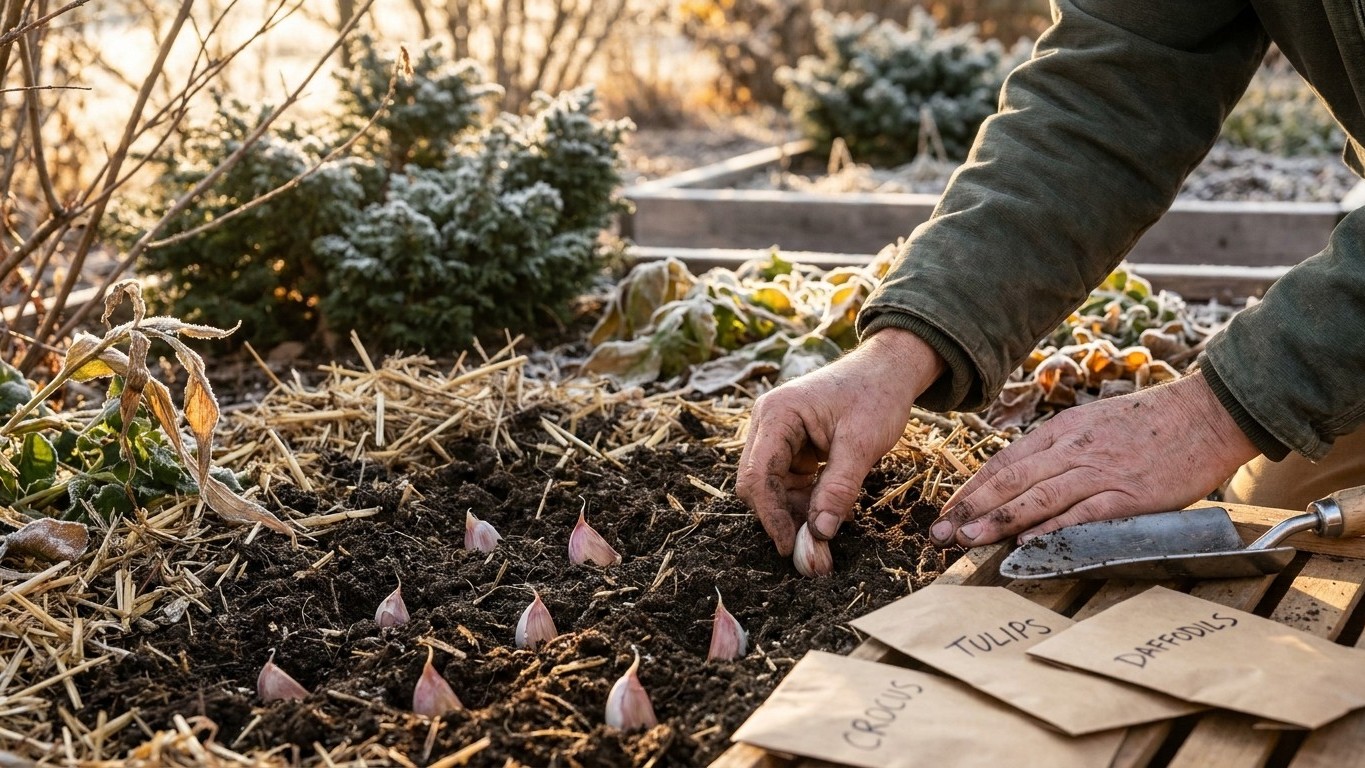
Garlic and shallots are the headline crop. Both go in four to six weeks before the ground freezes solid, giving the cloves time to send down roots without pushing up green growth that a hard freeze would just kill. Plant them too early and you get premature top growth; too late and the roots never establish before the soil locks up. Split the bulbs into individual cloves, point end up, and cover with a few inches of mulch once the surface starts to firm.
Spring-flowering bulbs follow the same logic. Tulips, daffodils, crocus and alliums need a cold period to bloom properly, and October is the traditional window for tucking them in before the ground becomes unworkable. Bare-root trees and shrubs can also go in during this stretch in the warmer pockets of the state’s hardiness range, since dormant roots establish with far less transplant shock than a spring planting into already-warming soil.
What doesn’t belong in the ground now is anything that needs to grow before frost. Direct-sowing lettuce or spinach for a harvest this season is a losing bet once the first freeze window has arrived. If you’re set on hardy greens, a cold frame or low tunnel changes the math, since it buys back several weeks of soil warmth. And remember the caution built into every one of these dates: a mountain town at 8,000 feet or higher may have already seen its first freeze in July, while a warmer western slope valley runs its own separate calendar entirely.
What to start under cover
There isn’t much new to start for outdoor transplant this month, and pretending otherwise sets a gardener up for frustration. Once you’re inside the first fall frost window, counting backward from that date for a new crop of transplants doesn’t leave enough runway to get anything to a harvestable size before growth stalls.
Where cover still earns its keep is extending what’s already established. Greens sown under a cold frame or low tunnel in late summer can keep producing well past the open-garden frost date, since the covering can hold soil temperatures several degrees warmer than open air on a clear, cold night. If you have young kale, spinach, or mâche already growing, covering them now rather than starting anything new is the higher-value move.
Indoors, this is a reasonable month to start a windowsill herb pot (parsley, chives, thyme) purely for kitchen use over the coming months, since these don’t need to reach outdoor transplant size on any deadline. It’s also a fine time to pot up any tender potted plants that summered outside and need to come in before nighttime temperatures drop further.
The two failure modes to watch for both come from misjudging the calendar. Starting anything meant for spring transplant too early means leggy, rootbound seedlings sitting on a windowsill for months with nowhere to go. Starting too late, on the other hand, mostly applies to gardeners hoping to squeeze one more outdoor crop past the frost window. Given Denver’s first freeze arriving by October 12 at the latest in a typical year, that gamble rarely pays off without covered protection already in place.
What is ready to pick
The first freeze is a harvest deadline as much as a weather event. Anything tender still on the vine when temperatures drop into the low 30s needs to come in first. Tomatoes, peppers, summer squash, and beans should all be picked or the plants covered before a hard freeze, since a single night below freezing turns a tomato from a ripening fruit into mush.
Winter squash and pumpkins are the opposite story. These should already be off the vine and curing in a warm, dry spot for a week or two before storage, a step that toughens the skin and extends how long they’ll keep. Check that the stem is fully dry and the rind resists a fingernail before calling a squash cured.
Root crops like carrots, beets, and potatoes tolerate light frost better than most vegetables and can often stay in the ground a bit longer under a layer of mulch, but a full harvest should happen before the ground freezes hard enough to trap them. Brassicas are the real exception to the frost-fear rule: kale, Brussels sprouts, and cabbage actually sweeten after a light frost, since the cold triggers the plant to convert starches into sugars.
If your garden already sits past frost, don’t assume the season is over for the kitchen. Anything under a cold frame keeps producing, sprouts and microgreens grow year-round indoors on a windowsill, and it’s worth pulling stored onions, potatoes, and squash from the pantry now to check for soft spots before one bad one spreads rot to the rest of the bin.
The jobs that matter this month
Protecting what stays in the ground
Mulching perennials, strawberry beds, and newly planted garlic should happen once the soil starts to cool but before it freezes solid, since mulch applied too early can trap warmth and encourage the wrong kind of growth. A four to six inch layer of straw or shredded leaves is enough to buffer roots against the freeze-thaw cycles that heave plants out of the ground over winter.
Deep watering before the ground locks up matters more than most gardeners expect. Colorado’s fall air is dry, and trees and shrubs going into winter with parched roots are far more likely to show dieback in spring. A slow, deep soak around the root zone of trees, especially newly planted ones, before a hard freeze sets in is one of the cheapest insurance policies available this month.
Shutting down for the season
Draining and disconnecting hoses, irrigation lines, and outdoor spigots before the first hard freeze prevents cracked pipes and split hose fittings, a repair bill that shows up every spring in this climate for anyone who skips the step. Pull frost-killed annuals and diseased plant debris out of beds rather than composting them in place, since leaving blighted material over winter just gives next year’s problems a head start.
This is also the window for dormant pruning prep, though the heaviest cuts on fruit trees usually wait for full dormancy later in the season. Turning compost, sharpening and oiling tools before they sit unused, and ordering seed for next season while the good varieties are still in stock are all jobs that cost nothing to do now and cost real money or time later if skipped. A soil test taken this month gives results in time to plan amendments before spring planting.
What not to do in October
The classic mistake this month is trusting a warm afternoon. Colorado’s fall temperature swings are wide enough that a 70-degree day can be followed by a hard freeze that same night, and gardeners who read the daytime warmth as a sign the season has more room left often lose a full bed of tender crops overnight. Watch the forecast low, not the afternoon high.
Leaving hoses, drip lines, or outdoor faucets full of water going into the first freeze is a mistake that shows up as a cracked fitting or split pipe the following spring. Drain and disconnect everything before the first hard freeze rather than after.
Cutting off watering the moment nights turn cool is another common misstep. Colorado’s fall air draws moisture out of soil fast, and trees and shrubs that go into winter dry are far more prone to root damage and dieback, even though the plant looks fine going dormant. Keep watering deeply until the ground actually freezes.
Finally, this is not the month to feed nitrogen to trees, shrubs, or lawns. Nitrogen pushes soft new growth that a freeze will kill outright, wasting the plant’s stored energy right when it should be shutting down for dormancy. If a fall feeding is warranted at all, it should lean toward phosphorus and potassium, applied earlier in the season, not now.
Checking this against your own county
Every date in this article comes from a single measuring point, and Colorado’s terrain makes that a genuine limitation, not a footnote. A mountain town can freeze in July while a warmer valley on the western slope is still weeks from its first frost. Elevation alone can shift these windows by a month or more within the same state.
Treat everything here as a starting point, then check it against your own county through the Colorado State University Extension, which publishes local planting guidance calibrated to specific regions rather than a single statewide date.
Common questions
Is it too late to plant garlic in October in Colorado?
Not usually. Garlic is meant to go in four to six weeks before the ground freezes solid, and October sits right in that window for most of the state’s lower elevations. Once the soil becomes unworkable, though, the window has closed for the season.
Can I still plant vegetables outdoors in October?
New vegetable plantings meant to mature this season generally don’t have enough time left once the first fall frost window (September 30 to October 12 at Denver) has arrived. A cold frame or low tunnel can extend the life of existing hardy greens, but starting new tender crops outdoors is not a reasonable bet.
Do I need to cover my plants if frost is forecast?
Tender crops like tomatoes and peppers need covering or harvesting before any forecast low near or below freezing. Hardy brassicas like kale and Brussels sprouts don’t need protection and often taste better after a light frost.
Why does my area’s frost date seem different from what’s listed here?
Because these figures come from one Denver-area station, and Colorado’s elevation changes are dramatic enough to shift frost timing by weeks within short distances. Mountain and western slope locations should check county-level data through CSU Extension rather than relying on a single statewide figure.