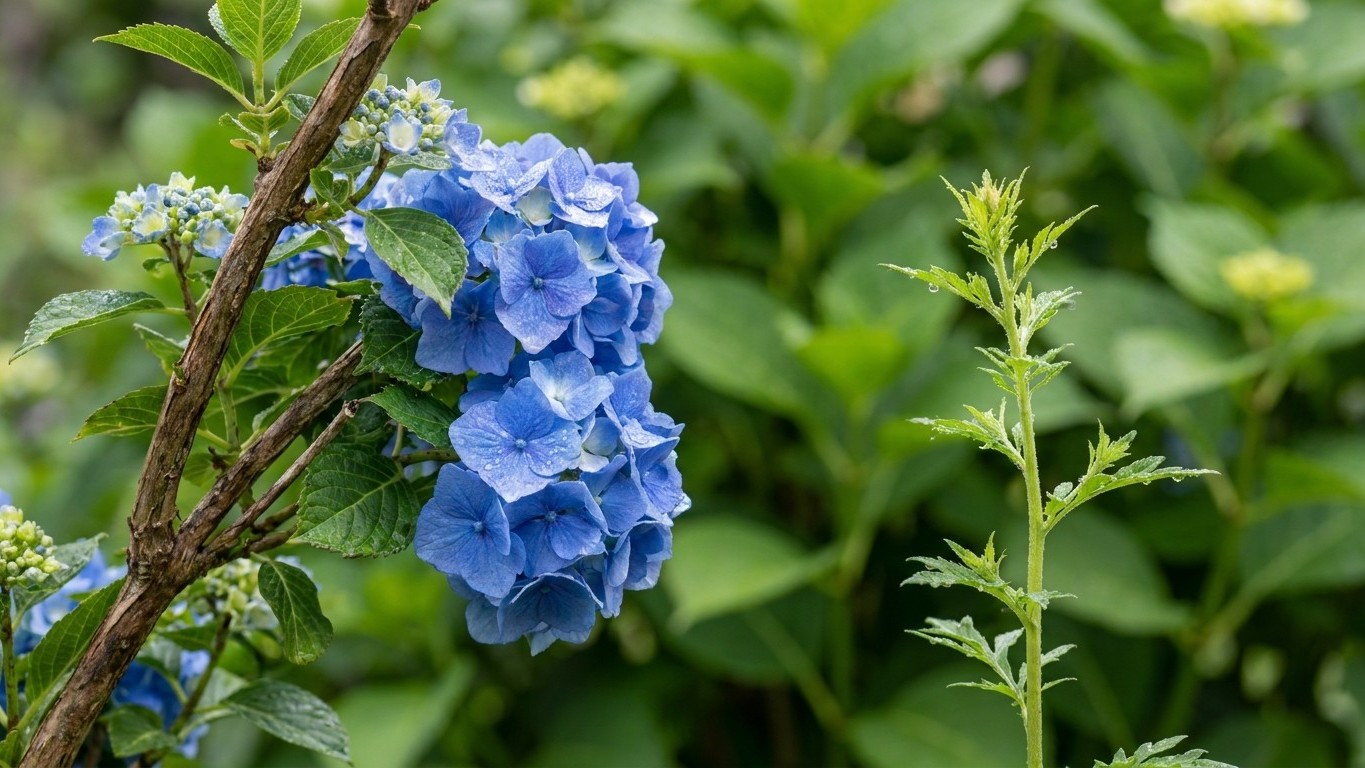

Prune hydrangeas in Connecticut by type, not by the calendar month. Bigleaf, mountain and oakleaf hydrangeas set next year’s flower buds on old wood, so they get trimmed in the weeks right after they bloom. Panicle and smooth hydrangeas flower on the current season’s growth, so they get cut in late winter or very early spring. Make the wrong cut at the wrong time and you lose a whole summer of flowers, not just a few stems.
What this comes down to in Connecticut
The state’s pruning calendar hangs on two frost windows. At Bridgeport, the reference city, the last spring freeze falls between April 2 and April 12, and the first fall freeze between October 28 and November 10 (NOAA NCEI Climate Normals, 32F freeze probabilities in the 30-70% band). New-wood types get cut before the spring window closes, and old-wood types get cut well ahead of the fall one.
The reason is when the flower buds form. A bigleaf hydrangea sets its buds in late summer and carries them through winter on stems that look like bare sticks. Cut those stems in fall, winter or spring and the buds go into the brush pile. A panicle hydrangea does the reverse: it grows new stems each spring and flowers at their tips, so cutting it while dormant costs nothing and often produces stronger stems.
Old-wood hydrangeas: right after the flowers fade
This group includes bigleaf (the mophead and lacecap types), mountain and oakleaf hydrangeas. Prune them once the blooms start to brown, usually in summer, and keep it light. Remove spent flower heads, take out dead or crossing stems, and cut a few of the oldest canes to the ground to keep the shrub open. Skip the hedge shears.
New-wood hydrangeas: before spring growth
Panicle types like ‘Limelight’ and smooth types like ‘Annabelle’ flower on new wood. Cut them in late winter or earliest spring, before buds swell. Panicles can lose up to about a third of their height to keep a strong framework. Smooth hydrangeas tolerate a harder cut, down to roughly 12 inches, though a short woody framework holds heavy flower heads better than bare ground-level stubs.
| Type | Flowers on | Best pruning window |
|---|---|---|
| Bigleaf and mountain | Old wood (some rebloomers also on new) | Right after the first flush fades |
| Oakleaf | Old wood | Right after flowering, minimal cutting |
| Panicle | New wood | Late winter to early spring, while dormant |
| Smooth | New wood | Late winter to early spring, while dormant |
Working it out for your own garden
No official source publishes a pruning date for Connecticut hydrangeas, and the frost data above says when freezes happen, not when to cut. What follows is a method built on those windows, so it still works after a move or in a cold year.
Step one: find out which kind you have
Check the plant tag first. If it is long gone, look at the flower. Round mopheads or flat lacecaps on a shrub with glossy, toothed leaves point to bigleaf. Big lobed leaves like an oak’s mean oakleaf. Cone-shaped flower clusters mean panicle, and big white globes that flop after rain usually mean smooth. If you still can’t tell, leave the plant alone for one full season and note where the flowers form. A shrub that blooms from old stems and is left unpruned loses nothing by waiting.
Step two: count from the frost window
For a new-wood hydrangea, work backward from the spring window. Take April 2 to April 12 and subtract about three weeks, which gives roughly March 12 to March 22 at Bridgeport. That is a working assumption, not a published figure. It puts the cut after the harshest cold and before the buds swell. Inland, where spring freezes linger, the same subtraction lands later on the calendar.
For an old-wood hydrangea, work back from the fall window instead. Take October 28 to November 10 and assume the shrub needs about twelve weeks after pruning to regrow and set buds. The answer is roughly August 5 to August 18 at Bridgeport. Treat that as a hard stop, and better to be done in July.
Step three: test the end result
Take ‘Limelight’ first. Cut it in the March window and the new stems have the whole season to grow and flower. It finishes comfortably. Now take a bigleaf hydrangea that blooms on old wood and give it that same March cut. The buds formed the previous August are gone, and no amount of care brings them back. For a plant pruned in September, the clock has run out. Same shears, same garden, different outcome.
In spring, scratch a stem with a thumbnail. Green underneath means alive. Tan or brown and brittle means dead and safe to remove. Old-wood types leaf out late, so a stick that looks dead in April is often just slow.
What changes across the state
Bridgeport sits on Long Island Sound, and the water softens both ends of the season. It is the mildest part of Connecticut, so every date above reads as an earliest case. Move inland, and especially into the northwest hills, and freezes arrive noticeably earlier in fall and linger later in spring. The USDA Plant Hardiness Zone Map, which rates only the average annual extreme minimum temperature, places Connecticut across zones 6a to 7b, and that spread is the same story in another form.
In practice, a gardener in the shoreline towns can prune new-wood hydrangeas a bit earlier and has a wider summer window for old-wood types. A gardener in the northwest hills should push the late-winter cut later and finish summer pruning sooner, because the buds need time to mature before a cold arrives. Elevation matters too: a hilltop garden and a river-valley garden a few miles apart can differ, since cold air pools in low spots on clear nights.
Cold also affects what survives to be pruned. In the colder inland zones, old-wood bigleafs can die back to the ground in a hard winter, and then there are no flower buds to protect. Our guide on Which Hydrangeas Survive a Connecticut Winter covers that side of the question, and it affects how you read your shrub in April.
The mistakes this state punishes
The common error is the tidy-up. A gardener cleans the beds in fall, or in the first mild weeks of spring, and cuts every hydrangea to the same height. For a panicle that is harmless. For a bigleaf or oakleaf it means no flowers that summer, and many people blame the weather or the soil.
Trusting a warm spell
Connecticut springs swing hard. A run of mild days can tempt you to prune, feed and uncover plants well before the last spring freeze, and Bridgeport’s window runs into the second week of April. Pruning prompts growth, and new shoots on a pruned shrub are tender. Wait until the worst of the cold has passed. Pruning in the dormant period, before buds swell, is the safer plan.
Cutting late in summer
A late-summer trim feels harmless, but it can remove buds already forming or push soft growth that the first fall freeze catches. If you missed the post-bloom window, accept a few stray flower heads and leave the shrub alone until next year.
Expecting pruning to fix other problems
Shy bloom is often a pruning issue, but flower color is not. Pink or blue comes from soil chemistry, not shears, as explained in Why Hydrangeas Are Pink in Connecticut, and How to Turn Them Blue. Do not prune harder hoping for a different shade.
Checking this against your county
The Bridgeport window is a starting point, not an instruction. Your garden may sit weeks away from it in either direction. UConn Extension has county offices that can speak to local conditions, and its horticulture staff can help identify a hydrangea you can’t name. For the broader picture of site, soil and care, go back to our guide to growing hydrangeas in Connecticut. Then adjust the dates above to your own spring and fall.
Common questions
Can I prune hydrangeas in fall in Connecticut?
You can remove clearly dead wood, and panicle and smooth types will not mind a fall cut. But old-wood types such as bigleaf and oakleaf carry their flower buds through winter, so fall cutting removes next summer’s bloom. The first fall freeze at Bridgeport falls between October 28 and November 10, and earlier inland. Leaving stems standing also gives some winter protection.
What if I don’t know which hydrangea I have?
Do not prune it on a guess. Skip the cut for one season, watch where the flowers form, and identify the shrub from its leaves and flower shape. Remove only dead wood in spring after checking with the scratch test. Waiting one year costs less than guessing wrong and losing the blooms.
Why didn’t my hydrangea bloom after I pruned it?
Most often it is an old-wood type that was cut in fall, winter or spring, which removed the buds. Winter dieback can have the same effect, especially on bigleafs in colder inland areas. Frost on opening buds is another cause. If the shrub was healthy and left alone, other factors such as too much shade come into play.
Should I cut hydrangeas to the ground?
Only smooth hydrangeas take that treatment well, and even they hold flower heads better with a short framework left in place. Panicle hydrangeas do best with up to about a third of their height removed. Bigleaf and oakleaf types should not be cut to the ground at all, except for dead stems, or a few of the oldest canes after flowering to renew the plant.