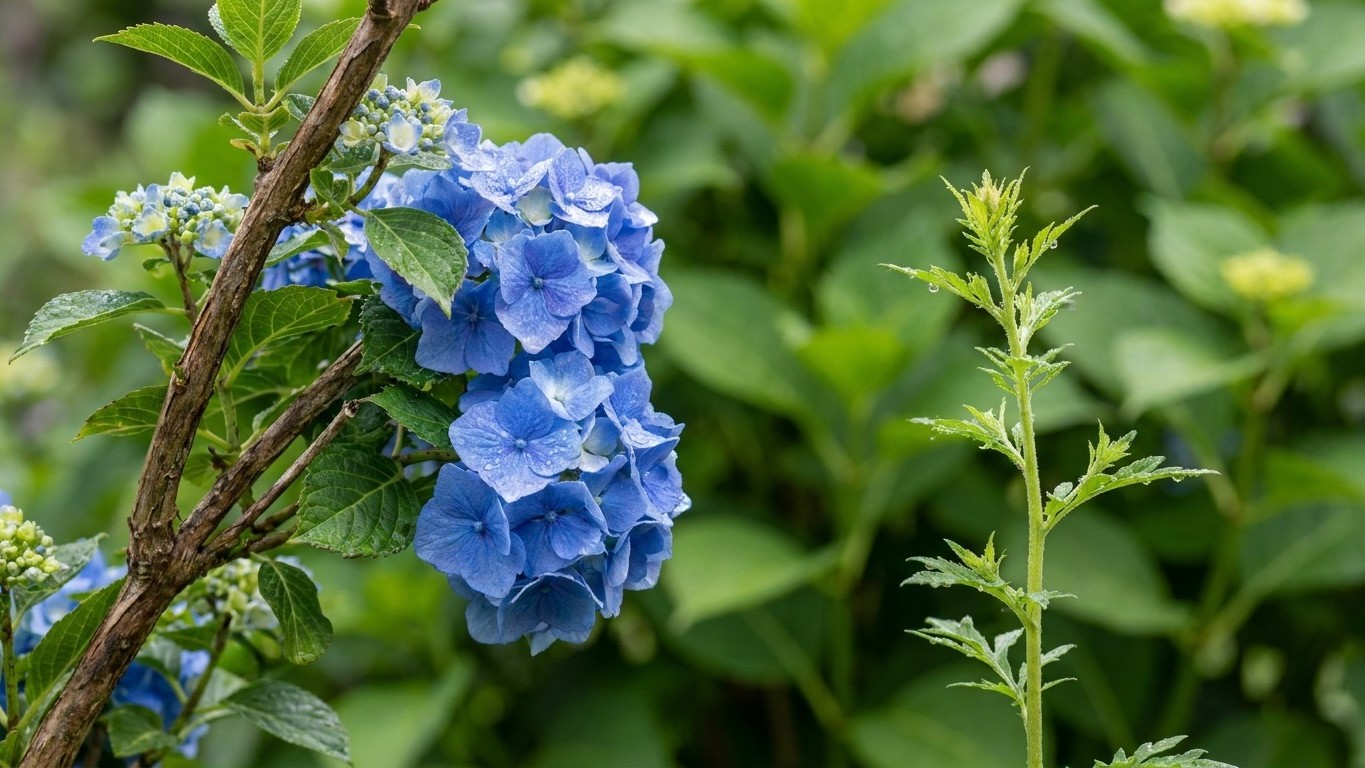

Connecticut gardeners can plant container-grown hydrangeas from mid-spring through late summer, but bloom color and winter survival depend on two things you control directly: soil pH and pruning timing. Bigleaf hydrangeas flower on wood grown the previous year, so a hard winter or a badly timed cut can erase an entire season of blooms before it starts.
When to plant Hydrangeas in Connecticut
NOAA’s 1991-2020 climate normals for the Bridgeport station (USW00094702) put the last spring freeze between April 2 and April 12, and the first fall freeze between October 28 and November 10. Bridgeport sits on Long Island Sound, which makes it the mildest reporting point in the state. Inland counties and the northwest corner run on a different clock entirely: freezes arrive earlier in fall and linger later in spring, sometimes by two to three weeks compared to the coast. If you garden in Litchfield County or the northeastern hills, treat the Bridgeport window as an optimistic guess, not a schedule.
Here’s a detail that surprises new hydrangea growers: starting these shrubs from seed indoors, the way you would tomatoes or marigolds, isn’t the standard path and usually isn’t worth the effort. Seed-grown hydrangeas rarely come true to the parent plant, especially the named cultivars sold at garden centers, and a seedling can take two to three years just to reach transplant size, let alone bloom. Commercial growers propagate hydrangeas from softwood cuttings taken in early summer, not from seed packets. If you want to try it anyway, take a 4 to 6 inch cutting from new growth in June, root it in moist potting mix under indirect light, and expect to nurse it through at least one full winter indoors or in a cold frame before it’s sturdy enough to harden off outside.
For nearly every home gardener, the practical move is buying potted nursery stock and timing the transplant around those frost windows. Spring planting works once the last frost risk has passed, so mid-April along the coast, pushing into early May inland. Count backward from the first fall freeze if you’d rather plant in autumn: roots need roughly six weeks of unfrozen soil to establish before the ground locks up, which puts the fall planting deadline around mid-September for Bridgeport’s date range and earlier still for the northwest hills. Plant later than that and the shrub goes into winter without the root contact it needs to survive.
If you’re moving a cutting or a greenhouse-grown plant outdoors, harden it off over 7 to 10 days first. Set it outside in a sheltered, shaded spot for a couple of hours the first day, then extend the time and sun exposure gradually. Skipping this step is a common reason a seemingly healthy plant collapses within days of transplanting.
Soil and site preparation
Bigleaf hydrangeas do best with morning sun and afternoon shade, especially inland where summer afternoons run hotter than the coast. Panicle hydrangeas tolerate considerably more direct sun, even close to full sun in cooler parts of the state, which makes them the better pick for an open, exposed yard.
Soil texture matters more than most people expect. Hydrangeas want soil that holds moisture without staying soggy, rich in organic matter but draining freely enough that roots don’t sit in standing water after a heavy rain. Heavy clay is the most common problem in Connecticut yards; if water pools in a test hole for more than a few hours after filling it, work in compost or aged manure across the planting area weeks before you dig, not the day of planting. That lead time lets the amendment start integrating with the native soil instead of sitting as an isolated pocket that roots avoid.
If you want a say in bloom color, start the pH conversation early. Aluminum sulfate shifts soil acidic and pushes bigleaf hydrangea blooms toward blue; garden lime raises pH toward pink. Either change is slow, taking a full season or more to show up in the flowers, so apply it weeks to months before you expect blooms, not right before the buds open.
Dig the planting hole twice as wide as the rootball but no deeper, so the crown sits at or slightly above grade. Backfill with the amended native soil, water in thoroughly, then mulch. Spacing depends heavily on which type you’re planting: dwarf bigleaf cultivars can sit 3 feet apart, while a mature panicle hydrangea trained as a small tree needs 6 to 10 feet of clearance to reach its full spread without crowding.
Varieties that suit Connecticut
The trait that matters most here isn’t days to maturity, it’s whether a variety blooms on old wood or new wood, because that single fact determines both pruning timing and how much winter risk you’re taking on.
Bigleaf and mountain hydrangeas: bloom risk in exchange for color
Bigleaf hydrangea (Hydrangea macrophylla), the classic mophead and lacecap types, sets its flower buds on the previous year’s growth. A cold snap that damages those buds over winter, or a late-spring freeze after growth has already started, can mean a bloomless summer even though the plant itself survives fine. Reblooming types sold under names like the Endless Summer series flower on both old and new wood, which gives the plant a second chance if winter takes out the old-wood buds. Mountain hydrangea (H. serrata) is a close relative with generally hardier flower buds than standard bigleaf types and the same pH-driven color response, making it a reasonable substitute in colder inland spots.
Panicle and smooth hydrangeas: the reliable bloomers
Panicle hydrangea (H. paniculata), including widely sold cultivars like Limelight, blooms on new wood grown each spring, so winter bud damage isn’t a concern the way it is with bigleaf types. It’s also considerably more cold-hardy and tolerates more sun, which makes it a strong choice for an exposed yard or a colder inland town. Smooth hydrangea (H. arborescens), sold widely as Annabelle, is native to the eastern United States, blooms on new wood, and shrugs off harsh winters without losing its flowering ability.
Oakleaf hydrangea for structure
Oakleaf hydrangea (H. quercifolia) blooms on old wood like bigleaf types, so it carries some of the same winter-bud risk, but it earns its spot in the yard through deep red-bronze fall foliage and peeling bark that adds winter interest after the leaves drop.
What to plant alongside
Hydrangeas share shade and moisture needs with a familiar group of woodland perennials, which makes bed planning straightforward. Hostas, ferns, astilbe, and heuchera all want the same dappled light and consistent moisture, and none of them compete aggressively for the same root zone once established. Evergreens like boxwood planted nearby give the bed winter structure once the hydrangea has dropped its leaves and cut back its old canes.
Pollinators are a more nuanced story than garden lore suggests. Mophead bigleaf hydrangeas produce mostly sterile flowers that offer little to bees, so if drawing pollinators matters to you, plant lacecap hydrangeas instead, or add genuinely pollinator-friendly companions like catmint or agastache near a sunnier panicle hydrangea planting.
Competition is worth watching for at the root zone, not just above ground. Planting shallow-rooted annuals or turf grass directly under a hydrangea’s canopy sets up a fight for the same surface moisture the shrub relies on during summer heat, which is one reason mulched, plant-free zones around the base tend to outperform crowded beds. As for the popular claim that marigolds or other companion flowers repel hydrangea pests, that pairing runs on garden folklore rather than documented evidence, and there’s no real reason to plant marigolds specifically for a hydrangea’s benefit.
Black walnut trees are worth avoiding near new plantings out of caution rather than certainty. Some hydrangea species tolerate the juglone that walnut roots release into the soil better than others, but a clear, published tolerance figure for the varieties sold in Connecticut garden centers isn’t available here, so the safer move with a young, newly transplanted shrub is simply to keep it out of a walnut’s root zone until it’s well established.
Watering, feeding and support
A newly planted hydrangea needs consistent moisture through its first full growing season, roughly an inch of water a week between rainfall and irrigation, applied at the base rather than overhead. Wetting the foliage repeatedly is one of the easier ways to invite the fungal leaf problems covered in the next section, so a soaker hose or drip line beats a sprinkler every time.
A 2 to 3 inch layer of organic mulch, pulled back an inch or two from the stems, holds that moisture in and moderates soil temperature swings, which matters both in July heat and through winter freeze-thaw cycles. Feeding stays light-handed: a balanced or phosphorus-leaning fertilizer applied once in early spring is usually enough. Heavy nitrogen feeding pushes the plant toward lush foliage at the expense of flowers, which is the opposite of what most gardeners are chasing.
Support matters more than people expect with the biggest bloomers. Mophead flowers get heavy fast, especially after rain, and can flop the whole stem over; a simple hoop stake set early in the season, before the canes lean, keeps the display upright without the awkward look of propping up an already-fallen plant. Smooth hydrangea (Annabelle types) is notorious for flopping under its own bloom weight, and a grow-through peony ring set in spring solves the problem before it starts.
Pruning timing is the single most consequential habit here, and it splits cleanly by bloom type. Old-wood bloomers, bigleaf and oakleaf hydrangeas, should be pruned right after they finish flowering, because next year’s buds start forming on that same growth within weeks. Prune them in late winter instead and you cut away the very buds you were hoping to see next summer. New-wood bloomers, panicle and smooth hydrangeas, take the opposite approach: prune them in late winter or early spring while dormant, since they’ll grow and set buds on the fresh wood that follows. Smooth hydrangea also sends up new shoots from the base over time; thinning the crowded ones out during that same late-winter pruning keeps the plant from turning into a tangled thicket.
Common problems
The complaint that lands in extension office inboxes most often isn’t a disease at all, it’s a hydrangea that grows fine but simply doesn’t bloom. On old-wood bigleaf and oakleaf types, that’s almost always winter bud damage, either from a genuinely cold winter or from a late freeze that hit buds after they’d already started swelling in spring. It can also come from pruning at the wrong time of year and unknowingly removing the buds that would have opened. There’s no fix for a lost season once the buds are gone, but choosing a reblooming cultivar or a new-wood type like panicle hydrangea sidesteps the problem going forward.
Leaf scorch shows up as brown, crispy edges on leaves exposed to strong afternoon sun combined with dry soil, most common on bigleaf hydrangeas planted in too much direct light. The fix is usually more consistent watering during heat spells and, longer term, choosing a site with afternoon shade for that species.
Powdery mildew appears as a white, dusty coating across leaf surfaces, typically in humid stretches where air doesn’t move freely through a crowded planting. Spacing plants properly at installation and avoiding overhead watering both cut down on how often it shows up. Cercospora leaf spot looks different, brown or purplish spots scattered across the leaf, and it thrives in the same wet-foliage conditions, which is another argument for watering at the soil line.
Yellowing leaves with green veins, known as chlorosis, point to an iron deficiency that’s common in soils with a high pH, often the same soils pushing bigleaf hydrangea blooms toward pink. A short bout of wilting right after transplanting is normal and usually resolves within a week or two of steady watering; wilting that shows up well into an established plant’s life is more often a sign of drought stress or root competition than disease.
Deer are a real threat to hydrangeas across much of Connecticut, particularly in rural and suburban edge properties near woodland. They browse buds and foliage readily, and a single visit can strip a young plant. Fencing or repellent applications timed for spring and fall, when deer pressure typically increases, are the most reliable defenses.
Pests that actually show up in Connecticut
UConn’s Home and Garden Education Center lists striped cucumber beetle, squash vine borer, squash bug, Japanese beetle, lily leaf beetle, four-lined plant bug, cutworms, brown marmorated stink bug, Colorado potato beetle, and allium leafminer as the pests it fields the most calls about from Connecticut home gardeners. Most of that list targets vegetable beds rather than woody ornamentals, so if you’re growing squash, tomatoes, alliums, or lilies alongside your hydrangeas, it’s worth checking those factsheets separately. For the hydrangea bed specifically, three from that list matter.
Japanese beetle is the one to watch most closely. UConn’s tracking shows adults emerging the first week of July and remaining active for two to three months, which lines up with when hydrangea foliage starts showing skeletonized leaves, the tissue between veins chewed away, leaving a lacy skeleton behind. Handpicking beetles into soapy water in the early morning, when they’re sluggish, is the control that actually works over a season; broad insecticide sprays tend to knock down populations only briefly.
Four-lined plant bug shows up on hydrangea and many other perennials in late spring into early summer, ahead of the Japanese beetle wave. Watch for small, round, sunken spots scattered across young leaves, sometimes mistaken for a fungal leaf spot at first glance. The damage is mostly cosmetic on an established shrub, and by the time it’s noticed the insects have often already moved on, so timing an insecticidal soap application right when the spotting first appears is the most effective response.
Brown marmorated stink bug is a generalist feeder that turns up in gardens statewide and will occasionally feed on hydrangea foliage and stems along with a wide range of other plants. It’s rarely the primary driver of hydrangea damage, but if you’re seeing stippled or discolored patches without an obvious other cause, it’s worth checking for. A local extension office or your county’s UConn office can confirm identification if you’re not sure what you’re looking at.
Harvest and end of season
Cutting hydrangea blooms for the vase is best done in the morning when stems are full of water. For fresh arrangements, cut blooms once they’ve matured and feel slightly papery to the touch; flowers cut too young while still soft tend to wilt within a day no matter how much water they’re given. For drying, that same papery, mature bloom is the one to choose, either hung upside down in a dark, airy space or left standing in an inch or two of water in a vase and allowed to dry slowly as the water evaporates.
As the season winds down and the first fall freeze approaches, between October 28 and November 10 along the coast and earlier inland, stop fertilizing by late summer so new growth has time to harden off before cold weather arrives. Soft, actively growing tissue is far more vulnerable to an early freeze than growth that’s had a chance to mature.
Resist the urge to deadhead old-wood bigleaf and oakleaf hydrangeas in fall. The spent flower heads left on the plant through winter provide a small amount of insulation for the buds beneath them, and pruning is better saved for right after next year’s bloom instead. Once the ground has begun to freeze, add a thicker layer of mulch over the root zone for extra insulation, and for bigleaf hydrangeas in exposed or inland sites, consider wrapping the plant in burlap or building a simple leaf-filled cage around it, a practical hedge against the bud damage that costs so many Connecticut gardeners their blooms the following summer.
Local help
Frost dates and soil conditions shift noticeably across Connecticut’s counties, and the state’s cooperative extension service tracks those local variations along with soil testing services that can pinpoint your yard’s actual pH rather than a guess. The UConn Extension office is the right first call for county-specific planting dates and a proper soil test before you commit to a bed.
Common questions
Why did my hydrangea grow all summer but never bloom?
On bigleaf or oakleaf types, this is almost always winter bud damage or pruning at the wrong time, since both bloom on the previous year’s wood. Switching to a reblooming cultivar or a new-wood type like panicle hydrangea removes the risk going forward.
Can I really change my hydrangea’s flower color?
Yes, but only on bigleaf and mountain hydrangeas, and only by shifting soil pH with aluminum sulfate for blue or garden lime for pink. The change takes a full season or more to show up, so start early rather than expecting quick results.
Do I need to protect hydrangeas over a Connecticut winter?
Panicle and smooth hydrangeas generally don’t need it, since they bloom on new wood. Bigleaf and oakleaf types, especially in inland or exposed sites, benefit from extra mulch and a burlap wrap or leaf cage to protect next year’s flower buds.
When is the best time to prune?
It depends entirely on whether the variety blooms on old or new wood. Prune old-wood bloomers right after they finish flowering; prune new-wood bloomers in late winter or early spring while dormant.
Is it better to buy a potted hydrangea or start one from seed?
Buy a potted plant. Seed-grown hydrangeas rarely match the parent variety and can take two to three years to reach a size worth transplanting, while nursery stock lets you plant directly within the spring or fall windows and see results far sooner.