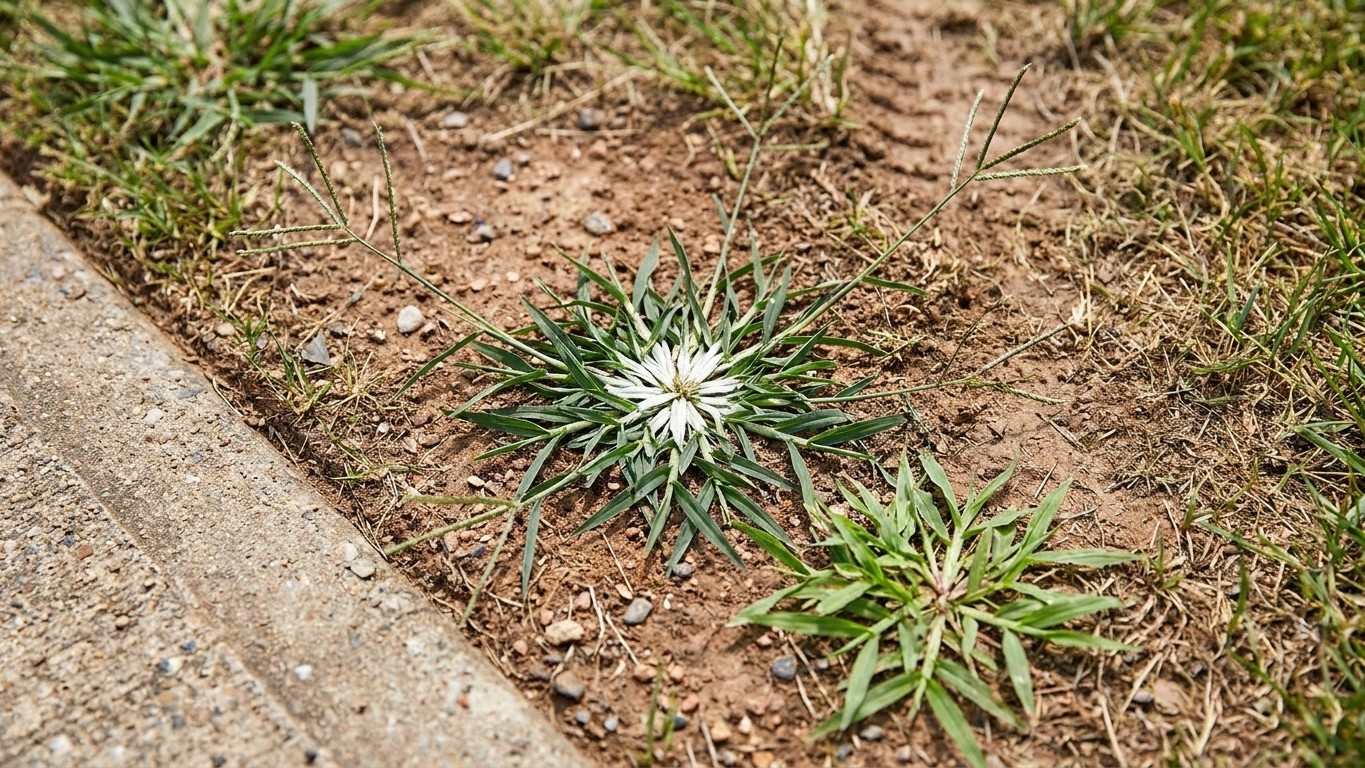

Connecticut lawns do best between 1.5 and 3.5 inches, and the grass in your yard decides where in that range you land. Tall fescue wants the tallest cut, while perennial ryegrass and rough bluegrass tolerate the shortest. Mow a fescue lawn at ryegrass height and it thins out within a season. Set the deck once for your species, raise it when summer heat arrives, and respect the one-third rule from the first mow in spring to the last in fall.
The mowing height for Connecticut lawns
Five cool-season species cover the lawn grasses recommended for the state: tall fescue, fine fescues, Kentucky bluegrass, perennial ryegrass and rough bluegrass. Their ideal heights are not close to each other. Tall fescue belongs at 3 to 3.5 inches. Fine fescues and Kentucky bluegrass sit at 2 to 3 inches. Perennial ryegrass and rough bluegrass are the low-cut pair, at 1.5 to 2.5 inches. These figures sit within the ranges published by land-grant extension programs such as Clemson, Purdue and University of Missouri Extension.
| Grass | Mowing height |
|---|---|
| Tall Fescue | 3 to 3.5 inches |
| Fine Fescues | 2 to 3 inches |
| Kentucky Bluegrass | 2 to 3 inches |
| Perennial Ryegrass | 1.5 to 2.5 inches |
| Rough Bluegrass | 1.5 to 2.5 inches |
The gap matters in both directions. A tall fescue lawn cut at 2 inches loses most of the leaf it needs to feed deep roots, and weeds move into the thin spots. A ryegrass lawn left at 3.5 inches flops over, mats and invites disease in humid weather. Neither mistake shows up in a week. Both show up by August.
Reading a mixed lawn
Most home lawns are blends, and many contain a bit of everything. Mow for the grass that covers the most ground, or pick a height where the ranges overlap. Kentucky bluegrass and fine fescue overlap across 2 to 3 inches. Tall fescue and Kentucky bluegrass meet at 3 inches. Ryegrass with Kentucky bluegrass overlaps between 2 and 2.5 inches. If you cannot tell what you have, 3 inches is the safest single setting for a general-purpose lawn, though it will be a little long for pure ryegrass.
Why warm-season grasses do not hold here
A grass from the other season simply cannot keep a Connecticut lawn looking decent. Warm-season species grow during the hottest months and go dormant, turning tan, at the first frost. At Bridgeport, the mildest part of the state, the first fall frost typically lands between October 28 and November 10 and the last spring frost between April 2 and April 12. Inland and northwest Connecticut freeze earlier in fall and later in spring. A warm-season lawn would spend those long cold stretches brown, and the colder the town, the longer that stretch runs. Cool-season grasses stay green, or green up quickly, in exactly those weeks.
Raising the deck when the heat comes
July is the month to move the deck up. Bring tall fescue to 3.5 inches, fine fescues and Kentucky bluegrass to 3 inches, and perennial ryegrass and rough bluegrass to 2.5 inches. That is the top of each species range, not above it. Taller blades shade the soil and slow evaporation, and cool-season grasses are under real stress when daytime highs reach 90°F.
Connecticut summers can look wet on paper. NOAA’s 1991-2020 climate normals for the Bridgeport station show about 11.1 inches of rain across June, July and August: 3.77 inches in June, 3.32 in July and 3.98 in August, out of 44.1 inches for the year. July is the driest of the three. Those are normals for one coastal station, not a forecast and not a measurement of your yard. A rain shadow, a slope or a paved neighborhood will all shift the number.
Two things decide whether that rain actually reaches your grass. The first is soil. On sandy ground an inch of rain drains through within the day, so a lawn on sand can need water every second day even in a wet summer. Clay holds the same inch for about a week, which keeps roots supplied but can leave the lawn soggy. The second is heat. Days at or above 90°F drive evaporation, and a summer thunderstorm that dumps an inch in twenty minutes mostly runs off instead of soaking in. Three gentle rains of a third of an inch each do far more good than one downpour.
A rain gauge on your own plot settles the question, and so does a straight-sided can set out on the lawn. If it catches less than about an inch in a week, the grass needs a supplement no matter what the regional average says. Keep the deck high through that stretch. A lawn mowed tall holds moisture longer, which is the cheapest drought insurance there is. For a very different situation, see How High to Mow a Lawn in Wyoming, where dry air changes the math.
The one-third rule, and why it is not arbitrary
Never remove more than one third of the blade in a single mowing. Garden writers repeat that line so often it sounds like folklore, but it has a mechanism behind it. Grass blades are the plant’s solar panels. Every cut shrinks the surface collecting energy, and the plant draws on stored reserves to regrow while root growth slows. Take a third and the lawn recovers in days. Take half and it spends a couple of weeks rebuilding leaf instead of roots.
The rule gives you a trigger height for every species. A tall fescue lawn kept at 3.5 inches should be mowed when it reaches about 5.25 inches. Kentucky bluegrass at 3 inches gets cut at 4.5. Perennial ryegrass at 2 inches gets cut at 3, and fine fescue at 2.5 inches at about 3.75. Watch the grass, not the calendar. In a wet June the lawn may need mowing twice a week, while in a dry August it might go ten days.
Skip a week and the lawn overshoots? Do not drop straight to the target height. Cut off a third, wait three or four days, then mow again at the lower setting. It takes two passes, but you avoid the scalped, yellow-brown stubble that follows a single hard cut, and weed seeds do not get the open soil they are waiting for.
Leave the clippings. Short, frequent cuts produce clippings that drop between the blades and break down quickly, returning nutrients to the soil. If you are getting clumps, the grass was too long when you started. The basics of technique, blade sharpness and mowing pattern are covered in Mowing a Lawn.
The first and last cut of the year
Spring: wait for the soil, not the date
At Bridgeport, the last spring freeze falls between April 2 and April 12, based on NOAA NCEI 1991-2020 normals for the 32°F freeze probability in the 30 to 70 percent band. That is the mildest corner of the state. Inland and northwest Connecticut run later, sometimes by weeks, so a neighbor on the shore and a gardener in the hills will not start mowing together.
Start when the lawn has visibly grown and the ground is firm enough that the mower leaves no ruts. Mow at your normal height. The temptation to scalp the first cut, to remove winter’s dead tips, backfires, because spring growth is fast and a lawn cut too short thins out before summer. If the first mow takes off more than a third, split it in two passes.
Fall: keep mowing until the grass stops
Cool-season grasses grow right through autumn, and many keep growing after the first frost. At Bridgeport that frost typically arrives between October 28 and November 10, and earlier in the state’s colder interior. Keep the schedule going until growth stops. Stopping early leaves long grass that mats under leaves and snow.
For the final cut, drop to the low end of your species range, not below it. Tall fescue goes to 3 inches, fine fescues and Kentucky bluegrass to 2 inches, and perennial ryegrass and rough bluegrass to 1.5 inches. Do it in two stages over a couple of weeks so you stay inside the one-third limit. For local timing, UConn Extension is the place to ask. Places with far shorter seasons, such as the one covered in How High to Mow a Lawn in Northwest Territories, make a Connecticut mowing calendar look generous.
Common questions
What height is best if I do not know my grass type?
Mow at 3 inches. It falls within the ranges for tall fescue, fine fescues and Kentucky bluegrass, and it is only slightly high for perennial ryegrass and rough bluegrass.
Can I mow lower for a neater look?
You can, but only within your species range. Cutting a tall fescue lawn to 2 inches, for example, falls outside its 3 to 3.5 inch range and thins the turf over time.
Should I raise the deck in shade?
Staying toward the top of your species range in shaded areas is sensible, because leaf area is how the grass collects what little light it gets. Stay inside the published range for the species.
Is the rainfall figure enough to skip watering?
No. The 11.1 inches across June through August is a Bridgeport normal, and sandy soil, heat and thunderstorm runoff can leave your lawn dry anyway. A rain gauge in your own yard is the check that matters.