
In Connecticut, most gardeners start pepper seed indoors between mid-January and early March, and the exact window comes from working backward from your transplant date: after the last frost, once soil reaches 60 F, minus 8 to 10 weeks of indoor growing time. Coastal gardeners near Long Island Sound lean toward the later end of that range. Inland and northwest Connecticut growers need to start earlier and expect a longer wait before the ground is ready.
The short answer
At the Bridgeport reference station, Connecticut averages 6.2 days a year at or above 90 F, based on NOAA NCEI Climate Normals for 1991 to 2020. That number matters more than it looks. Pepper fruit set stalls when daytime temperatures push past 90 F for even a short stretch, because pollen loses viability and open flowers abort rather than turning into fruit. With only 6.2 days a year averaging that hot at the coast, most Connecticut seasons don’t carry sustained heat stress the way a mid-Atlantic or southern garden would. But those days don’t spread evenly across the calendar. A heat spike that lands during the plant’s flowering window, the stretch when blossoms are opening and fruit is trying to set, can knock a pepper plant into a cycle of dropped blooms even if the rest of the summer stays mild.
The other end of the failure range is cold, not heat, and it’s the one Connecticut growers underestimate. Pepper flowers also Fail to Set Fruit when nights drop below 55 F, according to Utah State University Extension. That threshold isn’t a rare event in a state where river valleys and low-lying inland pockets pool cold air well into late spring and again in early fall. This site tracks the state’s heat load through days above 90 F, but it does not carry summer night minimum temperatures for Connecticut or any other territory. That means there’s no shortcut here for the cool-end risk. A grower in the Litchfield hills or a frost-pocket valley elsewhere in the state needs to watch their own overnight lows directly, ideally with a min-max thermometer left outside through May and June, rather than assuming a date on a calendar or a guess based on how far north they garden. Latitude alone doesn’t tell you what a particular hollow or riverside lot does to nighttime air.
When to start seed here
The math is the same everywhere in Connecticut. Only the local frost date and your own soil readings change from one county to the next. Here’s how to run it for your own address.
- Find your last spring frost date. For Bridgeport, the coastal reference station and the mildest part of the state, NOAA’s 1991-2020 Climate Normals put the 32 F freeze probability window between April 2 and April 12. Inland and northwest Connecticut freeze later in spring than the coast, so if you garden away from Long Island Sound, push your working frost date back by some amount you’ll need to judge from your own local experience or a nearby weather station, since this site doesn’t publish a separate inland figure.
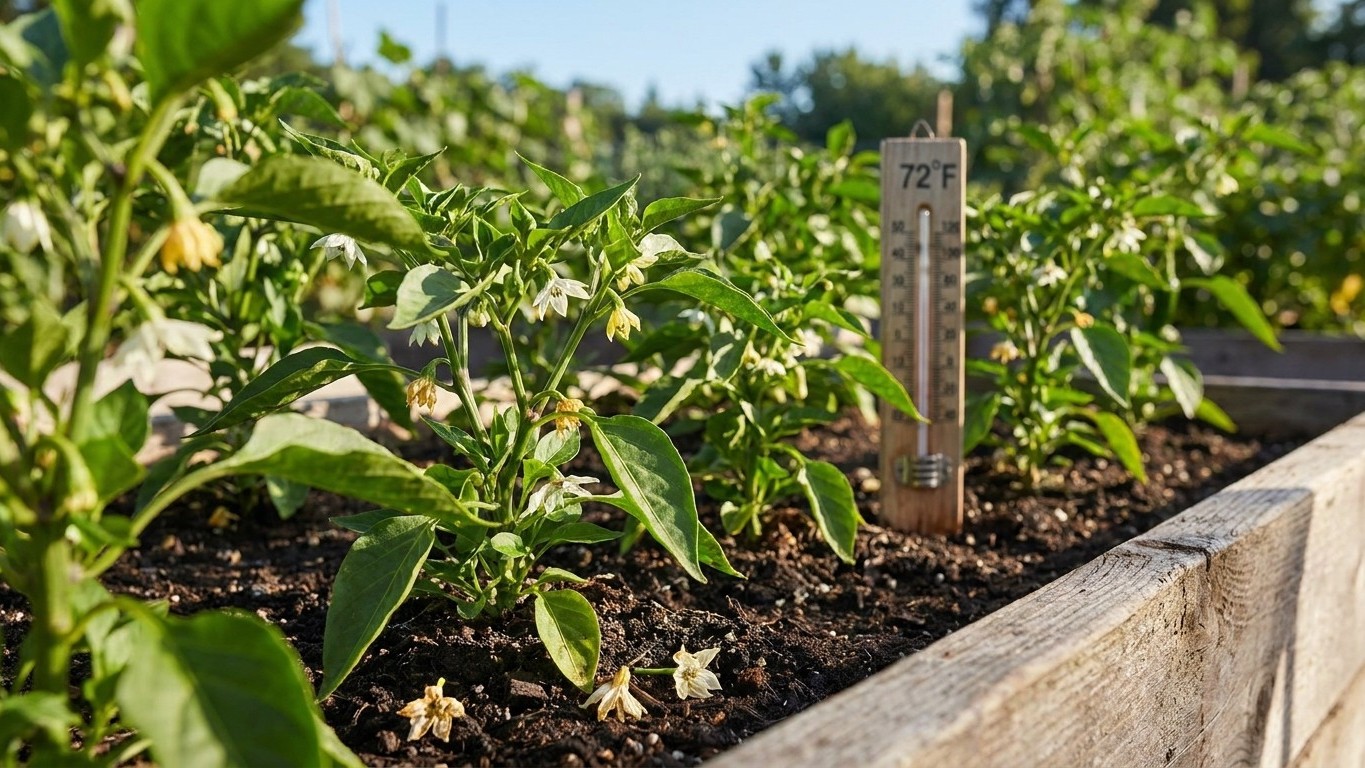
- Don’t transplant on the frost date alone. Peppers need soil at 60 F, not just air free of frost. Soil warms slower than air, so the actual transplant date usually falls somewhat after the last frost, once the ground itself has caught up. A soil thermometer pushed to a few inches deep, checked in the morning over a few consecutive days, is the only reliable way to confirm this. No blanket date for “when Connecticut soil hits 60 F” is published here, because it depends on your soil type, sun exposure, and whether the bed is bare or mulched.
- Count back 8 to 10 weeks from your real transplant date. If you use the coastal frost window itself as a rough anchor, April 2 minus 10 weeks lands near January 22, and April 12 minus 8 weeks lands near February 15. That gives a starting range of late January into mid-February for gardeners near the coast who transplant right around frost-out. If you wait for soil to actually reach 60 F, which typically comes some weeks after the air frost date, your seed-starting window shifts later by roughly that same gap.
- Adjust for your own ground, not the state average. Inland and northwest Connecticut gardeners, working from a later frost date and slower-warming soil, should plan their seed start correspondingly later than the coastal range above, or push transplant later while keeping the same 8-to-10-week indoor head start.
The point of doing this arithmetic yourself, rather than copying a single date, is that a frost calendar tells you about air temperature, and a pepper plant cares about soil temperature and its own flowering window, not the calendar on your wall.
What goes wrong here
- Blossom drop from a heat spell or a cool night. Fruit set fails at both ends: days above 90 F and nights below 55 F. Connecticut’s coast sees only 6.2 such hot days a year on average, but a single stretch landing during flowering is enough. The cool-night risk isn’t tracked on this site, so watch your own thermometer through late spring and early summer rather than assuming the coast is safe just because it’s mild. If a heat spell hits during bloom, run shade cloth over the row for a few days; if a cold snap threatens overnight lows near or below 55 F, cover plants or delay transplanting rather than pushing them out early to save a week.
- Sunscald on exposed fruit. Peppers that lose leaf cover, from disease, heavy pruning, or wind damage, scald in direct sun even in a state with a modest heat-day count. Leave foliage in place to shade developing fruit, and if a plant has already thinned out, use light row cover or shade cloth over the exposed side during the sunniest hours of the day.
- Blossom-end rot from uneven watering. This shows up as a sunken, leathery patch on the fruit’s bottom end and traces back to inconsistent calcium uptake, which follows inconsistent soil moisture rather than a lack of calcium itself. Connecticut’s mix of clay-heavy inland soils and fast-draining sandy patches near the shoreline makes this an easy trap in a dry stretch followed by a heavy rain. Mulch to even out soil moisture, and water on a steady schedule instead of letting the bed swing between drought and soak.
Common questions
What is the last spring frost date for pepper transplanting in Connecticut?
At the Bridgeport reference station, NOAA’s 1991-2020 Climate Normals put the 32 F freeze probability window between April 2 and April 12. That’s the mildest, coastal part of the state; inland and northwest Connecticut freeze later in spring, so gardeners away from Long Island Sound should expect their own safe transplant date to fall later than this range.
How many days over 90 F does Connecticut typically get?
The Bridgeport station averages 6.2 days a year at or above 90 F, based on NOAA NCEI’s 1991-2020 Climate Normals. That’s a coastal figure and the mildest reading available for the state; other regions aren’t separately tracked here, so treat it as a baseline rather than a statewide guarantee.
Can pepper seed be started too early indoors?
Yes. Utah State University Extension recommends starting seed 8 to 10 weeks before transplant, timed to when soil reaches 60 F after your last frost. Starting much earlier than that window usually produces leggy, root-bound transplants that stall rather than take off once they finally go in the ground.
How do I know when my soil has reached 60 F for transplanting?
Check with a soil thermometer pushed a few inches into the bed, ideally in the morning over several consecutive days rather than relying on a single reading. No blanket date for when Connecticut soil crosses 60 F is published here, since it depends on your soil type, sun exposure, and mulch, and it will vary from a sandy coastal bed to a heavier inland one.