
Delaware gardeners get two sowing windows for collards: a short spring one that risks bolting, and a longer, more forgiving fall window built around the first frost. The fall window is the one worth marking on your calendar.
The short answer for Delaware
Collards are a cool-season crop that Delaware gardeners can push into two seasons, but not with equal success. Spring sowing works only for a quick baby-green harvest before the heat arrives, because collards planted after the last frost mature right as Delaware’s warm, sticky season sets in. The state’s last spring frost lands between April 3 and April 14, according to NOAA’s 1991-2020 climate normals for the Wilmington reference station. That gives spring-sown collards maybe eight to ten weeks before the humidity thickens and older leaves turn tough and bitter.
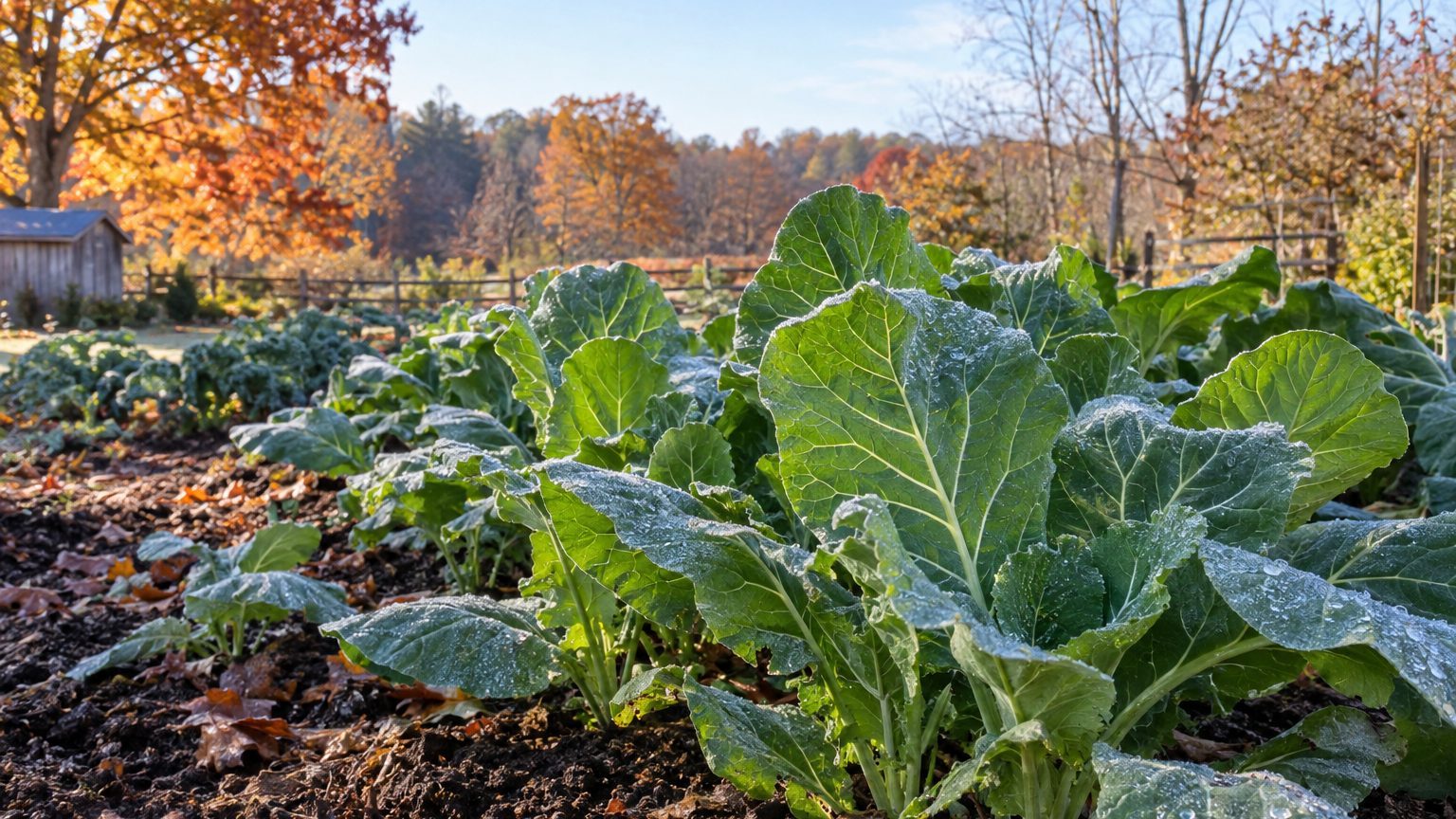
The window that actually pays off is the fall one. Collards taste better after a light frost, when cold converts some of the plant’s starches to sugar, and Delaware’s first fall frost arrives between October 26 and November 7 at that same reference station. Counting backward from that date, the sweet spot for direct-sowing collards outdoors runs from mid-July to early August, giving plants roughly 60 to 85 days to size up before the first hard frost locks in flavor and slows growth. Sow too early in July and plants may bolt in lingering summer heat before frost arrives to save them; sow too late and they won’t have enough leaf mass to shrug off that first freeze.
This isn’t a guess pulled from a neighboring state’s calendar. It’s built directly from the two frost dates NOAA tracks for Delaware, and it assumes an average year. A warm September or an early cold snap will shift things by a week or more in either direction, which is exactly why the sections below matter as much as the calendar math.
If you want a head start on transplants instead of direct-sowing, start seed indoors about six weeks before you intend to set plants out, whether that’s a spring batch timed to the April frost window or a summer batch timed to the July sowing window. For a fuller walk-through of both approaches, Growing Collards in Delaware covers the planting and care details this page doesn’t have room for.
What will not work here

Spring-only planting is the most common mistake, and Delaware’s frost dates explain why. With a last frost as early as April 3 in some years, gardeners get eager and sow collards in late March or early April expecting a full summer harvest. But collards don’t hold up to sustained heat the way, say, okra does. By the time June arrives, spring-sown plants are maturing straight into the hottest, most humid stretch of the year, and the result is bitter, tough leaves and plants that bolt to seed instead of filling out. If you only plant once a year, plant in summer for a fall harvest, not in spring for a summer one.
Waiting too long into the fall is the opposite failure. Delaware’s coldest month has a mean daily minimum of just 25.6°F, which is mild compared to zones farther north, but that number describes established plants with real leaf cover, not seedlings that went into the ground in September. A collard plant sown after the first week of August may not have the root system or leaf mass to handle a hard freeze once temperatures start dropping toward that 25.6°F average low. The plant survives the cold once it’s grown in; it doesn’t survive the cold while it’s still small.
Spacing and disease in a humid climate
Delaware’s Mid-Atlantic humidity also punishes crowded plantings. Collards packed in tight rows trap moisture between leaves, and that’s exactly the condition that lets black rot and downy mildew take hold in a warm, damp Delaware summer. Wider spacing than you’d use in a drier climate isn’t optional here, it’s the difference between a clean harvest and a bed of spotted, rotting leaves by September. Watering on a rigid weekly schedule fails for a different reason: it ignores the swings between soaking summer storms and dry stretches that Delaware’s coastal plain climate produces, so plants either sit in soggy soil or dry out between waterings. Check the soil instead of the calendar for that decision.
What changes across Delaware
Delaware isn’t one climate, even though it’s one of the smallest states. The USDA Plant Hardiness Zone Map places the state across zones 7a to 8a, a spread built entirely on average annual extreme minimum temperatures. That range matters because it means there’s no single frost date or planting day that applies evenly from the Pennsylvania line down to the Maryland border near the coast.
Coastal Sussex County, moderated by the Atlantic and Delaware Bay, tends to run warmer through fall and winter than inland New Castle County, which sits closer to zone 7a conditions. In practice, that means a fall collard crop planted along the coast may get an extra week or two of growing time before frost shuts things down, while an inland garden in the same state could see that first freeze arrive noticeably sooner.
The frost dates cited on this page, April 3 to April 14 for the last spring frost and October 26 to November 7 for the first fall frost, come from a single airport weather station. Suburban and rural gardens across the state typically see the last spring frost later and the first fall frost earlier than those figures, often by one to two weeks, and even more in low-lying spots where cold air pools overnight. That’s not a flaw in the data, it’s just what happens once you move off pavement and onto open ground.
Given that spread, treat the calendar in this article as a starting estimate rather than a fixed rule. A gardener near the coast might push the fall sowing window a week later than one further inland, and both would be right for their own patch of ground. Rather than trying to place yourself on the 7a-8a range from a description, check the USDA hardiness zone map directly for your county before locking in a date.
Where to check this for your own county
Every figure on this page describes Delaware as a whole, pulled from one reference weather station and one statewide hardiness map. That’s useful for planning, but it’s not the same as knowing what works on your specific street. The state’s land-grant extension service exists precisely to close that gap, and for Delaware that’s the University of Delaware Cooperative Extension.
When you visit, look for two specific things rather than browsing generally. First, find the county-level planting calendar for vegetables, which will reflect local frost data collected closer to actual gardens rather than an airport tarmac. Second, look for any variety trial results or recommended cultivar lists for collards and other greens, since extension programs often test which varieties actually perform well in the local soil and climate rather than relying on seed catalog claims. If you want a head start on that variety question before you even contact your county office, The Best Collards and Greens for Delaware lays out how different types perform across the state’s growing conditions.
A county-specific recommendation will always beat a state-level one, and that’s worth saying plainly: this page is the state-level version. It’s built to get you within a week or two of the right sowing window using the best statewide data available, not to replace the more granular guidance your local extension office can give once you tell them your zip code. If your county’s calendar differs from what’s written here by a week in either direction, trust the county source, since it’s likely drawing on more localized weather station data.
Extension offices also field walk-in and phone questions, which is useful if you’re dealing with something specific, like whether last year’s black rot problem means you should rotate your collard bed to a new spot this fall. That kind of on-the-ground troubleshooting is exactly what a statewide sowing calendar can’t provide.
The Moon calendar is a separate, older custom: see when to plant collard greens by the moon, written as tradition rather than fact.
Checking this against your own garden
No frost date, not even one drawn from good NOAA data, beats what’s actually happening in your own bed. Three signs will tell you more about your specific microclimate than any calendar.
Start with soil warmth, checked by feel rather than a thermometer. Dig down two or three inches with your hand in early spring; if the soil still feels cold and slightly damp like refrigerator air, hold off on direct sowing even if the calendar says the last frost has passed. Collard seed germinates slowly in cold soil and can rot before it sprouts.
Watch for the first true leaves on any seedlings you’ve started, whether indoors or direct-sown. The first true leaves, the ones that actually look like small collard leaves rather than the rounded seed leaves, signal that the plant has moved past its most fragile stage and can handle a bit more stress, including a slightly early transplant if a warm stretch is forecast.
Later in the season, watch for the first flush of flower buds pushing up from the center of a collard plant. That’s the plant signaling it’s bolting, usually triggered by a stretch of heat it can’t tolerate. If you see that happen on a spring planting well before you’d normally expect summer heat, it’s telling you something about your specific spot, maybe it sits in a sun trap, maybe it’s on the warmer side of that 7a-8a split. Either way, that’s information your own garden is giving you that a state calendar never will, and it’s worth writing down for next year’s sowing date more than any figure on this page.