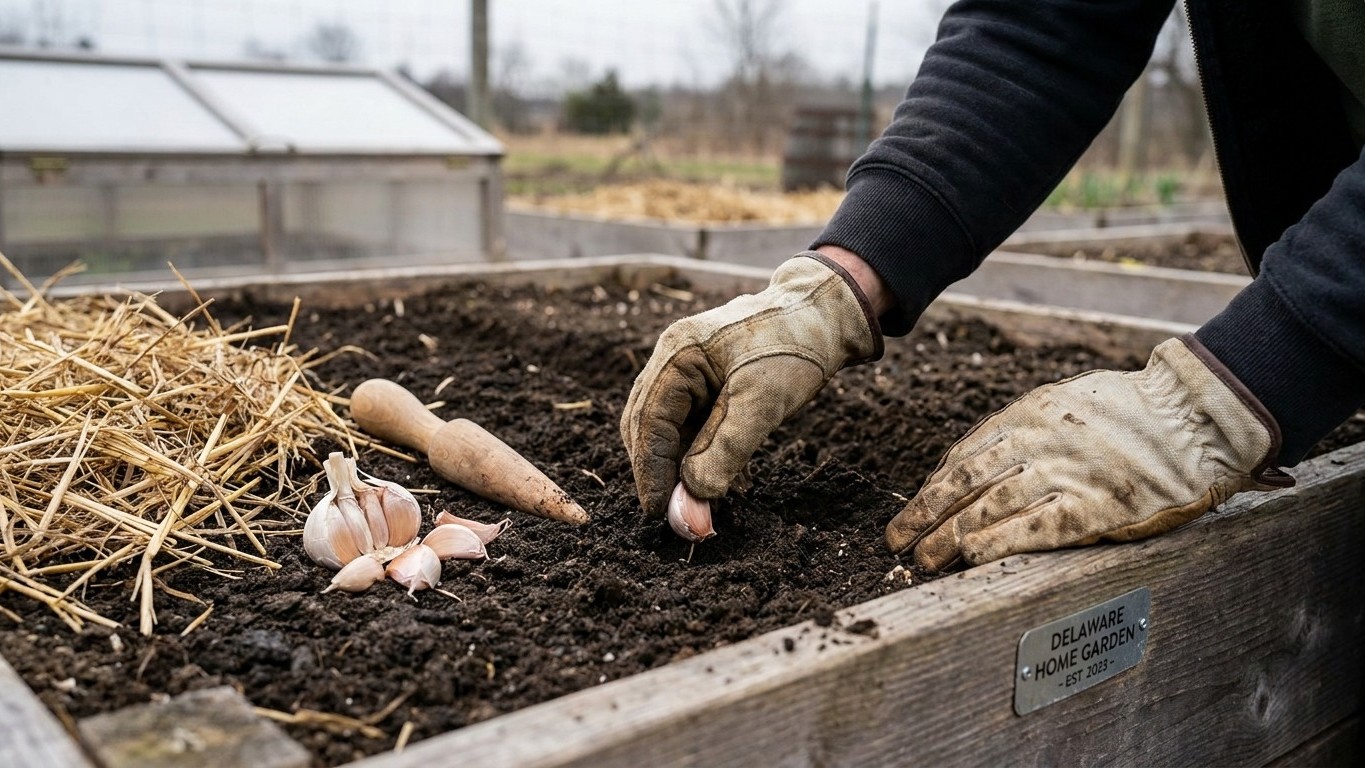

In Delaware, February sits well ahead of the last spring frost window of April 3 to April 14, so the open garden bed stays mostly closed for business. What you can do: get garlic and shallots into workable ground, tuck bare-root fruit stock into the soil while it’s still dormant, sow cold-hardy greens under a cold frame, and start onions, leeks, and early brassicas indoors. The real work this month happens under cover and on paper, not in bare dirt.
What goes in the ground in February

Delaware sits in USDA hardiness zone 7a to 8a, and the reference station data puts the last spring frost between April 3 and April 14. That’s six to ten weeks out from any February planting decision, which means soil temperature, not the calendar, decides what’s safe. Ground that’s frozen solid or waterlogged from winter rain won’t support root development no matter how mild an afternoon feels.
Garlic and shallots are the exception. If you missed the fall planting window, cloves can still go into workable ground early in the month, especially in southern Delaware’s Sussex County, where soil tends to warm and drain a touch faster than the clay-heavy ground around Wilmington. Push cloves root-down, two inches deep, and mulch heavily with straw to buffer the freeze-thaw cycles that heave shallow plantings out of the ground.
Bare-root and dormant plantings are the other green light this month. Fruit trees, grapevines, blueberry bushes, and cane fruits like raspberries can go into the ground while they’re still leafless, as long as the soil isn’t frozen or saturated. Planting dormant stock now gives roots a head start before the plant has to support leaves and fruit set.
Cold frames and low tunnels stretch what’s possible. Under that extra layer of protection, you can direct-sow spinach, mache, claytonia, and other cold-tolerant greens toward the back half of the month, particularly in the milder coastal pockets near the Delaware Bay. Peas can go in under cover too, since they germinate at soil temperatures as low as 40°F.
Indoors, this is prime time for forcing rhubarb and chicory. Dig a rhubarb crown, pot it, and keep it in a dark, cool spot around 50°F, and you’ll have tender stalks in a few weeks. Belgian endive works the same way with chicory roots. Neither needs sunlight, just patience and a warm-adjacent corner of the basement.
What to start under cover
Seed starting in February runs on backward math from the last frost window, not from any fixed date on the wall. Count back from April 3, the early end of Delaware’s frost range, and you get a working schedule for every crop that needs a jump start indoors.
Onions and leeks need the longest lead time, ten to twelve weeks before they go into the garden as transplants. Sowing them under grow lights now puts them on track for a mid-to-late April move outdoors, right as the frost risk fades. These are slow, grassy seedlings that tolerate being started early far better than most crops.
Peppers, which hate cold soil and won’t go outside until well after the frost window closes, still need eight to ten weeks of indoor growth before transplant. Starting them now means they’re stocky and ready to harden off once the calendar catches up to the weather.
Broccoli, cabbage, and other early brassicas destined for an outdoor move six to eight weeks before the last frost should get seeded toward the middle or back half of the month. That timing lines them up for transplanting in early spring while they can still take a light frost without damage.
The two ways this goes wrong are opposite problems. Start too early, and by transplant time you’ve got leggy, rootbound seedlings stretching for light, stressed before they even hit the ground. Start too late, and short-season crops don’t have enough growing time left before summer heat or frost cuts things short. Track your seed packet’s own timing against the April frost window for your county, not a generic date.
What is ready to pick
February harvests in Delaware are thin outdoors, and there’s no dressing that up. Most of what’s coming out of the garden this month was planted last fall and has simply survived the winter, not grown much since.
Overwintered kale is the workhorse. Leaves that toughed out several hard freezes often taste sweeter than fall kale, since cold triggers the plant to convert starches to sugars. Leeks left in the ground under a heavy mulch layer are still pullable too, and a well-insulated cold frame can keep spinach, mache, and other greens producing small pickings right through the month.
Brussels sprouts left standing after a fall harvest sometimes hold small side sprouts worth picking. Check them for soft or blackened spots before eating; a hard freeze can damage exposed sprouts even on a cold-hardy plant.
Indoors, sprouts and microgreens fill the gap. A tray of pea shoots, radish sprouts, or sunflower microgreens on a windowsill gives fresh, crisp greens in seven to fourteen days, no garden required.
This is also the month to go through the root cellar or pantry stash. Check stored squash for soft spots near the stem, which signal rot working inward. Sort potatoes for any that have started sprouting or gone soft, and pull onions that feel spongy when squeezed. One rotting squash or onion left in a bin can take down its neighbors fast, so a five-minute check saves the rest of the stash.
The jobs that matter this month
Dormant pruning tops the list, and February is close to the last comfortable window for it. Apple, pear, and peach trees, along with grapevines and cane fruits like blackberries and raspberries, should get cut back while they’re still leafless and the sap hasn’t started moving. Pruning now, before buds swell, reduces stress on the plant and gives you a clear view of the branch structure without leaves in the way. Wait too long and you risk cutting into active growth, which slows healing and invites disease.
Seed catalogs move fast this time of year. Popular varieties, especially heirloom tomatoes and disease-resistant squash, sell out weeks before planting season actually arrives. Placing orders now, while selection is full, beats scrambling for a substitute variety in April.
Soil testing is cheap insurance. A basic test through the University of Delaware Cooperative Extension tells you where pH and nutrients stand before you spend money on amendments you might not need. Results take a couple of weeks to come back, so submitting samples now means you’ll have answers before the spring planting rush.
Compost piles built in fall benefit from a turn now. Breaking up the pile mixes in oxygen and restarts the breakdown process that cold weather slows to a crawl, so you’re more likely to have usable compost by planting time.
Round out the month with tool maintenance: sharpen pruners and hoes, oil moving parts, and check stored fencing or bed frames for winter damage before you need them in a hurry. None of this is flashy work, but skipping it costs time later when the season won’t wait.
What not to do in February
The most common mistake is reading a warm afternoon as a green light for warm-season crops. A 60°F day in February doesn’t mean the soil four inches down has warmed to match, and tomatoes, peppers, and squash seeded or transplanted into cold, damp ground either rot outright or sit stalled for weeks, giving weeds a head start they never lose.
Uncovering cold frames and row covers too eagerly during a mild stretch is the second trap. Delaware’s winter weather swings hard, and a five-day warm spell can flip back to a hard freeze overnight. Plants that got a taste of open air and mild temperatures are more vulnerable when that cold snap returns than plants that stayed protected the whole time. Leave the covers on, or at least keep them within reach, until the weather pattern actually turns.
Feeding nitrogen at the wrong moment causes its own problems. Fertilizing dormant fruit trees or perennials too early pushes soft, tender new growth right before a freeze can hit it, and that new growth is the first thing damaged. Hold off on nitrogen-heavy feeding until growth is actually underway and the frost risk has genuinely eased, not just felt like it has.
Pruning cold-sensitive plants like figs too early is a related error. Unlike apples or grapes, figs can suffer dieback from hard freezes on freshly cut wood, so it’s worth waiting closer to when new growth actually starts before making major cuts.
Checking this against your own county
A statewide frost window is a starting point, not a guarantee for your yard. The April 3 to April 14 range comes from one reference station, and gardens away from that exact spot, especially inland or in low-lying frost pockets, often see frost linger later in spring and arrive earlier in fall, sometimes by a week or two. Coastal Sussex County tends to run milder than the inland parts of New Castle County, and a low spot near a creek or woodline can trap cold air well after the surrounding area has warmed.
Before committing to any of the dates above, check conditions specific to your own county through the University of Delaware Cooperative Extension, which tracks local frost trends and offers planting guidance tuned to Delaware’s growing regions.
Common questions
Can I plant grass seed in Delaware in February?
Cool-season lawn grass typically germinates better when soil temperatures climb into the 50s, which usually doesn’t happen statewide until spring. February seeding tends to sit dormant and risks washing away in winter rain rather than establishing.
Is it too early to start tomato seeds indoors in February?
For most of the month, yes. Tomatoes need roughly six to eight weeks indoors before transplanting after the last frost window in April, so starting in very early February often produces leggy, overgrown seedlings by the time it’s safe to move them outside. Late February works better for an early April frost window.
What vegetables can survive a Delaware winter outdoors?
Kale, leeks, spinach, mache, and Brussels sprouts routinely survive Delaware winters outdoors, especially with mulch or a cold frame for extra insulation. Their flavor often improves after freezing temperatures convert stored starches to sugar.
Should I fertilize my garden in February?
Generally no, unless a soil test specifically calls for it. Fertilizing dormant plants too early can trigger tender new growth that a late freeze then damages. Wait until active growth is underway before applying nitrogen.