
January puts almost nothing new into open ground in Delaware. Between the April 3 to April 14 last-frost window and the October 26 to November 7 first-fall-frost range (NOAA NCEI 1991-2020 Climate Normals), the state sits deep in its dormant stretch. The real answer this month is dormant plantings, cold frames, indoor starts, and the pruning and planning work that sets up everything that comes after.
What goes in the ground in January

The reason January is mostly a no-planting month has nothing to do with the calendar page and everything to do with soil temperature. Seeds and roots respond to how warm the ground actually is, not to what the thermometer says on a sunny afternoon. Delaware’s Plant Hardiness Zone runs 7a to 8a (USDA Plant Hardiness Zone Map, based on average annual extreme minimum temperature), with the milder end typically closer to the coast and the cooler end further inland and north. Even in that milder pocket, soil in January rarely holds enough warmth for germination.
So the honest first line is this: for the vast majority of vegetable and flower crops, nothing goes into open, unprotected ground this month. That is not a failure of the calendar, it is just where the season sits between the fall frost that already happened and the spring frost still six to fourteen weeks out.
What does still work outdoors:
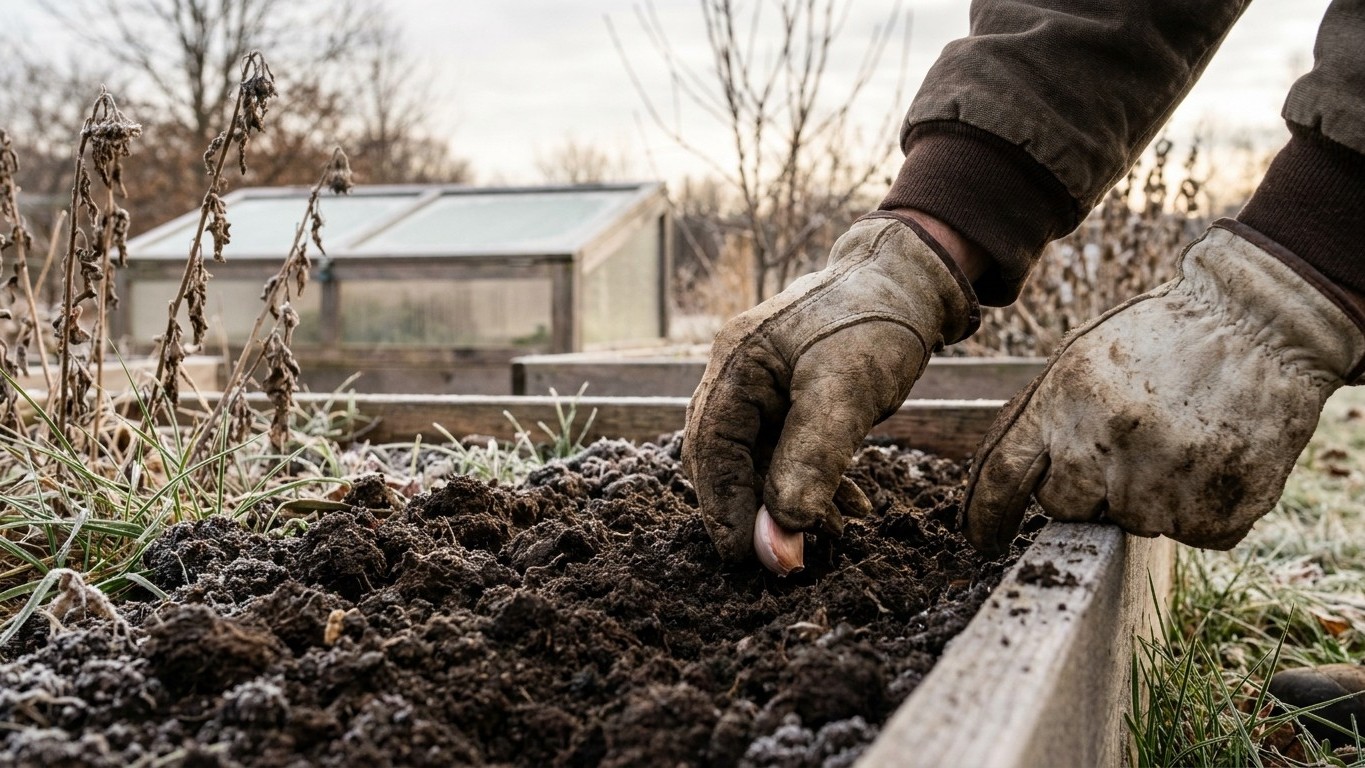
- Garlic and shallot cloves, if the ground is unfrozen and workable. A late planting will still size up, just smaller than a fall-planted crop.
- Bare-root fruit trees, cane berries, and grapevines, planted while fully dormant, before any bud swell.
- Cold frames and low tunnels, where hardy greens, spinach, and some alliums keep growing under cover even as the open beds sit idle.
- Forced rhubarb or chicory, dug and brought indoors into darkness to push tender, blanched growth for the kitchen.
Everything else, the peppers, the tomatoes, the summer squash, waits. Putting them in now, even under a mild spell, is a gamble against a soil temperature that simply is not there yet.
What to start under cover
Seed starting in January is counted backward from the frost window, not forward from a fixed date. That backward math is the tool worth keeping. Take the April 3 to April 14 last-frost range for the reference station and work back from it: onions, leeks, and celery generally need 10 to 12 weeks indoors before transplant, which lands seed-starting in early to mid January for those crops. Early peppers, at 8 to 10 weeks before last frost, can also go in trays late this month if the plan is to have sturdy transplants ready in early spring.
Broccoli, cabbage, and other cool-season transplants sit at 6 to 8 weeks before last frost, which points more toward February start dates rather than January, so there is no rush there yet.
The two ways this goes wrong are opposite mistakes. Start too early, working from January 1 instead of from the actual frost math, and the seedlings get rootbound and leggy in their trays long before outdoor soil is ready to receive them, stretching for light and losing vigor. Start too late, and the transplants never reach a strong enough size before the transplant window opens, so they go into the ground stunted and struggle to catch up all season. The fix for both is the same: write down the reference frost range for your own location, count backward by the number of weeks each crop needs, and let that arithmetic set the sowing date rather than the month itself.
What is ready to pick
Little to nothing comes out of open Delaware ground in January. That’s the plain truth of the deep-winter garden. But the pantry and the cold frame still have something to offer.
Overwintered kale, collards, and leeks that made it through the fall frosts often keep producing right through winter, especially where a layer of mulch or straw has kept the crowns from freezing solid. A hard freeze can wilt the leaves flat one day and see them bounce back the next once temperatures rise a few degrees, so a frozen-looking kale bed is not necessarily a dead one.
Cold frames and low tunnels are where the real harvest activity is this month: spinach, mache, arugula, and other cold-hardy salad greens keep cropping slowly under cover, needing only occasional venting on sunny days to avoid overheating.
Indoors, sprouts and microgreens fill the gap for anyone wanting fresh, crunchy greens on a weekly cycle regardless of what’s happening outside. A tray of sprouted lentils or a shallow pan of pea shoots on a sunny windowsill can be ready to cut within a week or two of soaking.
This is also the month to walk the root cellar or the garage shelf where squash, potatoes, and onions are stored. Squash with a soft spot or a sweet, fermented smell needs to be used immediately, not left to spread rot to its neighbors. Potatoes that have started sprouting eyes or gone green under light should be pulled and either used right away or discarded. Onions that have gone soft at the neck are past saving.
The jobs that matter this month
January is not an empty page just because the beds are bare. It’s the month that carries the most consequential background work of the whole gardening year, and skipping it costs real ground come spring.
Pruning and ordering
Dormant pruning of apple, pear, peach, and other fruit trees, along with raspberry and blackberry canes, should happen now while the plants are fully asleep and the branch structure is easy to see without leaf cover. Cuts made during dormancy heal cleanly and don’t invite the disease pressure that pruning during active growth can bring. This is also the window to order seed. Popular varieties, especially heirloom tomatoes and specialty peppers, sell out from catalogs well before planting season, and waiting until February or March often means settling for whatever is left.
Soil, compost, and repairs
A soil test taken now, through the University of Delaware Cooperative Extension or a similar lab, gives results back in time to amend beds before the spring planting rush, rather than guessing at fertility after the fact. Turning the compost pile keeps decomposition moving even in cold weather, and it’s a good moment to sift out finished compost for use once beds thaw. Tools that spent last season getting dull and rusty deserve a real cleaning and sharpening while there’s no urgency competing for the workbench. Raised beds, trellises, and fencing that took a beating over the growing season are easier to repair now, on a dry, calm day, than in the middle of a wet spring scramble. And this is a good moment to sketch next season’s crop rotation on paper, moving nightshades and brassicas to new spots before the memory of where everything grew last time fades.
What not to do in January
The most common mistake this month is trusting the air temperature over the soil temperature. A stretch of 55-degree afternoons can feel like spring, but if the ground underneath is still cold and wet, warm-season seeds sown into it will rot before they ever germinate. Wait for the soil itself to warm, which lags well behind the air by days or weeks.
A close second is uncovering cold frames or removing winter mulch too eagerly after a mild spell. Plants that have been protected all winter have no cold-hardiness built up for a sudden return to freezing air, and a week of warmth followed by one hard night can undo months of careful overwintering. Keep the covers on until the frost pattern has genuinely turned.
Feeding nitrogen to dormant plants is another wasted move. Fruit trees, canes, and perennial beds aren’t actively growing in January, so applied nitrogen mostly leaches away with winter rain rather than being taken up, and it can also push a premature flush of tender growth during any warm stretch, growth that then gets killed by the next freeze.
Walking on garden beds while the soil is wet or half-frozen compacts the structure for the whole season ahead, squeezing out the air pockets roots need later. Stick to paths and mulched walkways instead, and save the bed-walking for when the ground has properly dried out.
Checking this against your own county
Everything above is a state-wide starting point, not a set of instructions for one specific yard. Elevation, distance from the coast, and whether a garden sits in the more inland northern part of the state or the milder, coastal southern half can shift these frost windows by a couple of weeks in either direction. A garden tucked into a low, cold pocket will run later than the reference figures above; one near the coast or in a sheltered, south-facing spot can run earlier.
The most reliable local check is the University of Delaware Cooperative Extension, which publishes county-specific guidance and can point to soil testing labs, local frost data, and planting calendars tuned closer to a specific address than any statewide figure can be.
Common questions
Can I plant garlic in Delaware in January if I missed the fall window?
Yes, as long as the ground is unfrozen and workable. It will produce a smaller bulb than fall-planted garlic, but it’s a far better outcome than skipping the crop entirely.
Is it too late to start onion seeds indoors in January?
No. Onions typically need 10 to 12 weeks indoors before transplanting near the last frost window of April 3 to April 14, which makes early to mid January a reasonable start time, not a late one.
Why does my kale look wilted and frozen but still seem alive?
Many overwintered greens go limp during a hard freeze and recover fully once temperatures climb a few degrees. Check again on a milder day before assuming the plant is lost.
Should I fertilize my fruit trees in January since they’re dormant?
No. Dormant trees can’t use nitrogen efficiently, and applying it now risks nutrient loss to winter rain or a poorly timed growth flush during a warm spell. Save feeding for when active growth resumes.