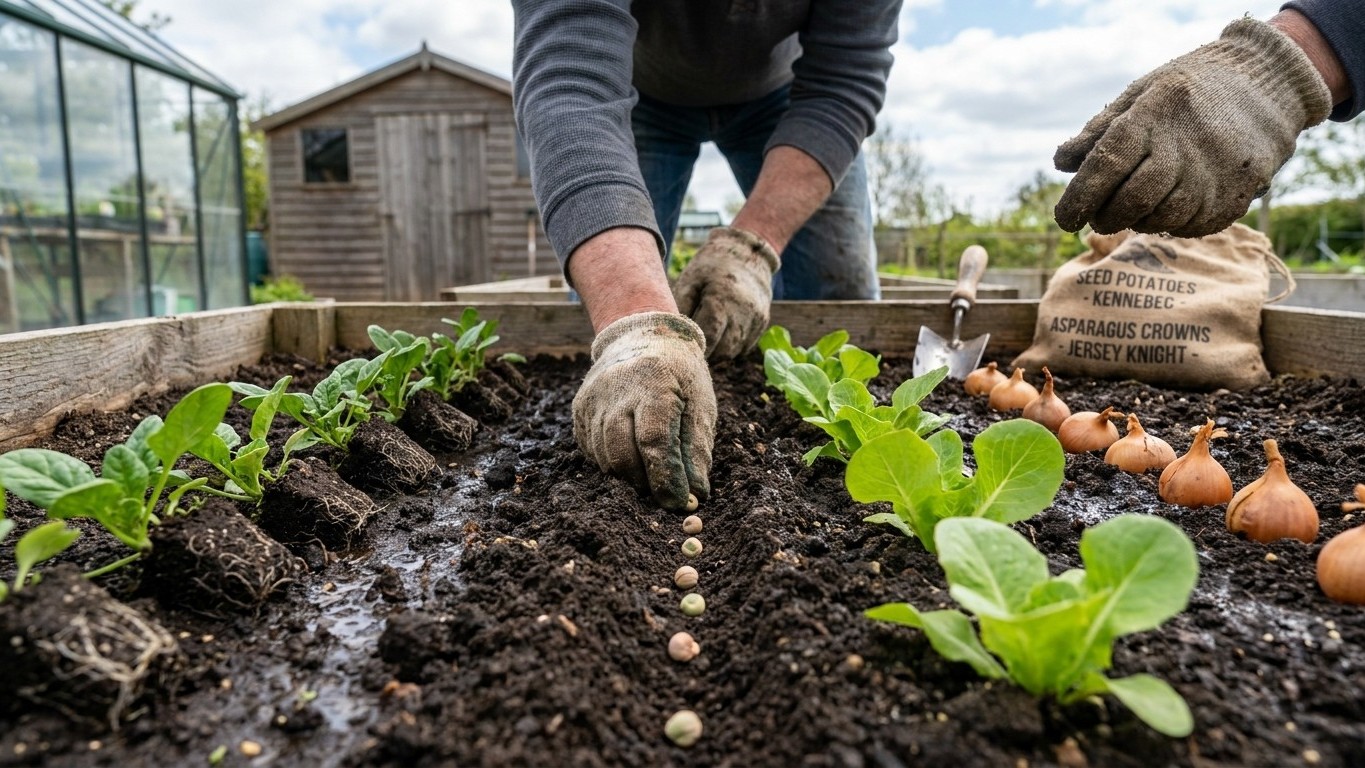

Late March in Delaware is the real start of the outdoor garden season, but the ground still isn’t safe for anything tender. Peas, spinach, lettuce, and onion sets can go in directly. Garlic that missed fall planting, seed potatoes, and bare-root asparagus or strawberry crowns can go in toward the end of the month. Tomatoes and peppers stay indoors under lights. Frost is still expected across the state well into April.
What goes in the ground in March

Soil temperature decides this month, not the calendar page. Peas and spinach will germinate in soil as cool as 40°F, which is why they’re the first seeds Delaware gardeners trust to the open ground in March. Lettuce, arugula, and radishes follow close behind once the soil hits the high 40s. All four can handle a light frost sitting on top of them; none of them can handle warm-season treatment, so resist the urge to sow anything else alongside them just because the afternoon felt mild.
Onion sets and shallot sets belong in the ground as soon as the soil can be worked without turning to mud, usually by mid-month in a normal year. Seed potatoes go in toward the back half of March, cut and cured for a day or two first, planted a few inches deep so a late frost doesn’t reach the shoots before they’ve had a chance to leaf out. None of this is a race against a single date. It’s a race against soggy soil that hasn’t drained and hasn’t warmed.
Bare-root and dormant plantings are the other big March job outdoors. Asparagus crowns, strawberry crowns, and dormant fruit trees, brambles, and grapevines all go in while they’re still asleep, before buds swell. Planting them dormant means less transplant shock and a full season of root establishment before summer heat arrives.
The reference frost window for the state, drawn from the airport weather station near Wilmington, runs from April 3 to April 14 for the last spring freeze. That means frost is still the expected condition for most of March, not the exception. Gardens away from the coast and airport pavement, especially at higher elevation or farther inland, often see that last frost run later still, sometimes by a week or two. Cold frames and low tunnels let you push a week or two earlier than open ground allows, especially for the greens and alliums that already tolerate cold.
What to start under cover
Work backward from the April 3 to April 14 frost window rather than from any fixed date on the wall calendar. Peppers need 8 to 10 weeks indoors before they go outside, which means the peppers you’ll transplant in mid-May should already have gone into trays in January or early February. If you haven’t started them yet, March is the last realistic window, and they’ll be a touch behind schedule rather than ahead of it.
Tomatoes need 6 to 8 weeks under lights before transplanting, so seed started in early to mid-March lines up with an outdoor move in early to mid-May, safely past the last-frost range. Broccoli, cabbage, and other spring brassicas follow a similar 6-to-8-week clock, and starting them now for a May transplant keeps them ahead of the heat that turns brassicas bitter and bolt-prone later in the season.
The two ways this goes wrong are opposite problems. Start too early and you’re nursing rootbound, leggy seedlings on a windowsill for weeks longer than they should sit in a small cell, stretching toward weak light and never quite recovering once they’re in the ground. Start too late and the plant never catches up. It goes into warm soil undersized, gets outcompeted by weeds and by its own stress, and produces less all season. Counting backward from your own last-frost estimate, not a generic date, is the only way to split that difference correctly.
What is ready to pick
Very little comes out of a Delaware garden fresh from open ground in March, and it’s worth saying that plainly instead of stretching a short list. What’s actually feeding a household this month is mostly what survived the winter under cover or in storage.
Overwintered kale, collards, and leeks that went into the ground the previous fall are often still standing, and cold has sweetened rather than ruined them; a hard freeze converts some of their starches to sugar, so late-winter kale often tastes better than the same plant did in October. Cold-frame lettuce, spinach, and arugula planted in late winter should be sizing up enough for a first light cutting by late March. Sprouts and microgreens grown on a countertop under a simple light are the fastest fresh green available this time of year, ready in one to two weeks from seed with no outdoor risk at all.
Storage crops need a check-in now, not a wait-and-see. Winter squash should feel heavy and firm; any soft spot or sweet, fermented smell means it’s turning and should be used immediately or composted before it spreads to the rest of the bin. Potatoes that have gone soft, green, or sprouted heavily are past saving for the table, though sprouted ones can be cut for seed potatoes if they’re still firm. Onions with soft necks or mold at the stem end are done; pull them from storage before they take neighboring onions down with them.
The jobs that matter this month
Dormant pruning has a real deadline in March: it needs to happen before buds swell and break. Apple, pear, and stone fruit trees, along with raspberry and blackberry canes, are pruned while still fully dormant so the plant puts its early energy into the wood you’ve chosen to keep rather than into growth you’ll cut away later. Wait until leaves emerge and you’ve lost the clean window and the tree pays for it with slower, messier regrowth.
Seed ordering has its own deadline, driven by other gardeners rather than the weather. Popular varieties, especially disease-resistant tomatoes and anything sold as an heirloom, sell out from seed companies by late winter most years. Ordering now, even for crops that won’t go in for another month or two, is the only way to guarantee the variety you actually want.
Soil testing and amending pay off precisely because nothing is growing yet to get in the way. A soil test through the University of Delaware’s extension lab tells you exactly what to add and how much, rather than guessing with a bag of general-purpose fertilizer. Turning compost, cleaning and sharpening tools before the rush of April planting, and repairing raised beds, trellises, and fencing all belong on this month’s list for the same reason: there’s time now that won’t exist once seeding season is in full swing.
Rotation planning, done on paper before a single seed goes in, prevents the disease and pest buildup that comes from planting the same family in the same soil year after year. It costs an evening. Skipping it costs a season.
What not to do in March
The classic March mistake in Delaware is trusting a warm afternoon over the soil thermometer. A run of 65°F days can feel like spring has arrived, but the ground underneath often hasn’t caught up, and seeds for warm-season crops like beans, corn, squash, and cucumbers will simply rot in cold, damp soil rather than germinate. Wait for the soil itself to warm, not just the air.
Pulling mulch off perennial beds too early after a mild stretch is the second common error. That mulch is doing its job precisely because frost is still likely through the April 3 to April 14 window at the reference station, and later than that away from it. Strip it too soon and a return freeze can hit crowns and emerging shoots that the mulch would have buffered.
Working wet soil is a mistake that costs the whole season, not just the week. Digging or tilling ground that hasn’t drained compacts it, squeezing out the air pockets roots need and creating a dense layer that can take a full year to recover. If a handful of soil forms a slick ball instead of crumbling, it’s too wet to work.
Heavy nitrogen feeding this early, before plants are actively growing and able to use it, mostly washes away or pushes soft, weak growth that’s more vulnerable to the next cold snap. Save the nitrogen push for when plants are actually growing fast enough to use it.
Checking this against your own county
Everything above is a starting point drawn from one reference station, not a guarantee for any particular yard. Delaware’s hardiness zones span 7a to 8a across the state, and the difference between coastal Sussex County and the inland parts of New Castle County can shift a last-frost date by a week or more in either direction. Elevation, tree cover, and how close a yard sits to open water all move these windows further.
Before committing seed to ground, check both the University of Delaware Cooperative Extension and its published planting calendar for guidance specific to your county rather than the state as a whole.
Common questions
Can I plant tomatoes outdoors in Delaware in March?
No. Tomatoes are killed by frost, and the reference last-frost window runs from April 3 to April 14, often later away from the coast. Start tomato seed indoors in early to mid-March for transplanting outdoors after that window has passed.
Is it too late to plant garlic in March in Delaware?
Fall-planted garlic produces the largest bulbs, but garlic sets can still go in during March if the ground is workable. Expect smaller bulbs than a fall planting, since the plant has less time to establish roots before bulbing begins.
What vegetables can handle frost in a Delaware garden?
Peas, spinach, lettuce, arugula, radishes, kale, and alliums like onions, garlic, and shallots all tolerate a light frost once established. This is why they’re the crops recommended for direct sowing in March, while warm-season vegetables stay indoors.
Should I remove mulch from my garden beds in March?
Not all at once. Pull mulch back gradually as soil warms and pest risk drops, but keep a protective layer over perennial crowns until the season’s frost risk has clearly passed, since a mild stretch in March doesn’t rule out a hard freeze afterward.