
December in Delaware falls well past the first fall frost window recorded for the region (October 26 to November 7), so the open garden is mostly closed for the season. Garlic and shallots can still go into workable soil, cold frames keep hardy greens producing, and dormant bare-root stock waits for a stretch of mild weather. Most of the month’s real work happens under cover, in the shed, or on paper.
What goes in the ground in December

The calendar says December, but the soil decides what actually happens. Delaware sits in USDA Hardiness Zone 7a-8a, and the reference weather station used for frost tracking (USW00013781) puts the first fall freeze between October 26 and November 7. By the time December arrives, that freeze has already come and gone in most yards, and the next one (the last spring frost, expected April 3 to April 14) is still months out. That leaves a long stretch where soil temperature, not the date on the wall, decides what survives.
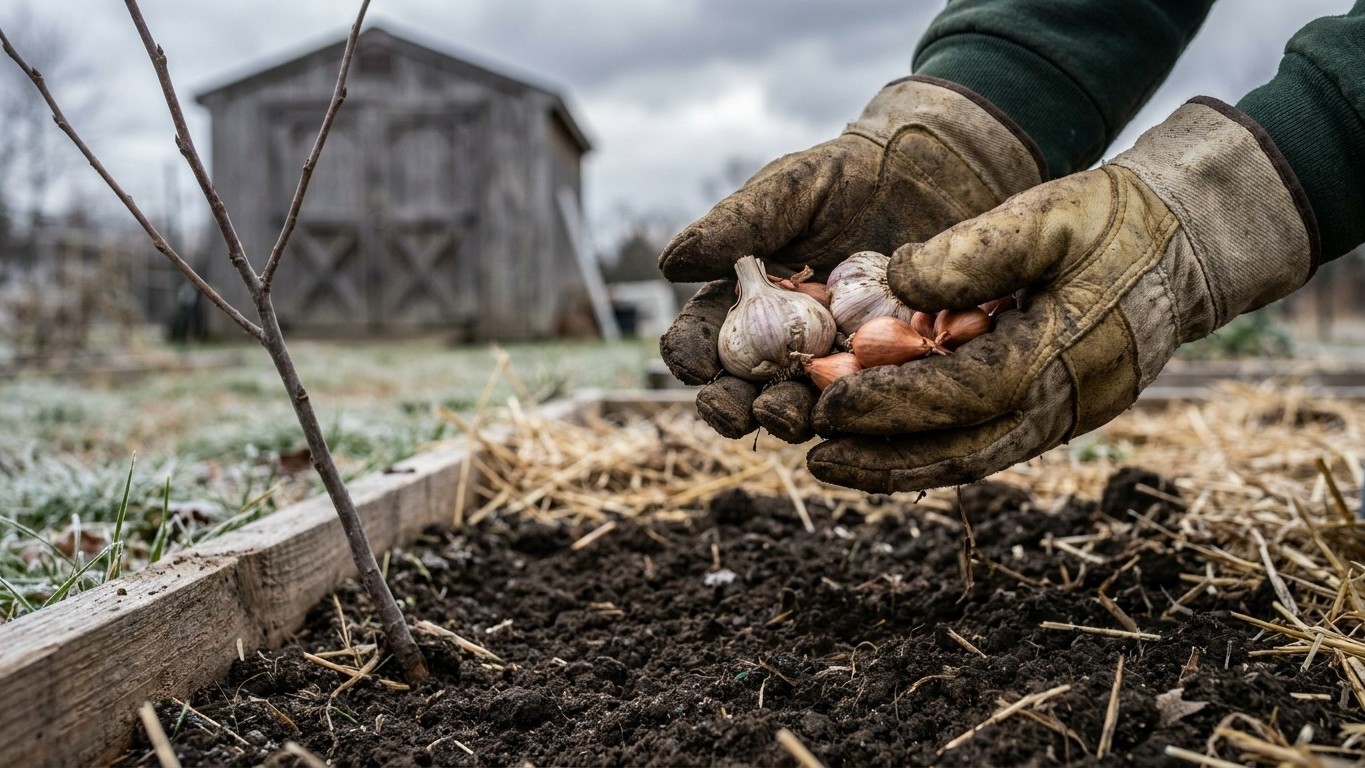
For most of the state, nothing new goes into open, unprotected ground this month except a short list of cold-hardy exceptions. Garlic cloves and shallot sets can still be tucked in if the soil hasn’t frozen solid, ideally with a few inches of straw mulch to buffer the freeze-thaw cycle that heaves bulbs out of the ground. Bare-root fruit trees, roses, and cane berries can be planted during their dormant window, but only when the ground is workable, not frozen and not waterlogged. Anything sold as bare-root that arrives before the soil cooperates should be potted up or heeled into a trench of loose mulch until conditions improve.
What still works under protection
Cold frames and low tunnels extend the season for greens already established, spinach, mache, claytonia, and tough lettuce varieties can keep producing under a layer of row cover or a glazed frame. Forcing chicory or rhubarb indoors, in a dark, cool space, gives a harvest with almost no outdoor risk. None of this replaces open-ground sowing. It’s simply the honest list of what a Delaware garden can still start in December.
| Task | Where | Condition to check first |
|---|---|---|
| Garlic and shallot sets | Open bed | Soil workable, not frozen or soaked |
| Bare-root trees, canes, roses | Open bed or holding trench | Ground diggable, dormant stock |
| Cold-hardy greens | Cold frame or low tunnel | Cover secure against wind and hard freeze |
| Chicory, rhubarb | Forcing indoors | Dark, cool storage space available |
What to start under cover
The spring last-frost window for the reference station runs April 3 to April 14, and most gardens outside that airport site push later, sometimes by one to two weeks. Working backward from that date, tomatoes, peppers, and other tender starts sown 6 to 8 weeks ahead don’t need to go under lights until January or February. Starting them now almost guarantees leggy, rootbound plants sitting in small containers for months before the ground is ready, which is one of the two failure modes worth naming outright: too early means stretched, weak stems and stalled growth; too late means running out of season entirely once transplant time arrives.
December’s under-cover work is narrower by design. Slow perennial herbs and flowers that need a long runway, or a period of cold exposure before they’ll germinate reliably, can go into trays now and sit in an unheated but frost-free space. Onion seed for long-season varieties is sometimes started this early in some systems, but for most home gardens in this zone, January is the more common target and December is early even for that.
Where December does earn its keep indoors is with quick, calendar-free crops: sprouts and microgreens on a windowsill or under a simple light, ready in one to two weeks regardless of what’s happening outside. They don’t count against any frost math because they never leave the kitchen. For anyone itching to start seed trays this month, the safer move is to check the back of the seed packet for weeks-to-transplant, count backward from mid-April, and hold off if the math says January or later.
What is ready to pick
Outdoors, the December harvest in Delaware is thin but not empty. Kale, collards, and Brussels sprouts left standing through the first frosts actually improve, cold exposure converts starches to sugars and takes the bitter edge off. Leeks can be pulled as needed straight from the row, since hardy varieties hold in the ground through freezing weather with a layer of mulch over the shoulders. Brussels sprouts are picked from the bottom of the stalk upward, snapping off individual sprouts as they firm up rather than cutting the whole stalk at once.
Cold frames extend that list a little further. Spinach, mache, and arugula growing under cover keep cropping in small amounts, usually enough for salads rather than large harvests. Indoors, sprouts and microgreens fill the gap for anyone who wants something fresh cut within days rather than weeks.
The other harvest this month happens in the root cellar or pantry, not the garden. Stored squash, onions, and potatoes need a hands-on check now, not later. One soft spot on a squash, one sprouting onion, or one potato going soft at the eye is often the first sign of rot spreading to its neighbors, so a walk-through of the storage bins every couple of weeks catches problems before they take out the whole batch.
The jobs that matter this month
Winter months carry more garden work than the empty beds suggest, and December has a full list with real deadlines attached. Dormant pruning of apple, pear, and stone fruit trees, along with cane berries like raspberries and blackberries, is best done now while the plants are fully dormant and the structure of the branches is easy to see without leaves in the way. Pruning too late, once buds start swelling, wastes energy the plant has already invested and can slow next season’s fruiting.
Ordering, testing, and planning
Seed catalogs move fast, and the varieties gardeners actually want, particular tomato lines, specific pepper heat levels, disease-resistant squash, tend to sell out earlier each season. Ordering now beats scrambling in February with a shortened list. This is also the moment to sketch next year’s rotation on paper: which beds grew heavy feeders like tomatoes or brassicas, which need a season of cover crop or legumes to rebuild nitrogen, and where garlic and alliums will go once the current crop comes out.
Soil testing pays off here too, since amendments like lime take months to shift pH and work best applied while beds sit idle. Turning the compost pile keeps decomposition going even in cold weather, and a pile left untouched all winter often arrives at spring half-finished. Tools deserve the same attention: cleaning soil off blades, sharpening pruners and hoes, and oiling metal parts before they sit unused prevents rust and dull edges from becoming a spring problem. Fencing, bed edges, and hoop supports for row cover are easier to repair now, without plants in the way, than in the rush of active growing season.
What not to do in December
A stretch of unusually mild days is the most common trap this month. Warm air tempts gardeners to pull back mulch or open up a cold frame to “let the plants breathe,” and then a hard freeze the following week catches those exposed plants with no buffer. Mulch and row covers stay on through mild spells; they come off gradually, and only once the freeze risk has genuinely passed, not after one warm afternoon.
Feeding nitrogen fertilizer this month is another mistake with a delayed cost. Nitrogen pushes soft, leafy growth, and any new growth triggered now won’t have time to harden off before the next hard freeze, leaving the plant with tender tissue exactly when it can least afford it. If soil needs amending, this is the season for slow-acting inputs like compost or lime, not a quick-release feed meant for active growing.
Planting warm-season crops or setting out tender starts because a few days felt like spring is the third classic error. Air temperature is a poor stand-in for soil temperature, and a warm afternoon doesn’t mean the ground four inches down has caught up. Bare-root stock and dormant plantings only go into ground that’s actually workable, not just ground that looks thawed on the surface. And stored crops left unchecked for weeks at a time are the quiet failure: rot spreads fastest in the dark, and a five-minute check every couple of weeks costs far less than losing a bin of potatoes to one bad apple, or in this case, one bad potato.
Checking this against your own county
A state-wide answer is a starting point, not a rule for every yard. Delaware’s hardiness range spans 7a to 8a, and coastal areas near Delaware Bay, along with the southern part of the state, tend to stay a little milder than inland spots further north. The frost dates cited here come from a single reference station, and gardens away from that station, especially in low-lying or rural areas, often see frost arrive earlier in fall and linger later in spring, sometimes by one to two weeks.
For a planting calendar built specifically around Delaware conditions, the University of Delaware Cooperative Extension is the most reliable next stop, with guidance tuned to the state’s counties rather than a single airport dataset.
Common questions
Can I still plant garlic in December in Delaware?
Yes, as long as the soil is workable and not frozen solid or waterlogged. Mulch the bed with a few inches of straw right after planting to protect the cloves through freeze-thaw cycles.
What vegetables survive winter in Delaware gardens?
Kale, collards, Brussels sprouts, and hardy leek varieties commonly hold through winter in open ground, especially with mulch. Cold frames extend that list to include spinach, mache, and arugula.
Is it too late to start seeds indoors in December?
For most tender crops like tomatoes and peppers, December is too early rather than too late, since the last spring frost window (April 3 to April 14) is still months away. Starting now typically produces leggy, rootbound plants before it’s safe to transplant.
When should I prune fruit trees in Delaware?
Dormant pruning of apples, pears, and cane berries is best done in winter while the plant is fully dormant and its branch structure is visible, before buds begin to swell in late winter or early spring.