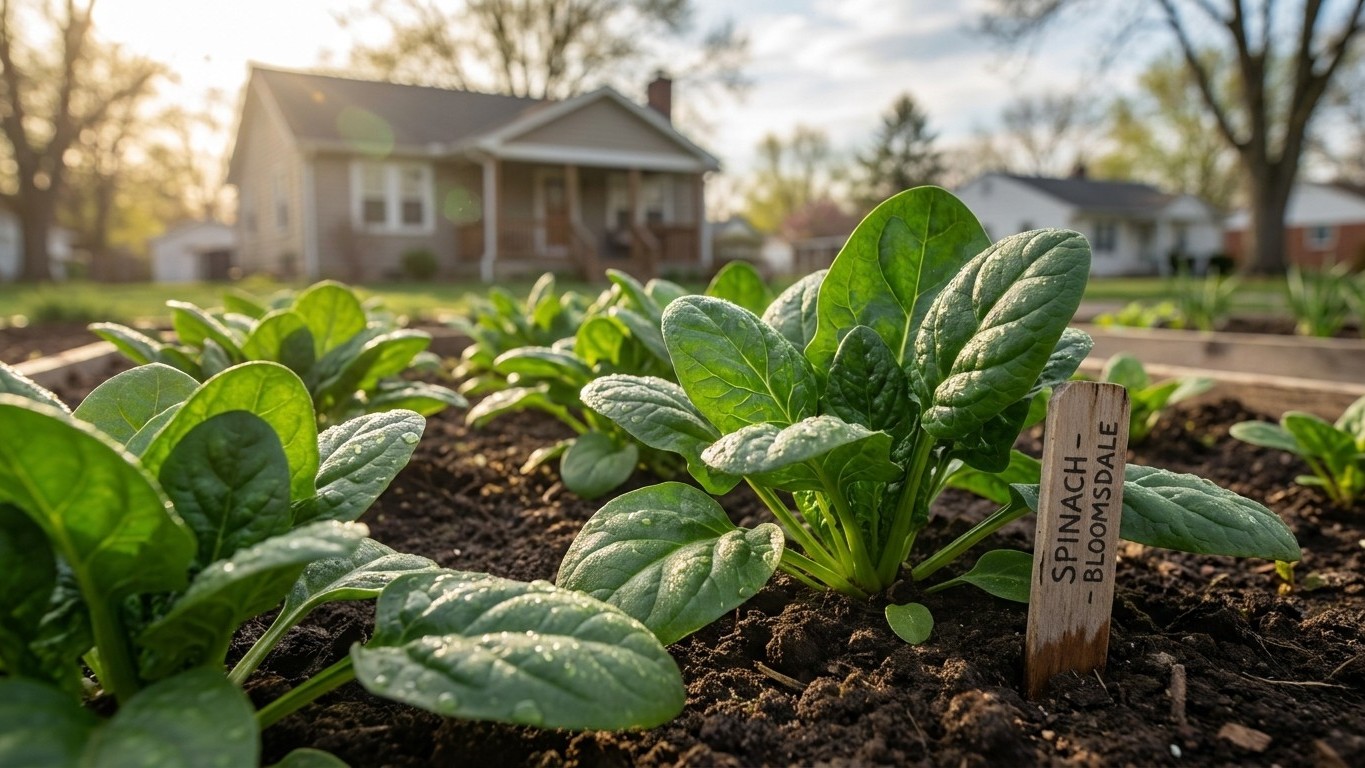

Spinach sown in Delaware bolts fast because the calendar works against it twice. The reference city logs 14 hours and 49 minutes of daylight on the summer solstice, which is already enough light to trigger flowering in this crop, and the state adds 17.6 days a year above 90 F on top of that. This raises the natural question of Will Spinach Bolt Early in Delaware?, and spring plantings usually run to seed by mid-to-late May. Fall plantings need to dodge warm soil first, then race the first frost, which arrives between October 26 and November 7.
The short answer
Spinach bolts under two conditions working together: long days and warm temperatures. Delaware supplies both, and it supplies the day length part earlier than most gardeners expect. On the summer solstice, the reference city sees 14 hours and 49 minutes of daylight, and the days are already stretching well past 13 hours by the second half of April, weeks before the thermometer does anything dramatic. That timing matters, because it means the photoperiod trigger for bolting is in place before the heat trigger even shows up.
Heat follows close behind. Utah State University Extension notes that spinach grows best where temperatures stay under 75 F, and Delaware averages 17.6 days a year at 90 F or hotter, a heat load concentrated in summer but with warm spells that reach into late spring. So the honest way to describe Delaware’s limit is that it is both, but not in equal measure at every point in the season. Day length starts the clock in April and May. Heat finishes the job, pushing plants that survived the light trigger into full bolt once afternoons routinely climb past that 75 F ceiling.
This is worth sitting with for a moment, because it contradicts a common assumption. A gardener who notices a mild, overcast spring might expect spinach to hang on longer, reasoning that cooler weather should buy time. It does not, not on its own. The days keep getting longer regardless of cloud cover or temperature, and that lengthening daylight alone is enough to push the plant toward flowering. A cool May in Delaware does not rescue a spinach bed; it just means the bolting happens on schedule instead of early.
None of this makes spring spinach pointless in Delaware. It means the crop has to be treated as a short, deliberate sprint rather than a slow-cooked staple. Get seed in early, expect a harvest window measured in weeks rather than months, and plan the fall crop as the second, often more forgiving, chance at a full-size harvest before winter shuts things down—see When to Sow Autumn Spinach in Delaware for the specifics of that timing.
How long the spring window really is
Working backward and forward from Delaware’s own frost data gives a realistic picture of the spring window, rather than a guess borrowed from a seed packet written for a different climate.
- Start with the last frost date. At the reference station, the last spring freeze typically falls between April 3 and April 14. That range anchors everything else.
- Sow two to three weeks before that date. Spinach seed tolerates cold soil far better than heat, so the safe sowing window runs from roughly mid-March into the first days of April, depending on how the season is running.
- Count the weeks of good growth. From that sowing date, the plant has a stretch of cool, lengthening days that support solid leaf growth before day length and warmth combine against it.
- Watch for the 75 F ceiling. Growth quality drops once temperatures push past that mark, and in Delaware’s spring pattern, that ceiling tends to arrive within a matter of weeks after the last frost, not months.
- Total usable window. Between an early-to-mid-March sowing and the point where lengthening days and rising temperatures push the crop toward bolting, Delaware gardeners typically get somewhere in the range of six to eight weeks of productive spinach growth before the spring crop turns to seed.
That is a narrower window than warmer-tolerant greens allow, and shorter than gardeners in cooler, higher-latitude states get from the same seed packet, since their days lengthen more slowly relative to the calendar and their heat arrives later. Delaware’s spring spinach is a real crop, but it is a fast one.
The autumn crop, and when the soil lets you sow
Fall spinach in Delaware runs into an obstacle spring sowing never faces: soil that is still too hot for the seed to germinate well, even as the calendar says it is time to plant.
Waiting for the soil to cool below 80 F
Utah State University Extension is specific on this point: spinach seed germination drops once soil temperature climbs above 80 F. Delaware’s summer heat load, that average of 17.6 days a year at 90 F or above, keeps topsoil running hot well past Labor Day in most years. That pushes the realistic sowing window into September, once overnight lows start pulling soil temperature down consistently. Sowing too early into August’s residual heat means thin, uneven germination, no matter how carefully the bed is watered.
Racing the first fall frost
The other constraint runs the opposite direction. The first fall frost at the reference station falls between October 26 and November 7. The source gives no days-to-maturity figure for spinach, but it does say plainly that a fall crop should go in the ground 50 to 75 days before the date you want to harvest. Counting back from a harvest target in mid-to-late October, that points to a sowing window opening in early September and running into the middle of the month, depending on how early frost typically shows up in a given county.
Put the two obstacles together and Delaware’s fall sowing window is narrower than the frost dates alone would suggest: it opens when the soil finally cools below that 80 F germination threshold, usually in September, and it closes fast once the 50-to-75-day countdown to frost runs out. Varieties named by University sources for cooler-season planting, including Bloomsdale, Melody, Teton, and Olympia, are available to home gardeners, though no published data compares their bolt resistance or maturity timing against each other.
Checking this against your own county
Every figure here comes from a single airport weather station, and suburban and rural gardens routinely see a later last spring frost and an earlier first fall frost than that station records, sometimes by one to two weeks, more at elevation. A garden in a low-lying valley or a shaded yard away from pavement will run its own schedule.
Before locking in a sowing date, check current conditions and local frost trends with the University of Delaware Cooperative Extension. County-level guidance accounts for the microclimate differences that a statewide or single-station average simply cannot capture, and it is the resource built specifically to answer the question this article can only frame in general terms.
Common questions
Can shade delay bolting in Delaware?
Partial afternoon shade can reduce direct heat stress on the plant, which addresses one half of the bolting trigger, but it does nothing to shorten the actual hours of daylight reaching the garden. Day length keeps advancing on its own schedule regardless of sun or shade.
Does mulching help spinach survive longer into summer?
Mulch can keep soil temperature down near the roots, which helps on the heat side of the equation, but it will not offset the day-length trigger once the calendar pushes past mid-spring.
Is fall spinach easier to grow than spring spinach in Delaware?
It often works out that way, mainly because days are shortening rather than lengthening through the fall growing period, removing one of the two bolting triggers entirely. The remaining challenge is timing sowing around warm soil and the first frost.
What happens if spinach bolts before harvest?
Once a plant sends up a flowering stalk, leaf quality drops and flavor turns bitter, tracking the same 75 F threshold that limits growth. At that point the crop is best pulled and replaced rather than nursed along.