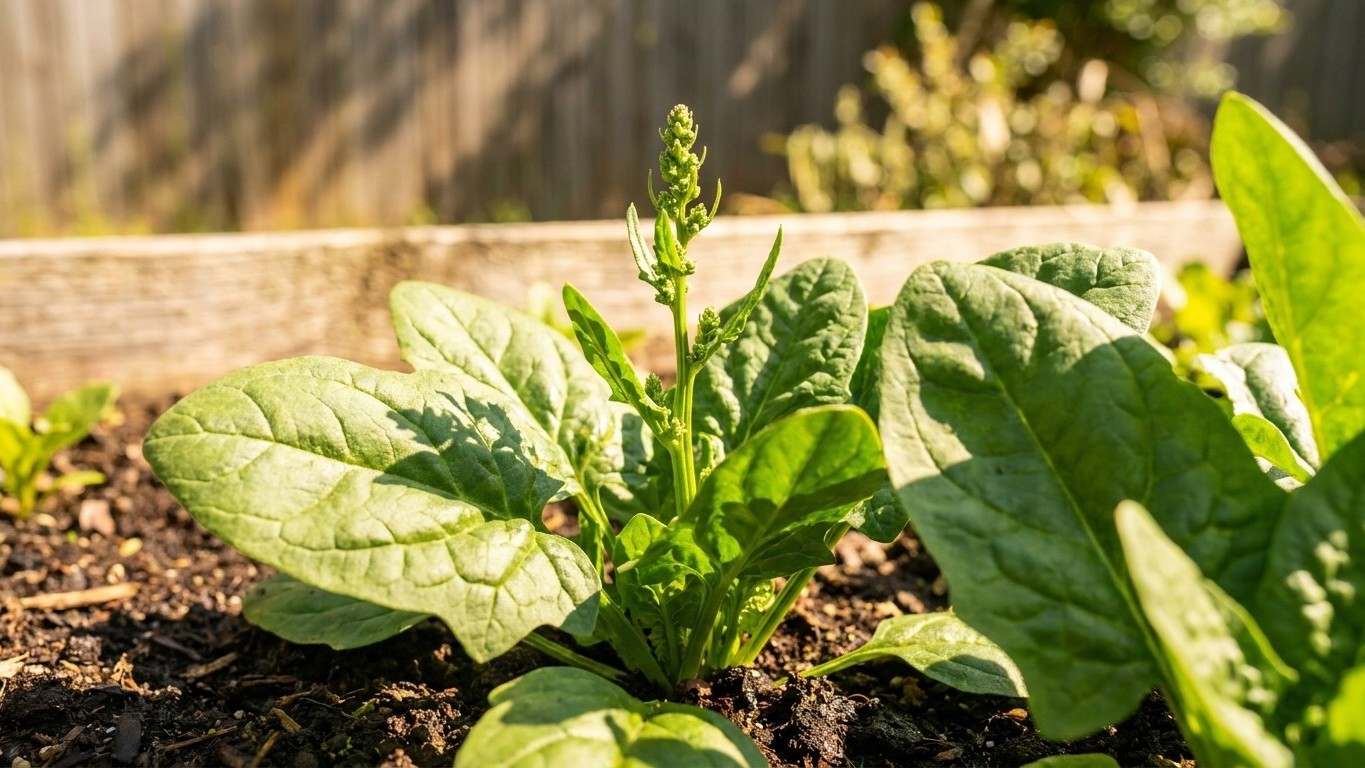

None of the nine pest species documented by University of Delaware Cooperative Extension in home vegetable gardens actually target spinach. Colorado potato beetle wants potatoes, squash bugs want squash, imported cabbageworm wants cabbage-family greens, and so on down the list. Spinach in Delaware runs into trouble from a different direction entirely: day length and heat push it to flower and turn bitter long before any insect does real damage. The clock that matters here is climate, not chewing insects.
Which pests attack spinach in Delaware
University of Delaware Cooperative Extension documents nine insect species across the state’s vegetable gardens: Colorado potato beetle, cucumber beetles (spotted and striped), harlequin bug, imported cabbageworm, Mexican bean beetle (Epilachna varivestis), squash beetle, squash bug, squash vine borer, and tomato hornworm. That’s the full list this service tracks for garden-scale vegetable production here, and it doesn’t stretch further just because a gardener wants it to.
Sort through those nine names and a pattern shows up fast: every one is tied to a specific plant family, and none of those families is spinach’s. Colorado potato beetle feeds on potato foliage and other nightshades, leaving spinach’s rounded leaves alone. Cucumber beetles, spotted and striped, chew cucurbit leaves, flowers and roots, cucumbers, squash, melons, not the leaf chemistry spinach offers. Harlequin bug is a brassica specialist, drawn to cabbage, kale and mustard-family plants. Imported cabbageworm larvae skeletonize brassica leaves too, following the same host preference as harlequin bug.
Mexican bean beetle needs legume foliage, bean plants specifically, with no documented interest in spinach. Squash beetle and squash bug both stick to the cucurbit family, while squash vine borer tunnels directly into squash stems, a feeding strategy that has nothing to do with a leafy green. Tomato hornworm rounds out the list as another nightshade feeder, chewing tomato and pepper foliage rather than spinach rows.
Not one of the nine species University of Delaware Cooperative Extension documents statewide is recorded as a spinach feeder. That’s the honest read of the list, and it matters for how a Delaware gardener spends their attention. If holes or chew marks show up on spinach leaves, the cause is something outside this documented set, an aphid, a leafminer, a slug, and identifying it means calling the extension service directly rather than assuming one of these nine is responsible.
The bigger threat to spinach in Delaware isn’t an insect at all. It’s the calendar.
When each one shows up, and what it does first
With no pest on Delaware’s documented list feeding on spinach, the more useful calendar tracks the plant’s real pressure points: cold at the start of spring, then heat and long days as the season moves on, and warm soil blocking the fall reseeding window.
Spring planting opens around the reference station’s last frost window, April 3 to April 14 at Wilmington, though gardens away from that airport station, especially rural and elevated ones, often see frost linger one to two weeks longer. Spinach seeded in that window germinates in cool soil and grows through the mild weeks before Delaware’s daylight and heat start working against it.
What shows up first isn’t chewing damage, it’s a growth change. As days lengthen toward the reference city’s 14 hours 49 minutes of daylight on the longest day, spinach plants that were producing flat leaves start sending up a central flower stalk, the visible sign of bolting. Warmth compounds it: spinach grows best below 75°F, and Delaware racks up an average of 17.6 days a year at 90°F or hotter, so that ceiling gets crossed early and often once early summer arrives.
Fall offers a second window, but it opens on soil, not on the calendar. Germination drops once soil runs above 80°F, so a fall sowing has to wait for that number to fall, not for a cooler-feeling day. Once soil cooperates, guidance frames fall spinach as a straightforward count backward: plant 50 to 75 days before the date the gardener wants to harvest, using the state’s first fall frost window, October 26 to November 7 at the reference station, as the outer edge of the growing period.
Named varieties Bloomsdale, Melody, Teton and Olympia show up in that same guidance without any published days-to-maturity attached to them, so choosing between them on a Delaware sowing date isn’t something this data supports.
Telling the damage apart from everything else
Since Delaware’s documented pest list doesn’t include a spinach feeder, damage in a spinach row is more likely to be something else altogether: heat stress, uneven watering, a nutrient shortfall, or plain bolting. Sorting those apart matters before reaching for any kind of control, insect or otherwise.
Bolting is the easiest to place because it isn’t damage at all, it’s the plant’s biology responding to daylength and heat exactly as expected once the season moves past spinach’s comfort range. A central stalk rising from the rosette, followed by small flowers, means the plant crossed that trigger, not that something attacked it. Heat stress shows differently: leaves that thin out, curl slightly, or turn bitter without any stalk forming point to temperatures pushing past the 75°F growth ceiling rather than to insects or disease.
| What you see | Likely cause | What separates it |
|---|---|---|
| Ragged holes, chewed leaf edges | An insect outside Delaware’s documented list for this crop | No species on the state’s list feeds on spinach; the extension office can identify it |
| Central flower stalk rising | Bolting from long days and warmth | Happens with no chewing marks present |
| Pale, thin, bitter leaves, no stalk | Heat stress near or above the 75°F ceiling | Tracks with hot stretches, not with visible feeding |
| Yellowing between leaf veins | Nutrient shortfall | Spreads evenly across the bed rather than in isolated bite marks |
| Wilting despite watering | Root stress from soil above 80°F | Coincides with germination failures nearby, not with leaf damage |
The one sign worth acting on fast is chewed leaf tissue, because it’s the only symptom in this table that points to something not already explained by Delaware’s climate. Even then, matching it to a species isn’t something to guess at alone, since the documented list for this state doesn’t cover spinach feeders at all. That gap is exactly why a county office call, not a home diagnosis, is the next step.
What actually works here, and what is a waste of time
Because no pest on Delaware’s documented list actually feeds on spinach, spending time or money on insect control for this crop specifically is largely wasted effort. The plant’s real limits are climate, and climate responds to timing, not treatment.
The single move that does the most good is planting to the frost windows rather than to a fixed date on a seed packet. Getting spinach into the ground as close to the April 3 to April 14 last-frost window as soil allows buys the maximum number of cool days before daylength and heat push the plant toward bolting. Waiting even a couple of weeks past that window trades productive growing days for bolted, bitter leaves.
A lightweight floating row cover, put down at planting and lifted before hot weather sets in, helps incidentally. It won’t stop a pest that isn’t there, but it does buffer late cold snaps and keep soil moisture steadier through the short spring window, both of which matter more for spinach in Delaware than any spray schedule would.
For fall, the useful move isn’t a product, it’s a soil thermometer. Waiting until soil drops back below 80°F before sowing, then counting back 50 to 75 days from the target harvest date, does more for a fall crop than anything applied to the leaves.
What wastes time: routine insecticide applications aimed at a pest list built for potatoes, squash, cabbage, beans and tomatoes. None of those species are documented as spinach feeders here, so treating spinach for them addresses a problem that isn’t there while leaving the actual limiting factors, daylength, heat and soil temperature, unmanaged. If chewing damage does appear and doesn’t match anything explainable by heat or bolting, the next step is identification through University of Delaware Cooperative Extension, not a guess at a product.
Where to check this for your own county
Everything documented here comes from University of Delaware Cooperative Extension, and it’s a statewide list, built to cover home vegetable gardens generally rather than any single crop or county. That’s useful context, but it isn’t a guarantee about what’s actually present in one particular yard.
Pest presence shifts within a state, sometimes within a few miles, depending on soil, nearby crops, and local weather patterns that a statewide list can’t capture. A garden near commercial cucurbit fields might see more pressure from cucumber beetles or squash bugs than a garden elsewhere in the state, even though both fall under the same statewide documentation. None of that changes the fact that spinach itself isn’t a host for any of the nine species tracked, but it does mean local conditions are worth checking before assuming anything about a specific yard.
Delaware’s extension structure runs through county offices, New Castle, Kent and Sussex, each connected to the same University of Delaware Cooperative Extension system that supplies the pest list used throughout this article. Reaching the office covering the county in question is the direct way to confirm what’s actually active locally, especially if leaf damage shows up that doesn’t match bolting, heat stress, or any of the other explanations covered above.
The next useful step for a Delaware gardener isn’t more reading, it’s a phone call or an email to the local county extension office with a photo of whatever’s on the leaves. That’s the fastest route to an answer more specific than anything a statewide list can offer.
Common questions
Does anything actually eat spinach in Delaware?
University of Delaware Cooperative Extension’s documented list for home vegetable gardens doesn’t include a species recorded as feeding on spinach. Chewing damage on spinach leaves points to something outside that list, worth identifying through the local extension office rather than guessing.
Why does spinach bolt so fast in Delaware?
Bolting is triggered by long days combined with warm temperatures. Delaware’s reference station sees 14 hours 49 minutes of daylight on the longest day of the year, and spinach grows best below 75°F, a ceiling the state crosses on an average of 17.6 days a year at 90°F or above.
When is the best time to plant spinach in Delaware?
Spring sowing lines up with the last frost window, April 3 to April 14 at the reference station, though many yards see frost linger later. Fall sowing waits for soil to drop back below 80°F, then counts back 50 to 75 days from the target harvest date.
Do Bloomsdale, Melody, Teton or Olympia resist pests better?
These four varieties appear in extension guidance for fall spinach, but no data on pest resistance or days to maturity is published for any of them in this material, so choosing between them on that basis isn’t supported here.