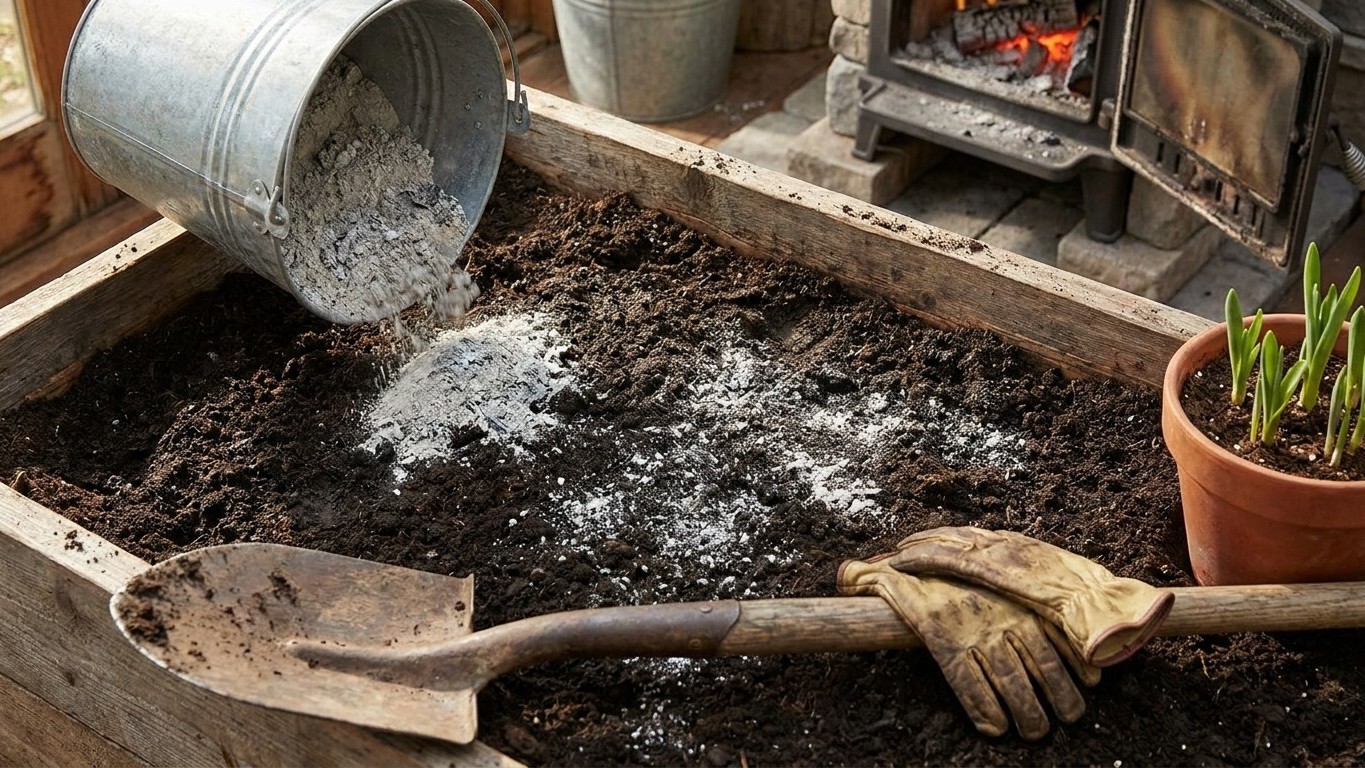

Wood ash from a clean-burning stove or fireplace has real uses around the house: as a garden amendment on acidic soil, as traction material on icy walkways, and as a mild abrasive for cleaning glass or metal. It also has real limits. It’s alkaline, it carries no nitrogen, and it stays dangerously hot long after the fire looks dead. Knowing which use fits your yard, and how to store the ash safely first, matters more than the use itself.
What to Do With Wood Ash

The single biggest use for wood ash is as a soil amendment, and the reason comes down to chemistry. Ash is alkaline, so it raises soil pH. That’s a benefit if your garden soil runs acidic, the kind of dense, tannin-heavy dirt common under conifers or in older lawns that have never been limed. Spread thin and worked into acidic beds, ash nudges the pH toward neutral, which makes nutrients already in the soil more available to plants. University extension services that publish home-composting and soil-fertility guidance describe this as the main garden benefit of wood ash: it functions much like agricultural lime, only faster-acting and less predictable in strength, since every batch of ash varies with the wood burned and how completely it burned.
That same alkalinity is why ash is the wrong choice for soil that’s already alkaline, which describes a lot of soil in the arid West and parts of the Midwest with limestone-heavy bedrock. Dump ash on soil that’s already pushing pH 7.5 or higher, and you can lock out iron and other micronutrients that plants need, producing yellowing leaves instead of healthier ones. A basic soil pH test, the kind sold at any garden center or run through a state agricultural lab, is the only way to know which category your yard falls into before you spread a single scoop.
What Ash Adds, and What It Doesn’t
Wood ash carries potassium and calcium, two nutrients plants use for root strength and cell structure. Beyond the garden, ash has a handful of other legitimate jobs around the property:
- Traction on icy steps and driveways, spread the same way you’d use sand
- Absorbing grease and odor when sprinkled at the bottom of a compost bin
- Light polishing of glass fireplace doors or tarnished metal, using a damp cloth
- Deterring some soft-bodied garden pests when dusted lightly around plant bases
What ash does not carry is nitrogen, the nutrient most responsible for leafy green growth. Burning wood drives nitrogen off as gas, so ash cannot replace a balanced fertilizer, only supplement the potassium and calcium side of the ledger. And none of these uses apply to ash from treated, painted, or manufactured wood. Pressure-treated lumber, plywood, particleboard, and painted trim release chemical residues when burned, and those residues concentrate in the ash. That ash belongs in the regular trash, not the garden, the driveway, or the compost bin.
How to do it
- Let the ash cool completely before touching it. This is not a same-evening job. Embers can survive for days under a bed of ash that looks stone-cold on the surface, so give it at least 48 hours after the last fire before removal.
- Scoop the ash into a metal container with a tight lid. A galvanized ash can with a lid is standard. Never use a paper bag, a plastic bin, or a cardboard box, all of which can ignite from residual heat you can’t see or feel.
- Set that container on a non-combustible surface, away from the house. Concrete or bare dirt works; a wood deck or the garage does not. Keep it outside for several more days as a safety margin before you use or dispose of the contents.
- Test your soil’s pH before spreading any ash in the garden. A simple home test kit or a sample sent to a state extension lab tells you whether your soil is acidic enough to benefit.
- Spread cooled, sifted ash thinly over acidic beds. A light dusting worked into the top few inches of soil is enough; ash is concentrated, and more is not better.
- Save a small batch for winter traction and cleaning. Keep a separate, clearly labeled container near the door for icy steps, and another near the fireplace tools for glass and metal cleaning.
- Screen out anything that isn’t clean wood ash before disposal. Nails, staples, or scraps of treated lumber that ended up in the fire should be picked out and thrown away separately, not mixed into ash you plan to use on soil.
What goes wrong
-
The ash bin catches fire days after the last burn
This is the most common and most dangerous failure, and it happens because embers hold heat far longer than the ash’s cool appearance suggests. If you find a container has scorched, melted, or smoldered, move it immediately to bare ground or concrete, away from anything flammable, and douse it with water before touching it again. Going forward, switch to a metal container with a lid and treat every batch of ash as hot for at least a week, not a day.
-
Plants near the ash pile start looking worse, not better
Yellowing leaves or stunted growth after adding ash usually means the soil was already neutral or alkaline, and the ash pushed pH too high, locking out iron and other micronutrients. Stop adding ash to that bed immediately. A pH test will confirm the imbalance, and in soil that’s now too alkaline, the fix is usually time, plus amendments like sulfur, rather than any quick reversal.
-
The garden bed got a heavy dump of ash all at once
A thick layer of ash, rather than a light dusting, can spike pH and salt levels in the soil faster than plants can adjust. If this already happened, rake off as much visible ash as possible, water the bed heavily to help flush excess salts, and hold off adding anything else to that soil until a follow-up pH test shows it’s back in a normal range.
-
Ash from a fire that included painted or treated wood ended up in the yard
If you realize after the fact that ash containing residue from treated lumber, plywood, or painted trim went into the garden or compost, stop using that bed for food crops for the current season. Remove the top layer of soil where the ash was concentrated and dispose of it with household trash rather than working it deeper into the bed.