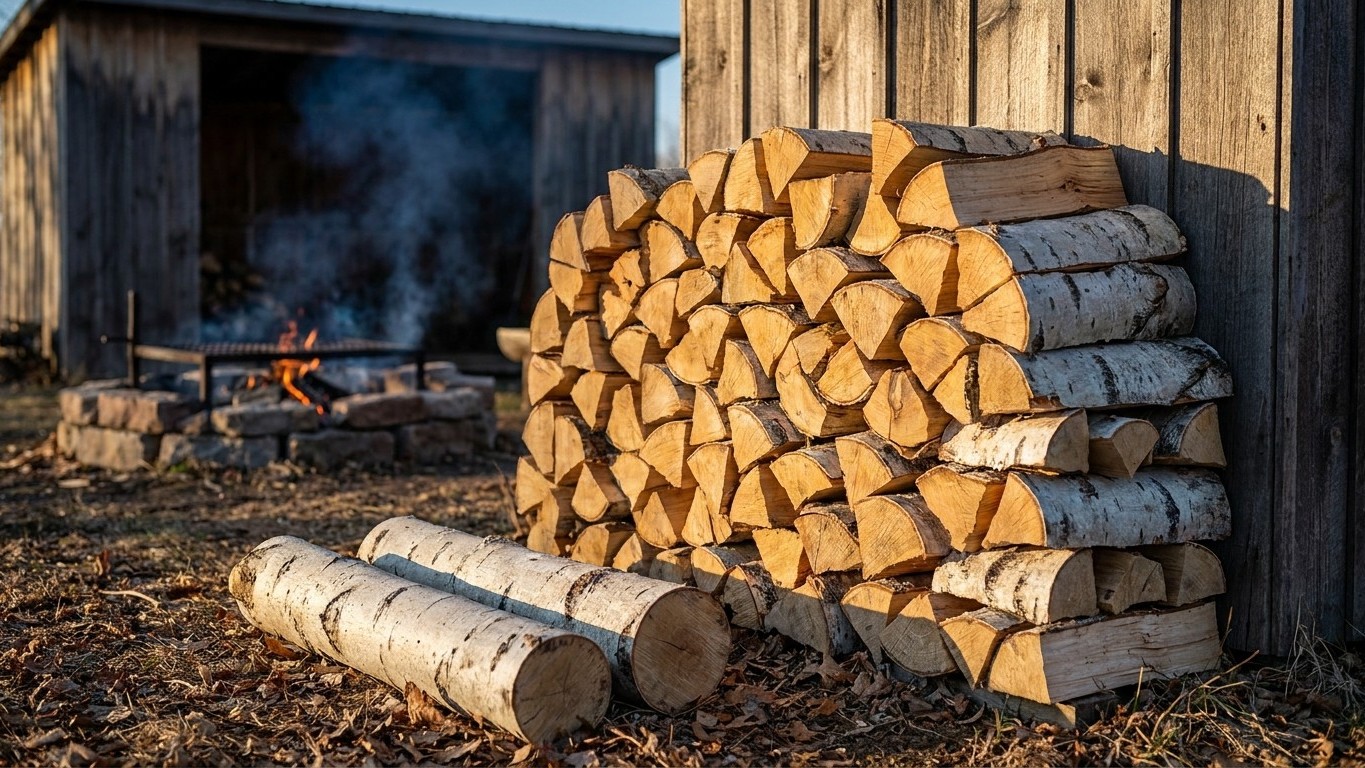

Aspen firewood burns fast and hot enough for shoulder-season fires, but it won’t carry you through a January night the way oak or hickory will. It splits easy, seasons in as little as six months, throws almost no sparks, and produces a clean-burning flame with minimal smoke. That makes it a favorite for fire pits, camping, and pizza ovens, but a weak choice as your only wood supply for a cold winter.
Heat Output: How Aspen Stacks Up in BTUs

According to SDSU Extension, a full cord of seasoned aspen delivers 14 million BTUs. Compare that to red oak at around 24 million BTUs, or shagbark hickory pushing past 27 million, and the gap becomes obvious. You’d need to burn close to a third more aspen than oak to generate the same heat over an evening.
That doesn’t make aspen useless. Its low density (aspen weighs in around 25 pounds per cubic foot when dry, versus 40-plus for oak) means it lights fast and burns hot in short bursts. That’s exactly what you want for kindling, for a quick fire on a mild fall night, or for getting a bed of coals going before you add denser logs. Plenty of experienced burners keep a mixed stack: aspen for starting and shoulder-season use, oak or ash for the long, cold stretches of winter.
The rule of thumb in most wood-heating circles: a cord of aspen roughly equals two-thirds of a cord of hardwood like oak in actual heat delivered. If you’re stocking a woodshed for a whole winter in a place with real cold (think Minnesota, Montana, or northern Wisconsin), aspen alone will leave you feeding the stove constantly and still feeling a chill by 3 a.m.
Smoke and Creosote: What to Expect
Aspen is one of the cleaner-burning firewoods available, which is part of why campgrounds and national forests often favor it. Properly seasoned aspen produces a light, low-odor smoke with less visible soot than resinous softwoods like pine or spruce. That matters if you’re burning near neighbors, in a suburban backyard, or in an area with wood-smoke ordinances.
Low resin content also means lower creosote buildup in a chimney or stovepipe, provided the wood is truly dry. Creosote forms when smoke condenses on cool flue surfaces, and wetter wood produces more of that smoke in the first place. Green or improperly seasoned aspen, on the other hand, smokes heavily and can gum up a flue just as fast as any other unseasoned wood. The wood species matters less here than moisture content: aspen at 20% moisture or below burns clean, aspen at 35% or higher smokes and smolders no matter what the label says.
A moisture meter is the cheapest insurance policy against a smoky, creosote-prone fire. Split a piece, press the meter’s pins into the freshly exposed face (not the weathered exterior), and look for a reading at or under 20%. Anything higher means the wood needs more time on the rack.
Sparks and Safety by the Fire Pit
This is where aspen genuinely shines. Its low resin and pitch content mean it throws far fewer sparks than pine, spruce, or even some hardwoods with tight, twisted grain. That’s a real safety advantage around a backyard fire pit, a campsite near dry grass, or a patio with wood decking nearby.
Compare that to woods like elm or some conifers, which can pop and throw embers several feet, and it’s easy to see why aspen shows up so often at scout camps, state park fire rings, and rental cabins. Fewer sparks means less risk of a stray ember landing on a tent, a wooden deck, or dry leaf litter. It’s not a zero-spark wood, no firewood is, but it ranks near the calm end of the spectrum.
None of that replaces basic fire safety. Keep a bucket of water or a hose within reach, clear a perimeter of at least 10 feet around any fire pit, and never leave a fire, however tame the wood, unattended.
Splitting and Seasoning Aspen
Aspen is about as forgiving to split as firewood gets. The grain runs straight, the wood is soft, and a maul or hydraulic splitter goes through rounds with little resistance. Rounds up to 16 or 18 inches across split cleanly by hand in most cases, which is a real advantage for anyone processing their own wood without heavy equipment.
Seasoning time is the other big selling point. Because aspen starts with lower density and less trapped moisture than dense hardwoods, it can reach burnable dryness in six months to a year under good conditions, split, stacked off the ground, and covered on top while the sides stay open to airflow. Oak, by contrast, often needs a full 18 to 24 months to season properly. If you cut and split aspen in early spring, you can realistically be burning it dry by the following fall.
A few practical notes for stacking:
- Split rounds within a few weeks of cutting; bark left on whole rounds traps moisture and slows drying.
- Stack in single rows with gaps between splits rather than tight piles, so air moves through.
- Elevate the stack on pallets or rails to keep ground moisture from wicking upward.
- Cover only the top of the stack, leaving the sides exposed to wind and sun.
Where Aspen Fits in Your Wood Supply
Aspen works best as a supporting wood rather than the backbone of a winter heating plan. It’s ideal for outdoor fire pits, quick evening fires, pizza ovens and bread ovens where a clean, fast, hot flame matters more than long burn time, and for campers who value low weight and easy hauling. Some campgrounds and national forests specifically recommend or require locally sourced aspen (or certified heat-treated wood) to slow the spread of invasive insects like the emerald ash borer, since transporting firewood across state lines can carry pests into new areas. Check local regulations before hauling wood any real distance.
For a wood stove or fireplace insert running as a primary heat source through a real winter, pairing aspen with a denser hardwood makes practical sense: aspen for daytime fires and quick reloads, oak, ash, or hickory for the overnight burn that needs to hold coals until morning. That combination gets you the fast, clean lighting aspen offers without sacrificing the sustained heat a cold night demands.
One more detail worth knowing: aspen’s light weight (often 15 to 20% lighter than an equivalent volume of oak) makes it noticeably easier to haul, stack, and load into a stove, which matters more than people expect once you’re moving several cords a season by hand.