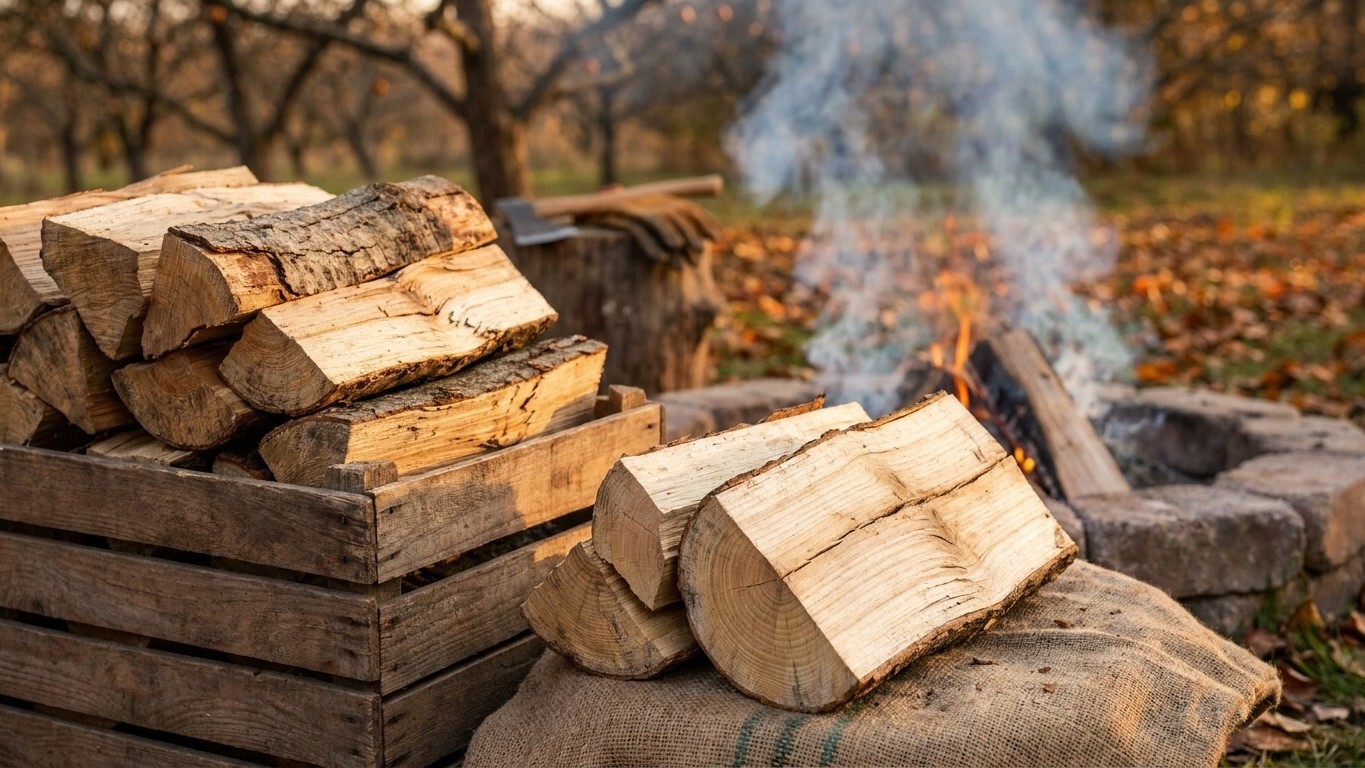

Apple and crabapple rank among the best firewoods you can burn, full stop. Dense, slow-burning, and famous for a sweet, mild smoke that makes backyard fire pits smell like a bakery, these two close relatives produce heat output close to oak and hickory while throwing far fewer sparks than pine or cedar. The catch is availability: most homeowners get their apple wood one tree at a time, usually after a storm takes down an old orchard tree or a landscaper removes a crabapple that’s outgrown its spot.
Heat Output: How Apple Compares to Other Hardwoods

Apple wood has a density that puts it in the upper tier of firewood species. Green apple wood weighs around 50 pounds per cubic foot, and once seasoned it delivers 21 million BTUs per cord, according to SDSU Extension. That’s within a few percentage points of white oak and shagbark hickory, and noticeably higher than maple or ash.
Crabapple burns almost identically. The wood is technically a bit denser in some crabapple cultivars because the trunks and branches grow slower and tighter-grained than orchard apple varieties bred for fruit production, not wood mass. Practically speaking, split crabapple and split apple behave the same way in a firebox: they catch a little slower than birch or ash, then settle into a long, steady coal bed that holds heat for hours.
That coal-holding quality is why apple wood shows up so often in recommendations for overnight burns. A firebox loaded with seasoned apple splits before bed will often still have live coals in the morning, which makes relighting a wood stove far easier on a cold January morning than starting from scratch with a fast-burning softwood.
Why the Coals Last So Long
Density is the whole story here. Wood with tighter cell structure holds more combustible material per log, so it burns down slowly instead of flashing hot and collapsing into ash within an hour. Fruit woods in general, apple, pear, cherry, share this trait, which is one reason orchardists have burned prunings for home heat for generations rather than hauling them to a burn pile.
Smoke, Aroma and Creosote Behavior
Ask anyone who’s smoked a brisket why apple wood chips sell out every summer at hardware stores: the smoke is mild, slightly sweet, and doesn’t carry the acrid bite you get from wet oak or unseasoned pine. That same smoke character carries over to full-size firewood use in a wood stove, insert, or outdoor fire pit. Neighbors are far less likely to complain about apple wood smoke than they are about green softwood smoke, which tends to hang heavy and smell resinous.
Properly seasoned apple firewood, meaning split and dried for at least 6 to 12 months to a moisture content below 20%, burns clean with minimal visible smoke. The Environmental Protection Agency’s guidance on residential wood burning confirms that moisture content is the single biggest factor driving smoke output and creosote buildup, regardless of species. Burn apple wood wet and it will smoke and creosote just like any other wet hardwood; burn it properly seasoned and it’s one of the cleaner-burning options available.
Creosote risk with apple wood is low to moderate when seasoned correctly, similar to oak or hickory. The dense grain does mean it takes longer to season than lighter woods like birch or poplar, so patience during the drying phase matters more with apple than with faster-drying species. Wood that looks dry on the outside but was only split three or four months earlier can still carry 25% to 30% moisture in the core, and that’s exactly the wood that glazes a chimney flue with creosote.
Sparking Behavior: What to Expect
Apple and crabapple are known as calm burners. Compared to softwoods loaded with pitch pockets, like spruce or pine, apple wood produces very few sparks and pops. That makes it a solid choice for indoor wood stoves and fireplace inserts where a stray ember popping through a mesh screen is more than a minor annoyance.
For outdoor fire pits, this low-spark trait is one of apple wood’s biggest selling points. Wood that throws fewer embers means less risk around dry grass, wooden decking, or nearby structures, an important consideration in states with seasonal burn bans tied to wildfire risk, such as California, Colorado, and much of the Mountain West. Always check local burn restrictions regardless of species; sparking behavior doesn’t override a county’s active fire danger rating.
Splitting and Handling Apple Wood
Here’s where apple wood gets a reputation for being difficult. The grain is notoriously twisted and interlocked, a trait that helped the living tree resist wind damage and heavy fruit loads but makes the wood stubborn on a splitting block. Straight-grained rounds split reasonably well with a maul, but crotches, knots, and old grafting points (common in orchard apple trees) often need a hydraulic splitter to break down cleanly.
Crabapple tends to run smaller in diameter than full-size apple trees, since ornamental and wild crabapples rarely grow trunks wider than 12 to 16 inches. That smaller diameter is actually an advantage for the home burner: rounds under 8 inches often don’t need splitting at all, and what does need splitting requires less force than a full cord of orchard apple.
A few practical notes for anyone processing apple or crabapple rounds:
- Split apple wood while it’s still green or freshly cut; it becomes noticeably harder to split once fully seasoned.
- Watch for embedded metal in old orchard trees, wire fencing, nails, or old grafting staples are common finds and will destroy a chainsaw chain.
- Expect a longer seasoning window, 9 to 12 months minimum for full-size splits, compared to 6 months for ash or birch.
- Store split apple wood off the ground and covered on top only, allowing airflow on the sides speeds up the drying process considerably.
Where Apple and Crabapple Firewood Comes From
Very few people cut apple or crabapple as a dedicated firewood crop the way they might manage an oak woodlot. Supply comes almost entirely from orchard removals, storm damage, and landscape trees that have died or need to come down. States with significant commercial apple production, Washington, New York, Michigan, and Pennsylvania among them, see the largest volumes of apple wood enter the firewood market when orchard blocks get replanted, something that happens on a rotating basis as productive trees age out after 15 to 25 years.
Because supply is inconsistent, apple firewood commands a premium in areas where it’s sold commercially, often priced alongside oak or higher. Homeowners near apple-growing regions sometimes get lucky by contacting local orchards directly during replanting season, since orchardists frequently need to clear old wood and are happy to let someone haul it away for free or at a low cost.
Crabapple is more evenly distributed since it’s a popular ornamental landscape tree across most of the continental United States, planted for its spring blossoms as much as any fruit it produces. When a mature crabapple comes down in a suburban yard, whether from age, storm damage, or a landscaping decision, it typically yields a modest but useful amount of dense, clean-burning firewood, usually somewhere between a quarter and a half cord for a mature specimen.
Best Uses for Apple and Crabapple Firewood
Given its burn characteristics, apple wood earns its keep in a few specific roles rather than as an everyday bulk fuel, mostly because supply rarely allows for burning it exclusively all winter.
Overnight and shoulder-season heating is where apple wood shines in a wood stove or insert. Its long coal life means fewer trips to reload the firebox, and the mild smoke is less likely to trigger complaints in neighborhoods with tighter property lines. For anyone running an outdoor fire pit for weekend gatherings, the combination of low sparking and a pleasant aroma makes apple and crabapple a standout choice over resinous softwoods.
Cooking and smoking applications remain apple wood’s most famous use, and for good reason. Chunks and chips are widely available commercially for smokers and grills specifically because the sweet smoke pairs well with pork, poultry, and cheese without overpowering the food the way stronger woods like mesquite or hickory can. Anyone processing a fallen apple tree at home can set aside smaller splits and chunks for grilling use while saving the larger rounds for the wood stove.
Blending apple wood with a faster-burning species is a practical strategy many experienced burners use. Mixing apple splits with birch or ash gives quick early heat from the faster wood while the denser apple takes over for sustained, longer-lasting coals later in the burn cycle, stretching a limited supply of apple wood across more burning sessions.