
Basswood burns fast, hot for a short while, and cool for most of it. As firewood goes, it sits near the bottom of the BTU chart, throws a decent flame with minimal spark, and produces more smoke than oak or hickory when it’s not fully dry. If you’re weighing basswood against denser hardwoods for your wood stove or fire pit, the short version is this: good for quick fires and shoulder-season heat, disappointing for a long winter night.
How Much Heat Does Basswood Firewood Produce?

Basswood, also called American linden (Tilia americana), is one of the lightest hardwoods you’ll find at a firewood dealer. According to SDSU Extension, a full cord delivers somewhere around 13.5 to 14.5 million BTUs. Compare that to red oak or shagbark hickory, both of which push past 24 million BTUs per cord, and you start to see the gap. Basswood lands closer to white pine or aspen than it does to any true heating hardwood.
That low number traces back to density. Basswood has a specific gravity around 0.32 to 0.37, making it one of the softest woods classified as a hardwood. Wood density and heat output move together almost in lockstep. Denser wood packs more combustible material into the same volume, so it burns longer and hotter per log. Basswood’s open, spongy cell structure means a split log burns down to coals in a fraction of the time it takes a piece of black locust or sugar maple.
What this means in practice: a stove loaded with basswood at 9 p.m. probably won’t have usable coals by sunrise. Homeowners who rely on overnight burns to keep a house warm through a cold snap tend to find basswood frustrating on its own. It works better mixed with a denser species, or reserved for daytime fires where you’re feeding the stove every couple of hours anyway.
Smoke and Creosote: What to Expect
Basswood has a reputation for smoking more than it should, and most of that comes down to moisture rather than the wood itself. Freshly cut basswood carries a high water content, and because the wood is so porous, it also holds onto that moisture stubbornly in thicker rounds even after months of stacking. Burn it too green and you’ll get a smoldering, smoky fire with a visible haze rolling off the chimney.
Properly seasoned basswood, split small and dried a full season, burns much cleaner. The smoke output drops noticeably once moisture content falls below 20 percent, which is the general threshold the EPA’s Burn Wise program recommends for any firewood species to reduce particulate emissions and improve combustion efficiency. The issue isn’t that basswood is inherently smoky wood like wet pine loaded with resin. It’s that basswood’s cell structure holds water longer than a tight-grained hardwood, so people burn it before it’s actually ready.
Creosote buildup follows the same logic. Cooler, smoldering fires from underseasoned wood send more unburned particulate up the flue, where it condenses into creosote on cooler chimney walls. Basswood burned wet contributes to this more than a dense, well-seasoned hardwood would, simply because its lower burn temperature doesn’t consume the compounds as completely. Dry basswood, burned in a hot, well-drafted fire, produces creosote at rates comparable to other seasoned hardwoods. The wood species matters less here than the seasoning and the way the fire is managed.
Sparks, Popping, and Fire Pit Safety
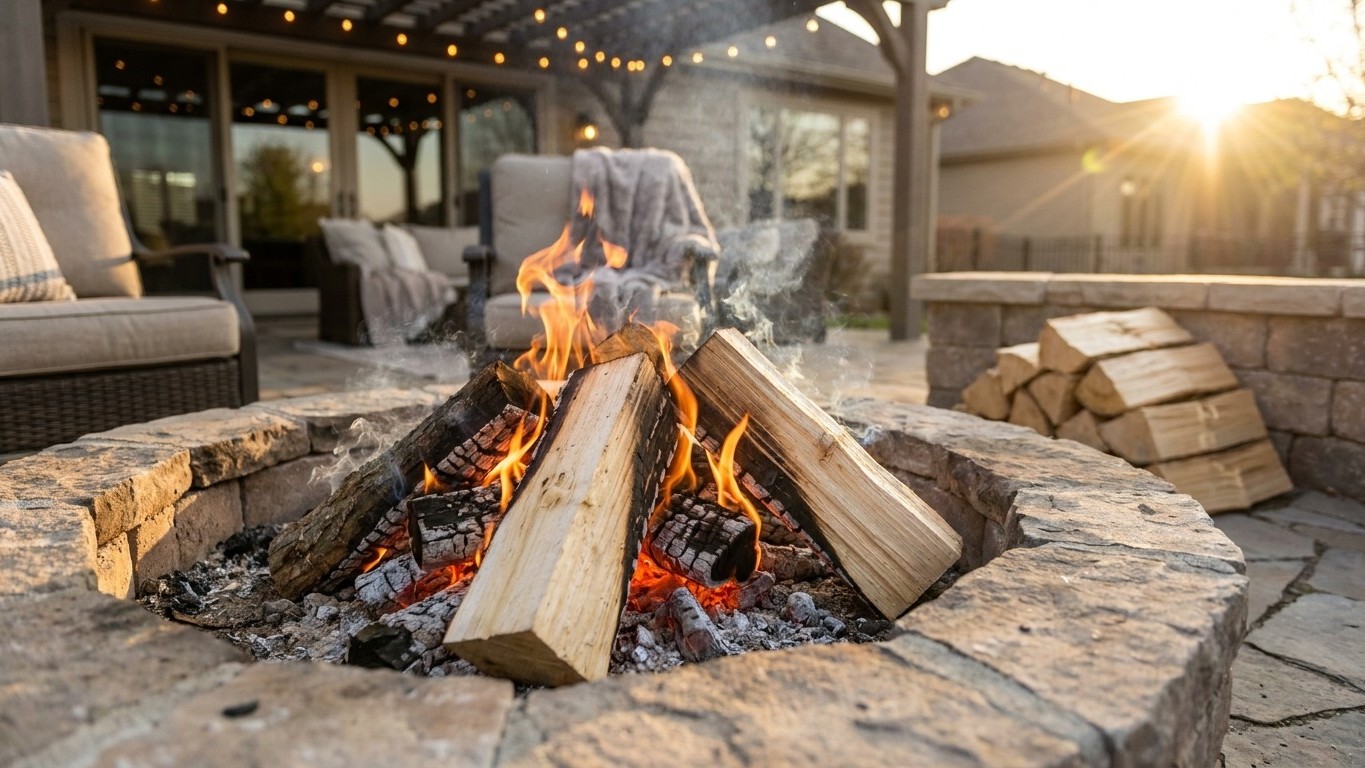
One place basswood genuinely earns points: it’s a quiet, low-spark wood. The fine, even grain and low resin content mean basswood doesn’t pop and throw embers the way pine, spruce, or green wood with trapped sap pockets tend to. For anyone running an open fire pit near a wood deck, a tent, or dry grass, that’s a real safety advantage over resinous softwoods.
This makes basswood a reasonable choice for backyard fire pits and camp fires where the concern is flying embers rather than sustained heat output. It’s not going to warm a crowd standing twenty feet back the way a hickory bonfire will, but it also won’t send sparks arcing onto someone’s jacket. Campers and backyard hosts who want a mellow, manageable flame sometimes prefer basswood or aspen over oak specifically for this reason, even knowing they’ll be adding logs more often.
Splitting, Seasoning, and Storage
Basswood is famously easy to split when freshly cut, soft enough that a hatchet handles rounds a chainsaw would otherwise be needed for on denser species. The catch is the grain. Basswood can develop a stringy, interlocked texture, especially near knots or where branches once grew, and stringy sections resist splitting cleanly, leaving ragged, hairy faces instead of a crisp split. Woodworkers actually prize basswood for hand carving for this same fibrous, forgiving grain, which tells you something about why it behaves oddly under an axe.
Seasoning basswood takes less time than most hardwoods, typically six months to a year if split and stacked properly, compared to eighteen months to two years for dense species like oak. The tradeoff is that basswood needs more attention to airflow. Because the wood is so porous, stacked rounds that don’t get good ventilation tend to hold surface moisture and can develop mold or soft, punky spots faster than a tighter-grained wood would. A few practical habits help:
- Split logs smaller than usual, since thick basswood rounds dry unevenly from the outside in.
- Stack off the ground on pallets or rails, with at least a few inches of clearance for air movement underneath.
- Leave the top covered but the sides open, so trapped humidity doesn’t build up inside a tarp-wrapped stack.
- Check moisture with a simple pin-style meter before burning; aim for 20 percent or below.
Basswood is also lightweight to handle, which matters more than people expect when you’re stacking a few cords by hand. A basswood round that would take real effort to lift if it were oak comes off the truck and onto the rack with noticeably less strain, a small but real convenience for anyone doing their own wood processing.
Best Uses for Basswood Firewood
Basswood shines in a few specific roles rather than as an all-purpose heating wood. It works well as a shoulder-season fuel, the kind of wood you burn in October or April when you want to take the chill off a room without cranking the stove to full output for six hours. Because it lights easily and burns hot early, it also doubles as excellent kindling or a fire-starter layer underneath denser splits, especially in a fireplace insert or an outdoor fire pit where getting a bed of coals going quickly matters more than sustained output.
Mixed burning is where basswood earns its keep in a wood stove. Loading a mix of basswood and a dense species like oak or ash gives you quick, responsive heat from the basswood up front while the denser wood catches and carries the burn longer. Some stove owners run basswood in the morning and evening for a fast warm-up, then switch to hickory or locust before bed for the overnight coal bed.
It’s a poor choice as the sole wood source for anyone heating primarily with a wood stove through a full winter, particularly in colder states like Minnesota, Wisconsin, or northern New York, where basswood grows commonly and gets cut locally. The wood simply doesn’t carry enough stored energy per log to keep pace with subzero nights. But as a supplemental or transitional wood, split small, seasoned well, and mixed with something denser, basswood earns a legitimate spot in the wood shed.