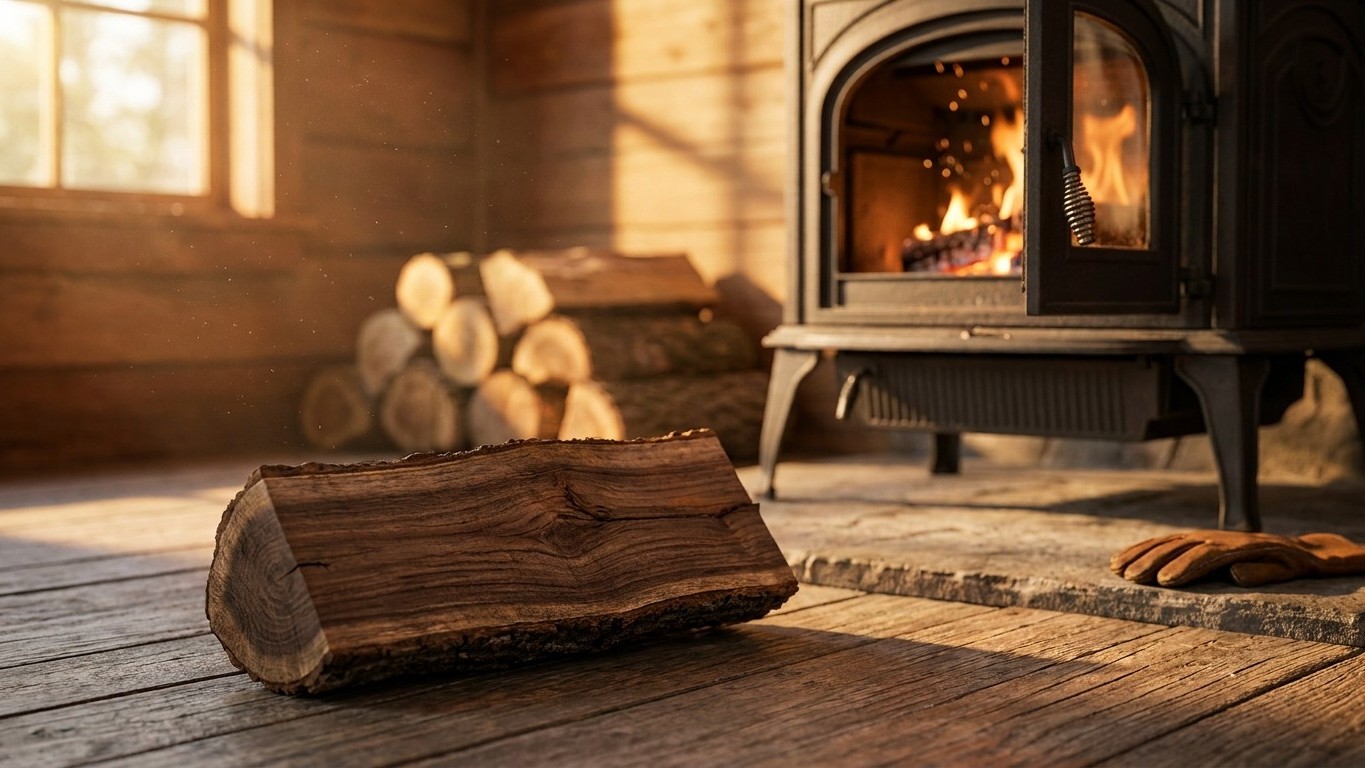

Black walnut burns hot but not blazing hot, splits easier than most hardwoods, and produces a mellow, low-spark fire with a faint sweet smell. It sits in the middle of the firewood pack: better than pine or poplar, but well behind oak, hickory, or hard maple when it comes to raw BTU output. If you’ve got a black walnut tree coming down, here’s what to expect once it hits your fire pit or wood stove.
Heat Output: Where Black Walnut Ranks

According to SDSU Extension, dry black walnut produces roughly 20 to 22 million BTUs per cord. That puts it solidly in the “medium” hardwood category, alongside species like soft maple, birch, and cherry. Compare that to red oak or shagbark hickory, which push past 24 million BTUs per cord, and the gap becomes obvious after a few hours of burning. A stove loaded with walnut will need reloading sooner than one packed with oak if you’re trying to hold an overnight burn.
That said, black walnut still beats the softwoods by a wide margin. Eastern white pine, for comparison, tops out around 15 million BTUs per cord. So if your only other option is pine or a fast-growing softwood, walnut is a clear upgrade for anyone heating a home through a Midwest or mid-Atlantic winter. Black walnut sits in this middle tier alongside American elm and hackberry — useful context if you’re weighing it against whatever else is available on your property.
Smoke, Sparks, and Smell While Burning
One of the underrated qualities of black walnut is how clean it burns once properly seasoned. It doesn’t pop and throw sparks the way some softer, resinous woods do, which makes it a reasonable choice for an open fire pit where flying embers are a real concern for nearby dry grass or wood decking. Green or wet walnut is a different story — any unseasoned wood will hiss, spit, and smoke heavily, and walnut is no exception.
The smoke itself has a mild, slightly sweet character that most people find pleasant rather than acrid. It’s nowhere near as aromatic as cherry or apple wood, but it’s not harsh like some construction-grade lumber or treated scrap can be. For cooking fires, black walnut gets mixed reviews. Some backyard smokers use it sparingly, blended with milder fruitwoods, because straight walnut smoke can turn slightly bitter on food if used in heavy doses over a long cook. As a home heating wood in a stove or insert, though, that bitterness is a non-issue since you’re not flavoring anything.
Creosote and Chimney Considerations
Because black walnut is a moderately dense hardwood, it produces less creosote buildup than softwoods when burned dry. Creosote formation is driven mostly by moisture content and incomplete combustion, not species alone, so the real safeguard is making sure your walnut has actually seasoned down to around 20% moisture or less before it goes in the stove. The Forest Products Laboratory, part of the USDA Forest Service, has long noted that fuel moisture is the single biggest factor in both heat efficiency and smoke output, more than the wood species itself.
Seasoning and Splitting Black Walnut
Black walnut is one of the more forgiving hardwoods to split. The grain runs fairly straight, and rounds under 16 inches in diameter usually give way with a maul without much fighting. Larger, older trunk sections with interlocking grain near old branch unions can be stubborn, but overall it’s noticeably easier than elm or sycamore, two species notorious for defeating splitting mauls.
Seasoning time runs 6 to 12 months if the wood is split, stacked off the ground, and given good airflow with sun exposure. That’s faster than oak, which commonly needs a full 12 to 24 months to season properly because of its dense, tight grain. Walnut’s slightly lower density means moisture escapes the wood more readily. A single-row stack under a simple cover, with the ends exposed to wind, will typically be ready to burn by the following fall if split in late winter or early spring.
A few practical pointers for anyone processing a walnut tree for firewood:
- Split rounds within a few weeks of felling; walnut left whole holds moisture stubbornly in the heartwood.
- Stack bark-side up on top rows to shed rain, since walnut bark can trap water against the wood underneath.
- Keep sawdust and bark scraps away from garden beds and other plants, since walnut roots, leaves, and to a lesser extent the wood contain juglone, a compound toxic to many plants including tomatoes.
That juglone issue is worth flagging separately, since it surprises a lot of people. It’s a soil and plant toxicity concern, not a health or smoke hazard, but gardeners have lost tomato plants and other juglone-sensitive vegetation to walnut mulch or wood chips spread too close to a garden bed. If you’re using walnut bark or sawdust for anything beyond the fire, keep it well away from vegetable plots.
Best Uses for Black Walnut Firewood
Given its middle-of-the-pack BTU output and clean-burning nature, black walnut works best as a shoulder-season wood or as part of a mixed woodpile rather than the sole fuel for the coldest stretch of winter. It lights easily, produces a steady, moderate flame, and doesn’t demand the babysitting that some faster-burning softwoods do. For a wood stove used to take the chill off a house in October and April, or for evening fires in a fireplace insert, it performs well without burning through your supply too fast.
For the deep cold of January and February, especially in northern states where overnight burns matter, walnut alone may leave you reloading more often than you’d like. Many households split the difference: oak or hickory for the coldest nights, walnut and other mid-range hardwoods for milder days, and softwoods reserved for quick starts or outdoor fire pits. If black walnut is what’s available from a tree removal or storm cleanup, it’s absolutely worth seasoning and burning rather than hauling to a chipper — it just shouldn’t be the only species in the woodshed if consistent heat output is the priority.
Outdoor fire pits and chimineas are actually a strong match for black walnut. The low spark output and manageable smoke make it comfortable to sit around, and the moderate burn rate means a bundle lasts through a full evening without constant feeding. Combined with its relatively fast seasoning time, it’s a practical choice for anyone clearing a walnut tree who wants usable firewood within a year rather than waiting two seasons for oak to dry out.