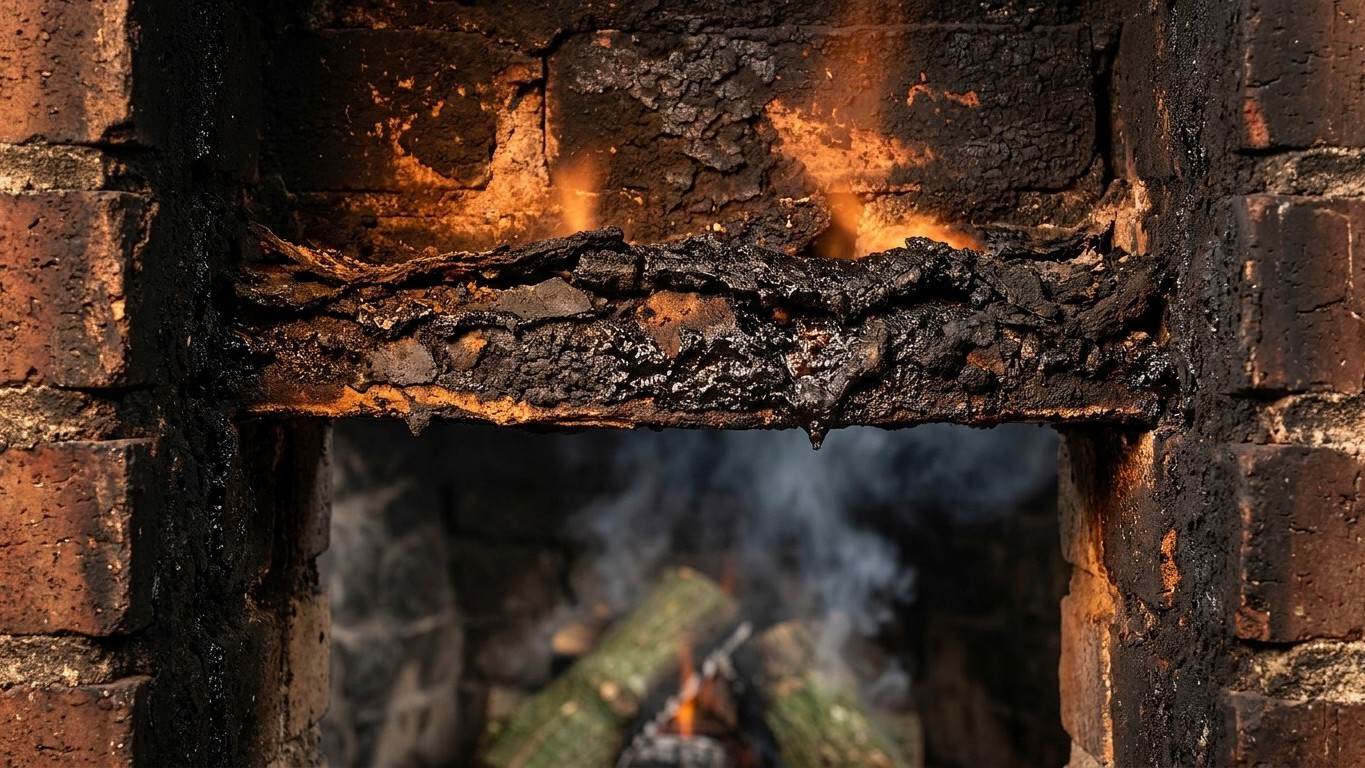

Creosote buildup on the inside of a flue is what actually burns during a chimney fire, and it forms whenever wood smoke cools faster than it can escape. The two habits that produce the most of it, burning green or unseasoned wood and damping a fire down for a slow overnight burn, are exactly the habits many people use to stretch their firewood supply. That’s the core problem this page untangles.
Chimney safety

Creosote is unburned wood gas. When smoke leaves the firebox still carrying tars and moisture, it hits the cooler walls of the flue and condenses there, the same way steam fogs a bathroom mirror. Layer after layer, that condensate builds into a coating that ranges from a flaky soot to a hard, glazed crust. That crust is fuel. Once it ignites inside the flue, the fire has a chimney’s worth of oxygen and a chimney-shaped chamber to burn in, and temperatures inside can climb far past anything the flue liner was built to handle.
The mechanism explains why the advice around wood burning sometimes contradicts the advice around saving wood. Green or unseasoned logs still hold a lot of water, so a chunk of the fire’s heat goes into boiling that water off instead of burning cleanly, and the smoke that results is cooler, wetter, and loaded with unburned particles. Damping a stove down overnight does the same thing from a different angle: less air means a smoldering, low-temperature burn that produces thick, heavy smoke instead of a clean flame. Both habits feel like they’re saving wood. Both are, physically, creosote factories.
Why a hotter fire is the safer fire
A hot, bright fire in a well-drawn stove deposits far less creosote than a smoldering one, because more of the wood gas actually combusts before it ever reaches the flue wall. This is one of the few places in home heating where the more aggressive-looking fire is also the safer one. A tall, active flame with visible movement is burning more completely than a flat bed of coals barely glowing under a closed damper.
Where it accumulates first
The flue is coldest at the top and in any section that runs through an unheated attic, so that’s where creosote condenses first and thickest. A flue that looks clean at the firebox opening can be heavily coated eight or ten feet up, out of sight and out of mind until a sweep gets a light and a mirror up there. This is the physical reason a visual check from the hearth tells you almost nothing useful.
An annual sweep and inspection is the only way to know what’s actually built up inside a flue, because there’s no way to judge the upper sections from the firebox. Cooperative extension programs and state fire marshal offices that publish chimney safety guidance consistently point to this same conclusion: inspection isn’t a suggestion tacked onto burning wood, it’s the only reliable way to catch a problem before it becomes a fire.
How to do it
Turning that safety information into action doesn’t require special tools or a big weekend project. It comes down to a short sequence, done in order, before the season’s first serious cold snap.
- Check your wood’s moisture level by feel and sound first. Well-seasoned splits are lighter than green ones of the same size, sound hollow when knocked together, and often show small cracks radiating from the end grain. If your stack still feels heavy and dull-sounding, set it aside for next season and burn what’s already dry.
- Build a hot start every time you light the stove. Use smaller, dry kindling first and open the air intake fully until the fire is established with real flame, not just glowing coals, before you think about slowing it down.
- Avoid closing the damper all the way down for a slow overnight smolder. If you need the heat to last, load with larger dry splits instead of choking off the air on a fire that’s still producing smoke.
- Look at the smoke coming out of your chimney on a cold morning. Thin, nearly clear smoke means a cleaner burn. Thick gray or black smoke rolling out means the fire is smoldering and depositing creosote right now.
- Schedule your annual sweep and inspection before the season, not during it. Fall is when chimney sweeps are busiest, so booking early gets you a slot before the first hard freeze instead of after a scare.
- Ask the sweep to check the upper flue and any attic run specifically. Since those cold sections build up first, a good inspection focuses there rather than just glancing at the firebox connection.
What goes wrong
Even careful burners run into trouble, and knowing what a specific failure looks like matters more in the moment than knowing how to have prevented it.
-
I hear a loud roaring or rumbling sound from the chimney, like a freight train or a low jet engine
That sound, along with a shaking pipe, dense smoke, and sparks or flame visible at the top of the chimney, is the signature of an active chimney fire. Get everyone out of the house, call the fire department immediately, and if you can safely do it, close the stove’s air intake and any dampers to starve the fire of oxygen. Do not go up on the roof or try to put it out yourself. Once the fire department has cleared the chimney, it needs a full professional inspection before it’s used again, since the heat can crack tile liners or warp metal ones even when the visible fire looked brief.
-
My stovepipe or chimney cap has a heavy black, tarry buildup I can see or scrape
A glazed, hard, shiny coating is the most dangerous stage of creosote, far more flammable and harder to remove than dry, flaky soot. This isn’t a job for a wire brush and a Saturday afternoon. It calls for a professional sweep with the tools built for glazed creosote, and it’s a strong signal that recent burns have been running too cool, usually from damp wood or an overly restricted air setting.
-
I haven’t had my chimney swept in years and I’m not sure how bad it is
Since the flue can’t be judged from the firebox, and the coldest sections where buildup collects fastest sit out of view, the only real answer is to schedule an inspection before burning again this season. If a sweep finds heavy deposits, expect them to recommend more frequent cleanings going forward, and use it as the moment to reassess how dry your wood really is and how you’ve been running the damper.
-
My smoke has turned thick and gray or black instead of thin and clear
That shift usually means the wood is too wet, the air intake is closed too far, or both. Open the damper, check whether the current load is fully seasoned, and if the smoke doesn’t clear up within a few minutes, treat it as a sign that recent burns have likely been depositing creosote and move up the timeline on your next sweep.