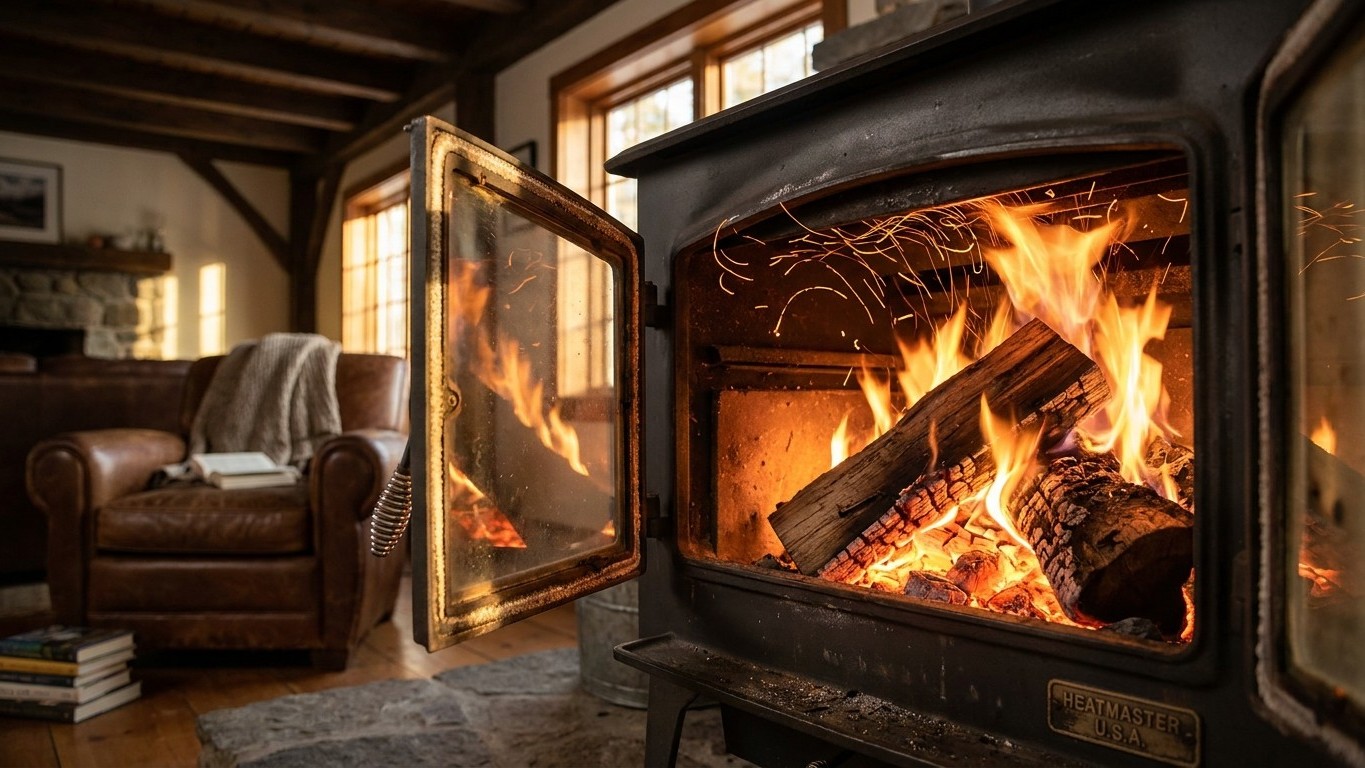

Mulberry burns hot, throws sparks like a Fourth of July display, and produces very little smoke once properly seasoned. It ranks among the better hardwoods for heat output, similar to oak or ash, but its spitting and popping habit makes it a poor match for open fireplaces or unscreened fire pits. Anyone burning mulberry needs a stove with a solid door or a well-screened outdoor setup.
How Much Heat Does Mulberry Firewood Actually Produce?

According to SDSU Extension, a full cord of seasoned mulberry generates somewhere between 25 and 26 million BTUs. That puts it in the same range as white oak and shagbark hickory, well above soft maple or cottonwood, and noticeably hotter than most fruitwoods people associate with backyard trees.
For comparison, a cord of white ash produces around 24 million BTUs, while black locust, one of the hottest-burning American hardwoods, tops out near 27 million. Mulberry sits comfortably in that upper tier. A homeowner heating a 1,500-square-foot house through a Midwest winter would need roughly three to four cords of mulberry to get through the coldest months, assuming a mix with milder days, which lines up with typical hardwood consumption rates for that square footage.
What makes mulberry stand out isn’t just the raw number. It burns with a long, even coal bed. Those coals hold heat overnight better than lighter woods like poplar or pine, so a stove loaded before bed with mulberry often still has usable coals by morning. That’s a real advantage for anyone running a wood stove as a primary heat source rather than just for ambiance.
Why Mulberry Sparks So Much (And What to Do About It)
Mulberry has a reputation among firewood cutters for throwing sparks farther and more frequently than almost any other common hardwood. The cause comes down to trapped gas pockets and sap channels in the wood that heat up and release suddenly, sending small embers popping several feet from the fire. Anyone who has stood too close to a mulberry campfire in shorts has probably learned this the hard way.
This isn’t a minor quirk. It’s the single biggest reason mulberry gets mixed reviews online despite its strong heat output. Open, unscreened fire pits are genuinely risky with mulberry, especially on dry grass or near a wood deck. A stray ember landing on dry leaves has started more than one preventable yard fire.
The fix is straightforward: burn mulberry in an enclosed wood stove or fireplace insert with a glass door, or use a heavy spark screen if burning outdoors. Indoor stoves with a sealed firebox contain the sparks entirely, which is why so many stove owners rate mulberry highly while campfire users often rank it lower. Context matters more than the wood itself here.
Splitting freshly cut rounds before the wood dries fully tends to reduce the sparking somewhat, since it releases trapped moisture and sap earlier rather than letting it build pressure inside a sealed log. It won’t eliminate the popping, but seasoned, well-split mulberry sparks noticeably less than green or partially dried rounds.
Sparks in Enclosed Stoves vs. Open Fires
Inside a modern EPA-certified wood stove, the sparking behavior of mulberry is almost a non-issue since the firebox contains everything. The same log in an open hearth or a backyard fire ring is a different story. Chimney owners with older open fireplaces lacking a spark guard should probably choose a milder-sparking wood like ash or hard maple instead, saving mulberry for enclosed appliances.
Smoke, Smell, and Overall Burn Quality
Properly seasoned mulberry produces relatively little smoke compared to woods like elm or cottonwood. It burns clean, with a mild, slightly sweet smell that most people find pleasant rather than acrid. Green or under-seasoned mulberry is another story entirely, producing thick white smoke and building creosote fast, which is true of nearly every hardwood but especially noticeable with mulberry given its density.
Creosote buildup is worth flagging specifically. Because mulberry burns dense and hot when dry, but smokes heavily when wet, the gap between “ready to burn” and “not ready” is more consequential than with lighter woods. Chimney sweeps in regions where mulberry grows commonly, particularly the central and southern United States, report it as a wood that either burns beautifully or gunks up a flue fast, depending entirely on moisture content at the time of burning.
Seasoning mulberry properly takes about 12 months split and stacked in a sunny, breezy spot, sometimes longer in humid climates like the Gulf Coast or the Ohio Valley. Moisture content should read 20% or below on a wood moisture meter before it goes in a stove. Skipping this step is the single most common reason people report mulberry as smoky or hard to light, when the real issue is impatience rather than the wood itself.
Once dry, mulberry lights easily from a bed of coals and doesn’t require constant tending. It’s not a wood that needs a fussy ash-tray or frequent adjustment. Ash production is moderate, similar to oak, so stoves burning mulberry regularly need cleaning out every week or two during heavy winter use, not daily.
Splitting, Seasoning, and Storage Notes
Mulberry wood has an interlocked, sometimes stringy grain that can make splitting by hand more work than expected. A hydraulic splitter handles it without complaint, but a maul and wedge on a large, twisted round can turn into a wrestling match. Smaller diameter logs, under 10 inches, split reasonably easily; anything larger with visible grain swirl is often better left to a mechanical splitter.
The wood itself is naturally resistant to rot, a trait that made it popular historically for fence posts before pressure-treated lumber took over. That same rot resistance means cut rounds left sitting on the ground can take longer to season than woods that break down faster, since the wood isn’t absorbing and releasing moisture as quickly. Stacking off the ground on pallets, with the top covered but sides open to airflow, cuts seasoning time noticeably compared to leaving rounds in a pile.
Mulberry trees rarely grow large enough in most yards to supply huge quantities at once, since it’s more often a mid-sized ornamental or fence-line tree than a forest timber species. Most people burning mulberry get it a tree at a time, from storm damage or a removal, rather than buying it by the cord commercially. That scarcity is part of why it doesn’t show up on every firewood dealer’s price list next to oak and hickory.
Mulberry Compared to Other Common Firewoods
Set next to oak, mulberry burns nearly as hot with a comparable coal life, but oak is far more available commercially and splits more predictably along straight grain lines. Next to elm, mulberry wins easily on heat output and burns with less smoke, though elm is famous for being nearly impossible to split by hand, a reputation mulberry doesn’t quite match but comes close to on large rounds.
Against softer options like pine or cottonwood, mulberry is in another category entirely for heat and burn time, producing roughly double the BTUs per cord. The tradeoff is availability and that persistent sparking issue, which pine and cottonwood don’t share nearly as dramatically.
For anyone deciding whether to bother processing a downed mulberry tree instead of hauling it off, the answer usually comes down to appliance type. Wood stove owners with an enclosed firebox are getting a genuinely excellent heat source for free. Campfire and open-hearth burners might be better off saving mulberry for indoor use and choosing something calmer for the fire pit.