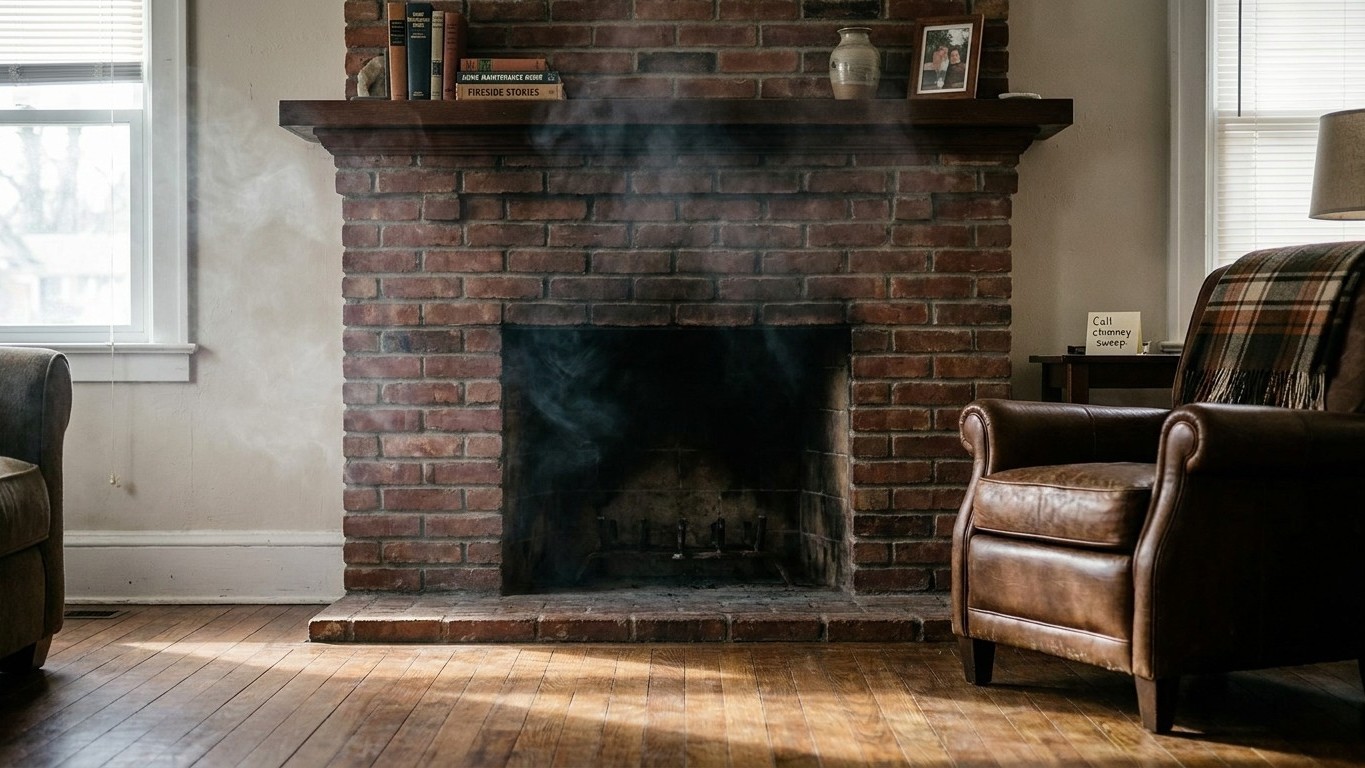

A smoky smell in a house without visible smoke is almost always a cold-flue problem, not a fire problem. If you smell it only while a fire is burning, that’s a draught issue and needs attention now. If you smell it with no fire lit, the chimney is acting as an open vent into your living space, and that calls for a different kind of check before you burn again.
What you are seeing

There are two very different symptoms hiding under one complaint, and telling them apart matters more than anything else here. The first is smoke you can actually see or feel while a fire is going, drifting back into the room, stinging your eyes, settling on the mantel. That’s a draught problem, tied to how the fire is burning right now, and it usually clears when the fire is out.
The second is a stale, sooty smell that shows up when nothing is burning at all, sometimes hours or days after the last fire. No smoke, no haze, just an odor that seems to come from the fireplace itself, or worse, from the walls near it. This is the one people underestimate, because there’s nothing to see. But a smell without visible smoke usually means the flue is leaking backwards when the fire is out, pulling outside air (and whatever is in your chimney) down into the house instead of pushing it up and out.
Neither case is something to just live with, but they sit on different levels of urgency. A smoky room during a fire is annoying and fixable tonight. A cold smell with no fire is a sign the chimney isn’t sealing the house off from itself, and depending on the cause, that can be a slow, ongoing exposure to combustion byproducts you can’t see. If that smell ever shows up alongside a headache, that’s not a coincidence to investigate later. A persistent smell with a headache is a reason to leave the house and call for a carbon monoxide check, not to open a window and continue about your evening. Get out first, ask questions second.
So before doing anything else, figure out which one you have. Light a small fire, or think back to the last one, and ask: was there smoke in the room while it burned, or is the smell there even when the fireplace is stone cold? That single distinction decides everything that follows.
Why it happens
Most people assume a smoky smell means a dirty chimney, and reach straight for a call to have it swept. Sometimes that’s right. But a cold-house smell is more often about a path of air being left open than about buildup sitting inside the flue. Creosote and soot do carry an odor, but they don’t usually push that odor into the room on their own. Something has to be moving air down through the chimney and into the house for you to smell it while nothing is burning.
The most common of those somethings is a damper left open. It sounds almost too simple, but an open damper on an unused fireplace turns the flue into a straight shaft between your living room and the outside air, and whatever is sitting in that flue, old soot, trapped moisture, the smell of the last several fires, gets pulled down whenever the house pressure shifts. That happens more than people expect in tightly built or well-insulated homes, because an unused fireplace in a tight house can act as a vent for the whole building. Run a bathroom fan, a range hood, a clothes dryer, and the house has to pull replacement air from somewhere. An open, unused flue is often the easiest path.
The second common cause sits right next to that one: a worn or failed door gasket on a fireplace insert or stove. Even with the damper handled correctly, a gasket that’s compressed, cracked, or missing lets flue gas leak past the door seal any time the pressure inside the flue briefly runs backward, which happens more in modern airtight homes than in older, draftier ones. It’s a small gap, but a small gap on a chimney is enough for a smell to travel a long way.
Third on the list, and the one that deserves more concern than either of the first two, is a cracked or separated flue liner. This doesn’t just let a smell through, it lets combustion gas from a genuinely damaged path into places it was never meant to go, sometimes into wall cavities next to the chimney rather than just back into the room. A damper left open, a failed door gasket or a cracked flue liner each produce the same symptom, the same stale smoke smell in a cold house, which is exactly why guessing at the cause from smell alone doesn’t work. All three need to be checked in order, because fixing the easy one first (the damper) can make it obvious whether a deeper problem is still there.
The instinct to blame “dirty wood” or a chimney that “just needs a cleaning” is understandable, but it skips past the actual mechanism. Dirty or wet firewood changes how much creosote builds up over a season. It doesn’t explain a smell appearing in a house where no fire has burned in days. That’s a sealing and pressure story, not a fuel story, and treating it as a fuel problem usually means calling for a sweep before checking the one thing, the damper, that takes thirty seconds to test.
What to do about it
Start tonight with the free check. Go to the fireplace, cold, and look up into the throat of the chimney where the damper plate sits. Most dampers have a simple handle or lever just inside the firebox. If it’s open, close it fully when the fireplace isn’t in use, and see whether the smell fades over the next day. This single step resolves a meaningful share of “smells of smoke when nothing’s burning” complaints, because it removes the open path entirely.
If the damper was already closed, or closing it doesn’t fully solve it, look at the door and its gasket next, assuming there’s a stove or insert with a door. Run a piece of paper across the seal and gently close the door on it; if the paper slides out with no resistance, the seal isn’t compressing anymore. A gasket that’s flattened, glazed, or gapped in spots is doing very little sealing, and that’s a repair, not a full stove replacement, though it’s worth having it fitted by someone who does that work regularly rather than guessing at the size and adhesive.
What you should not try to diagnose yourself is the flue liner. You can’t see a crack or a separated joint from the room, and probing at it with a flashlight from the firebox won’t tell you much. This is where the limit sits: a damper you can adjust yourself, a gasket a stove technician can replace in an afternoon, but a suspected liner problem needs a proper inspection, the kind that checks the full length of the flue rather than just the visible top and bottom. If closing the damper and checking the gasket don’t clear the smell, that’s the point to stop guessing and get a professional inspection scheduled, because at that point the remaining likely cause is structural, not something a home fix reaches.
And if at any point the smell arrives with a headache, dizziness, or that flat, stale-air feeling that doesn’t lift, skip the whole troubleshooting sequence. Get everyone out, ventilate on the way out rather than staying to open windows, and get a carbon monoxide check done before anyone goes back in. That’s not a step to fold into a weekend project list.
How to keep it from coming back
Once the immediate cause is handled, the habit that keeps it from returning is simple and boring: close the damper every single time the fireplace goes unused, not just after the season ends. It’s the cheapest, fastest fix available and it’s also the one people forget first, because an open damper causes no problem on the day you leave it open. The cost shows up weeks later, as a smell you’ve forgotten to connect back to that choice.
Beyond the damper, a yearly check of the door gasket and a professional flue inspection before the burning season starts catches both of the failure points that don’t announce themselves gradually. A gasket doesn’t usually go from fine to failed overnight, and a liner crack doesn’t usually appear mid-season either. Both are the kind of thing an annual look-over is built for, the same way a furnace gets a fall check before it’s asked to run every day.
None of this is really about the wood you’re burning, but it’s worth saying plainly since it comes up in the same breath so often: the fuel side of this problem, how well your firewood is seasoned and how that affects smoke and creosote while a fire is actively burning, is a separate mechanism from the cold-house smell covered here. If smoky rooms during a fire, rather than smells when it’s out, are the recurring issue, that’s the territory covered in The Firewood Never Seems to Dry, and it’s worth reading as its own problem rather than folding it into a damper or gasket fix that won’t touch it.