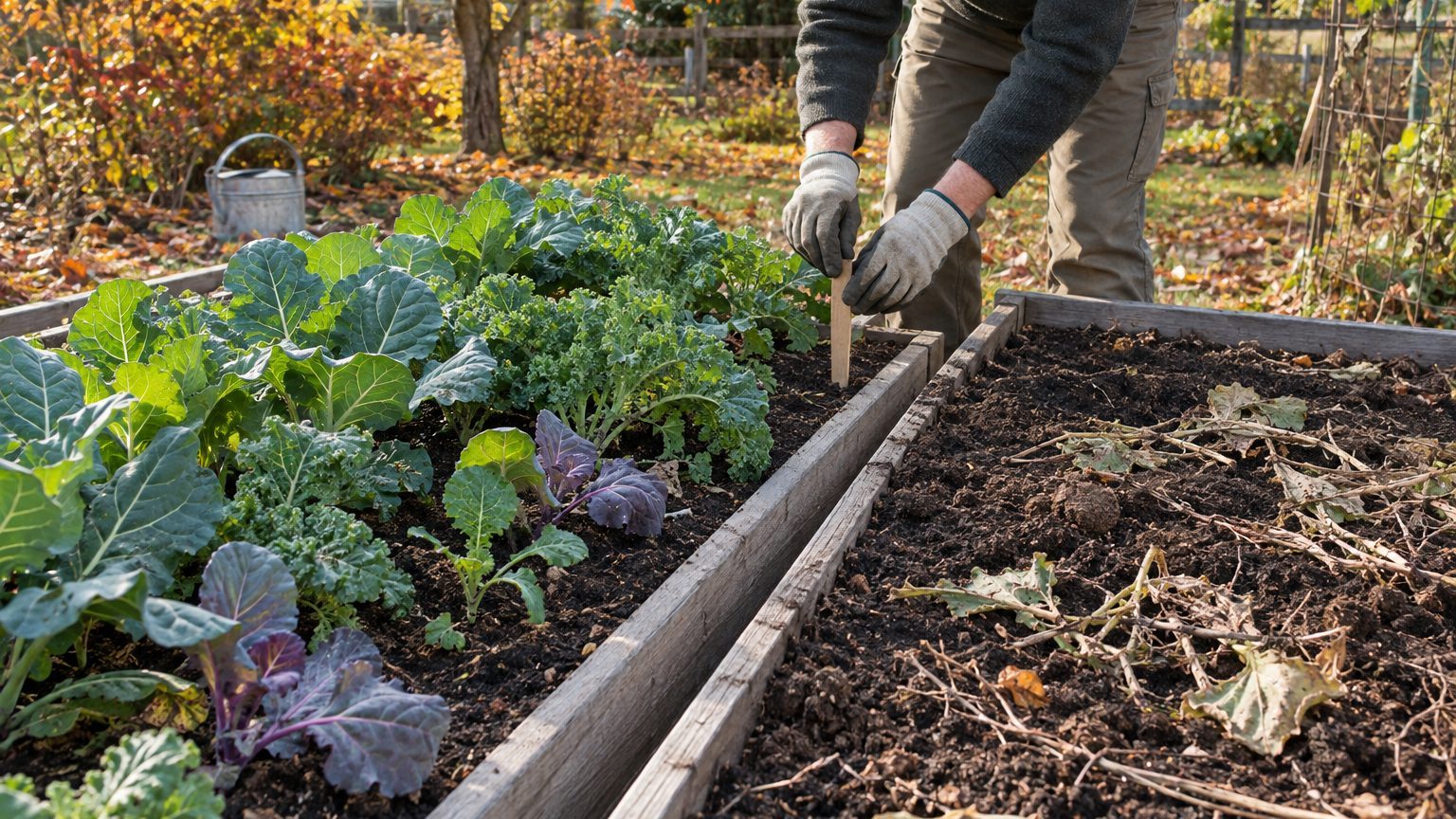

Collards belong to the cabbage family, and that family is bigger than most gardeners expect. Kale, cabbage, broccoli, cauliflower, mustard greens, turnips, rutabagas, radishes, arugula and several popular cover crops all count as the same crop for rotation purposes. Follow collards with any of them and the soil problems carry straight over. A real break means three to four years without any of them in that bed.
What is actually going on
Half the gardeners who rotate their brassicas are rotating them into themselves. They move collards out of the bed, plant turnips or kale there the next season, and feel good about the plan. The soil sees no change at all.
Rotation works because most garden pests and diseases are picky. A fungus, a bacterium or an insect that lives on one plant family starves, slowly, when that family stops showing up. Brassicas share a long list of such troublemakers. Clubroot is a soil-borne organism that swells the roots into knobby clubs and leaves plants wilting on hot afternoons; its resting spores can sit in soil for years, commonly a decade or more. Black rot is a bacterial disease that enters through leaf edges and shows as yellow V-shaped wedges, and it persists in crop residue. Alternaria leaf spot, yellows diseases and downy mildew follow the same family around too. On the insect side, root maggots, flea beetles, cabbage worms and harlequin bugs all recognize any brassica as dinner, and many of them overwinter in the debris and soil beneath last season’s plants.
The family is defined by botany, not by how the vegetable gets used. Collards, kale, cabbage, broccoli, cauliflower, Brussels sprouts and kohlrabi are one species grown in different shapes. Turnips and bok choy belong to a close relative, mustard greens to another, and rutabagas to a cross between cabbage and turnip ancestors. Radishes, arugula, watercress and horseradish sit in the same family as well. Different species, same vulnerabilities. A pathogen that attacks a cabbage root has little trouble with a turnip root.
That is why turnips and rutabagas deserve a flag of their own. They are grown as root crops and often get filed with carrots and beets in a gardener’s head, but they share their troubles with cabbage, kale and mustard. Rotate them into a cabbage bed and you have rotated nothing.
Understanding the mechanism makes the rules easy to adapt. The clock is about pathogen survival, and it only runs while no susceptible plant is present. Any family member, crop or weed, can pause it. A three-to-four-year gap is the usual extension recommendation for the common diseases, and for a bed with confirmed clubroot the wait stretches much longer, which is where your state extension service becomes the right call.
In the garden
Here is the working list. The right-hand column is the part that matters: what actually happens when each one lands in a bed that just grew collards.
| Counts as the same family | What goes wrong if it follows collards |
|---|---|
| Kale, cabbage, broccoli, cauliflower, Brussels sprouts, kohlrabi | Black rot and leaf spot inoculum left in the residue infects the new planting from day one, and root maggots find the bed already marked. |
| Mustard greens, bok choy, Chinese cabbage | Quick crops feel harmless, but the leaf diseases and flea beetles carry over, and clubroot can infect them as readily as collards. |
| Turnips and rutabagas | Clubroot deforms the roots, and any soft, weeping or moldy spot on a harvested root ends the question: it does not go in the kitchen or in storage. |
| Radishes and daikon | Fast to mature, but they feed root maggots and host clubroot, so a spring radish row quietly extends the infestation. |
| Arugula, watercress, horseradish | Often forgotten. Horseradish left in a corner of the bed keeps the family present for years. |
| Brassica cover crops (mustard, rapeseed, forage radish) | They restart the clock, covered in the cover crop section below. |
| Weeds such as shepherd’s purse and wild mustard | They also host the same pathogens, so an unweeded off-year bed is not really an off-year. |
What a four-bed rotation looks like
Four beds give each family three years away before it returns. A simple sequence runs like this:
- Bed A: collards and other brassicas this year.
- Bed B: legumes such as beans or peas, which leave nitrogen behind for the hungry leaf crop that follows.
- Bed C: tomatoes, peppers or squash.
- Bed D: onions, garlic, carrots or beets.
Each year, every family steps one bed forward. The brassicas that were in Bed A move to Bed D’s old spot, which is two crops removed from anything in their family. If you grow only a small plot, two beds will not do the job. Fewer than three years between brassica crops leaves pathogens a bridge to cross.
The cover crop that breaks it silently
Gardeners who rest a bed with a cover crop often pick mustard or oilseed radish because they grow fast and smother weeds. Both are brassicas. Dig them in and you have fed the same pathogens that you were trying to starve, and the rotation clock goes back to zero. Cereal rye, oats, crimson clover, hairy vetch and buckwheat belong to other families and leave the cabbage-family count untouched. Some mustards are sold for a “biofumigation” effect, but the results are inconsistent, and they still count as the family. The soil and feeding guide covers what a leaf crop wants from the bed once the cover crop is gone.
What it depends on where you are
The family tree is national. Cabbage-family botany does not change at a state line, so the list of what counts is the same in Vermont and in Georgia. The length of the break is where geography comes in.
Season length changes how many brassica crops a bed can carry in a year. Where winters are mild, collards stand through the cold months and a second planting can follow before the first has cleared the ground, so residue and pathogens never get a rest. Where winters freeze hard, the soil sits empty for months, and cold does some of the clean-up work for you, though resting spores of clubroot shrug off most winters. Summer heat and rainfall shift which problems dominate. Black rot spreads in warm, wet weather and splashing rain, while clubroot favors cool, damp, acidic soil. A gardener in a humid region and one in a dry region may be fighting different members of the same family, and the practical length of the break can follow.
Pest pressure follows the calendar too. Root maggots and flea beetles are active at different points in the season depending on where you live, so a bed that looks clean in one climate can be hammered in another. The fall-versus-spring crop timing that decides when a bed is occupied is laid out in sowing collards for an autumn and winter harvest, and it is worth reading alongside your plan, since a fall collard bed that overlaps a spring brassica bed has already used up a year.
For the specifics, go local. The state pages on this site cover how collards behave in each region, and your state’s cooperative extension service is the authority on which diseases are active in your county, which cover crops fit your season, and which collard types have been trialled where you live. Many offices will also test soil for pH and disease on request. If you have ever had stunted, club-rooted plants, call before you replant. The extension answer will beat any general rule, mine included.
The mistake that costs the most
Rotating by crop name instead of by family. It shows up as swapping collards for kale, or cabbage for turnips, or following a spring broccoli with a fall collard planting in the same spot. The gardener sees a different vegetable and a different seed packet and concludes the bed has changed. The soil sees one more brassica.
The cost builds quietly. The first year, nothing looks wrong. By the second or third, leaves show yellow wedges, plants wilt in the afternoon heat even when the soil is moist, and roots pulled up come out swollen and misshapen. At that point the pathogen is established, and clubroot in particular can take a bed out of brassica production for years. Gardeners often blame the weather or the seed, then repeat the same plan the following season.
The fix is a habit more than a technique. Keep a paper map of the garden, with one box per bed, and write the family beside each year’s crop rather than just the vegetable. Draw the word “brassica” on anything cabbage-related, including radishes, turnips, rutabagas, mustard and cover crops. Then check the map before planting: if the bed held anything with that label in the last three years, plant elsewhere. If space is tight, move the brassicas to a container with fresh potting mix or to a new bed, and let the old one hold beans, tomatoes or onions. If the soil already shows clubroot, test the pH with your extension office’s help, since raising it toward neutral can help, and stay away from the whole family until they say otherwise.
Keeping the map takes about ten minutes a season. Digging out a bed of club-rooted roots takes a good deal longer, and the main collards guide has the full growing picture for the years in between.
Common questions
How many years should I wait before growing collards in the same bed?
Three to four years without any brassica is the usual recommendation for common diseases. A bed with confirmed clubroot needs a much longer break and a conversation with your extension service.
Can I follow collards with kale?
No. Kale and collards are the same species, so they share every disease and insect that matters. Swapping one for the other is a rest for nothing.
Do radishes and turnips really count?
Yes. Radishes, turnips and rutabagas are brassicas, and they host clubroot, root maggots and flea beetles. A quick radish crop in a bed that rests from collards keeps the family present and the clock stalled.
Does a container or raised bed escape the rule?
Only if the soil is new. Fresh potting mix starts without the pathogens. A raised bed refilled with the same soil, or a pot of mix reused from last year’s cabbage, carries the problems with it.