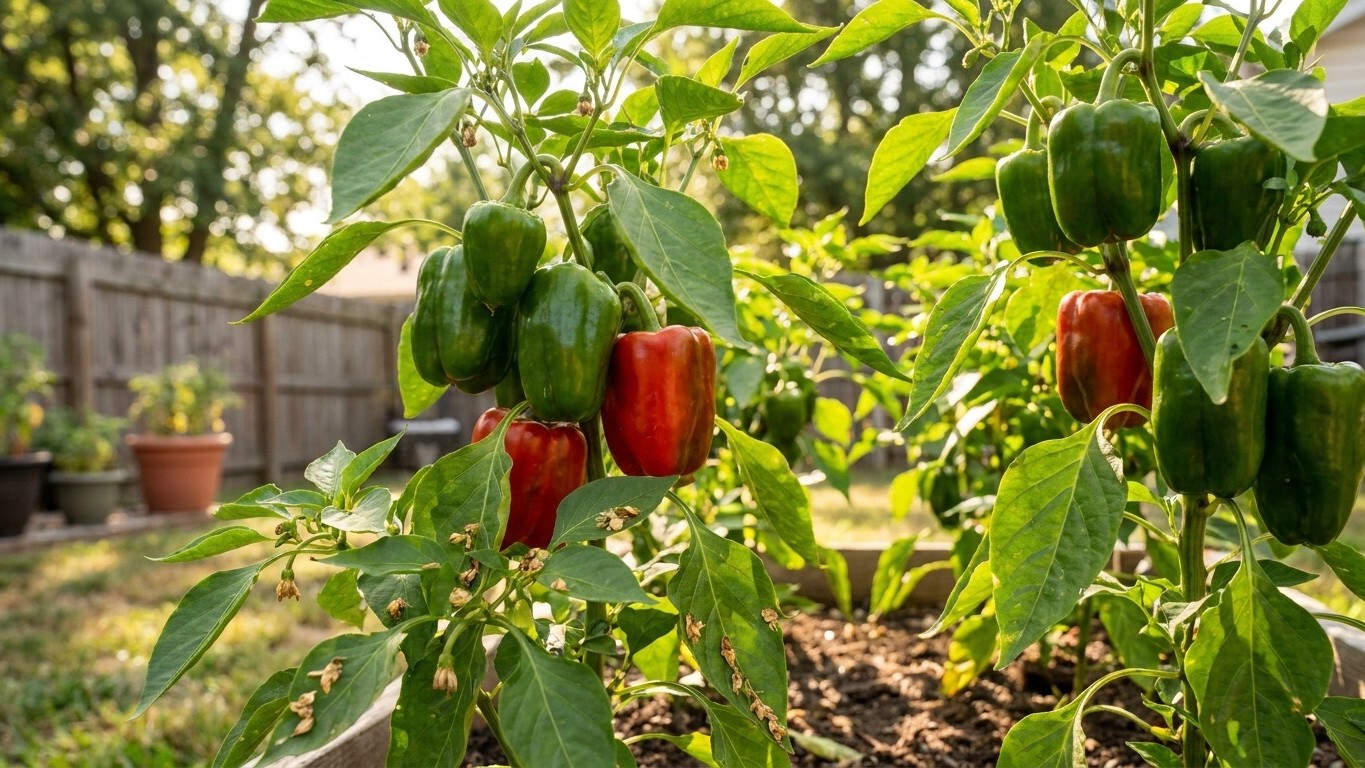

Pick peppers when the fruit reaches full size and feels firm and glossy. Clemson Extension puts that at about 70 to 85 days after transplanting. Then keep them out of the refrigerator. A home fridge runs colder than peppers tolerate, and the fruit pits and softens within days. The rest of this page covers the mechanism, the counting, and the failures to watch for in Growing Peppers in New Jersey.
The short answer
Twenty point eight. That is the mean number of days a year that reach 90 F or more at Newark, the reference station for New Jersey in the NOAA NCEI Climate Normals. It measures summer heat load, not the average summer temperature. A typical year hands a pepper bed about three weeks of 90 F days, mostly bunched into a few hot spells.
Those spells matter because pepper fruit set fails at both ends, according to Utah State University Extension: days above 90 F, or nights below 55 F. A blossom that opens during a hot stretch is the one at risk. Blossoms that open before or after it are not affected by that spell. So the 20.8 count tells you how often the hot end of that window gets tested here. It does not tell you when. Newark is an airport station, and a yard in the Pine Barrens or the Highlands will not match it exactly.
The cool end is yours to watch
This site carries days at or above 90 F, but it does not carry summer night minima. Nothing here tells you how many July or September nights drop under 55 F in your town, and guessing from latitude or from how cold the winters run would be unreliable. Put a min/max thermometer at bed height and read it each morning while the plants are flowering. Any night under 55 F goes in your notes. Two or three of those, and you will know why a stretch of flowers produced nothing. The full list of causes is in Why Peppers Fail to Set Fruit in New Jersey.
How fruit set shapes your picking dates
A calendar date is a poor guide to harvest. The 35 to 45 days Utah State Extension gives for ripening run from flowering, not from sowing or transplanting. A flower lost to a hot spell pushes that fruit’s clock back, and the pepper that replaces it ripens later. Clemson’s 70 to 85 days after transplanting is the better planning number for the first harvest, and individual fruit will drift around it.
Pick by the fruit itself. It should be full size for its type, firm, with taut, shiny skin. Cut it with pruners and leave a short stub of stem, because yanking tears branches. Green peppers are edible, and picking them early leaves the plant free to set more. Waiting for red, yellow, or orange takes longer on the plant and exposes the fruit to more weather.
After the pick: why the fridge is the wrong place
Clemson Extension gives the best storage conditions as 45 to 50 °F with 80 to 90 percent relative humidity, good for two to three weeks. That range is warmer than a domestic refrigerator. Below about 45 °F, peppers suffer chilling injury: the skin develops pits, the flesh goes soft, and the fruit rots faster than it would have on a shelf. Nearly everyone makes this mistake, because the crisper drawer feels like the obvious home for a pepper.
Treat “two to three weeks” as a ceiling reached only under ideal conditions, not a promise. A cool, humid spot out of direct sun is the target, and a thermometer will tell you whether your basement or pantry really sits in that range. Sliced or cut pepper is a different case. It will not hold on a shelf, so use it within a few days.
When to start seed here
Work backward from the day the plants go outdoors. Utah State Extension says transplants need 8 to 10 weeks indoors, and that they go out when the soil reaches 60 F, after frost. Here is the arithmetic in order, so you can redo it for your county.
- Find your last spring frost. The NOAA NCEI Climate Normals put it at March 29 to April 6 for Newark, using the 30 to 70 percent probability band of a 32 F freeze. That is the reference-city figure, not a statewide guarantee. Suburban and rural gardens typically see the last frost one to two weeks later, and more at elevation, so check your own county’s date.
- Wait for the soil, not the calendar. Frost-free is only the first gate. Push a soil thermometer a few inches down in the morning, and treat the first dependable stretch of readings at 60 F as your transplant date. If that date comes after your frost date, the soil date wins.
- Subtract 8 weeks. Take your transplant date and count back 56 days. This is the latest sensible sowing date.
- Subtract 10 weeks. Count back 70 days from the same date. This is the earliest. Your sowing window sits between the two.
- Run an example. Suppose the soil reads 60 F on May 15 (a made-up date, used only to show the counting). Seventy days back is March 6, and 56 days back is March 20. Sow between those dates.
Counting forward to the first harvest
Once you have a transplant date, add Clemson’s 70 to 85 days to estimate when the first fruit is ready. With a May 15 transplant, that lands between July 24 and August 8. Remember it is a range from one extension service, and a hot spell or a cold night during flowering can stretch it.
Starting seed too early backfires too. Seedlings that outgrow their pots in March sit root-bound and leggy while you wait for warm soil. If the frost date comes late, or the soil dawdles at 55 F, let the plants wait in a bright window rather than hardening them off into cold ground. Peppers that go out on schedule, even a week late, beat peppers that go out stressed.
What goes wrong here
New Jersey’s summers give peppers three predictable ways to fail, and each one has a fix you can act on before the next flowering cycle.
- Blossom drop in a hot spell or a cool night. Flowers fall off without setting fruit when days climb above 90 F or nights sink below 55 F. With 20.8 hot days a year at the reference station, expect at least one episode. Mulch to keep roots cooler, water deeply and consistently, and use a strip of shade cloth during a forecast heat wave. For the cool end, check your own nights with a min/max thermometer, since this site has no summer minima to offer. Don’t fertilize heavily right after a drop. Extra nitrogen makes leaves, not fruit.
- Sunscald where the sun is strong. Fruit exposed to direct summer sun develops pale, papery, sunken patches that turn white or tan and then invite rot. It happens most when a plant loses leaf cover, from pruning, disease, or insect damage. Leave the foliage canopy intact and shade the bed in the worst afternoon hours. Pick and discard scalded fruit so rot does not spread. If leaves are being chewed, read What Eats Pepper in New Jersey, and When to identify the culprit.
- Blossom-end rot. A dark, leathery, sunken patch on the bottom of the fruit is blossom-end rot, a calcium-delivery problem more than a soil-shortage one. Swings between dry and soaking-wet soil are the usual trigger. Water on a steady schedule, mulch to hold moisture, and test your soil before adding anything. Pull affected fruit so the plant puts energy into healthy ones.
A quick way to tell them apart
Look at what is failing. Flowers on the ground and no fruit means blossom drop. Pale, papery damage on the side facing the sun is sunscald. Damage on the bottom of the fruit, opposite the stem, is blossom-end rot. Records help here: write down each 90 F day and each night under 55 F next to the date flowers fell. After a season you will have a map of your own yard that no reference station can supply.
Common questions
Can I put peppers in the refrigerator at all?
You can, but you will pay for it. Below about 45 °F, whole peppers pit and soften from chilling injury, and a home fridge runs colder than that. Clemson Extension’s storage range is 45 to 50 °F with 80 to 90 percent relative humidity. Cut pepper is the exception, since it needs the fridge for a few days.
How do I know a pepper is ready to pick?
Look for full size, a firm feel, and glossy skin. For color types, wait until the fruit finishes changing. Clemson’s 70 to 85 days after transplanting is a planning estimate, not a rule. Utah State Extension’s 35 to 45 days count from flowering, so a fruit that set late will ripen late no matter what the calendar says.
How long will picked peppers keep?
Up to two to three weeks, and only under the best conditions: 45 to 50 °F with 80 to 90 percent relative humidity. Treat that as a maximum. A shelf in an ordinary kitchen is warmer and drier than that, so expect less.
Do the Newark numbers apply to my yard?
Treat them as a starting point. The 20.8 days at or above 90 F and the March 29 to April 6 last-frost window both come from the Newark reference station. Suburban and rural gardens typically see the last spring frost one to two weeks later, and more at elevation, so check your county before you set a transplant date.