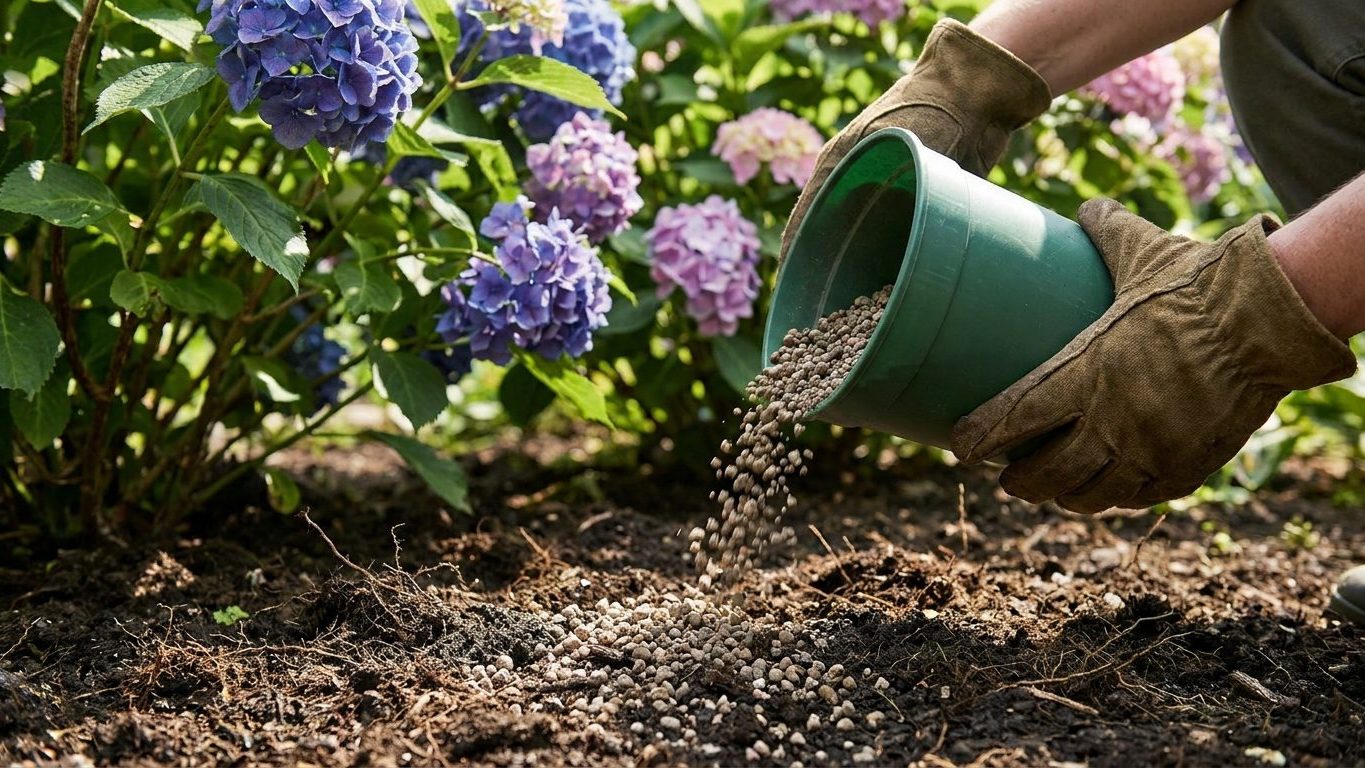

Feeding hydrangeas isn’t just about growth. For bigleaf and mountain hydrangeas, what you feed the soil can shift flower color between blue and pink; for panicle, smooth, oakleaf and climbing types, fertilizer changes only vigor and bloom size, never hue. Get the fertilizer type wrong and you either waste it or undo a color you worked to set.
Why this matters
Hydrangeas are rated low maintenance for a reason, and feeding is the task most likely to break that reputation if handled carelessly. For bigleaf and mountain hydrangeas, the nutrients you add don’t just feed the plant, they change what element is available in the soil for the roots to absorb, and that element decides whether flowers read blue, purple or pink. A high-phosphorus fertilizer, in particular, locks up aluminum in the soil. That’s invisible until bloom time, when a gardener who wanted blue finds pink instead, with no idea why.
Skip feeding altogether and the plant usually survives fine, since the genus tolerates soils from acid to alkaline and from clay to sand without complaint. What you lose is vigor: smaller flower heads, slower new growth on the types that bloom on current-season wood, and less next-year bud formation on the types that set buds the previous summer. Feed badly, meaning heavy on nitrogen and light on everything else, and you get the opposite problem: lush green foliage that hides the flowers entirely.
When to do it
Feed by what the plant is doing, not by a date on a calendar, since that date shifts by zone and by type anyway. The signal to watch is new growth breaking at the base or along the stems in spring. Once you see that flush of leaves expanding, the plant is actively pulling nutrients from the soil and a feeding does real work.
A second, lighter feeding as flower buds begin to swell supports bloom size without pushing a wave of soft new growth that competes with the blooms for energy. After that, ease off. Feeding late in the season pushes soft new growth that hasn’t had time to ripen before the plant goes dormant, and unripened wood is more exposed to winter damage, an outcome that matters most for the old-wood bloomers, bigleaf, mountain, oakleaf and climbing hydrangeas, whose flower buds for next year are already forming on this year’s stems. Panicle and smooth hydrangeas, blooming on new wood, are more forgiving here since next year’s flowers grow fresh regardless.
If you’re adjusting color on a bigleaf or mountain hydrangea, plan on months, not weeks. Soil pH and aluminum availability shift slowly, so a treatment applied as new growth starts won’t show its full effect until the following bloom cycle, sometimes the one after that.
How to do it
Start with what the plant actually needs before reaching for anything that changes color. A balanced, general-purpose fertilizer applied once as new growth emerges and again lightly as buds swell covers the nutritional side for every type in the genus, from an eight-foot panicle to a five-foot oakleaf. Scatter it evenly under the branch spread, not piled against the base of the stems, then water it in well so it moves down to the root zone instead of sitting on the surface where it can scorch foliage or wash away in the first hard rain.
Because macrophylla and paniculata are both shallow-rooted, most of the feeder roots sit in the top few inches of soil. That’s exactly why a layer of mulch over the root zone pays off after feeding: it keeps the soil from drying out between waterings, which matters because nutrients only move to the roots dissolved in soil moisture, and it moderates the temperature swings that shallow roots feel more than deep ones.
Adjusting color on bigleaf and mountain hydrangeas
This step applies only to bigleaf and mountain hydrangeas. On every other type in the genus, changing soil chemistry does nothing to flower color; those flowers age from white or green to cream or pink on their own schedule, driven by the season, not the soil.
For blue, work aluminum sulfate into the soil around the root zone to push the pH below roughly 5.5, which makes aluminum available to the roots; that available aluminum is the actual ingredient behind blue color, not acidity by itself. For pink, garden lime raises the pH above roughly 6.5 and ties aluminum up so the plant can’t take it in. Between those two points, expect flowers somewhere in the purple range. Apply either amendment lightly and repeat over a season rather than dumping a large dose at once, since a sudden swing in pH stresses roots more than it helps color.
Skip the coffee grounds and citrus peel remedies passed around at garden centers. They’re a widely held belief, not a reliable method: the pH shift they produce is small, and color depends on available aluminum reaching the roots, which kitchen scraps in the amounts a home gardener uses rarely deliver in any consistent way.
Whatever you use, keep phosphorus low in any fertilizer applied to a hydrangea you’re trying to keep blue. High phosphorus binds aluminum in forms roots can’t absorb, and a fertilizer chosen for bloom boosting on other plants in the yard can quietly turn a blue hydrangea pink over a season or two.
What goes wrong
Over-feeding is the most common failure, and it looks like generosity rather than a mistake. Too much fertilizer, especially anything nitrogen-heavy, produces a hydrangea with dense, dark green foliage and few flowers, since the plant channels energy into leaf growth instead of blooming. If your hydrangea looks lush but underwhelming at bloom time, that’s usually the tell.
The high-phosphorus mix-up ranks second. A gardener feeds a blue hydrangea with a general “bloom booster” fertilizer, not realizing most of those are phosphorus-heavy, and finds the flowers drifting toward pink or muddy purple the following year with no obvious cause. Checking what you’re already applying to nearby roses or vegetables is worth doing before blaming the soil.
Coffee grounds and citrus peel scattered around the base, hoping to nudge color blue, sit in the “extra care that isn’t” category. It feels proactive, costs nothing, and does almost nothing measurable, while the gardener assumes the soil is handled and skips the aluminum sulfate that would actually work.
Late-season feeding rounds out the list. A well-meaning fall feeding pushes tender new growth right before dormancy, and that unripened wood is what gets damaged over winter, particularly on the old-wood bloomers where this year’s damaged stems are next year’s missing flowers.
Doing it differently
Containers change the math because watering leaches nutrients out of potting mix faster than it does from garden soil, so container-grown hydrangeas generally need lighter, more frequent feeding through the growing season rather than one or two larger doses. Container culture is also where color adjustment on bigleaf and mountain types is easiest to control, since you’re managing the pH of a defined volume of soil rather than an entire garden bed.
Raised beds offer a similar advantage on a larger scale: amending pH evenly across a contained bed is more predictable than trying to shift color in open ground, where drainage patterns and existing soil chemistry vary from one side of the plant to the other.
By variety, the practical difference is about what the feeding supports rather than how you apply it. On panicle and smooth hydrangeas, which bloom on the current season’s growth, feeding directly supports the flowers you’ll see that same year. On bigleaf, mountain, oakleaf and climbing types, which bloom on wood formed the previous summer, this year’s feeding is really an investment in next year’s flower buds, a distinction worth remembering before deciding a feeding “failed” when blooms look thin.
Common questions
Can I change the color of a panicle or oakleaf hydrangea by feeding it?
No. Color response to soil pH is documented only in bigleaf and mountain hydrangeas. Panicle, smooth, oakleaf and climbing types shift shade only with the season, moving from white or green to cream or pink as flowers age, regardless of soil chemistry.
Will coffee grounds turn my hydrangea blue?
Not reliably. Coffee grounds and citrus peel can nudge soil pH slightly, but the shift is too small to consistently free up the aluminum the plant needs for blue flowers. Aluminum sulfate applied deliberately does that job; kitchen scraps generally don’t.
Is it safe to feed hydrangeas near pets?
Only bigleaf hydrangea is documented as toxic, and only if large quantities of bark, leaves, flowers or stems are eaten, causing nausea, stomach pain, vomiting or sweating in pets and horses. This is a plant-toxicity concern, not a fertilizer one, but it’s worth knowing if dogs or cats spend time near the bed.
How do I know if I’m overfeeding my hydrangea?
Dense, dark foliage with few or no flowers is the main sign, especially after a nitrogen-heavy application. If growth looks lush but blooms are sparse or small, cut back on fertilizer rather than adding more.