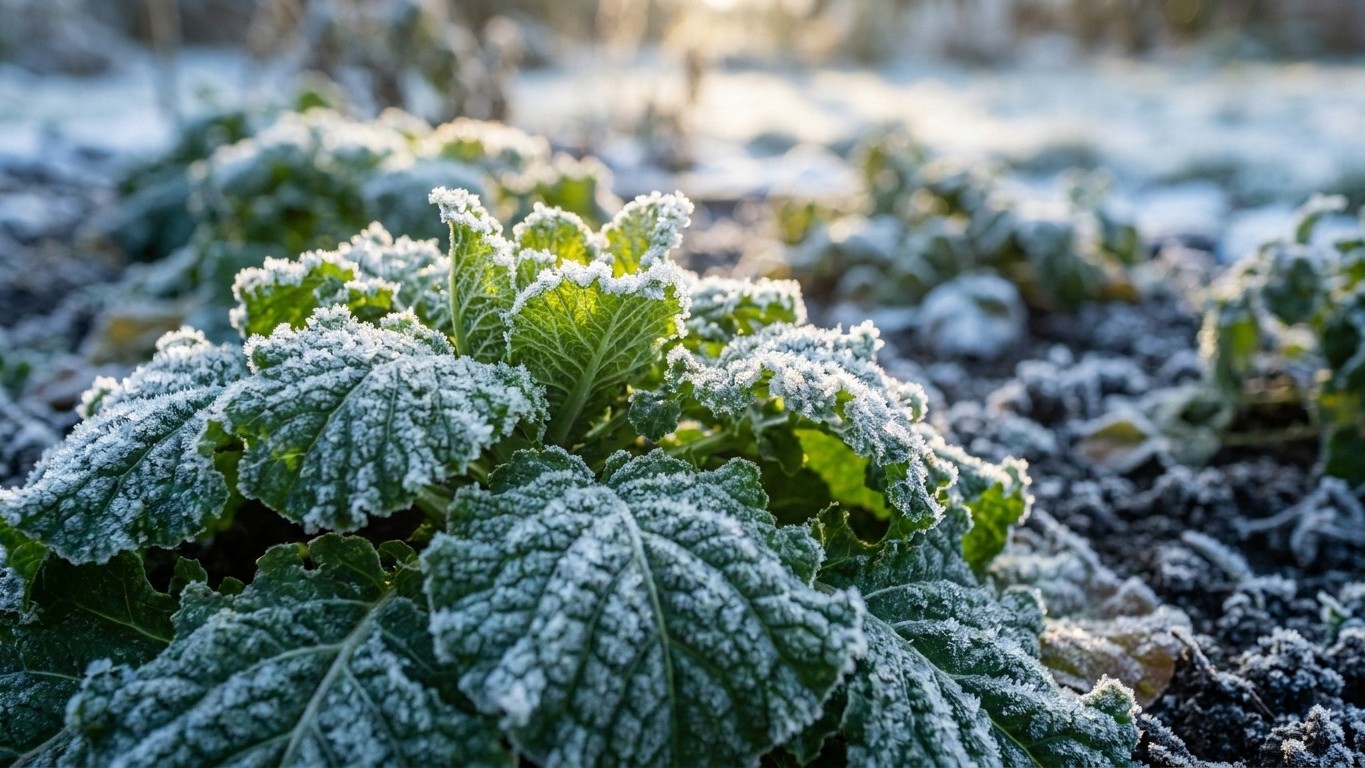

Cold doesn’t just make kale tougher; it makes it taste better. Utah State University Extension confirms that frosts improve the flavor of the fall-planted crop, and mature plants are hardy enough to stay in the garden straight through winter, supplying fresh greens long after everything else has died back. That single fact changes how a gardener should think about planting dates, variety choice, and when to actually start picking. The rest of this piece walks through the mechanism behind that sweetness and how to build a kale planting around the cold instead of around avoiding it.
The short answer
Yes, frost really does make kale taste better, and it isn’t a garden myth passed around at the seed rack. Utah State University Extension states plainly that “frosts help improve the flavor of the fall planted crop.” Kale is the one crop in this series where cold gets treated as an ingredient instead of a threat. Everything else on a fall garden calendar is planted to dodge the first freeze; kale is planted to meet it.
That’s why the fall timing looks backward compared with something like lettuce. Utah State University Extension times the fall kale crop so its maturity date lands two to three weeks after the first fall frost, not before it. Gardeners are told to plant 50 to 75 days ahead of that anticipated maturity date, which means the calendar is built to run the plant straight through at least one freeze before it’s ever picked.
Hardiness is what makes that survivable. Young kale plants aren’t seriously damaged by temperatures down to 25 F, according to the same source. Mature plants go further: they’re described as “extremely hardy” and able to “withstand very cold temperatures,” but no number is attached to that claim. There’s no published low-temperature floor for a fully grown kale plant here, and it would be wrong to borrow the young-plant figure of 25 F and apply it to a mature one. The honest answer is that a mature plant’s cold limit simply isn’t quantified in this source; it’s described only as very high tolerance.
The payoff for pushing through that cold is real. Utah State University Extension notes that plants can be left in the garden throughout the winter to supply greens out of season, and many gardeners do exactly that, picking leaves through the cold months instead of pulling the whole crop at first frost. Paired with the flavor improvement, that makes kale one of the few vegetables where a hard freeze is genuinely good news rather than a reason to run outside with a sheet.
What actually decides it
Two separate things are happening here, and mixing them up is where a lot of garden advice goes sideways: what makes the leaf taste sweeter, and what determines whether the plant survives long enough to be picked.
The plant’s response to cold, not just exposure to it
Frost’s effect on flavor isn’t about the leaf simply surviving a freeze. It’s a shift inside the plant’s own chemistry as temperatures drop. Utah State University Extension doesn’t quantify how much sweeter the leaf gets or how many freezes it takes to get there; the guidance is limited to the plain statement that fall frosts improve flavor, with no threshold given for how cold or how often. Gardeners often ask how many freezes are “enough.” This source doesn’t answer that question, and no number should be invented to fill the gap.
Two hardiness stages, two different answers
Cold tolerance isn’t fixed in a kale plant; it changes as the plant matures, and Utah State University Extension gives two distinct data points for it. Young plants are not seriously damaged by temperatures down to 25 F. That’s a specific, usable number for anyone deciding whether to protect seedlings on a cold night early in the season. Mature plants are described only as “extremely hardy” and able to “withstand very cold temperatures,” with no figure attached. That gap in the data isn’t something to paper over with a guess. It reflects the fact that a full-grown kale plant’s tolerance runs well past what’s been measured for a young one, and the source simply stops short of naming a hard floor for it.
Why the fall crop is timed past the frost, not before it
Most cool-season vegetables are timed to reach maturity before the first frost, because frost is the risk being managed. Kale flips that logic. Utah State University Extension times the fall crop so maturity lands two to three weeks after the first fall frost, meaning the plant is deliberately still growing, or freshly matured, right as the cold arrives. That’s the practical version of “frost makes kale taste better”: the plant reaches its harvest window while it’s actively experiencing the cold that improves its flavor, instead of finishing its growth before that cold ever shows up.
How to do it
- Find your first fall frost date and count forward two to three weeks. That landing point is your target maturity date for a fall kale crop, matching how Utah State University Extension times the planting.
- Count backward 50 to 75 days from that target maturity date. Wherever that lands on your own calendar is your fall planting day.
- Match a variety’s days-to-maturity to that window. Starbor (green, 55 days), Red Russian (purple, 50 days), and Scarlet (redleaf, 55 days) are all credited with cold hardiness, so any of the three fits a frost-timed fall planting.
- For a spring-started planting instead, set kale out four to five weeks before your last frost date. Kale is hardy enough to handle that early exposure, since young plants aren’t seriously damaged by temperatures down to 25 F.
- Let young plants take on some cold rather than rushing to protect them at the first light frost. A reading down to 25 F isn’t cause for alarm at this stage.
- Once the plants mature, leave them where they are. Many gardeners leave kale growing in the garden throughout the winter, harvesting leaves as needed instead of pulling the whole plant when the first freeze hits.
What goes wrong
- Planting the fall crop too early. If kale matures well before the first frost instead of two to three weeks after it, the crop misses the flavor benefit entirely. Count the planting date backward from the frost-plus-weeks target instead of from habit or a seed packet’s generic date.
- Treating young and mature plants as equally cold-tolerant. Assuming a seedling can handle whatever a mature plant handles risks losing it in an early cold snap. Apply the 25 F figure to young plants only, and give mature plants credit for being more resilient without assuming there’s no limit at all.
- Pulling the whole plant at the first freeze. That habit throws away the entire winter harvest opportunity that mature kale is built for. Leave the plant in place and harvest by the leaf through the cold months instead.
- Picking a variety that doesn’t fit the available fall window. A slower variety planted too late won’t finish before the season really shuts down. Match Starbor, Red Russian, or Scarlet to the number of days actually available between your planting date and the point the ground freezes hard.
- Expecting frost to sweeten the leaf on a fixed schedule. There’s no published count of “how many frosts” it takes. Judge the leaf by taste after a freeze rather than by counting freezes and expecting a guaranteed result.
Common questions
Does kale absolutely need a frost to taste good?
Utah State University Extension credits frost specifically with improving flavor in the fall crop. The source doesn’t say kale is inedible or bland without one, only that frost is what improves it, so a fall crop that never sees a freeze simply misses that improvement rather than failing outright.
Can kale really survive outside all winter with no protection?
The source says plants can be left in the garden throughout the winter to supply greens out of season, and many gardeners do this. That guidance applies to mature plants, which are described as extremely hardy; it isn’t the same claim made for young, unestablished seedlings.
What’s the coldest temperature kale can handle?
For young plants, 25 F causes no serious damage, according to Utah State University Extension. For mature plants, the source gives no specific number, describing them only as extremely hardy and able to withstand very cold temperatures.
Is spring-planted kale timed the same way as the fall crop?
No. Fall kale is timed to mature two to three weeks after the first fall frost, deliberately meeting the cold. A spring planting goes out four to five weeks before the last frost, timed to get a head start on the season rather than to intersect with a freeze.