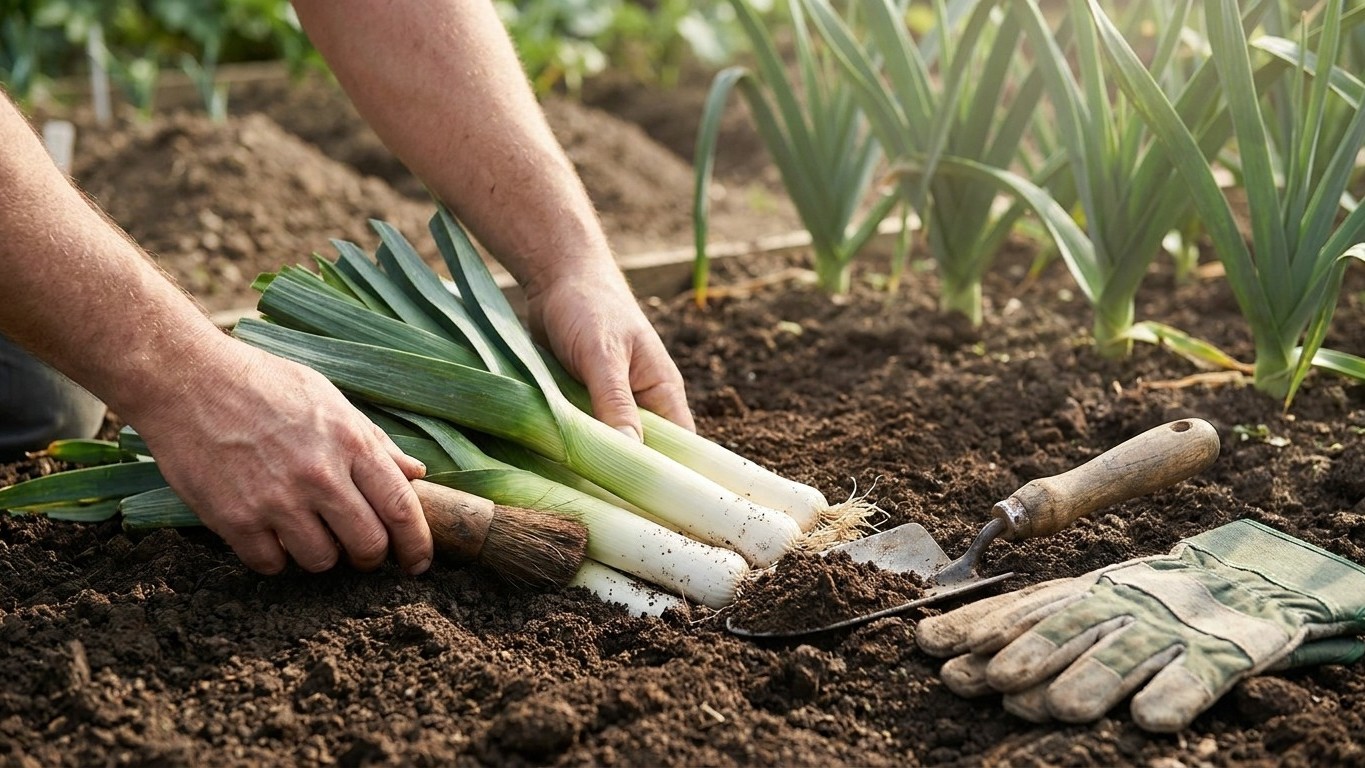

The white part of a leek doesn’t come from a special variety or a lucky soil type. It’s engineered, one stretch of stem at a time, by keeping sunlight off the plant while it grows. Utah State University Extension is blunt about it: gardeners either hill soil around the stalks two to three times during the season, banking two to three inches each time, or they skip that labor by planting transplants deep in a single dibble hole from the start.
The short answer
According to Utah State University Extension’s guide, Leeks in the Garden, the blanched white shaft you slice into soup is the result of deliberate light exclusion, not genetics. The Extension describes two paths to the same outcome. The first is hilling: as the plants grow through the season, gardeners mound soil against the base two to three times, adding two to three inches of banked soil with each pass. That buried portion never sees sunlight, so it never produces chlorophyll, and it stays pale and tender all the way down.
The second path skips the repeated labor entirely. Utah State University Extension notes that transplanting with the dibble method “partially eliminates the need for multiple hilling.” Instead of building up soil around a shallow-planted seedling three separate times, the gardener drops a tall Transplant into a six-inch-deep hole at planting time and lets the surrounding soil do the blanching work up front. Less maintenance, similar result.
What both methods share is the underlying principle: length of white stem is a function of buried, light-blocked tissue, not a trait bred into the seed. Plant a leek and expose the whole stalk to sun from germination onward, and you get a plant that’s green almost to the roots, edible but visually nothing like the leeks in a grocery bin. Bury or bank that same plant, and the identical genetics produce a long, pale shaft.
This matters for how gardeners plan their season. Hilling requires returning to the bed multiple times, watching the plant’s height, and having loose soil available to mound. The dibble method requires planning ahead, because it depends on starting with a transplant that’s already ten to twelve inches tall before it goes in the ground. Neither method is more “correct.” They’re two different labor trade-offs for manufacturing the same result, and Utah State University Extension presents both as valid, standard practice rather than one being an advanced technique and the other a shortcut for lazy gardeners.
What actually decides it

The white shaft length ultimately comes down to how much of the stem sits below the light line, and gardeners control that in one of two distinct ways.
Hilling as an ongoing process
Hilling treats blanching as something built up over the growing season. Utah State University Extension specifies hilling two to three times, adding two to three inches of soil with each round. The Extension also notes that hilling “encourages taller growth thus producing a longer blanched edible stem.” The mechanical logic is straightforward: the plant keeps pushing upward to reach light, the gardener keeps burying the new growth, and the net effect is a stalk that’s both taller overall and whiter along a longer section, because more of its total height has spent time underground.
The dibble method as a one-time setup
The dibble method front-loads the blanching into the transplanting step itself. Utah State University Extension describes placing a transplant that’s already ten to twelve inches tall into a dibble hole six inches deep, watering it into place, then gradually filling in the hole around the stem. Because a large portion of the plant’s existing height goes straight into the ground at transplanting, much of the blanching work is done in that single action. Later hilling can still add a bit more white length, but the heavy lifting happens once, at planting, rather than being spread across repeated visits to the bed through the season.
Both mechanisms rely on the same biological reality: leek stem tissue only greens up when exposed to light. Bury it, and it stays pale by default. The choice between the two methods is really a choice about when the gardener wants to do the work, not a choice about the biology itself.
How to do it
- Start seeds indoors or in a protected seedbed. Utah State University Extension specifies sowing seed one-quarter to one-half inch deep.
- Once seedlings emerge and grow, thin them to four to six inches apart, in rows spaced eight to sixteen inches apart. This spacing applies whether you’re growing seedlings in place or preparing to lift them as transplants later.
- Give transplants six to eight weeks of growth before they go into the garden. Count backward from your own last average frost date, since Utah State University Extension’s own timing reflects the Utah calendar and won’t match every region. If your transplanting date is set, subtract six to eight weeks from it to find your seed-starting window.
- Wait until transplants reach roughly ten to twelve inches tall before moving them to the garden bed. This height matters because it’s what makes the dibble method effective: a short seedling doesn’t have enough stem to bury deeply.
- Dig a dibble hole about six inches deep for each transplant. Set the plant into the hole and water it in immediately to settle the roots and remove air pockets.
- Fill in the dibble hole gradually rather than all at once, backfilling as the plant establishes itself.
- Through the rest of the growing season, hill soil around the base two to three times, banking two to three inches of soil with each hilling to extend the blanched portion of the stem further, especially if you skipped a deep dibble hole or want an even longer white shaft than the dibble method alone provides.
What goes wrong

- Transplants go into the ground too small. If seedlings haven’t had their full six to eight weeks of growth, they won’t reach the ten-to-twelve-inch height the dibble method depends on. Remedy: hold transplants indoors or in a protected bed until they hit that height and age before moving them, even if it means waiting past your original plan.
- Skipping hilling and skipping the dibble hole. Some gardeners plant leeks shallow, like onions, and never hill afterward. The result is a plant that’s mostly green from top to bottom, because none of the stem was ever shielded from light. Remedy: pick one method deliberately, either commit to hilling two to three times during the season or commit to the six-inch dibble hole at transplanting, rather than defaulting to neither.
- Hilling too infrequently or too lightly. Hilling only once, or adding less than the two to three inches per pass that Utah State University Extension recommends, leaves less of the stem buried and shortens the white portion. Remedy: plan for two to three separate hilling sessions across the season, each time banking two to three inches of soil, rather than trying to do it all in one pass.
- Crowded spacing that stunts stem growth. Planting closer than the recommended four to six inches apart, in rows tighter than eight to sixteen inches, competes plants against each other for light and nutrients, producing thinner stalks regardless of how well they’re blanched. Remedy: thin seedlings to the spacing Utah State University Extension specifies before the plants get Established, not after they’ve already started competing.
- Filling the dibble hole all at once. Dumping soil back into the hole in one motion right after transplanting can crush or bend a young stem before it’s had time to settle. Remedy: fill the hole gradually over subsequent visits to the bed, letting the plant establish itself in stages rather than burying it completely on day one.
Common questions
Does variety affect how white the stem gets?
Utah State University Extension names several varieties, including Large American Flag, Comanche, and King Richard, but doesn’t attach a stem length, days-to-maturity figure, or hardiness rating to any of them. The blanching outcome comes from cultivation method, not from choosing one named variety over another.
Can I use both hilling and the dibble method on the same planting?
Yes. The dibble method reduces how much hilling you need, according to Utah State University Extension, but it doesn’t rule out adding hilling later in the season if you want an even longer white shaft than the deep transplant alone produced.
Is leek a plant that survives cool weather while this process happens?
Yes. Utah State University Extension classifies leek as a hardy cool-season biennial, meaning it tolerates cooler conditions during the growing season while the blanching process, whether through hilling or the dibble method, plays out over the weeks that follow transplanting.
What happens if I never hill or dibble at all?
The plant still grows and is still edible, but the stem will be green for most or all of its length instead of showing the long white blanched section typical of leeks sold in stores. The blanching is a cultivation step, not something that happens automatically as the plant matures.