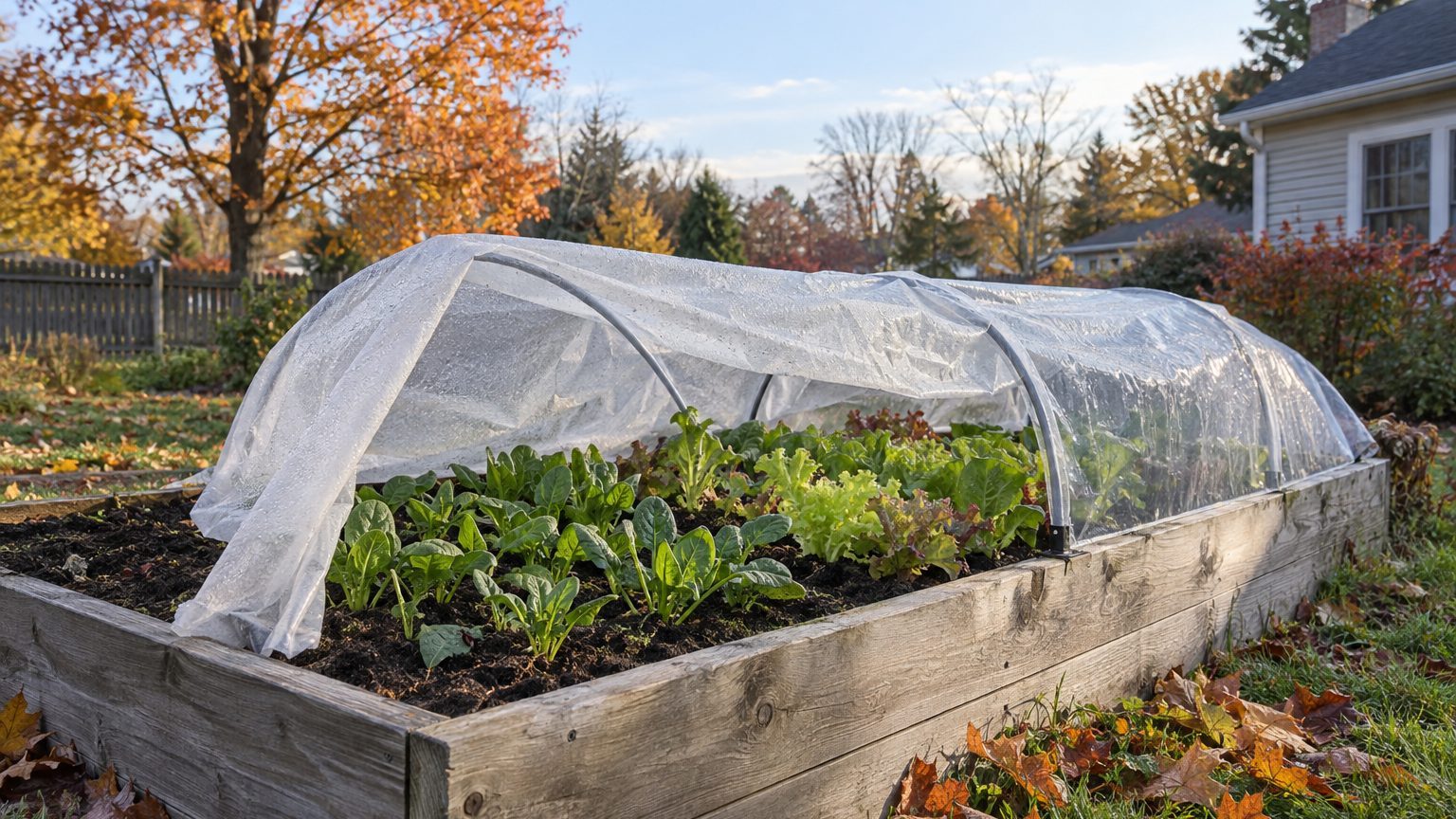

At Omaha’s airport weather station, the last spring freeze lands between April 12 and April 23, and the first fall freeze between October 15 and October 26. Row covers, low tunnels, and cold frames can stretch both ends of that window by a few weeks, depending on the site and the weather. Rural and suburban gardens usually run one to two weeks behind those spring dates, so check your own county before you set a planting day.
When the soil is warm enough in Nebraska
The date most gardeners want is the last spring frost. NOAA’s 1991-2020 U.S. Climate Normals for the Omaha airport station put it between April 12 and April 23, based on the 30 to 70 percent band for a 32°F freeze. A frost date is a probability, so any single spring can fall outside that span. Gardens in the suburbs, in the country, or on higher ground, which describes much of the state’s western half, typically see the last freeze later than the airport does. Often it is by a week or two.
That date marks the end of freezing air. Seedlings and seeds care about the soil, and soil lags behind the air. It holds winter cold and spring moisture, and it warms only after the frost risk has passed. Cold, wet soil keeps warm-season transplants from growing roots and rots seeds before they sprout. A cover on the calendar does not change that.
What a cover does is trap heat. On a clear night the ground radiates the warmth it stored during the day. A fabric or plastic layer slows that loss and keeps the air around the plants still, so the space under it stays warmer than the open yard. A second layer, such as fabric inside a tunnel, adds a bit more. The gain is real but variable. It depends on the material, the night, the wind, and whether the soil was warm to begin with. A cover shifts the limit a crop can take, and it never removes it. A hard freeze on a clear, calm night can still take everything under it.
How do you know the soil is ready?
Push a soil thermometer to planting depth in the morning, when the reading is at its lowest. Then compare it with the minimum soil temperature printed on the seed packet or listed by your extension office. Peas, spinach, and lettuce germinate in cool soil and can go in weeks before the frost range ends, with a cover to help. Tomatoes, peppers, squash, and melons need warm soil and warm nights. A cover can bridge a few cold nights for them, but it cannot make them grow in cold ground.
One passive trick works in your favor here. Lay a cover over the bed a couple of weeks before planting, and the soil underneath warms faster than the open ground beside it.
Ventilation is a matter of crop safety. A closed cold frame or tunnel in spring sun can cook its contents within an hour, even when the air outside is cool. Open or prop it by mid-morning on any sunny day and close it again in the late afternoon. Everything here is passive. Nothing gets put inside a covered structure to heat it, because fire and carbon monoxide are real hazards.
How long the season lasts here
The reference station has about 175 frost-free days between the late end of the spring range and the early end of the fall range, and about 197 between the early end of spring and the late end of fall. Those figures are for the Omaha airport. Higher, more exposed ground in the western part of the state will come in shorter.
A window of that length allows a second sowing. A spring planting of radishes, lettuce, spinach, or peas can be harvested by early summer, and the bed can then take a late planting of beans or a fall crop. The fall sowing is the one to plan backward. Take the first fall freeze range of October 15 to October 26 and count back the days to maturity on the packet. For crops sown directly in the ground, such as carrots, turnips, beets, and spinach, the packet count starts at sowing. Then add extra time, because growth slows as autumn days shorten. A cover gives that late bed a few more weeks of useful growth, but it does not rescue a sowing that went in too late.
The length of the window also changes whether transplanting is worth the trouble. Where the season is long, a crop like broccoli or a fall brassica can be direct-seeded or started in a cool corner and moved. Where it is short, the first sowing is the only one, and a transplant that stalls from root disturbance can cost the crop its whole season. Starting tomatoes or peppers indoors still makes sense with this much room, but handle the roots gently and harden the plants off before they go out. The Extending the Growing Season in Wisconsin guide shows how a shorter window pushes the plan toward the earliest types and one planting. The Extending the Growing Season in Connecticut guide covers a humid eastern climate where frost timing differs.
Succession sowing is the natural way to use a window this long. The succession sowing guide on this site lays out how to space plantings of the same crop, and how to match a fall sowing to the fall freeze range. Nebraska spans several degrees of latitude and a large change in elevation, so a gardener in the panhandle or the far north should treat the Omaha dates as the outer edge and ask the county office for local averages.
Heat and water in Nebraska
Summers in the eastern part of the state run hot and often humid, with spells in the 90s F at the reference station. Rain tends to arrive as thunderstorms in late spring and early summer, then turns patchier through July and August. Western parts of the state are drier. Heat shapes a summer garden, but it is not the main limit on extending the season. Under a cover in July, the air heats up quickly, so covers belong in the cool ends of the year, with shade cloth or open sides in between.
The facts that decide how far a cover can carry a crop are light and cold, working together. The reference city sits at 41.31 degrees north. At that latitude, daylight shrinks through autumn to a point where leafy crops barely grow, even in mild weather. That point arrives as the days shorten toward winter, so check your own county’s frost dates. After it, a cover holds a crop alive rather than growing it. A bed of spinach, kale, or carrots has to be near full size by then, because it will sit and wait, and be harvested from, until daylight returns in late winter.
Day length also governs onions. They respond to hours of light, not warmth, when deciding to stop making leaves and start making a bulb. At 41 degrees north, the day-length class of the onion matters. A gardener in the far north or south of the state should check their own latitude and ask the extension office which class suits it.
The coldest month decides which cover will do. Omaha’s mean daily minimum in the coldest month is 15.2°F (NOAA 1991-2020 normals). That is an average, so cold snaps run well below it. The USDA Plant Hardiness Zone Map (2023) places the state in zones 4a to 5b, which rates the average annual extreme minimum temperature, so the range runs from the colder north and west to the milder southeast. For spring and fall frost nights, a light fabric laid over the crop can be enough. For winter harvests of hardy greens, only a framed structure will do, ideally with a second layer inside. Plains wind adds a requirement of its own, because it lifts and tears fabric. Anchor edges well and brace frames against it.
Water needs a plan too. A cover keeps rain off the bed, so irrigate underneath, in the morning, and avoid wetting the foliage. In a cool, damp stretch, a tightly closed tunnel breeds mildew and other leaf diseases, and slows ripening. Airflow helps all of it.
Which season extension suit Nebraska
Choose by type, and match the type to the goal.
| Type | Best use | What to watch |
|---|---|---|
| Floating row cover | Frost nights in spring and fall, pre-warming soil | Anchor against wind; lift for pollination on crops that need it |
| Low tunnel on hoops | Early warm-season transplants, late greens | Vent on sunny days; plants can overheat within an hour when closed |
| Cold frame | Seedlings, hardy greens into winter | Prop the lid open in sun; condensation and mildew in damp spells |
| Framed walk-in tunnel | Winter harvest of hardy crops | Wind and snow load; doors and sides must open for airflow |
With a window of roughly 175 to 197 days at the reference station, the state is not short of season. Still, a gardener farther north or at higher elevation will do better with the earliest types of each crop, meaning those with the shortest days to maturity and the most cold tolerance. The first sowing may be the only one, and a cover can pull it a bit earlier.
Heat favors a different set of choices. Where summers run hot, look for types that tolerate it, give the root zone shade with mulch, and keep a cover open or removed in midsummer so air moves through. Humid conditions in the east make disease resistance the first thing to check on a seed packet or plant tag. Covers hold moisture, and a resistant type is the cheapest insurance against mildew.
No cultivar is named here, and the reason is practical. The varieties that do well depend on soil, wind, local disease pressure, and the specific stretch of Nebraska you garden in. The only recommendation worth following is one from trials run in the state itself. University of Nebraska–Lincoln Extension and your county office can tell you what has been tested and what has worked. For the broader logic of covers, Extending the Season: What a Cover Buys, and What It Cannot sets out what any cover can and cannot do.
Common questions
When can I plant tomatoes outside in Nebraska?
Wait until the last spring freeze range at your location has passed, the soil has warmed, and nights are mild. At the Omaha airport station that range is April 12 to April 23, and gardens outside the city usually run one to two weeks later. A cover can bridge a few cold nights, but it will not make transplants grow in cold ground.
Does a row cover make plants frost-proof?
No. A cover traps heat that rises from the soil and keeps the air still, which raises the temperature at the plants by an amount that varies with the material, the wind, and the night. A hard freeze on a calm, clear night can still kill what is under it. A second layer helps, but the limit only moves.
Do I need to vent a cold frame in winter?
Yes, on any sunny day, even a cold one. A closed frame in direct sun can overheat in about an hour. Prop the lid open by mid-morning and close it in the late afternoon. Keep the approach passive, with no heaters, lamps, or candles inside.
How late into fall can a cover keep crops going?
A cover can carry hardy crops well past the first fall freeze, which at the Omaha reference station falls between October 15 and October 26. Growth slows sharply as daylight shortens, though, so crops should be near full size by then. After that the cover keeps them alive, and you harvest from them through winter as needed.