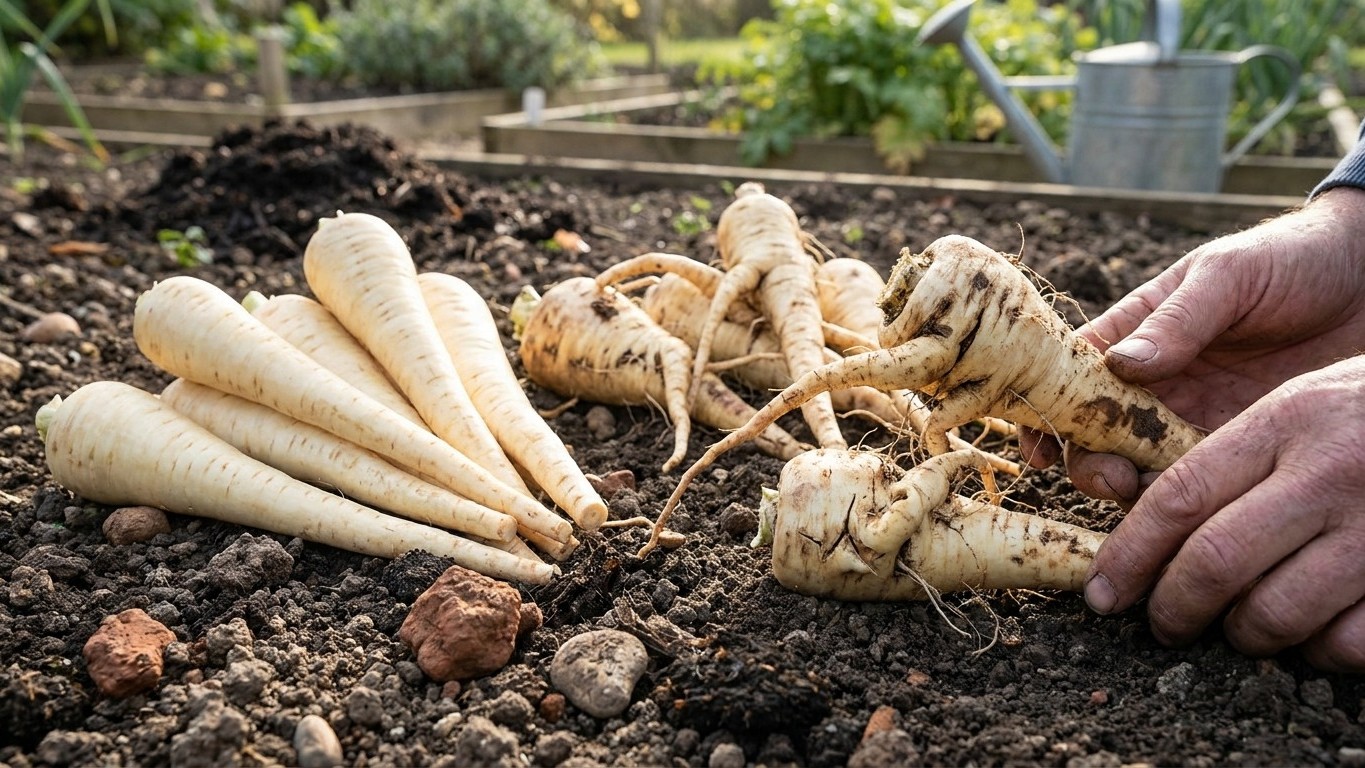

Parsnips fail for a short list of predictable reasons, not bad luck: pest damage from parsnip fly maggots tunneling into the root, fungal leaf blights and root rots that take hold in wet or heavy ground, a leafhopper-spread disease called yellows, and forked or hairy roots caused by either compacted soil or too much water at the wrong time. Nearly every one of these traces back to soil prep or a watering habit that’s easy to fix once you know which mechanism is at play.
The short answer
According to Utah State University Extension’s guide, Parsnips in the Garden, the problems that actually show up in home plots fall into four categories: parsnip fly (the larvae, or maggots, feed inside the root), leaf blights, root rots, and yellows, a disease spread by leafhoppers. That’s the whole list from this source. No mildew, no beetle, no rodent damage gets named here, which tells you where to focus your attention if a crop underperforms.
Underneath those four, a fifth and much more common complaint sits quietly: the forked, twisted, or hairy root that never turns into a clean, straight parsnip. Utah State University Extension traces this back to two separate causes. The first is the ground itself. Parsnips prefer fertile, well-drained, deep, sandy soils rich in organic matter, and heavy soils need to be amended with plenty of compost and should be double dug to allow good root development. A taproot hitting compacted clay or a buried rock has nowhere to go but sideways, and it splits.
The second cause has nothing to do with soil texture. Avoid overwatering, the same source warns, as hairy roots form and forking may occur. A parsnip bed can have perfect, deep, loose soil and still throw forked roots if it’s watered too generously or too often. That’s why the general guideline is 1 to 2 inches of water per week, not a daily soak. Treating soil prep and watering as two separate checklists, rather than one vague “give it good conditions” instruction, is the difference between a root that comes out straight and one that comes out looking like a wishbone.
Once roots are out of the ground, storage habits decide how long the harvest actually lasts. Held at 32 F and 95 percent relative humidity, parsnips keep for two to four weeks. Stored in moist sand in a cool cellar, they’ll last several months. Neither of those is a difficult setup to build at home, but skipping humidity control, or leaving roots in a warm garage, shortens that window fast.
What actually decides it
Heavy or stony soil forces roots to split
A parsnip taproot grows straight down by default. When it meets resistance, compacted clay, undecomposed organic debris, or a stone, it doesn’t push through. It forks around the obstruction, and once it forks, both halves keep growing, producing the split, tangled roots that are hard to peel and cook evenly. Utah State University Extension’s fix for this is structural, not seasonal: double dig heavy ground and work in plenty of compost before seed ever goes in, aiming for soil that’s fertile, well-drained, deep, and sandy. This has to happen at bed prep, not mid-season, because a taproot already growing can’t be rescued by loosening the soil around it later.
Overwatering triggers hairy, forked roots
This is a completely separate mechanism from soil structure, and it’s the one gardeners with perfect raised beds still run into. Excess water encourages the root to throw out fine side roots, the “hairy” texture the source describes, and can cause forking even when the ground underneath is loose and rock-free. The fix here is behavioral: stick to roughly 1 to 2 inches of water per week and resist the urge to water on a fixed daily schedule regardless of rainfall. Checking soil moisture before watering, rather than watering by habit, is what actually prevents this version of the problem.
Pests and disease attack from outside
Parsnip fly maggots feed inside the root itself, tunneling through the flesh and leaving damage that isn’t visible until the parsnip is pulled or cut. Leaf blights and root rots work through moisture, fungal pressure builds in humid or waterlogged conditions and moves from foliage down into the crown or root. Yellows is different again: it’s spread by leafhoppers, insects that carry the disease from plant to plant as they feed, meaning control depends on managing the insect vector rather than treating the soil or adjusting the watering can.
How to do it
- Prepare the bed before sowing. Work in generous compost and, if the ground is heavy, double dig it so roots can grow straight down through loose, deep soil rich in organic matter.
- Sow seed directly in place. Parsnips don’t transplant well, so seed goes straight into the bed rather than into starter trays.
- Wait out germination. Parsnip seed is slow, expect 14 to 21 days before seedlings appear. Resist the urge to re-sow bare-looking soil before that window closes.
- Thin seedlings once they’re up. Space plants 3 to 6 inches apart within rows, and keep rows 12 to 18 inches apart, so roots have room to size up without crowding each other into odd shapes.
- Water on a consistent, moderate schedule. Aim for 1 to 2 inches per week rather than frequent light watering, which is what triggers hairy, forked roots.
- Let the roots run through the full growing season. From seeding, parsnips take roughly 100 to 120 days to mature, so patience matters more than it does with faster crops.
- Leave roots in the ground through a stretch of freezing weather before harvest. The sweetness in parsnips comes from exposure to frost, not simply from growing in a mild climate zone, so a few weeks of cold snaps in the ground do more for flavor than a comfortable growing region ever will.
- Harvest and handle roots carefully. Wear gloves when pulling and trimming the foliage, since parsnip sap can irritate skin, especially in direct sun.
- Store immediately after harvest. Keep roots at 32 F and 95 percent relative humidity for two to four weeks, or bury them in moist sand in a cool cellar for a supply that lasts several months.
- Cook the first-year taproot only. As NC State Extension notes, the fleshy sweet taproot from first-year plants is edible, either raw or baked, boiled, pureed, roasted, fried, grilled, or steamed.
What goes wrong
- Forked roots from heavy or rocky soil. The taproot splits around compacted clay or buried stones. Fix it before sowing, not after: double dig heavy ground and mix in plenty of compost so the root has a clear path down.
- Hairy, forked roots from overwatering. Too much water triggers fine side roots and splitting even in good soil. Pull back to roughly 1 to 2 inches per week and check moisture before watering on habit alone.
- Parsnip fly maggots inside the root. Larvae tunnel through the flesh, and the damage often isn’t visible until harvest. Watch for early signs of feeding on foliage and pull suspect roots promptly rather than letting the crop sit.
- Leaf blights spreading across foliage. Fungal pressure builds in damp, crowded conditions. Give plants the spacing this guide recommends, 3 to 6 inches between plants and 12 to 18 inches between rows, so air can move through the bed.
- Root rots setting in below ground. Waterlogged, poorly drained soil is the trigger. The same well-drained, deep, sandy soil that prevents forking also keeps rot from taking hold.
- Yellows spread by leafhoppers. This disease moves plant to plant through the insect, not through the soil. Removing infected plants quickly limits how far it travels through the bed.
- Woody roots from letting the plant go a second year. Only the taproot from a first-year plant is the tender, edible one; a parsnip left to flower in its second season puts its energy into a stalk and the root turns woody. Harvest first-year roots rather than letting plants overwinter for a second growing cycle.
Common questions
How long does it take for parsnips to grow from seed to harvest?
Germination alone takes 14 to 21 days, and the full crop needs roughly 100 to 120 days from seeding to reach maturity. That timeline runs from the day seed goes in the ground, not from when seedlings first appear.
Why do my parsnip roots come out forked or hairy?
There are two separate causes, and they call for different fixes. Heavy, compacted, or stony soil forces the root to split as it grows, which calls for double digging and working in compost before sowing. Overwatering is the other cause entirely, producing hairy side roots and forking even in loose, well-prepared soil, and the fix there is sticking to about 1 to 2 inches of water per week.
Can I eat a parsnip that has flowered?
The edible, sweet taproot comes from first-year plants. Once a parsnip sends up a flower stalk in its second year, the root shifts to woody, and it’s no longer the tender vegetable you’d raw, bake, boil, puree, roast, fry, grill, or steam. Harvest before that stage.
What’s the best way to store parsnips after digging them up?
Kept at 32 F and 95 percent relative humidity, parsnips last two to four weeks. For a longer supply, bury them in moist sand in a cool cellar, where they’ll keep for several months rather than weeks.