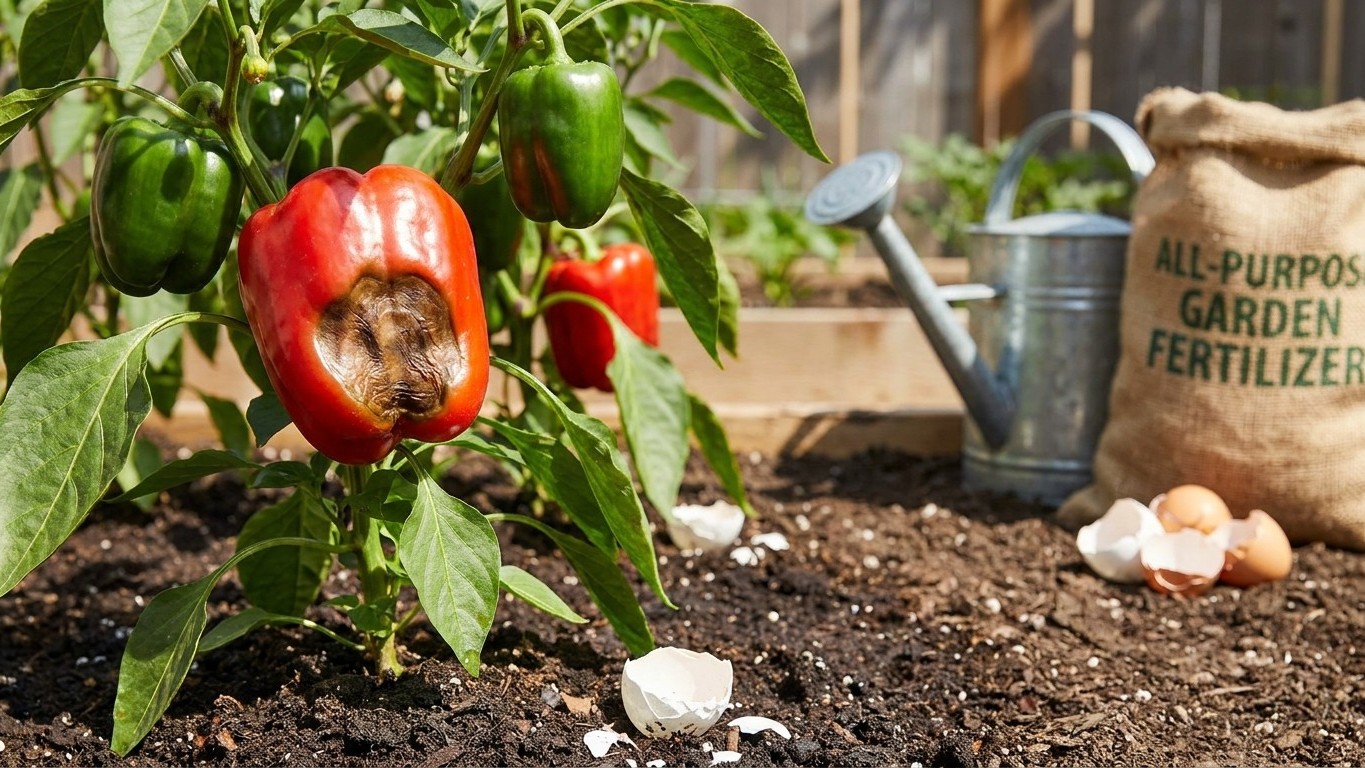

Blossom-end rot on peppers traces to four separate causes, and water shortage is just one of them. Utah State University Extension names poor water management, excessive nitrogen, root pruning, and drought stress as the drivers behind that sunken, leathery patch on the fruit’s bottom end. Treat it as a single “water problem” and you’ll miss the other three.
The short answer
Utah State University Extension, in its guide “Peppers in the Garden,” lists the causes plainly: poor water management, excessive nitrogen, root pruning, and drought stress. That’s the full list, and no single fix covers all four. A gardener who waters more but keeps dumping high-nitrogen fertilizer on the plant every two weeks will still watch fruit go bad at the blossom end, because the nitrogen is feeding leaf growth at the expense of calcium movement into the fruit.
Blossom-end rot itself isn’t a disease. No fungus, no bacteria, no pest is involved. It’s a calcium delivery problem inside the plant. Calcium moves through the pepper mostly with water, riding the transpiration stream up through the stem and into developing tissue. When that stream gets interrupted, whether by soil moisture swings, root damage, or a nitrogen overload that pulls resources toward foliage, the fruit tip runs short and the cells there collapse. The visible spot is the end result of an internal supply failure, not the failure itself.
This matters for how you respond. Gardeners often reach for calcium spray or crushed eggshells the moment they spot the lesion, assuming a calcium shortage in the soil. Most garden soils actually carry plenty of calcium already. The problem is almost never that the ground lacks it; it’s that the plant can’t move it to where it’s needed, fast enough, at the right moment in fruit development. That reframes the whole approach: the fix lives in water consistency, fertilizer balance, and root protection, not in adding more calcium to soil that already has it.
Four causes also means four possible starting points for troubleshooting. If your watering has been steady and your nitrogen application modest, but you tilled aggressively near the plants last week, root pruning is the more likely suspect. If nothing changed in your routine but a two-week dry spell hit right as fruit was sizing up, drought stress fits better. Reading the recent history of the bed, not just the plant, points toward the right cause faster than guessing.
What actually decides it
Poor water management
This isn’t about total water volume so much as consistency. Peppers that get soaked, then left to dry out hard, then soaked again put uneven pressure on the transpiration stream that carries calcium. The swings themselves, wet to dry to wet, disrupt calcium delivery more than a steady but modest watering schedule would. A plant watered the same modest amount every few days often does better than one watered heavily but irregularly.
Excessive nitrogen
Nitrogen pushes vegetative growth: bigger leaves, longer stems, more shoots. All of that growth competes with developing fruit for the plant’s limited calcium supply, and leaves generally win that competition because they transpire more water than fruit does. A pepper plant loaded with nitrogen looks lush and healthy right up until the fruit starts showing rot at the tip, which is part of why the cause gets missed. The plant seems to be thriving.
Root pruning
Any physical damage to the root system, close cultivation with a hoe, aggressive weeding, transplant shock, disrupts the plant’s ability to draw up water and calcium at the exact moments fruit needs it most. Roots don’t regenerate instantly, so the window of vulnerability can stretch for days after the damage happens, even if the plant looks fine above ground.
Drought stress
Extended dry stretches slow water uptake overall, and calcium simply doesn’t move without water behind it. Drought stress compounds with heat: peppers already face a separate, well-documented fruit-set problem when daytime highs climb above 90°F and nighttime lows drop under 55°F, since both extremes interfere with pollen viability. That’s a different mechanism from blossom-end rot, but the two often show up in the same stretch of a hot, dry summer, which is part of why growers sometimes lump them together. Local day-time highs above 90°F are tracked by territory; summer night minimums are not published here, so keep an eye on your own overnight lows during fruit set.
How to do it
- Test soil moisture before watering, not on a fixed calendar. Push a finger two inches down near the root zone. If it’s still damp, hold off; consistency matters more than a rigid schedule.
- Water at the base, evenly, at the same rough interval each time. Avoid letting the root zone swing from soaked to bone-dry between waterings, especially once fruit has set.
- Mulch around the base of the plant. A layer of mulch slows evaporation and buffers the soil against the wet-dry swings that disrupt calcium uptake.
- Cut back on nitrogen once flowering starts. Early-season nitrogen supports healthy leaf structure; heavy nitrogen during fruit development pulls calcium toward foliage instead of fruit.
- Keep tools away from the root zone. Hand-pull weeds close to the stem rather than hoeing, and avoid deep cultivation once plants are established.
- Watch soil moisture more closely during dry spells. Drought stress is cumulative; a week without adequate water can affect fruit that won’t show symptoms for several more days.
- Track flowering dates, not planting dates. Fruit typically needs roughly 35 to 45 days from flowering, not from sowing or transplanting, to size up. Count from the flower, and you’ll know when the plant is most vulnerable to inconsistent water.
- Leave foliage cover in place over developing fruit. Sunscald sets in when fruit sits exposed to direct sunlight during hot, dry weather, since the leaf canopy is what shields it; stripping leaves to “let light in” does more harm than good.
What goes wrong
- Adding calcium spray or eggshells at the first sign of rot. Most garden soil already holds enough calcium; the plant simply couldn’t move it to the fruit in time. Fix water consistency and nitrogen levels instead of adding more calcium to soil that doesn’t need it.
- Watering heavily right after noticing the problem, then going back to irregular watering. One good soak doesn’t undo the swing pattern that caused the issue. The remedy is a steady interval maintained through the rest of fruit development, not a single correction.
- Confusing blossom-end rot with sunscald. Blossom-end rot shows as a sunken, leathery spot at the fruit’s blossom end, caused by internal calcium delivery failure. Sunscald appears on the side facing the sun, caused by direct light exposure during hot, dry weather. Treating sunscald like blossom-end rot means adjusting watering when the real fix is leaving leaf cover intact over the fruit.
- Cultivating close to the stem to “clean up” the bed. Even light hoeing near established pepper plants can prune roots and disrupt uptake for days. Hand-weed within the drip line instead.
- Loading nitrogen-heavy fertilizer through the whole season. Lush leaf growth looks like a healthy plant, but excess nitrogen during fruiting competes directly with fruit for calcium. Shift to a lower-nitrogen feed once flowering begins.
- Ignoring a dry week because the plant “looks fine.” Drought stress effects often lag behind the actual dry spell; the fruit that shows rot today may reflect water shortage from several days earlier. Check soil moisture proactively rather than waiting for visible wilting.
Common questions
Does blossom-end rot spread from one pepper to another on the same plant?
No. It’s a localized calcium delivery failure in each individual fruit, not a pathogen, so it doesn’t spread through the plant’s tissue to affect other peppers directly. Multiple fruits can show it at once, though, if the underlying cause, like a dry spell or heavy nitrogen application, is affecting the whole plant.
Can I still eat peppers with blossom-end rot?
The affected tissue itself is unappetizing and often invaded by secondary organisms once it softens, but cutting away the damaged portion and using the rest is a matter of personal preference rather than a safety rule covered in the sourced material here.
Will blossom-end rot go away on its own once I fix the watering?
Fruit already showing the sunken spot won’t recover, but new fruit that sets after you correct water consistency, nitrogen levels, and root protection should develop normally, according to the causes named by Utah State University Extension.
Is blossom-end rot more common in container-grown peppers?
Containers dry out faster than garden soil and swing between wet and dry more easily, which lines up with the poor water management cause named by Utah State University Extension. That doesn’t mean containers are immune to the other three causes, including root disturbance from repotting or overly rich potting mixes heavy in nitrogen.