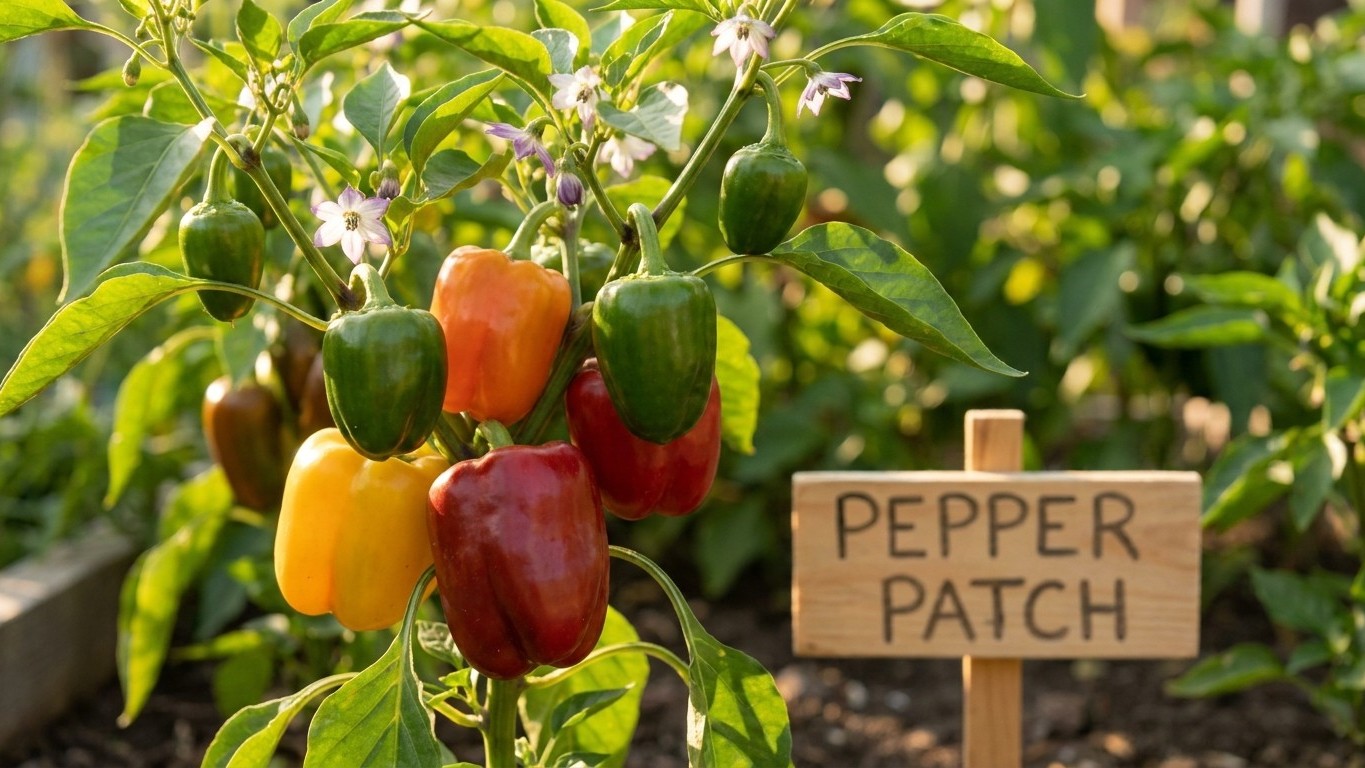

Once a pepper flower sets fruit, expect 35 to 45 days before that pod reaches full color, according to Utah State University Extension. That window is fixed by the plant’s own ripening clock, not by how long the seedling has been in the ground. Get the timing wrong and you’ll either strip green fruit too early or watch ripe peppers soften on the vine while you wait for a color that’s already arrived.
The short answer
Utah State University Extension puts the flowering-to-color window at 35 to 45 days. That’s the span between a flower dropping its petals to reveal a tiny green nub of fruit, and that same fruit reaching its final color, whether that’s red, yellow, orange, or purple depending on the variety. It’s a specific stretch of time tied to one biological event: pollination and fruit set. It has nothing to do with when you started seeds indoors or when you moved transplants outside.
This distinction matters more than it sounds. Two plants set in the ground on the same day can flower a week or two apart depending on stress, temperature, and how the roots settled in. Once a plant does flower and a fruit sets, though, the countdown to color is remarkably consistent within that 35 to 45 day range. Gardeners who track “days to maturity” from transplant date are working with the wrong reference point. The clock that actually predicts your harvest starts at the flower.
Spacing plays into this too, indirectly. Utah State University Extension recommends setting pepper plants 18 inches apart within the row, with rows spaced 18 to 24 inches apart. Crowded plants compete for light and airflow, which slows flowering and, by extension, pushes back the whole ripening sequence. A pepper bed planted at the recommended spacing tends to flower more evenly across the row, which makes the 35-to-45-day window more predictable when you’re planning harvest labor or a canning weekend.
On the storage side, the same source is specific: once picked, peppers hold for 1 to 2 weeks at 50 to 55 degrees Fahrenheit. That’s warmer than most home refrigerators run, and that gap matters. Prolonged refrigeration causes chilling injury, a real physiological problem that shows up as pitting, softening, and premature decay, not a minor cosmetic issue. If you’re harvesting peppers with the intent to keep them a while rather than eat them immediately, the standard fridge crisper isn’t the right environment.
Put together, the short answer is this: count roughly five to six weeks from flower to full color, space your plants generously enough that flowering happens on schedule, and store harvested fruit closer to 50-55°F than to standard refrigerator temperature if you want it to last past a few days.
What actually decides it
Fruit set failure at the cold end
Pepper flowers can open and even look healthy while producing no viable fruit at all, and temperature is usually the reason. When nighttime temperatures drop below 55 degrees Fahrenheit, pollen becomes less viable and fruit set drops off. A plant can flower for weeks in a cool stretch and simply never produce a pod, because the pollen itself failed before it ever had a chance to fertilize the flower. This site doesn’t carry summer night minima by state or region, so if you’re gardening somewhere with cool evenings, you’ll need to track your own overnight lows rather than assume from daytime warmth or from a general sense of your climate zone.
Fruit set failure at the hot end
The opposite failure happens just as often, and it’s a separate mechanism entirely. When daytime temperatures climb above 90 degrees Fahrenheit, peppers drop blossoms or fail to set fruit even if pollen is otherwise viable. Heat stress interferes with flower development directly, causing the plant to abort blossoms rather than push energy into fruit it can’t support under stress. A gardener who only watches for cold nights and ignores a run of 90-plus days is missing half the picture. Both thresholds operate independently, and either one alone can shut down fruit set for a stretch, even if the other end of the range is perfectly fine.
Water delivery and its effect on ripening
Peppers need 1 to 2 inches of water per week, delivered deep and infrequently rather than in frequent shallow doses. Drip irrigation is the recommended method because it puts water at the root zone steadily without wetting foliage or creating the boom-and-bust moisture swings that stress a plant. Inconsistent watering, feast one week and drought the next, doesn’t just affect fruit size. It stresses the plant during the exact window when it’s converting a green pod into a ripe one, and stressed plants ripen unevenly or drop fruit before color finishes developing.
How to do it
- Plant at the recommended spacing from the start. Set plants 18 inches apart within the row, with rows 18 to 24 inches apart, so flowering happens on schedule instead of being delayed by crowding and poor airflow.
- Watch your own nighttime and daytime temperatures once flowering begins. Fruit set fails below 55°F at night and above 90°F during the day, so track both ends locally rather than assuming either threshold based on the season.
- Mark the date a flower sets fruit, not the date you planted or transplanted. This is the actual reference point for the 35-to-45-day ripening window.
- Water deeply and infrequently through the ripening period. Deliver 1 to 2 inches per week, ideally through drip irrigation, so the plant isn’t stressed by dry spells or waterlogged by shallow frequent watering.
- Check color daily as you approach day 35 from fruit set. Ripening isn’t always uniform across a plant, so individual fruits may finish at different points within the 35-to-45-day range.
- Harvest once a fruit reaches full color for its variety. Full color, whatever that final shade is for the specific plant, is the sign the pod has finished its ripening process and is ready to come off the plant.
- Cool harvested fruit promptly and store at 50 to 55 degrees Fahrenheit. This range keeps peppers usable for 1 to 2 weeks without triggering chilling injury.
- Avoid standard refrigerator temperatures for extended storage. If peppers need to last past a few days, keep them out of prolonged refrigeration, which causes pitting and premature breakdown.
What goes wrong
- Flowers appear but no fruit ever forms. This usually traces back to nighttime temperatures under 55°F. There’s no fix for the weather itself, but tracking your own local overnight lows lets you anticipate a slow patch rather than assume something is wrong with the plant.
- Blossoms drop during a hot stretch. This is the other end of the same problem, triggered by daytime temperatures above 90°F. It’s a separate cause from cold-night failure, and confusing the two means treating the wrong problem. The plant typically resumes setting fruit once temperatures moderate.
- Fruit is picked too early because the gardener counted from transplant date instead of flowering date. The 35-to-45-day window starts at fruit set, not at planting. Mark the date each flower turns into a small green fruit, and count from there instead.
- Harvested peppers go soft or pitted within a few days. This is a strong sign of chilling injury from a standard refrigerator, which runs colder than the recommended 50 to 55 degree storage range. Move fresh harvest to a cooler room or a dedicated storage spot in that range rather than the crisper drawer.
- Uneven ripening across a single plant or row. Inconsistent watering is a common driver here. Deep, infrequent watering at 1 to 2 inches per week, ideally via drip irrigation, keeps the plant on a more even ripening schedule than sporadic hand-watering does.
- Plants set fruit unevenly across a crowded bed. Spacing tighter than 18 inches within the row, or rows closer than 18 to 24 inches apart, restricts airflow and light, which delays flowering on the inner plants. Wider spacing at planting time avoids this from the start.
Common questions
How long does it take a pepper to ripen after it flowers?
Utah State University Extension puts it at 35 to 45 days from the point a flower sets fruit to when that fruit reaches full color. This does not include the time from seed or transplant, only the window after fruit set.
Why did my pepper plant flower but never produce any fruit?
Fruit set can fail at either temperature extreme. Nights under 55°F reduce pollen viability, while days over 90°F cause blossom drop from heat stress. These are two distinct causes, and either one alone can stop fruit production even if the other condition is fine.
How much water do pepper plants need while fruit is ripening?
Utah State University Extension recommends 1 to 2 inches of water per week, applied deep and infrequently. Drip irrigation is the recommended delivery method for keeping moisture consistent at the root zone.
Can I store harvested peppers in the refrigerator?
Peppers keep for 1 to 2 weeks when stored at 50 to 55 degrees Fahrenheit. That’s warmer than most refrigerators run, and prolonged refrigeration at colder temperatures causes chilling injury, so a standard fridge isn’t ideal for extended storage.