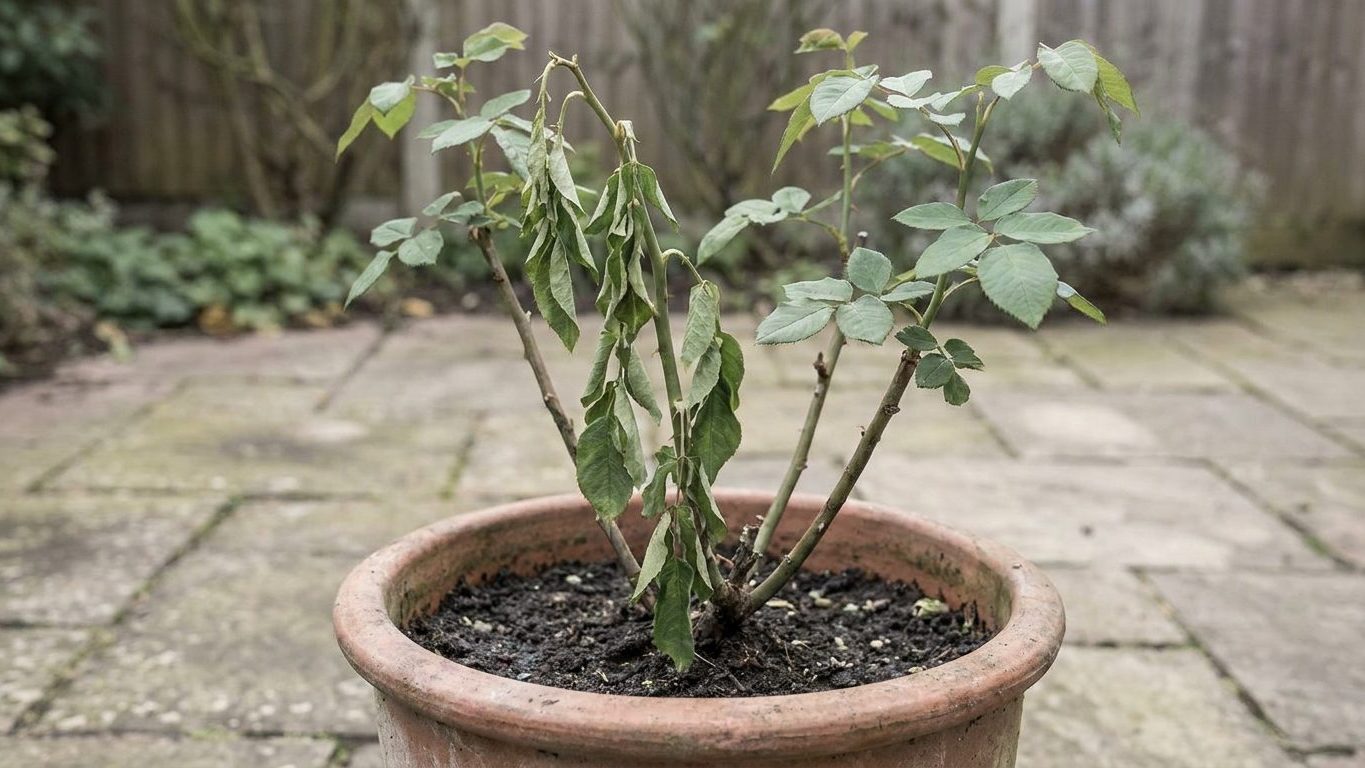

A rose wilting while its leaves are still green and fully expanded, not yellowed or dropped, points to one of three problems: a blocked cane, a damaged root system, or a watering mismatch with the soil. It is often serious for that specific cane or section, but rarely fatal to the whole plant if you diagnose it within a week or two.
What you are looking at
The leaves themselves look intact. No black spots, no powdery coating, no chewed edges. They are simply limp, drooping down along the stem instead of standing out from it, as if the plant had gone a week without water even though the ground might be damp. This is a loss of turgor pressure inside the leaf and stem cells, not a disease of the leaf tissue.
Pay attention to how much of the plant is affected. A single cane wilting from the tip down, while every other cane on the bush looks normal, points to a localized blockage in that one cane. The whole bush wilting at once, with every leaf on every stem drooping, points to a root-level or watering problem that affects the entire vascular supply.
What it is not
Do not confuse this with black spot defoliation, where yellow leaves drop from the bottom of the plant upward over weeks. Do not confuse it with normal midsummer afternoon droop, where leaves sag in full sun heat and fully recover by the next morning. If the leaves are still limp after a cool night and moist soil, the wilting is not a normal heat response. That persistence is the signal that something mechanical, not environmental, is stopping water from reaching the leaves.
What actually causes it
Roses move water from roots to leaves through a narrow band of vascular tissue just under the bark. Anything that blocks, severs, or drowns that pathway produces the same visual result: green leaves that cannot get water, wilting even though the plant is not actually short on it at the source. That is the common explanation gardeners get wrong. Wilting does not automatically mean the soil is dry. More often it means the water is present but cannot travel.
Three causes, one symptom
A cane borer, usually a small bee or wasp larva, tunnels into the pith through an open pruning cut and hollows out the center of the cane as it feeds. That hollowed section can no longer carry water upward, so everything above the tunnel wilts while the rest of the plant, fed by other canes, stays green. Canker diseases do the same thing chemically instead of mechanically, girdling a ring of dead tissue around the cane at the site of infection.
Root rot works from the other end. Waterlogged soil starves roots of oxygen, and the fine feeder roots that absorb water die first. A plant sitting in soggy ground can wilt from thirst even though its roots are surrounded by water, because those roots have already stopped functioning. Girdling roots, vole tunnels, or a rotted graft union produce the same effect by physically cutting off the supply at the base rather than in the soil.
True water stress, simple underwatering, is the most common cause but the easiest to rule out: push a finger two inches into the soil near the root zone. Bone-dry soil confirms straightforward drought stress. Damp or soggy soil with wilting rules that out and points you toward roots or a cane instead.
| Cause | Pattern | Soil check | Confirming sign |
|---|---|---|---|
| Cane | Single cane wilts, rest of bush fine | Normal | Hollow pith or dark lesion at cut end |
| Root | Whole plant wilts | Soggy or foul-smelling | Blackened, mushy roots when dug up |
| Water | Whole plant wilts | Bone-dry | Recovers within a day of deep watering |
What to do now
For a wilting single cane, cut it back in sections until you reach clean, white, solid pith. Any hollow or discolored center means you are still above the damage; keep cutting down. The wilted growth above the blockage is already lost this season, but the cane stub below it, if healthy, can push new growth from a lower bud within a few weeks in warm weather.
For a canker with a visible sunken, dark lesion on the bark, cut at least an inch below the lesion into clean tissue, and wipe your pruners with rubbing alcohol between cuts so you do not carry the infection to the next cane you trim.
For suspected root rot, stop watering immediately and check drainage before doing anything else. If the soil around the base stays wet two days after a rain with no more rain in sight, the plant is sitting in a bathtub. In containers, this can mean drilling more drainage holes or repotting into fresh, well-draining mix. In the ground, it can mean the rose was planted in a low spot that needs to be built up. Roots that are already black and mushy will not recover; what you are Protecting is whatever root mass is still white and firm.
For plain drought stress, water deeply and slowly at the base, enough to soak the top eight inches of soil, rather than a quick surface splash. Recovery, if this is the actual cause, usually shows within 24 hours. If the same cane or plant is still wilted a full day after a deep watering, water was not the primary problem and you should go back and check for a cane blockage or root damage instead.
What does not work
Fertilizing a wilting rose to “help it bounce back” is one of the most common mistakes, and it usually makes things worse. Fertilizer salts draw water out of already-stressed root cells through osmosis, adding a chemical burden on top of a mechanical or drainage problem that fertilizer cannot fix.
Foliar calcium sprays and crushed eggshells scattered around the base are sold as a general cure for weak canes and poor vigor, but they solve a problem the plant usually does not have. Calcium moves through the plant in the same water stream that is already blocked, so spraying it on leaves or adding it to soil that is not calcium-deficient does nothing to restore flow past a borer tunnel, a canker, or dead roots. The mineral is present; the plumbing to deliver it is the actual failure.
Wrapping the wilted cane, painting the cut with pruning sealant, or dousing the crown with a fungicide “just in case” treats the surface, not the blockage underneath. Pruning sealants can even trap moisture against a cut that needs to dry, encouraging the rot they were meant to prevent. None of these remedies restore water flow once the vascular tissue is already dead or hollowed. The only fix for a blocked cane is cutting back to living tissue; the only fix for damaged roots is correcting drainage and waiting for new root growth.
Preventing it next time
The single change that prevents the most cases is getting drainage right before anything else. Roses tolerate a wide range of watering mistakes but not standing water at the roots for more than a day or two. If a planting spot pools water after rain, raise the bed, amend heavily with coarse compost, or move the rose rather than trying to out-water the problem with a different schedule.
Beyond drainage, seal or angle pruning cuts so they shed water instead of holding it, since open cuts are the main entry point for cane borers. Cutting at a slight angle just above an outward-facing bud, rather than flat across the cane, reduces the flat surface where water and insects can settle.
Water deeply and infrequently rather than a little every day. Frequent shallow watering keeps the top inch of soil damp while the deeper root zone stays dry, training roots to stay shallow and vulnerable to both drought stress and rot at the surface. A deep soak every few days, adjusted to your soil type, builds the deeper root system that resists both extremes.
Finally, disinfect pruners between plants and between cuts on a diseased cane. Canker and fungal pathogens travel on blade edges, and a five-second wipe with alcohol between cuts is the cheapest insurance against spreading a cane problem you already have to a cane that was healthy.
Common questions
Can a rose recover from wilting in full leaf?
Yes, in most cases, if the cause is identified within a week or two. A single wilted cane recovers once cut back to healthy tissue, and a drought-stressed plant recovers within a day of deep watering. Root rot is the hardest to reverse and depends on how much healthy root mass remains.
Should I cut off a wilting cane immediately?
If the wilting is confined to one cane and the rest of the bush is healthy, yes, cut back to clean white pith as soon as you notice it. Waiting allows a borer or canker to tunnel further down the cane, forcing a lower and more damaging cut later.
Why is my rose wilting even though the soil is wet?
Wet soil with wilting usually points to root damage, most often root rot from waterlogging, not a watering shortage. The roots have stopped absorbing water even though it is available, so adding more water at this stage worsens the problem rather than solving it.
Does wilting always mean the rose is dying?
No. Wilting confined to a single cane, with the rest of the plant green and turgid, means that one cane is compromised, not the whole plant. Whole-plant wilting is more serious and warrants checking the roots and drainage right away, but even then the rose often survives once the underlying cause is corrected.