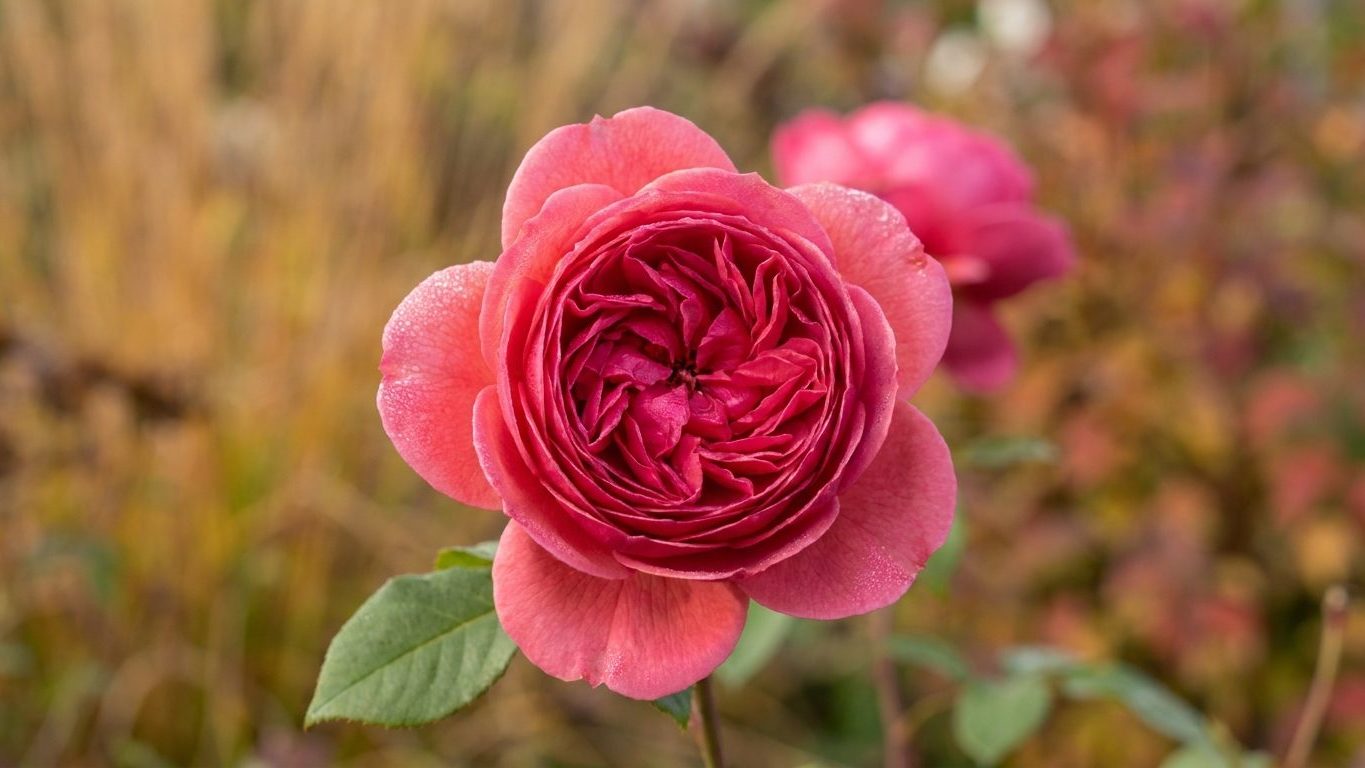

Gertrude Jekyll is a David Austin shrub rose (cultivar code ‘AUSboard’) grown for deep pink, densely petaled blooms and an old-rose fragrance that ranks among the strongest in the English rose line. It survives outdoors from USDA zone 5a through 11b, needs six or more hours of direct sun, and flowers on new wood all season rather than in one spring flush. That last fact decides almost everything about how you prune it, and it’s the detail most plant tags leave off.
What Gertrude Jekyll actually is
Gertrude Jekyll is classed as a Shrub rose, one of the eleven rose groups this site covers (hybrid tea, floribunda, grandiflora, shrub, climbing, rambling, miniature, ground cover, old garden, rugosa, hybrid musk, polyantha). The genus overall runs 1 to 8 feet tall and 1 to 6 feet wide depending on cultivar, according to the NC State Extension Gardener Plant Toolbox, but that figure covers every rose in the database, not this plant specifically. No per-cultivar height is documented here, so treat the number on your nursery tag as the working figure.
Hardiness runs zone 5a through 11b, a wide span for a named cultivar, and it needs full sun, six or more hours of direct light a day. Growth rate is listed as medium, but maintenance is rated HIGH, which already signals this is not a plant-it-and-forget-it shrub. Flower anatomy follows the genus rule of parts in multiples of five, with petal counts ranging from 5 in a single bloom to more than 20 in a double; the source description for this cultivar points to the double end of that scale. Propagation is most often done by grafting, with seed and stem cutting as secondary methods, which matters later when deciding what part of the plant to protect over winter.
What Gertrude Jekyll is good for
The old-rose fragrance is the reason people plant this cultivar in the first place. NC State groups rose scent into five categories: old rose, fruity, tea, myrrh, and musk. Gertrude Jekyll sits in the old rose group, and a dense, double bloom holds more fragrance oil per flower than a simple, five-petaled bloom does. That’s why heavily petaled English shrub roses get planted next to a porch or path rather than scattered through a mass landscape bed: the point is to walk past it and smell it, not just see it from across the yard.
For cutting, timing the stem matters more than most gardeners expect. Cut once the sepals have folded back and the first petal or two are starting to unfurl; a bud cut tighter than that often never opens indoors.
Past the bloom, the plant still has a job to do. The hip, the fruit left behind once petals drop, holds the true seeds (achenes) inside, is edible, and turns from green to red through fall. If you stop deadheading late in the season and let a few hips form, you get autumn color and feed birds in the process. Beyond fragrance and fruit, the plant’s structure earns its keep over winter too: dead stems cut back to 12 to 24 inches and left standing, rather than cleared to the ground, shelter native, stem-nesting bees.
Where it ripens in time, and where it is a gamble
A hardiness range of zone 5a through 11b is unusually wide for one named cultivar, and surviving winter and blooming well are two different questions.
At the cold edge, zone 5a, think of the upper Midwest, where winter lows regularly test a rose’s crown or graft union. Because Gertrude Jekyll flowers on new wood, a hard winter that kills the top growth back to the snow line doesn’t cost you the whole season’s bloom the way it would on an old-wood rambler: new canes push and flower anyway. What has to survive is the union (on a grafted plant) or the crown (on an own-root plant), and mounding soil or mulch over whichever one you have is the margin between a rose that comes back and one that doesn’t.
At the warm edge, zone 11b, think of a place like Key West, Florida, where winter chill barely registers. Here the gamble flips: freeze damage stops being a concern, and the risk becomes the warm, humid air that fuels the diseases listed for this genus (botrytis, blights, powdery mildew, leaf spots, anthracnose), which stay active nearly year-round rather than pausing for a dormant season.
| Zone edge | Reference region | Main risk | What to protect |
|---|---|---|---|
| 5a (cold) | Minneapolis, MN area | Winter kill to the union or crown | Mound soil/mulch over base per rootstock type |
| 11b (warm) | Key West, FL / Honolulu, HI area | Year-round fungal disease pressure | Airflow and monitoring, not winter cover |
Between those two edges, the broad middle of the hardiness range (roughly zones 6 through 9) gives the most comfortable margin: enough winter chill for a real dormant rest, and enough warmth for the six-plus hours of full sun the plant needs, without the sustained heat and humidity that push disease pressure into overdrive.
The two ways a season goes wrong
A long bloom season isn’t automatically a trouble-free one. In the north, the failure mode is straightforward: a hard freeze reaches the union or crown before it’s protected, and the plant either dies back to the ground or dies outright.
In the south, and anywhere summers run hot and humid for months, the failure is slower and easier to miss. Warm, still, wet air is exactly what botrytis and powdery mildew want, and both are on the list of diseases documented for this genus. A rose in zone 8 or 9 can sail through winter with no protection at all and still lose most of a summer’s bloom to fungal disease if the air around it never really dries out.
For Gertrude Jekyll specifically, the second failure mode matters more, given how it flowers. Because new wood keeps pushing fresh buds through the season, a single disease flare on older canes doesn’t end the show the way it would on a once-blooming rambler. But repeated infection on that same young growth, the tender tissue mildew and botrytis prefer, cuts directly into the repeat bloom the plant is grown for. Once you’re solidly inside the 5a to 11b range, humidity management does more for this rose’s flowering than winter protection does.
What it resists, and what it does not
NC State’s Rosa profile lists disease and pest pressure for the genus as a whole rather than a resistance grade specific to Gertrude Jekyll. The diseases named are botrytis, blights, powdery mildew, leaf spots, and anthracnose. The pests named are Fuller rose beetle, Japanese beetle, rose chafer, rose thrips, southern red mite, and two-spotted mite. Worth flagging: the southern red mite and two-spotted mite are arachnids, not insects, so a spray built for beetles or thrips won’t necessarily touch them.
No high-versus-intermediate resistance rating is documented for this cultivar, and that absence is itself useful information. Where a catalogue does distinguish high resistance from intermediate, intermediate only means the plant slows a disease down, not that it escapes it. Here, there’s no rating at all to lean on, so treat every disease on that list as a live risk rather than assume any built-in protection. That’s especially relevant given the new-wood flowering habit covered above: the soft young growth pushed for repeat bloom is precisely the tissue those fungal diseases target first.
Growing it without the usual mistakes
The mistake this cultivar invites is treating it like a once-blooming rambler and cutting it back hard. Ramblers flower from old wood, so hard pruning there removes next year’s flowers outright. Gertrude Jekyll flowers from new wood, so light pruning only is the rule: cut hard and you cost yourself bloom for the season. Most roses need yearly pruning in late winter, but the exact date depends on your USDA zone, so check the state-specific page for a workable window rather than picking a calendar date at random.
Soil should be clay or loam, with a pH anywhere from acid (below 6.0) to neutral (6.0 to 8.0); that’s a wider band than many gardeners assume, and there’s no need to chase 6.0 to 6.5 specifically. The one soil condition to watch is strongly alkaline ground, above roughly 7.5, where iron chlorosis shows up as yellowing between the leaf veins. Full sun of six or more hours a day is not negotiable given the plant’s high maintenance rating and medium growth rate; shade it and it grows slower and blooms less, full stop.
Deadheading pushes a new shoot with every cut, useful through most of the growing season and a liability near the end of it. Keep deadheading through summer, then stop with enough runway before your first frost date that new shoots can ripen rather than staying soft. Soft wood that hasn’t ripened by frost is what dies back hardest over winter. Last, check your plant tag before winter: grafting is the standard commercial propagation method for a cultivar like this, but plenty of shrub roses sold today are own-root with no graft at all. A budded rose needs the union protected; an own-root plant needs the crown protected instead, and they’re not the same spot on the plant.
Common questions
Does Gertrude Jekyll rebloom through the season? Because it flowers on new wood rather than old wood, fresh growth keeps producing buds as the season goes on, unlike a once-blooming rambler that flowers in a single spring flush.
Are the thorns on Gertrude Jekyll dangerous? They’re prickles, not true thorns. A true thorn is a modified stem, woody all the way through; a prickle grows from the outer skin of the stem, which is why it snaps off sideways rather than breaking like wood.
Should I prune it hard in spring to control size? No. Hard pruning removes the new wood this cultivar flowers from, which costs you bloom rather than saving it. Light pruning in late winter, timed to your zone, is the safer approach.
Do I need to protect the graft union or the crown over winter? It depends on whether your plant is grafted or own-root. Check the nursery tag: a budded rose has a union that needs mounding, while an own-root plant has no union at all and the crown itself needs the protection instead.