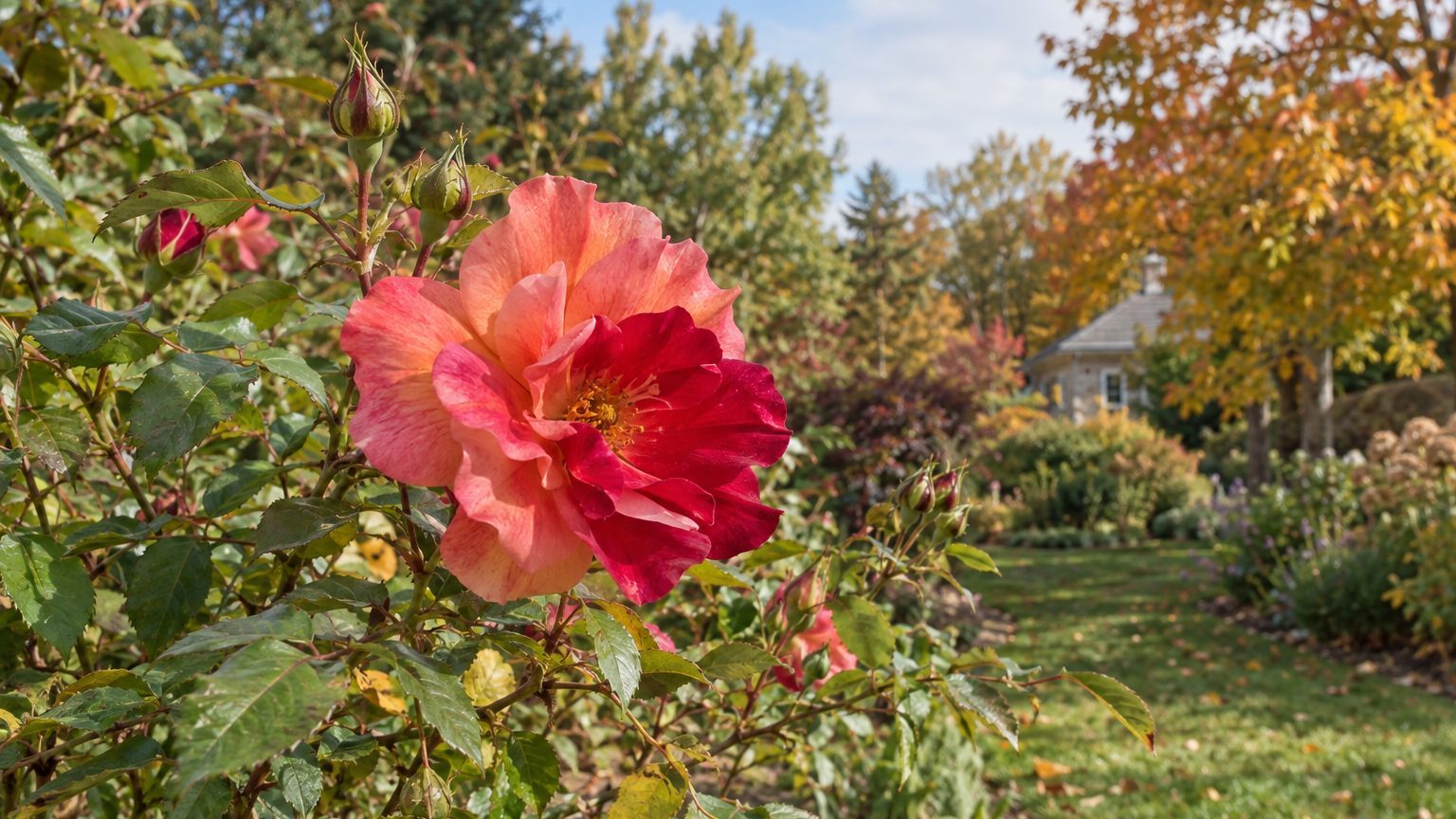

Mutabilis is an Old Garden rose sold for multicolored flowers in spring and again in autumn. Unlike a tomato, it has no “days to maturity” to check against your frost date. The question that matters is whether the plant gets enough mild weeks to root, ripen its wood and deliver that second flush before winter, and what care that takes where you live.
What Mutabilis actually is
The facts that decide whether it suits a garden are short. Mutabilis belongs to the Old Garden group, and the source description reads: multicolored flowers in spring and autumn, tolerates poor soil, part shade and high humidity. That comes from the North Carolina Extension Gardener Plant Toolbox entry for Rosa.
There is no catalogue figure for days from transplant, and no honest way to invent one. A rose is a perennial shrub, and its clock runs in seasons: one to get roots established, then a bloom cycle each year after that. If a nursery quotes you a number of days to bloom for this variety, treat it as that nursery’s estimate, not a documented figure.
Size is the same story. The source documents 1 to 8 feet tall and 1 to 6 feet wide for the genus, depending on cultivar. A range that wide is useless for planning a hedge or a corner, and no per-plant figure for Mutabilis is published here. Check the tag or the grower’s listing before you commit to a spot.
One more fact shapes the work. The source says roses flower on old wood on the once-blooming types. Mutabilis is described as blooming in spring and autumn, which points to a repeater, but the source does not settle it. Check that before you pick up the pruners (more on that below).
What Mutabilis is good for

This is an ornamental, not a kitchen crop, so “use” means what it does in the landscape. The source description gives it three jobs: color in two seasons, and tolerance for three conditions that sink fussier roses. Poor soil, part shade and high humidity describe a lot of real yards, such as the north side of a garage, a damp corner, or a bed nobody ever amended.
Part shade is a tolerance, not a preference. The source gives full sun, 6 or more hours of direct sunlight a day, as the genus standard. Treat part shade as a rescue option for a spot that falls short, not a reason to skip the sunniest bed you have. Soil is documented as clay or loam, with a pH from acid (below 6.0) to neutral (6.0-8.0).
What the flowers look like up close is thinly documented. The source says multicolored, and it does not list the colors or explain how one plant carries them. Petal count is unknown for this cultivar, though the genus runs from 5 petals (single) to more than 20 (double), and flower parts come in multiples of five. Fragrance falls into five groups in the source: old rose, fruity, tea, myrrh and musk. Which one Mutabilis belongs to is not documented here, so smell one before you plant it by a window.
Two practical uses follow from the genus facts. For the vase, cut once the sepals have folded back and the first one or two petals are unfurling. A bud cut tighter than that often never opens. For the fall garden, the hip is an accessory fruit holding achenes. It is edible and turns from green to red in fall. Whether this cultivar sets hips freely is not documented, and nobody should plan a harvest around it.
Where it ripens in time, and where it is a gamble
What the zone range does and does not tell you
The source documents USDA zones 5a through 11b for the genus Rosa. That spans most of the country, but it describes the whole genus, not Mutabilis specifically, and the cultivar’s own cold tolerance is not published here. This page also carries no frost-date figures from named weather stations, so I won’t pretend to give city-by-city margins. Any such table would be guesswork, and the state pages are where reference-city frost dates belong.
What can be said is where the gamble sits. At the cold end of the range, the risk is winter and the shortness of the season. At the warm end, there is no frost race at all, and the issue shifts to humidity and disease pressure (covered in the next two sections).
The frost arithmetic, adapted for a rose
A tomato grower subtracts days to maturity from the frost-free window. A rose grower does a looser version of the same sum. Start with your average date of first fall frost. Work backward through the stretch the plant needs to produce and finish its autumn flush, the very thing this variety is sold for. Then work backward again through the weeks a new transplant needs to root before the ground cools. The days left over are your real planting window.
The weeks each step takes are not documented for Mutabilis, so I won’t hand you numbers. You can still run the sum with your own local data. Where autumn arrives early, a late planting leaves a root system too young to carry the plant through winter, and the fall flush will be thin or absent. The planting date itself depends on your zone, and the page for your state gives it.
The two ways a season goes wrong
A long season is not automatically a good one, and a frost table cannot show either of these failures.
The first is soft growth that will not ripen before frost. Wood ripens and the plant hardens on its own, but only if it stops pushing new shoots in time. Every deadheading cut pushes a new shoot, and so does a late feeding. Shoots too soft to ripen in time are the ones winter kills, usually back to wood that has to be cut off the next spring. Stopping the cuts is what avoids that late growth, not any signal from the plant.
The second is a humid season working against the foliage. The source says Mutabilis tolerates high humidity, but tolerating is not the same as being immune. The diseases the source names for roses include powdery mildew, leaf spots, botrytis, blights and anthracnose, all of which thrive when leaves stay wet and air stands still. A plant that shrugs off damp conditions can still carry a leaf-spot problem into the fall flush.
What it resists, and what it does not
No disease resistance grade is listed for Mutabilis in the source. Nothing is rated high, nothing is rated intermediate, and I won’t imply protection that the catalogue does not give. If a seller advertises resistance, ask what the claim rests on.
What the source does give is the list of problems that affect roses in general. Diseases: botrytis, blights, powdery mildew, leaf spots and anthracnose. Pests: Fuller rose beetle, Japanese beetle, rose chafer, rose thrips, southern red mite and two-spotted mite. The two mites are arachnids, not insects, so “insects and mites” is the accurate way to group them. Which of these will hit your plant depends on your region, and the source does not rank them for this cultivar.
Resistance is a trait of the cultivar, not of the group. Old Garden roses do not share a single disease profile, and the reverse holds elsewhere too: Knock Out Rose: When to Plant the Tomatoes That Ripen All at Once is a shrub rose bred specifically for resistance. Mutabilis has no such documented claim here. The source also rates roses as high maintenance, so budget for scouting, watering at the base and cleanup.
One cleanup fact is worth knowing. Powdery mildew overwinters in dormant buds and on stems, not in leaf litter. Raking leaves is good hygiene, but it alone does not end the cycle.
Growing it without the usual mistakes
The mistake this variety invites is pruning on a calendar instead of on bloom habit. The source says roses on old wood, the once-bloomers, should be cut after flowering, while repeat-bloomers are pruned while dormant. Cut a once-bloomer in late winter and you remove the year’s flowers. Mutabilis is described as flowering in spring and autumn, so confirm which type you have from the grower before you cut. Most roses take a yearly prune in late winter, but the date depends on your zone, so use the page for your state rather than a national rule.
Feeding follows the same logic as the frost sum. Stop feeding and stop heavy deadheading early enough that new shoots can firm up before winter. Late nitrogen is the usual culprit behind soft growth.
Check the tag for how the plant was grown. Hybrid teas, grandifloras and many climbers are budded onto a rootstock, while most landscape shrub roses sold today are own-root with no graft union at all. Winter protection guards the union on a budded rose and the crown on an own-root one. The source calls grafting the best propagation strategy, with seed and stem cuttings also possible, so a cultivar like this could come either way. If you are comparing sizes and habits, the cultivar pages carry per-plant figures. Gertrude Jekyll Rose: When to Plant the Tomatoes That Ripen All at Once is one example, and the wider Rose Varieties index covers the main groups, including the Old Garden roses this one belongs to.
When you tidy up, remove what is diseased or unsafe. Dead stems cut back to 12-24 inches and left standing shelter stem-nesting native bees.
Common questions
When should I prune Mutabilis?
It depends on whether yours blooms once or repeats. Once-bloomers flower on old wood and get cut after flowering. Repeat-bloomers are cut while dormant. The right date also depends on your zone, so use the page for your state.
Will it grow in shade?
The source says it tolerates part shade. Give it the sunniest spot you can and use shade as a fallback.
Are rose thorns dangerous?
They are prickles, not true thorns. Prickles grow from the outer skin of the stem, which is why they can be rubbed off. They scratch and can break the skin, so wear gloves. “Thornless” is still the trade term on some cultivar labels.
Can I eat the hips?
The hip is edible and turns from green to red in fall, but whether Mutabilis sets hips reliably is not documented here.