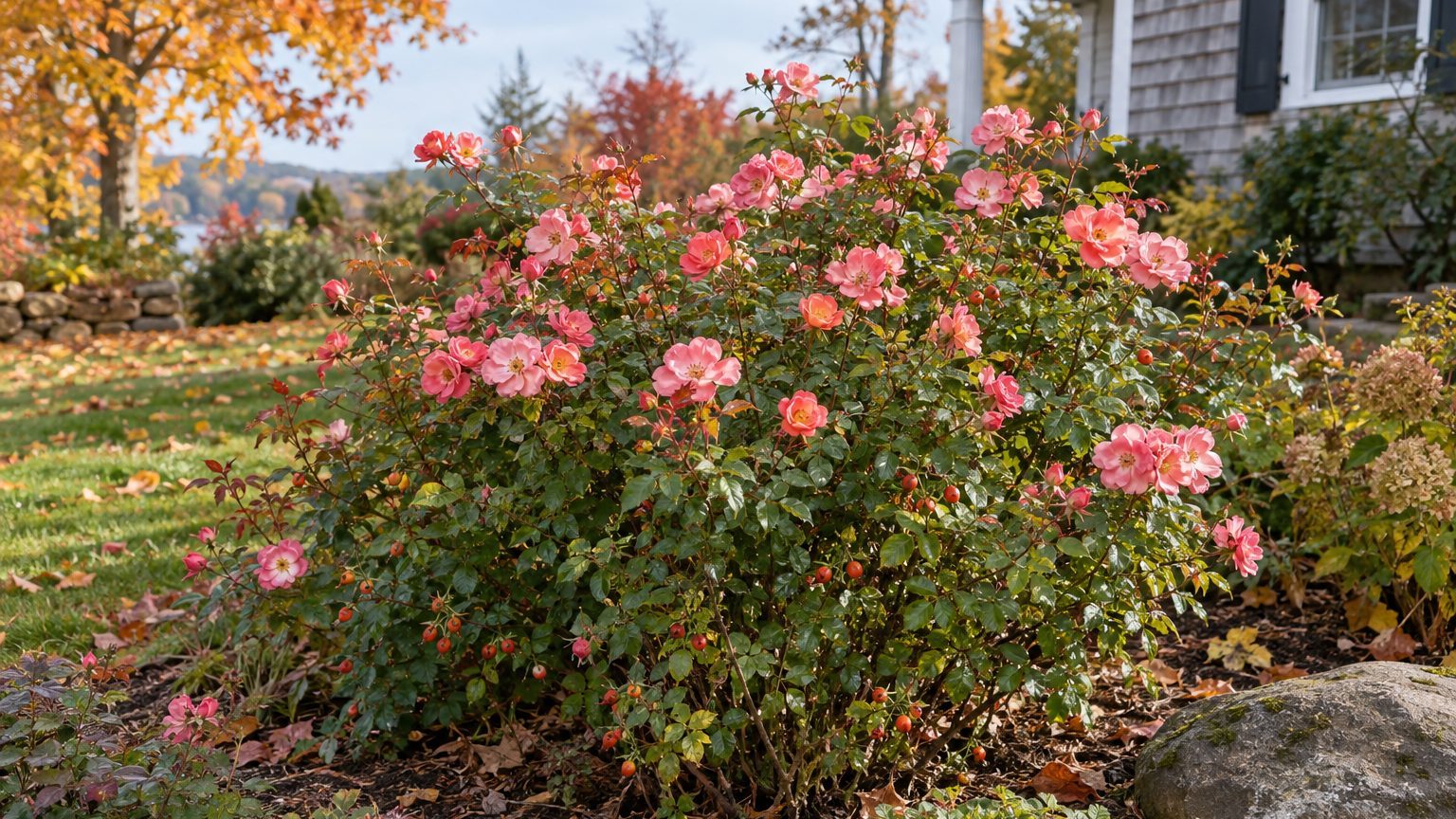

Oso Easy is a shrub rose that flowers on new wood, and that one fact rewrites the question in the title. A tomato ripens in a single flush against the first frost. This plant keeps building flowering canes through the season, so there is no days-to-maturity clock to beat. What you can check is whether your season is long enough for new wood to grow, bloom and ripen, and what that costs you in pruning and care.
What Oso Easy actually is
The catalogue description of Oso Easy is brief: a shrub group, disease resistant, hardy, available in many colors. It gives no days-to-maturity figure, and that absence is correct. The number on a tomato tag is counted from transplant, not from sowing, and a rose has no counterpart. Nothing here runs from planting day to a harvest date. The source is the NC State Extension Gardener Plant Toolbox entry for Rosa.
Three facts decide whether it suits a garden. The first is the flowering wood. Oso Easy blooms on new wood, which means light pruning only, because hard pruning costs bloom. The second is size. The only documented dimensions are for the genus: 1 to 8 feet tall and 1 to 6 feet wide, depending on cultivar. Oso Easy’s own figure is not published here, so read the plant tag before you set spacing. The third is the fruit. Roses make hips, an accessory fruit holding achenes, edible, turning from green to red in fall.
The same source rates growth as medium and maintenance as high for the genus. Expect to spend some time with this plant.
What Oso Easy is good for

This is a landscape shrub, not a kitchen crop, so the tomato question of sauce versus salad has no direct answer. No flavor note for Oso Easy’s hips is documented here, and I won’t guess at a taste. What the source does establish is that rose hips are edible and that they ripen from green to red in fall.
The mechanism matters more than any adjective. A hip is an accessory fruit, a seed-holding structure built from the flower, and it only forms if a flower is left on the plant. Every deadheading cut removes that flower. A gardener who deadheads steadily gets more bloom and almost no hips. One who stops cutting gets hips. You pick one or the other for each stretch of the season.
For the vase, timing is everything. Cut once the sepals have folded back and the first one or two petals are unfurling. A bud cut tighter than that often never opens. Petal count runs from 5 on a single flower to more than 20 on a double, but where Oso Easy falls in that range is not documented here. The same goes for scent: the source sorts rose fragrance into five groups (old rose, fruity, tea, myrrh and musk), and none is assigned to this cultivar.
The many colors in the catalogue note are real selling points for beds and borders. Beyond that, the page can only say what the category implies. Other cultivar pages, such as the Flower Carpet Rose: When to Plant the Tomatoes That Ripen All at Once page, follow the same format, so you can compare what each plant documents and what it leaves blank.
Where it ripens in time, and where it is a gamble
The honest answer starts with a gap. The frost-window figures for named weather stations that this page was meant to cross with a catalogue number are not published here. I won’t invent a reference city or a date. What I can give is the arithmetic, so you can run it with your own numbers.
- Start with your frost-free window: the days between the last spring frost and the first fall frost.
- Subtract the weeks your soil needs to warm and the plant needs to push strong new canes in spring.
- Subtract the weeks you want at the end for wood to ripen before frost arrives.
What is left is your flowering time on new wood. For a tomato that remainder is a picking window. For Oso Easy it is simply how many weeks of bloom the plant can build. The source gives no per-cultivar figure for any of the three subtractions, so treat the result as a planning estimate, not a promise.
Hardiness is the wider frame. For the genus, the source lists USDA zones 5a through 11b. That is a broad spread, but it describes roses in general, not this cultivar. Oso Easy’s own limit belongs on the page for your state, along with your frost dates and the pruning timing that follows from them. Nowhere is the plant documented as impossible, so no place gets that label here.
A long window gives a comfortable margin. A short one leaves a rose that still grows, but with fewer weeks of flowering and less time for the wood to ripen. That is a gamble on bloom, not on survival. The Rose Varieties hub lists the other cultivars if you want to compare how each one is documented before you buy.
The two ways a season goes wrong
For tomatoes, two limits hide behind a frost table. Fruit will not set when nights fall below 50F, and above roughly 86F the pollen goes sterile, which is why southern growers run a spring crop and an autumn crop. Those are tomato figures. Nothing in this source ties either number to roses, so I won’t carry them over to Oso Easy.
Roses have their own pair of failures, and both come down to how the plant handles new wood. The first is pruning that fights the bloom habit. Oso Easy flowers on new wood and takes light pruning only. A hard cut, the kind some gardeners give a shrub to tidy it, costs flowers. The pruning date depends on your zone, so the state page for where you live carries it.
The second is soft late growth. Every deadheading cut pushes a new shoot, and shoots that start too late are too soft to ripen in time. Dormancy follows day length and cold, not anything the plant does on its own, so the fix is on your side. Stop the cuts as the season closes, let the wood ripen, and the plant hardens on its own.
For this variety, the pruning limit matters more than any heat or cold threshold. A plant that flowers on new wood punishes the wrong cut directly, in the following season’s blooms. Late growth is a smaller risk that you control by when you stop deadheading.
What it resists, and what it does not
The catalogue says Oso Easy is disease resistant. That is the whole claim. No resistance is graded by disease, and no distinction between high and intermediate resistance is published here. Without a grade, you cannot tell which diseases the plant slows and which it escapes.
That matters because intermediate resistance means the plant slows a disease, not that it escapes it. For roses in general, the source names botrytis, blights, powdery mildew, leaf spots and anthracnose. Resistance varies by cultivar, not by group. Knock Out, another shrub rose, was bred specifically for it, while several classic ramblers are mildew-prone. A shrub label tells you very little by itself.
One practical point from the wintering habits of these diseases: powdery mildew overwinters in dormant buds and on stems, not in leaf litter. Raking up fallen leaves therefore does not end it.
The pests the source names for roses are Fuller rose beetle, Japanese beetle, rose chafer, rose thrips, southern red mite and two-spotted mite. The two mites are arachnids, not insects, so watch for both insects and mites. Whether Oso Easy resists any of them is not documented.
Growing it without the usual mistakes
Start with light and soil. The source asks for full sun, 6 or more hours of direct sunlight a day, and clay or loam with a pH from acid (below 6.0) to neutral (6.0 to 8.0). Iron chlorosis shows up on strongly alkaline soil, above about 7.5, so a very chalky bed is the one to avoid.
Check the tag for the rootstock. Hybrid teas and many climbers are budded onto a rootstock, but most landscape shrub roses today, Knock Out and Drift among them, are own-root. Whether Oso Easy is own-root is not documented here, so read the label. That decides what winter protection covers: the union on a budded rose, the crown on an own-root one.
Pruning is the habit-specific part. Because the plant flowers on new wood, a light trim does the job and a hard cut costs bloom. Do not remove every dead stem. Take out what is diseased or unsafe, and leave dead stems cut back to 12 to 24 inches standing for stem-nesting native bees. Your zone sets the date, and the state page for where you live has it.
Feeding follows the same logic as late deadheading. Pushing growth late in the season invites shoots too soft to ripen before frost, so ease off as the season closes.
Spacing comes from the cultivar tag, since the genus range of 1 to 6 feet wide is far too loose to plan around. A medium growth rate and high maintenance rating mean this is not a plant to plant and forget. For another cultivar with its own documented habits, see the Peace Rose: When to Plant the Tomatoes That Ripen All at Once page.
Common questions
When should I prune Oso Easy?
Oso Easy flowers on new wood, so prune lightly. The date depends on your zone, and the page for your state gives it.
Is Oso Easy really disease resistant?
The catalogue says so but publishes no grade for specific diseases. Treat it as slowed, not immune, and watch for powdery mildew and leaf spots.
Are rose thorns dangerous?
They are prickles, not true thorns. Prickles grow from the outer skin of the stem, which is why they snap off sideways. Wear gloves anyway.
Can I eat the hips?
Rose hips are edible and turn from green to red in fall. Whether Oso Easy sets many, and how they taste, is not documented here.