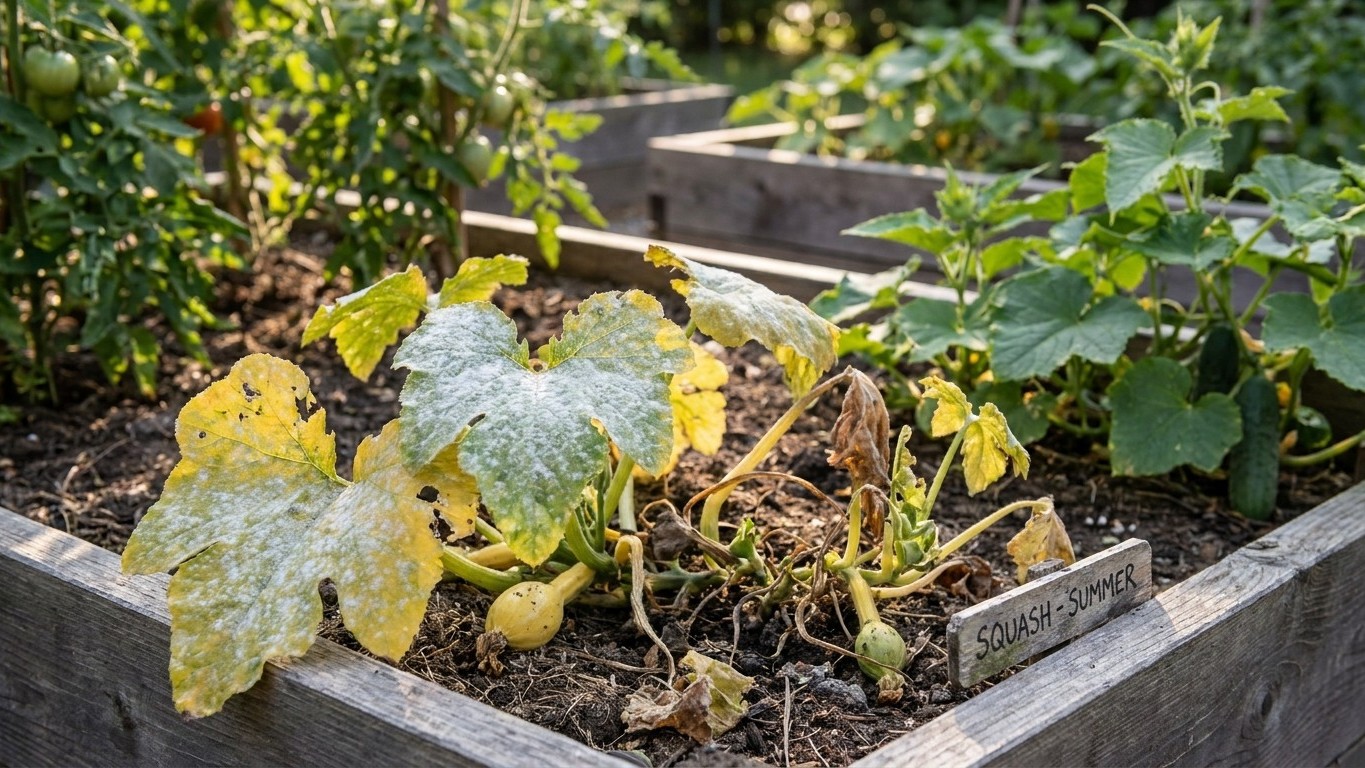

The short answer: pull a summer squash plant once it stops producing usable fruit faster than it accumulates disease and pests, not when it looks merely tired. A few yellow leaves are normal. A plant that’s mostly yellow, coated in white mildew, or hollow at the base has already stopped paying its rent in the garden.
What is actually going on

A summer squash plant in decline isn’t just an eyesore. It’s a reservoir. Powdery mildew spores keep multiplying on dying leaf tissue and drift to neighboring plants, including the fall brassicas or cucumbers sharing the bed. Squash vine borer larvae keep feeding inside a collapsing stem whether or not the plant is still setting fruit, and when they finish, they drop into the soil to overwinter as pupae, ready to emerge next summer in the same spot. Squash bugs do something similar: they lay eggs on failing foliage right up until frost, and those eggs or the adults themselves shelter in garden debris left standing over winter. The plant becomes less a producer and more a nursery for next year’s problem.
That’s the mechanism worth understanding before deciding when to yank a plant. Removing it early, at the first sign of a losing battle, cuts off that reproductive cycle. Leaving it “just in case it gives one more squash” usually costs more in pest and disease pressure the following season than the extra fruit is worth.
Different types of summer squash decline differently. Zucchini-type and yellow crookneck-type plants tend to collapse fast once vine borers get established, sometimes wilting within days even though the leaves looked fine the week before. Pattypan-type and scallop-type varieties often show mildew stress first, a slow graying and thinning of the canopy that spreads from the oldest leaves inward. None of this means one type is better than another for a given garden; it means the failure pattern to watch for depends on which type is planted. For advice on which specific varieties perform best against local disease and pest pressure, a state extension service or land-grant university vegetable trial report is the right source, not a general guide like this one.
It’s also worth being honest that not every declining squash plant is finished. Some stress is cosmetic and temporary, especially heat stress in mid-summer that causes wilting during the hottest part of the day but recovery by evening. The plants worth pulling are the ones that don’t recover, that produce misshapen or bitter fruit consistently, or that show visible internal damage at the base of the stem. General practices like removing the worst-affected leaves, improving airflow between plants, and using a horticultural oil or insecticidal soap on early pest sightings can extend a plant’s useful life. But there’s a point past which those interventions stop working, and pushing past that point is where gardeners lose ground rather than gain it.
In the garden
Recognizing the tipping point is less about a single symptom and more about which combination of signals shows up together. The table below covers the most common ones and what tends to happen if a gardener waits instead of acting.
| Signal | What it usually means | What happens if the plant stays in the ground |
|---|---|---|
| Lower leaves yellowing, upper leaves still green | Normal aging or early nutrient stress | Often nothing urgent; monitor for spread before pulling |
| White or gray powdery coating spreading across most leaves | Powdery mildew established | Spores spread to nearby cucurbits; photosynthesis drops, fruit quality declines fast |
| Sudden wilting of one or two vines while others look fine | Squash vine borer likely tunneling in the stem | Larvae finish feeding, pupate in soil, and re-emerge as adults the following summer |
| Sap-sucking damage, clusters of bronze eggs on leaf undersides | Squash bug infestation building | Population multiplies through the rest of the season and overwinters in garden debris |
| Fruit setting but scarring, misshapen, or aborting before maturity | Pollination stress or advanced pest damage | Continued fruit drop with little usable harvest, plant wastes energy on non-viable fruit |
| Stem collapsing at soil line, plant leaning or falling over | Advanced borer damage or stem rot | Plant dies within days regardless of intervention; disease organisms remain in soil |
What to do once the plant is out
Once two or more of these signals show up together and aren’t improving with basic care, it’s time to remove the plant rather than manage around it. Cutting the stem at soil level, rather than yanking the whole root ball, disturbs the surrounding soil less and reduces the chance of scattering pest eggs or disease spores that were riding on the leaves. Bag and discard any plant material showing mildew, borer damage, or bug infestation instead of adding it to a home compost pile, since backyard compost rarely reaches the sustained heat needed to kill fungal spores or overwintering pests. Healthy trimmings without disease or pest signs can go into compost as usual. Sanitizing pruners or loppers with a household disinfectant between plants keeps mildew from hitchhiking to the next cucurbit in the row. And rotating next year’s squash, melons, and cucumbers to a different bed, ideally one they haven’t occupied in the last couple of seasons, breaks the cycle for soil-borne problems that this year’s plant may have left behind.
What it depends on where you are
Some of this is universal. Every summer squash plant, regardless of climate, eventually responds to shortening day length by slowing fruit production, and that shift happens on the calendar, not the thermometer. That part of the answer doesn’t change by region.
What does change is how much disease and pest pressure builds before that natural slowdown even arrives. Regions with long, humid summers tend to see powdery mildew establish earlier and spread faster, because the fungus favors warm nights with high humidity, conditions that persist for months in parts of the Southeast and mid-Atlantic. Gardeners there may find themselves managing mildew from mid-summer onward rather than treating it as a late-season problem. In hot, dry regions of the Southwest, mildew pressure tends to be lower, but spider mites and squash bugs can build up quickly in the heat, and the decision to pull a plant may hinge more on pest damage than on fungal disease. In shorter-season northern and mountain climates, an early frost can end a plant’s productive life abruptly, before disease or pests ever become the deciding factor, and the more relevant question becomes when to plant a second, quicker-maturing succession rather than when to pull the first one.
Rainfall patterns matter too. Areas with a defined summer monsoon or wet season see mildew and bacterial issues spike right after the rains start, while areas with dry summers and irrigation-only moisture can sometimes keep foliar disease in check longer simply because the leaves stay drier overnight. None of these regional patterns come with a fixed date attached, because the actual timing shifts year to year with the weather any given season delivers.
The mistake that costs the most
The single costliest mistake is waiting for “one more squash” from a plant that has already tipped from productive to declining. It’s an understandable impulse. The plant is still standing, it still has flowers, and pulling something that looks alive feels premature. But a plant held past that tipping point isn’t neutral. It’s actively spreading mildew spores to everything nearby, feeding pests that will overwinter and return, and putting energy into fruit that’s often scarred or bitter by the time it’s harvested anyway.
The fix isn’t a stricter calendar date. It’s paying attention to the combination of signals covered above and acting on them promptly rather than hoping the plant rallies. A plant with two or three vines showing borer damage while the rest look fine is often worth partially removing rather than waiting for total collapse. A plant coated in mildew across most of its canopy is past the point where trimming a few leaves solves anything.
Pulling early also opens the bed for something useful: a fast-maturing fall crop, a cover crop that improves the soil, or simply a season of rest for that patch before next year’s cucurbits go back in. None of that happens if the failing plant stays put through September out of reluctance to end something that still has a few green leaves left. The gardeners who get ahead of squash bugs and vine borers year over year tend to be the ones who treat plant removal as routine maintenance, not defeat.