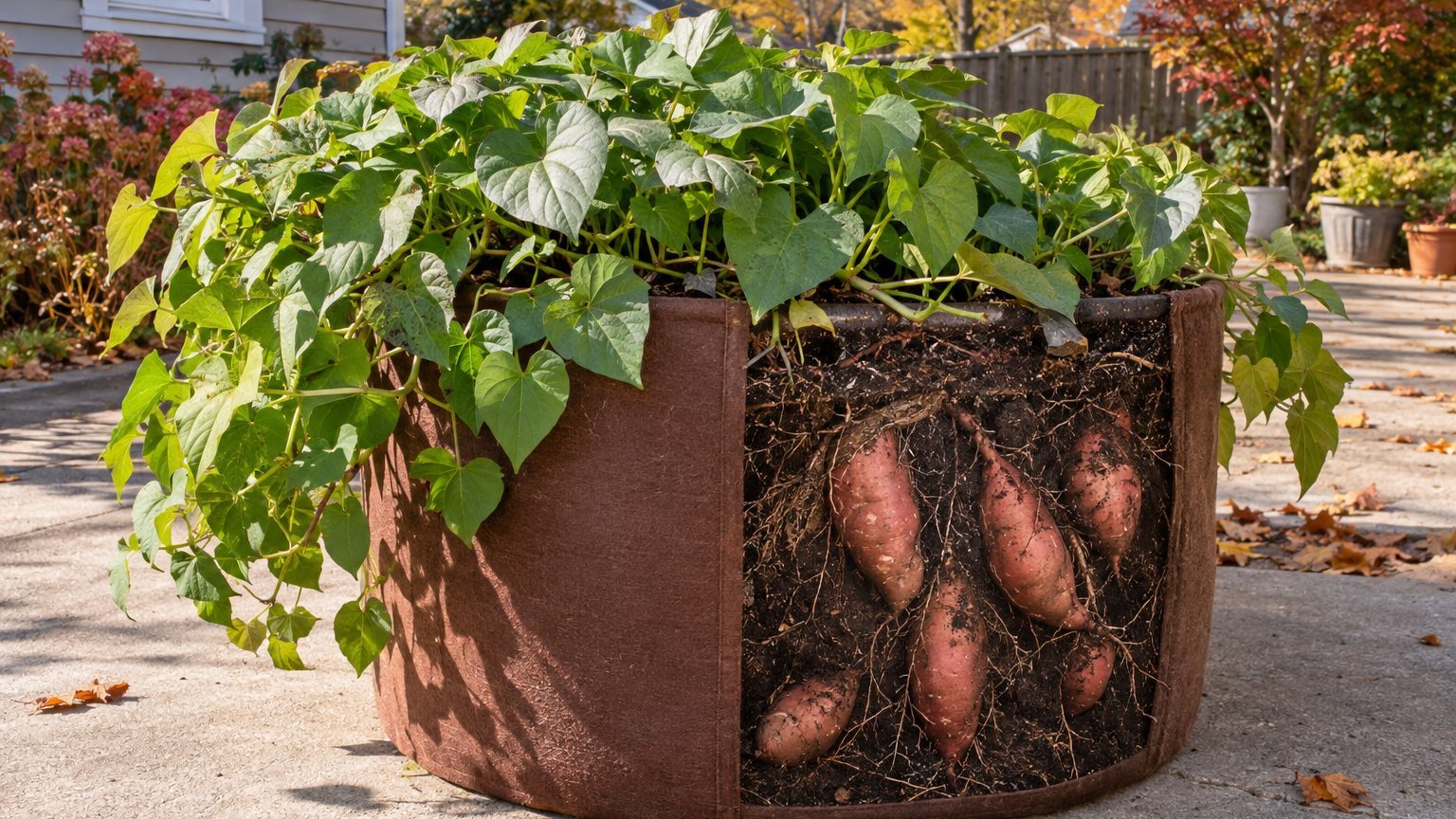

Yes, sweet potatoes grow well in containers, and sometimes better than they do in cold, heavy garden soil. The condition is depth. A pot that is wide but shallow gives you a mound of vines and almost nothing underneath. Give the roots a deep, well-drained container, put it in full sun, and a patio or driveway corner can deliver a real harvest.
What is actually going on
The edible part of a sweet potato is a storage root, a swollen underground root that forms along the buried stem of the slip (the rooted sprout you plant). Whether those roots swell into something worth eating depends on two things: warmth and room to expand downward. Containers help with the first and can wreck the second.
Start with warmth. This is a tropical vine, a cousin of morning glories, and it sulks in cool soil. A container sitting on pavement or a sunny deck heats far faster than open ground, and the soil inside loses its spring chill sooner. Dark plastic and fabric grow bags absorb even more. For gardeners with cool springs or short summers, that head start is the best argument for growing in a pot at all.
Now the depth. Storage roots don’t burrow like a carrot. They thicken where they form and push down and outward through loose soil. If they meet a hard floor or a wall of compacted mix, they bend, crowd each other, or stay pencil-thin while the plant pours its energy into leaves. That is why a wide, shallow planter looks lush all summer and disappoints in the fall. The vine can trail over the edge indefinitely, so the container’s surface area barely matters. Its depth and total volume do.
Loose mix matters for the same reason. Bagged potting mix is airy and drains freely, which is what swelling roots want. Heavy garden soil dug into a pot will pack down after a few waterings and behave like a brick. And a rich, nitrogen-heavy mix pushes the plant toward leaf growth at the expense of roots, so easy on the fertilizer.
One point of vocabulary saves confusion. A sweet potato is not a yam, whatever the supermarket label says. True yams are an unrelated tropical crop rarely seen in US grocery stores. Nor is it a potato. It isn’t a nightshade, it doesn’t share potato diseases the way tomatoes do, and the usual rules about rotating potatoes don’t apply to it. If you want the full growing picture, including how to start slips, Growing Sweet Potatoes: Slips, Heat, and a Careful Cure covers it.
Variety choice matters more in a pot than in the ground, since compact, shorter-vined types suit containers better than sprawling ones. Your state’s cooperative extension service knows which types have been trialled where you live, so ask there before you buy slips.
In the garden
Getting the setup right
Every row below is a rule of thumb rather than a law, but each one comes with the failure it prevents. Nobody learns much from a list of correct answers.
| Element | What to aim for | What happens when it goes wrong |
|---|---|---|
| Container volume | At least about 10 gallons for a single plant, with more room if you want to share the pot between plants | A cramped pot produces small, tangled roots and a plant that dries out in a day |
| Depth | At least 12 inches of soil, and deeper is better | Roots hit the bottom and bend or stall; the vines thrive while the harvest is thin |
| Slips per container | One slip in a container of roughly 10 gallons; two or three in a large tub, spaced well apart | Overcrowded slips compete for the same soil and produce mostly small roots |
| Drainage | Several open holes at the bottom, and a loose, well-draining mix | Waterlogged soil invites rot; a soft, sour-smelling root is the result |
| Watering | Steady moisture early, easing off later as roots bulk up | Long dry spells followed by heavy soaking can crack roots; constant wetness can rot them |
| Sun and heat | Full sun, at least six hours a day | Shade slows root swelling; on scorching days, a dark pot can overheat the root zone |
Set slips deep enough that several nodes (the bumps along the stem) sit under the soil, because those buried nodes are where roots form. A slip barely stuck in the surface makes fewer roots. Then let the vines spill over the sides. Compared with sprawling in a bed, a pot keeps them tidy, and How Much Room Sweet Potato Vines Need shows what the same plant demands in open ground.
The harvest advantage
Digging sweet potatoes in the ground is where many crops get damaged. Skins are thin, a spade blade slices roots without warning, and every nick becomes an entry point for rot. In a container, you tip the whole thing onto a tarp, crumble the mix by hand, and lift the roots out without a blade anywhere near them. You also see immediately what grew and where. If you have a heavy clay yard, this alone can justify the pot.
Handle harvested roots gently, because bruises matter later. Curing is the next step, in a warm, humid spot, and your extension service can give you the specifics for your area. Do not put sweet potatoes in the refrigerator or a cold cellar. Cold injury sets in below their storage range, it cannot be reversed, and it is one of the most common ways a good home crop gets ruined. Before storing anything, inspect each root. A soft patch or a weeping spot ends the question: that root does not go into storage, and looking sound on the outside never proves it is safe to keep.
What it depends on where you are
Some of this page holds everywhere. Depth, drainage, a loose mix, full sun, slips planted with buried nodes, and the ban on cold storage are national. A gardener in a cool northern state and one in a humid southern state face the same physics underground.
The rest is local, and this page can’t know yours. Season length decides whether the plant has enough warm weeks to swell its roots at all. Summer heat decides how much your container helps or hurts: in a cool region, a pot’s extra warmth is a gift, while in a hot region a dark container in afternoon sun can overheat the roots and dry out within hours. Summer rainfall decides your watering routine. A wet stretch can leave an unsheltered pot soggy, while a dry one may call for watering every day.
Types that thrive in one state’s trials can struggle in another, which is another reason to check locally. Your state’s cooperative extension service (usually run through your land-grant university) publishes variety trial results and planting guidance based on your conditions. That is the authority for anything specific to your yard.
The state pages on this site apply the general rules to regional conditions, so use them alongside your extension office. They will show you what tends to change from one region to the next, from how early you can start to how you handle summer weather.
Containers also change one habit people bring from ground gardening. In beds, you plan where sweet potatoes go next year, and What Sweet Potatoes Rotate With covers that. In a pot, you skip the puzzle by starting each season with fresh mix, which also resets any problems that might have built up in the old soil.
The mistake that costs the most
Choosing a container for its width rather than its depth. It is easy to do, because a broad, low planter looks right for a sprawling vine. It seems to make sense: the plant spreads, so give it space to spread. But the spreading part is the leaves. The harvest is underground, and underground the only dimension that counts is how far down the soil goes.
The failure is quiet. A shallow pot grows an impressive canopy all summer, so nothing warns you. Then you tip it out in fall and find thin, crowded roots pressed against the floor of the pot, or a few that curled sideways when they ran out of room. By then, the season is over and you can’t fix it. Feeding harder doesn’t help either. Extra nitrogen only grows more vine.
What to do instead is settle depth before anything else. Pick a container at least 12 inches deep, and go deeper if you can, with real volume behind it. Tall pots, large buckets with drainage holes drilled in the bottom, and deep fabric bags all qualify. If all you have is a shallow planter, use it for something else, such as herbs or lettuce, and buy or borrow a deeper container for the sweet potatoes.
Fill it with a loose, well-draining mix, set the slip with several nodes buried, and put it in the sunniest spot you have. That combination is the one condition that can’t be skipped. Everything else on this page can be adjusted as the season goes.
Common questions
Can I reuse last year’s potting mix?
You can, but fresh mix is the safer choice. Old mix tends to compact and lose its airy structure, and it may carry problems from the previous crop. If you do reuse it, loosen it thoroughly and blend in fresh material, and watch for any plant that struggles early in the season.
Can I grow slips from a grocery-store sweet potato?
Sometimes, but it is a gamble. Store-bought roots are often treated to resist sprouting, and they may carry diseases that you would then bring into your garden. Slips from a reputable source, or the guidance of your state extension service, are more reliable.
How should I store the harvest?
Cure the roots first, in a warm, humid place, and follow your extension service for details in your area. Never store sweet potatoes in the refrigerator or a cold cellar, because cold injury is permanent. Check them regularly, and discard any root that is soft or weeping, since a sound-looking surface tells you little about what is inside.
Is a sweet potato the same as a yam?
No. True yams are a different plant, and the “yam” label in supermarkets is a marketing habit. A sweet potato is also not a potato or a nightshade, so it does not share a rotation with potatoes, tomatoes, or peppers.