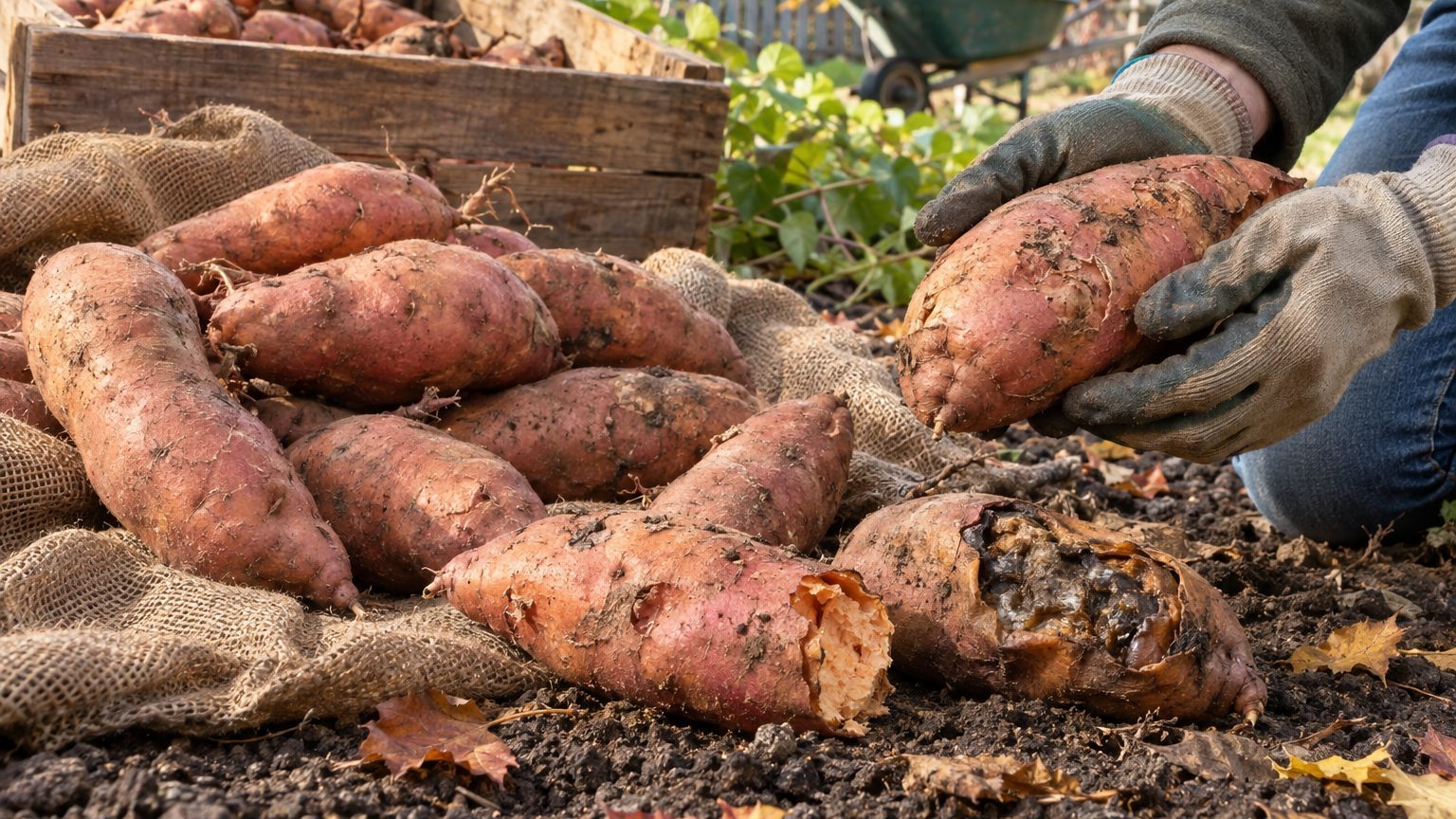

Sweet potatoes that rot in storage were usually damaged at harvest, not in the pantry. Scraped skin, cold soil, a skipped cure and a chilly storage spot cause most home losses, and none of them show until weeks later. The fix is a short, warm, humid cure right after digging, careful handling, and a storage spot that is cool but never cold. Nothing here guarantees a root, but it stacks the odds.
What is actually going on
Start with the skin. A freshly dug sweet potato has a thin, tender covering, nothing like the corky jacket of a store-bought root. Every scrape, fork puncture or snapped-off tip is an open door. Soil is full of the fungi and bacteria that cause soft rot, surface rot and other storage diseases, and they mostly need a wound to get in. That is wound entry, and it explains why a root that looked perfect on the day it was lifted can be a puddle in a month.
Curing closes the door. Held in warm, humid air, the root builds a new layer of cork-like cells under each wound, a bit like a scab that thickens into a seal. Extension services generally describe curing conditions in the low-to-mid 80s °F with high humidity and some air movement, held for several days up to about a week. The same warm spell converts part of the starch to sugar, which is why a cured root tastes sweeter than one eaten straight from the ground. Your state extension office will have the exact protocol it recommends.
The wrong mental model makes this harder. Sweet potato is not a potato, and it is not a nightshade. It is a storage root in the morning glory family, so potato habits (cool, dark, damp, and rotating it with tomatoes) do not carry over. It isn’t a yam either, whatever the supermarket label says. True yams are an unrelated tropical crop. Potatoes tolerate cold storage. Sweet potatoes do not.
That brings up the other early decision: temperature. Roots that sit in cold, saturated soil, or that get chilled after digging, suffer injury that shows up later as internal darkening, hard cores, off flavors and rapid decay once they warm up. So never put sweet potatoes in a refrigerator or a cold cellar. The damage from sustained cold below the storage range is permanent, and it is among the most common ways a good harvest gets ruined.
Soil matters here too. Heavy, waterlogged ground produces roots with more skin problems and more fungal pressure at harvest, a point covered in The Soil Sweet Potatoes Actually Want.
In the garden
Here is the sequence from lifting to storage, with what tends to happen at each step when it goes wrong. Each row is a place where a wound or a chill gets in.
From the ground to the shelf
| Step | What to do | When it goes wrong |
|---|---|---|
| Timing | Lift before the soil turns cold, and on a dry day if you can. | Roots chilled in the ground carry injury into storage and rot early. |
| Digging | Loosen the soil wide of the row, then lift by hand. | Spade and fork cuts are open wounds. Cut roots go in the kitchen pile, not the storage pile. |
| Handling | Lay roots gently in shallow containers. Brush off loose soil, but do not wash. | Tossing and stacking bruises the skin. Washing leaves moisture on fresh wounds. |
| Sun | Move roots into shade quickly. | Hours of hot sun can scald the skin and cook the flesh beneath. |
| Curing | Hold them warm and humid with some airflow, for several days to about a week. | Skipped or cut short, the wounds stay open. Too wet and stagnant, and rot starts during the cure itself. |
| Storing | After curing, keep them in a cool-but-not-cold interior spot, roughly in the mid-50s to around 60 °F, in a single layer or loosely packed. | Cold spots cause chilling injury. Hot, dry spots shrivel the roots. |
If you have a small, closable space, such as a spare room, you can build a cure with a space heater, a pan of water, and a thermometer and hygrometer to check on it. Don’t seal roots in plastic without ventilation. Trapped condensation is the reverse of what you want.
What a soft spot means for the basket
Inspect roots by looking and by pressing gently. You are watching for soft or sunken patches, dark or wet-looking areas, mold, any weeping or sticky ooze, a sour or fermented smell, and skin that has gone leathery and wrinkled. A soft patch or a weeping spot ends the question for that root. Do not trim around it and keep the rest, because some rots leave bitter compounds well beyond the visible damage.
Then look at its neighbors. Soft rot in particular moves quickly through contact and moisture, so check every root that touched it, and pull any with the same signs. A sound-looking surface does not prove a root is fine inside, so inspect the stored basket regularly and cook or discard anything doubtful. If your vines look healthy but the roots don’t, the Sweet Potato Greens guide covers the edible crop above ground.
What it depends on where you are
Some of this is the same everywhere. Roots are fragile at lifting, wounds need curing, cold storage is off the table, and rotten roots go in the trash. Those rules hold in Georgia and in Michigan.
The rest is local, and this page can’t know yours. Season length decides how much time the roots had to size up and toughen before the soil cools. Summer heat affects how well the crop grew and how ready it is at harvest. Summer and fall rainfall determines how wet the ground is when you dig, which changes how much disease pressure the roots carry and how hard it is to dig cleanly. A short, cool season with a wet autumn is a different problem from a long, hot one with a dry fall. In the first, the fight is to dig before cold soil does damage. In the second, it is more likely to be humidity control and pests during curing.
Curing spaces vary just as much. A garage that is warm in early fall is not warm in a later, colder one. A house with central air is drier than one without. Adjust your curing setup for your own conditions, and verify it with a thermometer instead of a guess.
For place-specific answers, start with the state pages on this site, then go to your state’s cooperative extension service. Extension offices know the varieties trialled in your area, the local disease pressure, and the harvest and curing timing that fit your climate. This page deliberately names no varieties, because a type that thrives in one state may be a poor keeper in another. Searching for your state’s name plus “extension sweet potato storage” usually turns up a current bulletin. The overall growing picture is in Growing Sweet Potatoes: Slips, Heat, and a Careful Cure.
The mistake that costs the most
The mistake is treating sweet potatoes like potatoes: digging them, then putting them straight into a cold cellar, basement corner, unheated garage or the refrigerator “to keep them fresh.”
It feels sensible. Cool, dark and damp is how gardeners are taught to keep potatoes, and a crop stored that way looks fine for a while. The trouble is that sweet potatoes are tropical in origin and do not tolerate that range. Chilling injury builds up quietly. The skin may look normal while the flesh inside darkens, develops a hard core, or turns off-tasting when cooked. Chilled roots also lose their defenses, so rot sets in fast once they warm up, often after you have already moved them to the kitchen. By then it looks like a mystery, because the harm happened days or weeks earlier.
What to do instead is simple. Cure first, warm and humid with airflow. Then move the roots to a spot that stays cool but never cold, in the temperature range your extension service recommends, which is usually the mid-50s to around 60 °F. An interior closet, a spare room or an inside pantry often works better than a basement. Check the temperature with a thermometer over a few days, including overnight, rather than trusting how the room feels in the afternoon.
If a room is too cold, leave the roots out of it. And if a root has been chilled and you can’t tell, cook it soon instead of storing it. Cold injury doesn’t reverse.
Common questions
Can I wash sweet potatoes before storing them?
No. Brush off loose soil after they have cured, and wash only when you’re about to cook them. Water sitting on fresh wounds invites rot.
Is it safe to cut off a bad spot and eat the rest?
Don’t rely on it. A soft, wet or weeping patch means the root is finished. Some rots leave bitter compounds beyond the visible damage, and looking sound does not prove a root is safe.
Are sweet potatoes the same as yams?
No. Sweet potatoes are a morning glory relative, not a yam and not a nightshade like potatoes. “Yam” on a supermarket label is usually a naming habit. The difference matters because potato advice, from storage to crop rotation, doesn’t apply.
What if I dug them before I could cure them?
Get them into a warm, humid, ventilated spot as soon as you can. Cure any that are undamaged, eat cut or bruised ones first, and check the pile often. A cure that starts late is better than none, though the earlier wounds have had more time to be invaded.