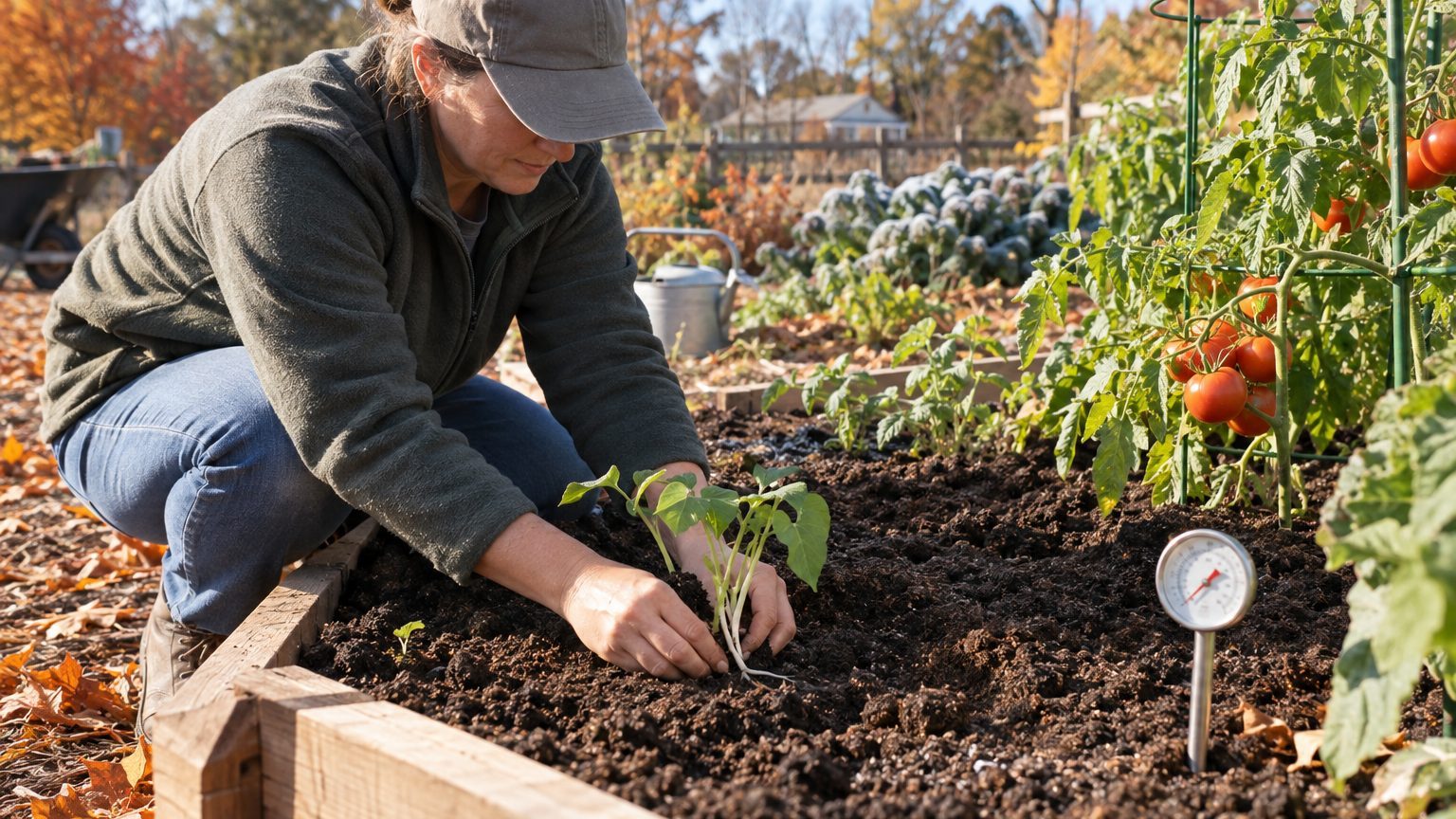

Plant sweet potato slips after the last frost, once the soil has truly warmed and the nights stay mild. That usually lands two to three weeks later than the date most gardeners circle for tomatoes. Slips set out early stall and sulk, and a later planting tends to overtake them. What follows covers why that happens, the conditions to watch for, and how to count back from fall.
What is actually going on
Why chill stalls a slip
Sweet potato is a tropical vine. It belongs to the morning glory family, which makes it no relation to the potato, and not a nightshade either. That matters for planning: it never rotates with potatoes or tomatoes, and the “yam” on a supermarket label is a misnomer, since true yams are a different tropical plant entirely. The plant evolved for warm ground, and it behaves that way.
A slip is a rootless cutting with a few leaves, and it has to grow new roots fast. Cold soil slows that to a crawl. Cool nights make it worse, because the plant loses heat faster than the ground can supply it. The slip does not die, usually. It just sits there, leaves dull or purpling, doing nothing for weeks. Meanwhile the early root development that decides how many storage roots the plant sets is happening under stress, or not happening at all.
Wet cold is the worst version. Cool, soggy soil around an unrooted cutting invites rot, and a slip that rots has no second chance. A slip planted into warm, moist ground roots in days and starts running.
Why the frost-free date misleads
The average last frost date tells you when the plant will stop freezing. It says nothing about when the plant will start growing. Those are different thresholds, and for a heat lover the gap between them is often two to three weeks. Soil also lags behind air. A warm afternoon can put the air in the 70s while the ground four inches down is still cold from a wet spring.
Tomatoes make a useful comparison, though only up to a point. Tomatoes tolerate a cool snap and recover. Sweet potatoes hold a grudge. A later planting into properly warm soil goes into a growth spurt that a stalled early planting never gets to have, which is why waiting so often wins.
Soil type shifts this too, and it is worth reading The Soil Sweet Potatoes Actually Want before you decide where the bed goes. Loose, well-drained ground warms faster than heavy, wet ground.
In the garden
The conditions to wait for
Skip the date and watch three things. Each has a failure mode, and knowing it helps you judge a borderline day.
| Condition | What to look for | If you ignore it |
|---|---|---|
| Frost is behind you | Past your average last frost, with no cold snap in the forecast | Frost blackens the vines outright, and you replant with slips you may not be able to get again |
| Warm soil | A soil thermometer at 4 inches reading steadily in the mid-60s °F or above for several days, the range many extension services use | Slips stall, root slowly, and are prone to rot in wet ground |
| Mild nights | Overnight lows staying in the mid-50s °F or higher, with no dips in the extended forecast | Growth stops on each cold night, and leaves may purple or yellow |
| Hardened-off slips | A week of gradual outdoor exposure before planting | Wind and sun scorch soft leaves, and the plant spends its first weeks recovering |
Check the soil thermometer in the morning, when the ground is at its coolest. A reading taken at 3 p.m. flatters the bed. If you want to speed things up, black plastic laid over the bed for a couple of weeks before planting warms the soil noticeably, and it is a reliable way to gain ground in short-summer regions. Clear plastic works too, but it needs weed control underneath.
Counting back from first frost
Waiting has a cost, because sweet potatoes also need a long stretch of warmth before fall. So work backward. Find your average first fall frost date, then find the maturity range for the variety type you are growing from the plant tag, the slip supplier, or your extension service. Count back from the frost date across that range and add a buffer for a cool summer. The result is your latest workable planting date, and the warm-soil date is your earliest. The window between the two is where you plant.
If the window is narrow, choose a faster-maturing type rather than pushing the date earlier. Earlier planting into cold ground erases the gain. Your state extension service publishes trial results for varieties that perform locally, and that is a better guide than any catalog description.
The full growing sequence, from starting slips to curing, is laid out in Growing Sweet Potatoes: Slips, Heat, and a Careful Cure.
What it depends on where you are
The national part
Some of this holds everywhere. The plant is chill-sensitive. Warm soil and mild nights are the starting signal. The season has to be long enough to finish before frost. The reasoning in the last two sections travels with you from Georgia to Minnesota, and it is the part you can trust without checking anything.
The local part
Everything else is regional, and this page does not know your garden. Three things change the answer.
- Season length. A long, hot season leaves room to wait. A short one leaves almost none, so the plastic-mulch trick and faster-maturing types matter much more.
- Summer heat. Hot summers make up for a late start. Cool coastal or mountain summers do not, and a planting that goes in on time may still struggle through a cloudy July.
- Summer rainfall. Wet summers favor raised beds or ridges, since drainage keeps soil warmer and roots healthier. Dry summers put more weight on irrigation than on timing.
Elevation and exposure count as well. A south-facing slope and a low, shaded corner of the same yard can differ by a week or more in spring warm-up, and a frost pocket at the bottom of a hill can catch a planting the rest of the neighborhood escapes.
Your county extension office is the best local source, because it knows your last and first frost dates, the varieties trialed in your soil, and the pests that show up in your area. Start with the hub page for this guide, Growing Sweet Potatoes: Slips, Heat, and a Careful Cure, then look for the state page for where you live and cross-check it against your extension service. Where the two differ, go with the extension office, since its advice comes from local trials.
The mistake that costs the most
Planting slips because they arrived. That is the one that ruins more sweet potato beds than any other, and it has nothing to do with skill.
Slips ordered by mail ship on the supplier’s schedule, which is built around a broad range of customers and not your soil. A box lands on the porch in May, the slips look limp and a little desperate, and the gardener plants them that afternoon out of pity. The ground is cold. The slips sit for three weeks, some rot, and the survivors start behind. A gardener who waited would have had a stronger crop from the same box.
What to do instead
Treat the delivery date and the planting date as two separate events. When slips arrive early, open the box right away, since they suffocate in there. Set the slips in a jar with an inch or two of water, or pot them into loose mix, and keep them in a bright, warm spot indoors. Change the water every couple of days. Many will grow roots along the stem and stay healthy for a couple of weeks. Ask your supplier when they ship, and if you can, pick a later ship date at checkout.
Start hardening them off when the soil and nights are close to ready, and plant when the conditions in the table have held for several days running. This same patience carries through the season. Roots you dig in fall need warm, careful curing, and they must never go into a refrigerator or a cold cellar, because cold injury is irreversible and it is the most common way a good harvest gets ruined. The full storage picture is in Storing Sweet Potatoes: Never in the Cold.
Common questions
Can I plant sweet potatoes the same day I plant tomatoes?
Only if your soil and nights are already warm on that day. In many gardens tomatoes go in a couple of weeks earlier than sweet potatoes should. Check the soil thermometer rather than the calendar.
What happens if I plant too late?
The plants run out of warm weather before the roots finish sizing up, and you dig small roots. Count back from your first fall frost using the maturity range for your variety type, and use a faster type if you are close to the edge.
Do I plant seed potatoes or sweet potato roots?
Neither. Sweet potatoes are grown from slips, which are sprouts taken from a mature root or bought from a supplier. Grocery-store roots are a poor source because they may carry disease or be treated to prevent sprouting. Sweet potatoes are not potatoes, so seed potatoes have nothing to do with them.
Are sweet potatoes and yams the same thing?
No. True yams belong to a different plant family and are rarely grown in home gardens in the United States. The “yam” label on some orange-fleshed sweet potatoes in grocery stores is a marketing habit, and the plant you are growing is a sweet potato.