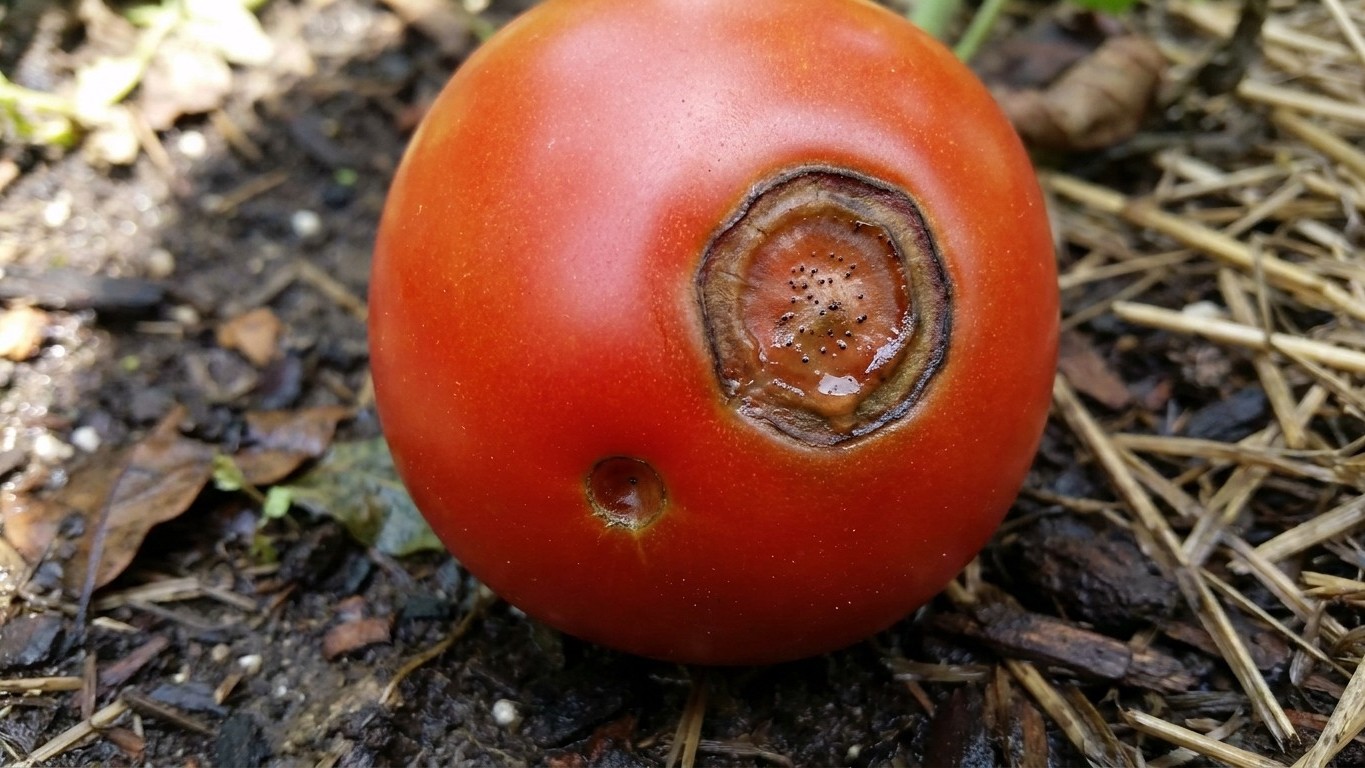

Anthracnose on tomatoes shows up as small, sunken, water-soaked circles on ripe or nearly ripe fruit, often developing a faint target pattern as they age. A fungus causes it, splashing up from soil onto low-hanging fruit during warm, wet spells. It won’t topple the whole plant, but it can turn a promising harvest into compost within days once the weather cooperates with it.
What you are looking at

This is a fruit disease first and a leaf disease a distant second, which already separates it from most of the tomato problems gardeners worry about. It moves fast once fruit starts ripening: a lesion that looks like a pinprick on Monday can be a soft, sunken crater with visible spore dots by the weekend. It is not usually lethal to the plant, but it is ruthless on the crop.
Early fruit lesion, a small sunken spot
The first sign is a tiny, slightly depressed spot on the surface of a ripe or ripening tomato, most often near the bottom or on a fruit that’s been resting against damp soil or mulch. The spot is round, water-soaked in appearance, and slightly darker than the surrounding skin. Green fruit rarely shows symptoms; the fungus waits for sugars to rise before it commits.
Mature lesion, the target-ring pattern
Left alone, that small spot widens into a sunken circle with a slightly raised, darker border and faint concentric rings inside, almost like a tiny archery target pressed into the fruit. The center softens and can ooze in humid weather. Several lesions on one tomato often merge into a single large, collapsed patch.
Black speck stage, spores in the wound
As the lesion ages, tiny black specks appear inside the sunken area. These are the fungus’s spore-producing structures, and they’re the reason a single infected fruit left on the vine can reinfect every tomato that touches it or sits nearby during rain. Leaves, when affected at all, show small, irregular brown spots that are easy to overlook next to the drama happening on the fruit.
What it is not
Three other tomato problems get mistaken for this one, and the mix-up matters because the fixes are completely different. Treating a calcium deficiency with fungicide wastes money; ignoring a bacterial infection because you assumed it was harmless anthracnose lets it spread through a whole planting.
Early blight
Early blight also makes concentric rings, but it starts on the lower leaves, not the fruit. Its rings are dry, papery, and brown, usually rimmed with a yellow halo, and the leaf around them yellows and drops. If the target pattern you’re seeing is on foliage rather than fruit, you’re looking at early blight, not the fruit-rot fungus this page covers.
Blossom-end rot
Blossom-end rot produces a flat, leathery, sunken patch, but it always forms at the blossom end, the bottom of the fruit opposite the stem, and it never develops concentric rings or black specks. It’s a calcium and water-delivery problem, not an infection, so no fungicide will touch it. Irrigation consistency is the fix here, not sanitation.
Bacterial spot or speck
Bacterial spot and speck cause small, raised, scabby lesions or tiny dark specks, usually with a narrow yellow halo, scattered across young green fruit and leaves. They stay small and don’t sink into a soft crater the way a fungal fruit rot does. Ripe fruit is rarely the primary target the way it is with the sunken-circle disease described here.
| Condition | Where it appears first | Defining feature |
|---|---|---|
| Anthracnose | Ripe or ripening fruit | Sunken circle, faint rings, black specks in center |
| Early blight | Lower leaves | Dry papery rings with yellow halo, leaf drop |
| Blossom-end rot | Blossom end of green or ripening fruit | Flat leathery patch, no rings, no specks |
| Bacterial spot/speck | Green fruit and leaves | Small raised scabs or specks, stays shallow |
Where it comes from and when it strikes
The culprit belongs to the fungal genus Colletotrichum, a group that survives between growing seasons in old plant debris left in the soil and, less often, on contaminated seed. It doesn’t travel on the wind the way late blight spores do; it needs water to move, which means splashing rain or overhead irrigation is usually how it gets from soil to fruit.
Warm, humid weather with extended periods of leaf and fruit wetness is what lets an infection take hold and spread. The fungus can sit quietly on a plant for weeks without symptoms, only showing itself once fruit begins to ripen and its sugar content rises, which is why a garden can look perfectly healthy right up until the first tomatoes start turning red and suddenly develop spots overnight.
Fruit sitting on wet soil, damaged fruit, and dense plantings with poor air movement all extend the window of wetness the fungus needs. A single wet week during peak ripening does more damage than a whole dry month earlier in the season, which is why the disease often seems to appear out of nowhere in late summer.
What to do about it now
Start by removing every fruit that shows a lesion, along with any fallen fruit rotting on the ground, and destroy it rather than composting it in a home pile that won’t reach fungicide-killing temperatures. This single step does more to slow the spread than anything else available to a home gardener.
Pick ripening fruit a little earlier than usual and let it finish indoors, away from splashing water and soil contact. Switch from overhead watering to drip irrigation or a soaker hose at the base of the plant, since keeping foliage and fruit dry starves the fungus of the moisture it needs to spread. A layer of straw or plastic mulch under the plants stops soil from splashing onto low fruit in the first place.
Prune lower leaves and stake or cage plants to open up airflow through the canopy; a plant that dries out faster after rain gives the fungus less time to work. A copper-based or chlorothalonil fungicide applied to unblemished fruit and foliage can protect what hasn’t been infected yet, but nothing reverses a lesion that’s already formed. Be honest with yourself about that: once the sunken circle appears, that fruit is not coming back.
As for the harvest, fruit without visible lesions from the same plant is fine to eat. Cut affected fruit away and discard it rather than trimming around the spot and eating the rest; the rot inside usually extends further than what shows on the skin, and quality, not safety, is the real concern.
Keeping it out next season
Rotate tomatoes, along with peppers, eggplant, and potatoes, out of any bed that had this problem for at least three years, since the fungus persists in soil debris and short rotations simply let it wait you out. Clean up and destroy all plant debris at the end of the season instead of tilling it under, which just buries the problem for next year.
Unlike Verticillium wilt or Fusarium wilt, which show up on seed packets with letter codes like V and F, most widely available tomato cultivars don’t carry a marketed resistance rating for this particular fungus, since strong resistance is limited across common varieties. Look for tolerance mentioned in variety descriptions rather than a standard code, and don’t assume a disease-resistant hybrid covers this one just because it covers others.
Sanitize stakes, cages, and any tools that touched infected plants with a household disinfectant before storing them for winter; spores can ride over on hardware just as easily as on soil. Mulch every season as a standing splash barrier, space plants for airflow rather than maximum yield per square foot, and prune lower foliage once the canopy starts to close in. Buy transplants from a nursery you trust, and inspect any seedling’s lower leaves and stems before it goes anywhere near your garden.
Common questions
Can I still eat tomatoes from a plant with anthracnose?
Yes, as long as you discard any fruit showing lesions. Unaffected tomatoes from the same plant are safe; just harvest and eat them promptly since the fungus can still spread among fruit sitting together after picking.
Will anthracnose spread to next year’s peppers or eggplant if I rotate them into the same bed?
It can. The fungus that causes this disease isn’t limited to tomatoes, so rotating into another nightshade family crop, including peppers and eggplant, doesn’t break the cycle. Choose an unrelated crop for the rotation instead.
Does rain make anthracnose worse, or just humidity?
Both play a role, but rain matters more directly because the fungus relies on splashing water to move from soil to fruit. A humid stretch without rain slows drying and helps lesions develop once the fungus is already there, but the initial infection usually traces back to a splash event.
Is a fungicide worth applying if fruit is already ripening?
It can still help protect fruit that hasn’t been infected yet, especially if applied before a wet spell, but it won’t cure lesions that have already formed. At that stage, removing infected fruit and improving airflow and drainage does more for the rest of the crop than spraying alone.