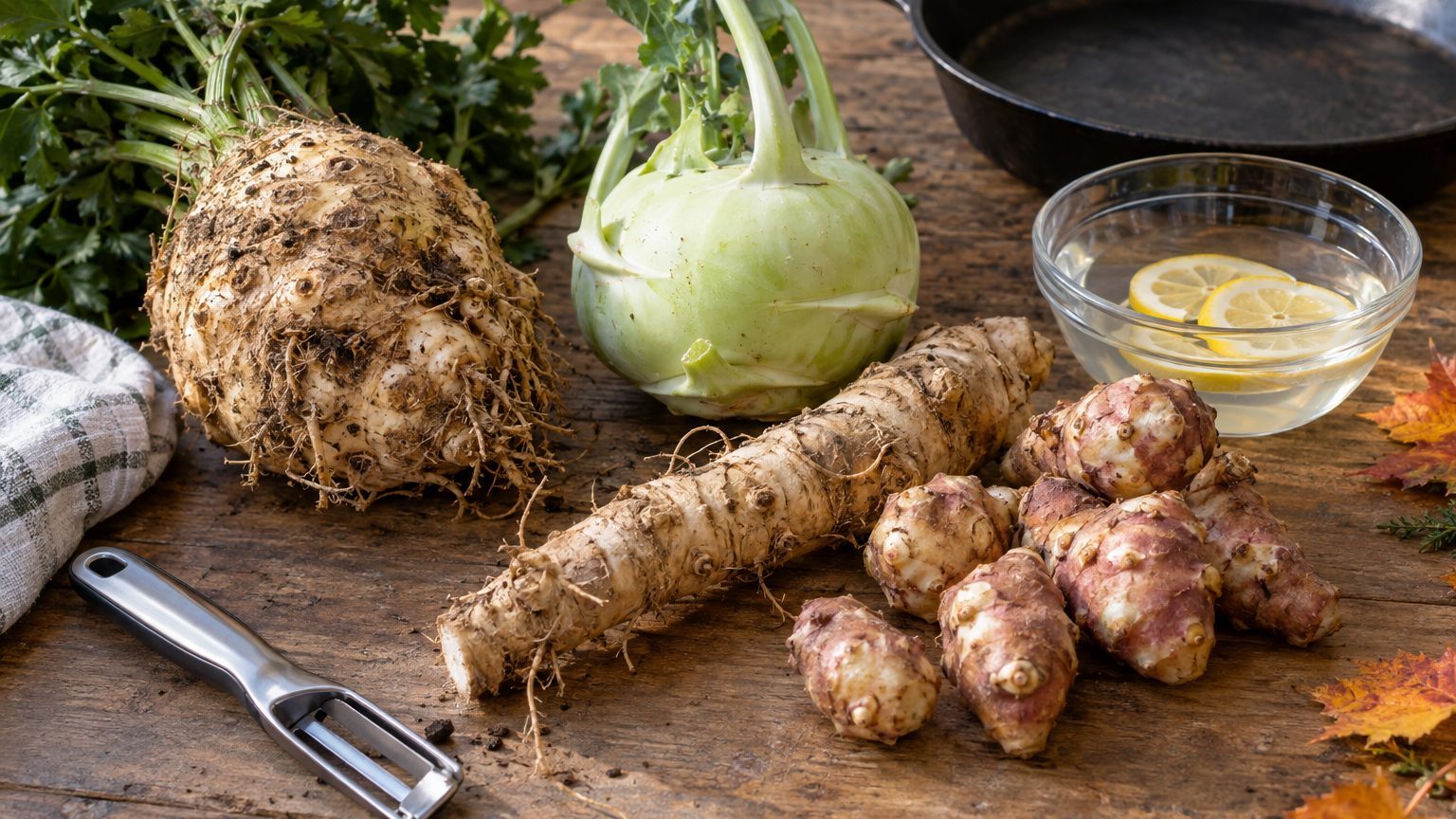

Roast the celeriac and the Jerusalem artichokes, shred the kohlrabi raw, and grate the horseradish into a sauce. That’s the short version, and it covers most of what a first-time grower needs on a Saturday afternoon. These four vegetables look strange on the counter, but none of them asks for special equipment or technique, just a sharp peeler, a hot oven, and a few habits that keep you from ruining a good harvest.
The details matter, though. Celeriac browns within minutes of cutting. Kohlrabi gets woody if it’s left to grow too big. Sunchokes can upset some stomachs. Horseradish can clear your sinuses from across the room. Here’s how to handle each one, which pairs with which, and how to store the lot. For the bigger picture on all four, start with the guide to Celeriac, Kohlrabi, Horseradish and Jerusalem Artichokes.
Celeriac and kohlrabi: the mild, versatile pair
Celeriac is a celery variety bred for its swollen base, not the root of the celery stalks at the grocery store. It’s knobby, hairy, and ugly, and a paring knife works better than a peeler for getting through the skin. Cut a thin slice off the top and bottom so it sits flat, then slice the skin away in strips, following the curve. Expect to lose a fair amount of weight to the peel and the crevices.
Once it’s cut, work fast or drop the pieces into water with a squeeze of lemon juice. The flesh oxidizes and turns gray-brown like an apple. The flavor is somewhere between celery and parsley with a nutty, starchy sweetness, and it stands up to both raw and cooked treatments.
Raw, celeriac is the base of the French classic remoulade: cut into thin matchsticks, tossed with lemon juice, Dijon mustard, and mayonnaise or plain yogurt. Let it sit in the fridge for at least 30 minutes so it softens a little. It’s good with ham sandwiches, smoked fish, or a plain roast chicken dinner.
Cooked, it behaves like a smarter potato. Mash it half and half with potatoes, boiled for roughly 15 to 20 minutes until a knife slides in easily, then finish with butter and a little cream. Roast 1-inch cubes at 425°F for 30 to 40 minutes, turning once, and the edges caramelize while the centers go creamy. Or simmer chunks with an apple and an onion in stock, then blend. Celeriac soup is silky without needing much cream.
Kohlrabi is a different animal. It’s a swollen stem, not a root, and its name comes from the German for “cabbage turnip,” which is a fair description of the taste: mild, sweet, a bit like a broccoli stem with the bitterness removed. Globes in the 2 to 3 inch range tend to be tender. Much bigger and the flesh can turn fibrous, especially near the base. Peel off the outer skin (on small, young bulbs a peeler is enough, on big ones you may need to cut deeper to get past the tough layer under it).
Raw is where kohlrabi shines. Slice it into matchsticks and toss with lime juice, salt, and chili flakes for a crunchy snack. Or shred it with a crisp apple and a vinegar dressing for slaw, which holds its crunch in the fridge far better than cabbage slaw does. Kohlrabi is also a good vehicle for dip, cut into sticks like carrots.
Heat changes it. Roasted wedges at 425°F, about 25 to 35 minutes, turn tender with browned edges and a faint turnip sweetness. Grated kohlrabi makes decent fritters, but wring the shreds out in a clean towel first, since the water content is high and soggy batter is the usual failure. And don’t toss the leaves. They’re edible and can be sautéed like collards, though they need a few more minutes than spinach to soften.
Jerusalem artichokes: scrub, roast, start small
The name is wrong twice. The plant is a native North American sunflower relative, and it isn’t an artichoke. The “Jerusalem” part is often traced to girasole, the Italian word for sunflower, though food historians still argue about it. Many cooks just call them sunchokes, which sidesteps the confusion.
Don’t bother peeling them. The skin is thin and edible, and the knobs and bumps make peeling a slow chore. A stiff vegetable brush under running water does the job. Trim off any blemishes and leave them whole or halve the larger ones.
Roasting is the easiest route. Toss them in oil and salt, spread them on a sheet pan, and roast at 400°F for roughly 25 to 30 minutes, until the skins wrinkle and the insides go soft and sweet. The flavor sits between artichoke heart and sweet potato, with a nutty edge. They also turn from perfect to mushy quickly, so check at 20 minutes the first time you cook them.
Raw, sliced paper-thin, they have a crisp texture often compared to water chestnuts and work well in salads with lemon and olive oil. Simmered with potato and onion, they make a thick, pale soup that needs little more than stock and pepper. Thin rounds fried or baked until crisp are a good chip.
One honest warning. Sunchokes store their carbohydrate as inulin, a fiber that many people ferment in the gut with enough gas to notice. Some folks have no trouble at all, others feel it after a modest serving. The sensible approach is a small portion the first time, maybe a few roasted pieces alongside other vegetables, before serving a full pan to guests. Cooking style may change how people react, but there’s no guarantee, so let your own stomach be the test.
Horseradish: handle with respect
Fresh horseradish is a completely different thing from the jarred stuff, and it’s the one root on this list that’s more condiment than vegetable. The heat isn’t there until you break the cells. Grating or grinding mixes enzymes with compounds in the root and produces pungent mustard-oil chemicals, the same family that gives wasabi and mustard their bite. That’s why a whole root smells like almost nothing and a grated one can make your eyes water.
Work with ventilation. Grinding in a food processor is the practical method (a hand grater works but is a rough job on the eyes). Open a window or fan, and when you lift the lid, turn your face away. The vapors are far stronger than you expect. Peel the root first, cut it into chunks, and process until it’s finely grated.
Vinegar controls the final heat. The pungency builds for a couple of minutes after grinding, and acid halts the reaction. Add vinegar right away and you’ll get a milder sauce. Wait two to three minutes and it comes out considerably hotter. A common starting point is about 3 tablespoons of white vinegar and a quarter teaspoon of salt per cup of grated root, adjusted to taste. Store it in a clean jar in the refrigerator, where it keeps best for a month or two before fading in strength and darkening.
Heat also kills it. Cooking horseradish for any length of time wipes out the sharpness, so stir it into hot dishes at the very end. Beyond the classic roast beef and prime rib pairing, it works in cocktail sauce, mixed into sour cream for baked potatoes, folded into deviled eggs, or whipped into mashed celeriac for a dish with two root vegetables in it. Beets and horseradish are an old pairing in Eastern European kitchens for good reason, the earthy sweetness balanced by the sting.
Collinsville, Illinois, hosts an annual horseradish festival, and the surrounding area has been a major growing region for decades. If you grow your own, you’ll understand the enthusiasm. One decent root yields enough for months of sauce.
Storing a mixed harvest so it gets eaten
Roots are only useful if they’re still good when you reach for them. The four behave quite differently in storage, and that shapes what you cook first.
- Celeriac: keeps for weeks in the refrigerator crisper, and longer in a cold, humid cellar. Trim the leaves and rootlets first.
- Kohlrabi: best used within a couple of weeks. Remove the leaves before storing so they don’t pull moisture from the bulb.
- Jerusalem artichokes: the least durable once dug. They shrivel quickly, so keep them in a bag or damp cloth in the fridge and cook them within a week or two.
- Horseradish: wrapped in a damp towel in the fridge it lasts for weeks. Grated portions can be frozen, though the punch fades.
That order suggests a simple kitchen plan. Cook the sunchokes and kohlrabi first, raw or roasted. Hold the celeriac for soups and mash through the colder months. Grate horseradish as the need arises, since a fresh jar beats an old one.
If you’re deciding whether any of these earn a spot in the garden at all, the breakdown of Which of These Are Actually Worth the Space weighs yield against effort. For timing, Planting Dates for Four Different Crops lays out when each one goes in the ground.
One last practical detail on celeriac: if a root feels light for its size or has soft, spongy spots when you cut it, the center may be hollow or pithy. It’s still edible, just cut away the dry core and use the firm outer flesh for soup, where texture matters least.