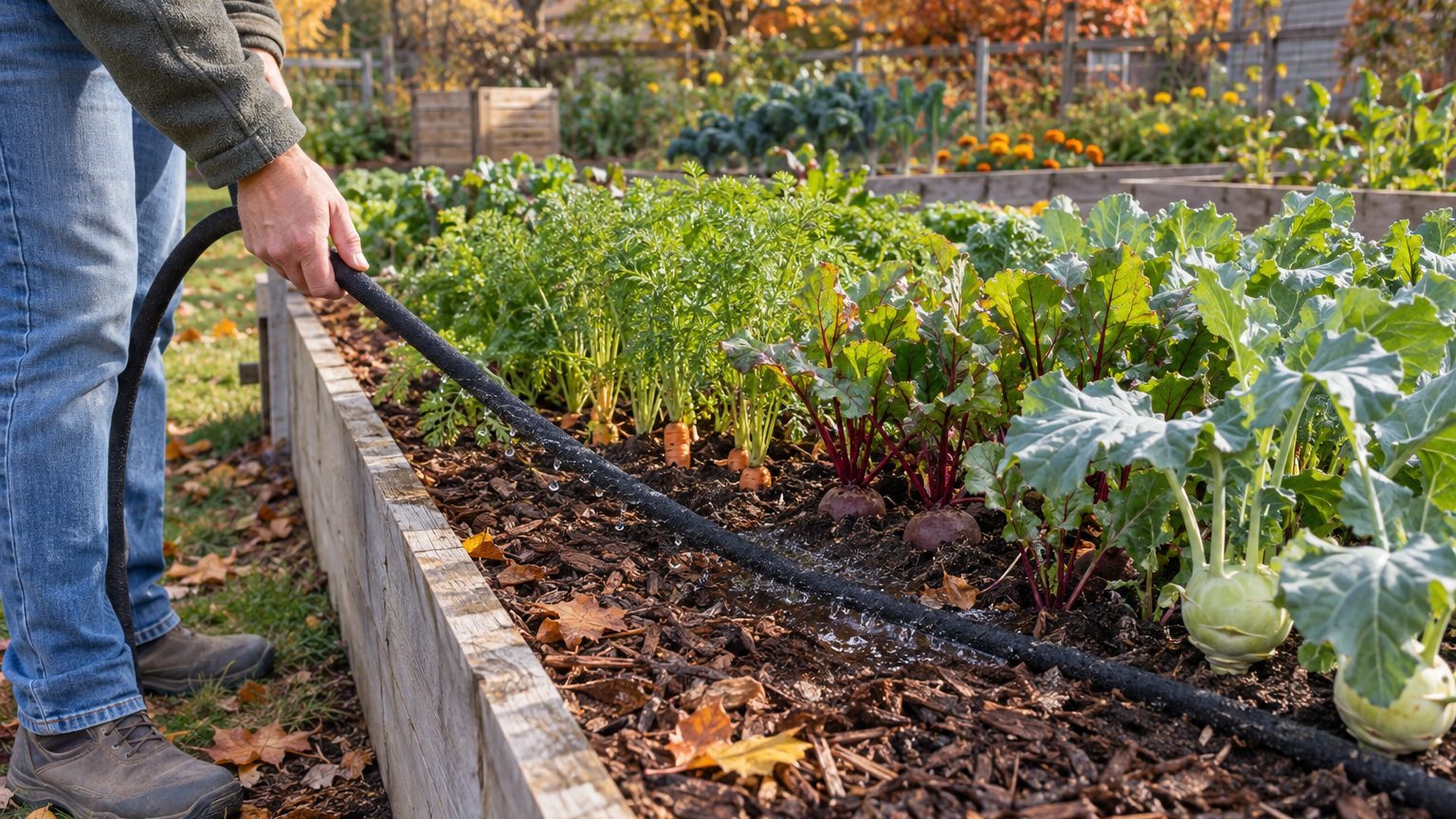

Steady moisture beats generous moisture. For most unusual roots, that means about an inch of water a week (rain included), delivered in a slow, deep soaking rather than a daily sprinkle, with a few inches of mulch to keep the soil from swinging between bone dry and soggy. Celeriac and kohlrabi are the fussy ones. Horseradish and Jerusalem artichokes forgive a lot more.
An inch sounds abstract until you convert it. One inch of water over one square foot of soil is roughly 0.62 gallons. A 4-by-8-foot bed (32 square feet) therefore needs about 20 gallons a week when the sky offers nothing. A 100-square-foot patch needs about 62. Fill a few five-gallon buckets and you can see exactly what a “proper watering” looks like.
Why the swing does more damage than the drought
A root or swollen stem grows by adding cells and then filling them with water. Slow, even supply produces tight, uniform tissue. A dry spell followed by a downpour makes the inside swell faster than the skin can stretch, and the result is a split. Gardeners know this from carrots and beets, and it applies to the whole family of oddballs covered in Celeriac, Kohlrabi, Horseradish and Jerusalem Artichokes.
Drought stress leaves its own marks, and they are less dramatic but just as disappointing. Kohlrabi that stalls in dry soil turns tough and woody, and a stalled bulb will not recover its tenderness once water returns. Celeriac that goes thirsty can end up pithy or hollow in the center, with a coarse texture that no amount of roasting fixes. Horseradish grown dry tends toward thin, stringy, fibrous roots instead of thick, clean ones.
Shallow roots make the problem worse. Celeriac and kohlrabi both keep most of their feeder roots in the top several inches of soil, which is the first layer to dry out on a hot afternoon. A bed can look fine at a glance and be parched where it counts. Sandy soil, common across Florida, the Carolina coastal plain and much of Michigan, loses moisture fastest. Heavy clay, found across much of Ohio, Missouri and Texas, holds water well but turns waterlogged if you overdo it, and soggy roots invite rot.
Crop by crop: how much, and when
Celeriac and kohlrabi: the thirsty pair
Celeriac is a marshland plant at heart, descended from wild celery that grows in damp ground. It is also a slow grower, so the thirst lasts for months. The soil should feel like a wrung-out sponge the whole time, never dusty and never dripping. The full season-long plan is in Celeriac: A Long Season and Constant Water, but the short version is that a missed week in July can show up as a hollow center in October.
For celeriac, check the soil two to three inches down every couple of days in warm weather. If it is dry at that depth, water. Give it enough to wet the top six inches, which on an average loam takes the better part of an inch. Mulch is almost mandatory here. Two to three inches of straw, shredded leaves or grass clippings (untreated with herbicide) cuts evaporation and keeps the soil temperature steadier.
Kohlrabi runs on a shorter clock, often 45 to 60 days from transplanting for common varieties, so the stakes are compressed. Its swollen stem forms in the last few weeks, and that is when an even supply matters most. A common mistake is a heavy soaking after a long dry stretch. Instead, bring the soil back to moist over several days, giving smaller amounts more often until the balance returns. Gardeners in the Southwest and inland California, where kohlrabi is a cool-season crop, can lean on drip lines to hold that rhythm during warm days.
Horseradish and Jerusalem artichokes: the tolerant pair
Horseradish sends a taproot deep into the ground, which is why established patches survive neglect that would flatten a celeriac bed. The reputation for toughness is earned, but “survives” and “produces good roots” are different goals. A patch left to fend for itself through a dry summer tends to give thinner roots. Aim for the same inch a week through the growing season, then let the soil dry slightly between waterings so the crown does not sit wet. Standing water is the real threat, particularly in heavy soil.
Jerusalem artichokes can reach well over six feet tall, and all that foliage transpires plenty of water. Once established, though, they tolerate dry spells better than almost anything else on this list. They are native to North America, and wild stands grow along roadsides and river banks across the Midwest and East with no one tending them. Water becomes a real consideration in two situations: right after planting, when the tubers are rooting, and during a stubborn late-summer drought when the plants are loading energy into the tubers. A deep soaking every week or two in that stretch is usually plenty.
Also, Jerusalem artichokes are one of the few crops here where overwatering is the bigger risk. Tubers sitting in saturated soil can rot, and wet clay is where it tends to happen. If your bed drains slowly, plant on a slight mound and let the rain do most of the work.
Getting water to the roots without wasting it
Deep and infrequent beats shallow and daily, with one caveat for the shallow-rooted crops: they cannot reach far down, so “infrequent” means every two to three days in hot weather, not once a week. For deep-rooted horseradish and established sunchokes, weekly is fine.
Drip irrigation and soaker hoses solve most of the problems at once. They deliver water at ground level, keep the leaves dry (celery-family crops are prone to fungal leaf diseases when foliage stays wet), and let you run a measured amount on a timer. An inexpensive battery timer at the spigot takes the guesswork out. Overhead sprinklers work in a pinch, but they lose more to evaporation and wind, and you will need a rain gauge or an empty tuna can set in the bed to see how much actually lands. A can that fills to one inch is your target.
Watering in the morning gives plants a full day to use the moisture and lets any splashed foliage dry before evening. Evening watering is better than skipping a day in a heat wave, but it keeps leaves damp overnight, which fungi like.
Here is a quick way to judge when to water, no gadgets needed:
- Push a finger or trowel two to three inches into the soil beside the plants.
- If it crumbles dry, water now. If it forms a loose ball when squeezed, wait.
- If it drips or smears like paste, hold off and check drainage.
Mulch deserves its own mention because it changes how everything else works. A 2 to 3 inch layer can noticeably reduce how often you need to water, and it moderates the soil temperature swings that stress shallow roots. Keep it a couple of inches back from kohlrabi stems and celeriac crowns so moisture does not collect against them. In containers, which dry out far faster than ground soil, check daily in summer. Celeriac in a pot is a tough proposition unless the container is large and you are committed to a daily check.
Autumn: when the weather takes over the watering
It is early October, which means a lot of gardeners are watching the final stretch of root swelling. Fall is when splitting is most common, because the pattern is often dry September followed by soaking October rain. In the Pacific Northwest, summers are famously dry and the autumn rains arrive in a rush, and the same sequence plays out in parts of the Northeast after a late-summer dry spell. If your soil has dried out and a storm is forecast, a light watering a few days ahead can ease the transition. It will not stop a deluge from doing damage, but it narrows the gap between dry and wet.
Keep watering celeriac and kohlrabi through the cool weather if rain is lacking. Cooler air slows evaporation, but the plants are still growing and still drinking. Many gardeners cut back too early because the garden “feels” finished. Celeriac in particular keeps adding size into the colder weeks, which is why it is one of the last roots to leave the ground.
Horseradish and Jerusalem artichokes need almost nothing extra by now. Jerusalem artichoke tubers are traditionally dug after the tops have died back, and horseradish is often harvested after a few frosts, when the roots have sweetened and sharpened. Which crops can stay in the ground and which should come out is covered in Which of These to Leave Out for the Frost.
One last adjustment is worth making a few days before digging. Hold off on watering so the soil is moist but not saturated. Dry-ish soil crumbles off the roots instead of clinging as heavy mud, the roots come out with less breakage, and you are less likely to bruise the skin on the way to storage. For celeriac and kohlrabi, though, do not let the bed dry out completely in the final week, since a sudden parched stretch right before harvest can toughen the outside.
A final piece of perspective: many seed packets and extension guides note that uneven watering is the single most common cause of cracked and woody root vegetables in home gardens. Fixing it rarely takes new equipment. A rain gauge, a layer of mulch and a habit of checking the soil with your finger will cover most of what these crops ask for.