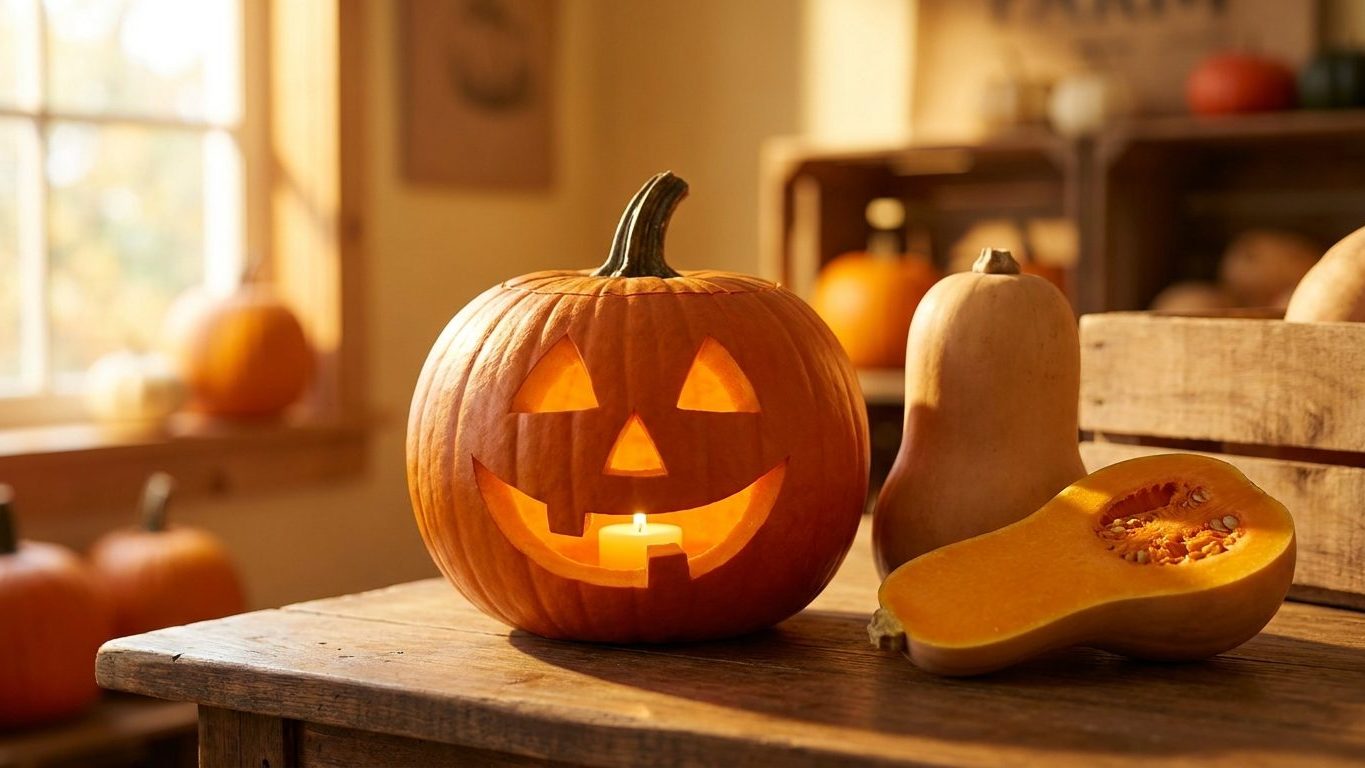

The short answer: every pumpkin is technically a winter squash, but not every winter squash behaves like a pumpkin, and the gap between the two shows up the moment you try to cook one or store it past Thanksgiving. Breeding, not botany, is what actually separates a jack-o’-lantern from a butternut.
What is actually going on

Four species do almost all the work here: Cucurbita pepo, Cucurbita maxima, Cucurbita moschata, and Cucurbita argyrosperma. Pumpkins fall mostly under pepo, with some large types under maxima. Butternut, most tan-skinned storage squash, and the tropical pumpkins sold in Latin markets fall under moschata. So the word “pumpkin” describes a shape and a color tradition more than it describes a species, and a plant breeder can push the same species toward two very different jobs.
One job is the shell. A type bred for carving or for a display porch is selected for a rind that holds its form after cutting, a hollow, stringy interior that scoops out easily, and a stem that reads as decorative. None of that helps the plate. The cavity is mostly air and seed, the walls are thin enough to carve with a kitchen knife, and the flesh cooks up watery and mild because the plant was never asked to concentrate sugar or starch there.
The other job is the flesh. A type bred for the table, the kind gardeners mean when they say “winter squash,” is selected for the opposite traits: a small seed cavity, thick and dense walls, and flesh that develops sugars and carotenoids as it matures on the vine. The rind on these types is not for show. It is a storage organ. As the fruit finishes ripening, the skin hardens into something closer to a shell than a peel, and that hardening is what lets the squash sit in a cool room for months instead of days.
This is also where the site’s pumpkin content and its squash content stop overlapping. If the question is which type feeds a family through the winter, the answer lives in the squash side of the garden, not the jack-o’-lantern side.
None of this is fixed by variety name alone. Seed catalogs and university trial lists change by region and by year, and the type that performs well in one state’s summer heat may sulk in another’s shorter season. A state Cooperative Extension Service office is the reliable place to ask which named types were trialled locally, because that answer changes with the weather more than with the seed packet.
In the garden
The confusion usually starts at the seed rack, where “pumpkin” and “squash” packets sit side by side with similar photos. The table below breaks down what each type is actually for, and what tends to go wrong when a gardener plants one expecting the other.
| Type | Bred for | What goes wrong when misapplied |
|---|---|---|
| Carving / display pumpkin | Thin, hollow shell; strong stem; uniform round shape | Baked or pureed, it turns watery and bland; the low sugar content that makes it easy to carve also makes it a disappointing pie filling |
| Storage / eating winter squash | Dense, thick flesh; small seed cavity; hardened rind for keeping | Carved for décor, it collapses fast because the wall isn’t built to hold a cut shape, and the flesh bruises where a knife touches it |
| Dual-purpose types | A middle ground, edible but not bred to maximize either trait | Gardeners expect pie-quality flesh or jack-o’-lantern durability and get neither at its best |
The practical fallout shows up at harvest and after. A gardener who picks a carving type expecting it to store like a butternut is often surprised when it softens within weeks, because the rind was never selected to hold up past October. A gardener who tries to carve a dense storage squash finds the knife work slow and the walls too thick to hollow cleanly, and ends up with a jagged, heavy jack-o’-lantern that cracks along the cut lines within days.
Curing separates the two groups further. Storage types benefit from a period after harvest where the fruit sits in a warm, dry spot so the rind can finish hardening and any small nicks on the skin can seal over. Skip that step and a squash that looked fine in the field can rot from the stem end within a month. Carving pumpkins don’t get the same treatment, because they aren’t going into a pantry. Once cut, they’re on a countdown measured in days, not months, no matter how they were cured.
None of this means guessing at the harvest bin. The stem should be dry and corky, the rind should resist a fingernail, and the color should have deepened to whatever that type’s mature shade is. A fruit that’s still glossy and easily dented isn’t ready for either job, decorative or edible, and picking early is one of the more common ways gardeners end up with a squash that neither carves cleanly nor cooks well.
Checking a squash before it goes in storage
Whatever the type, a squash headed for the pantry or the crisper drawer needs a look-over first. A soft spot near the stem, a patch that feels wet or weeping to the touch, or any sign of mold on the skin or the stem end means that fruit is done, regardless of how firm the rest of it feels. Looking sound is not the same as being sound, and a squash that fails any one of those checks should be used right away or discarded rather than trusted to a shelf.
What it depends on where you are
How well any of this plays out has almost nothing to do with which packet a gardener bought and almost everything to do with the season that follows planting. Winter squash and pumpkins alike need a long stretch of warm weather to move from flower to a fully hardened rind, and that stretch is a local fact, not a national one. A region with a short frost-free window can run out of season before a slower-maturing storage type finishes hardening its skin, leaving a gardener with fruit that’s edible but won’t keep the way the same variety would in a longer summer.
Heat matters as much as length. Some regions get long seasons but cool nights that slow fruit development, while others get intense mid-summer heat that can stall pollination for a few weeks even with plenty of season left on the calendar. Rainfall changes the picture again, since consistently wet summers push disease pressure on the vines and the fruit skin itself, while dry regions face the opposite problem of irrigation timing and blossom drop under stress. None of these factors read the same from one state to the next, and which combination applies to a given backyard is a local question.
That’s a genuine gap, not a hedge. A gardener in a humid river valley and a gardener on a high, dry plateau can plant the identical seed packet and get two different outcomes from the same instructions, because the instructions that matter most (when to plant, which types finish reliably, how much disease pressure to expect) are regional questions dressed up as gardening questions.
This is exactly the gap a state Cooperative Extension Service is built to close, since their trial data and planting calendars are built from local conditions rather than averaged across the country. The USDA’s national Extension directory is a reliable starting point for finding the office that covers a given county. On this site, the state-by-state winter squash pages are where that local layer gets filled in, and they’re worth checking before assuming any planting date or variety choice made here applies as-is.
The mistake that costs the most
The single costliest error is treating “pumpkin” and “winter squash” as interchangeable at the moment of planting or buying, then discovering the mismatch only at the cutting board or the pantry shelf. A gardener who plants a carving type in the patch meant for the winter’s eating squash loses that space for a whole season and ends up with fruit that cooks up thin and mild instead of dense and sweet. A shopper who buys a large, round, orange pumpkin at a farm stand assuming it will store like a butternut can lose the whole fruit to soft rot within a few weeks, because the rind was never bred to hold up that long.
The fix isn’t a rule of thumb about size or color, since both groups include round orange fruit and both include odd-shaped tan ones. It’s asking the actual question before planting or buying: is this going on a porch and getting carved, or is this going into a pot or a pantry? That single question points toward a completely different set of types, and it’s worth asking before the seed order goes in, not after the harvest is already sitting on the counter.
Once that question is answered, the rest follows. A gardener planting for storage should be checking rind hardness and stem condition at harvest, curing before shelving, and inspecting regularly for the soft spots and weeping patches that end a squash’s time in the pantry. A gardener planting for carving should stop worrying about flesh quality altogether and focus on shell strength and stem durability instead. Trying to optimize one type for the other’s job is where most of the disappointment in this whole topic comes from, and it’s avoidable simply by naming the goal before the seed goes in the ground.