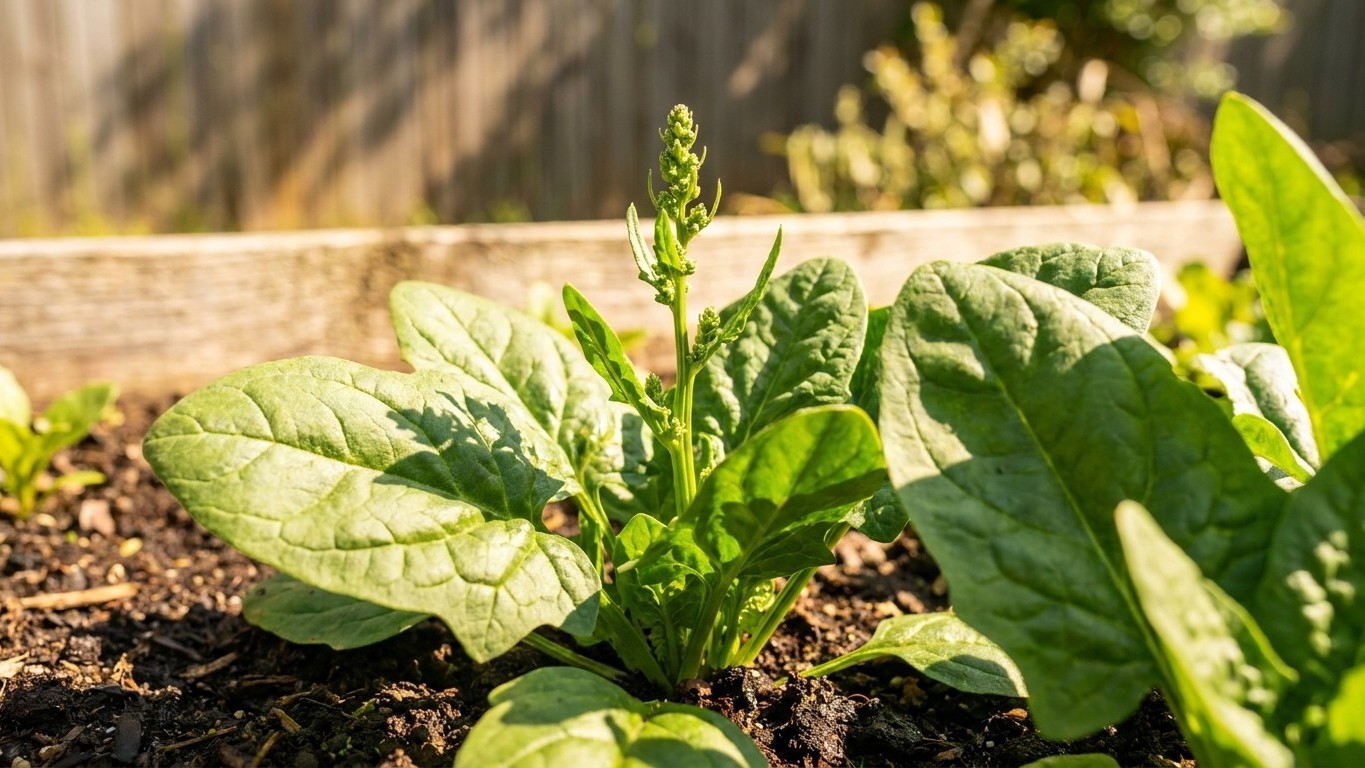

Spinach in Minnesota gets eaten by a short list of feeders: insects that chew holes, insects that tunnel inside the leaf, sap-feeders that curl new growth, slugs, and rabbits and deer. Most of the damage lands in the cool weeks right after sowing, in spring and again in fall. A leaf that has already bolted in summer heat is a different problem, covered in Will Spinach Bolt Early in Minnesota?
Which pests attack spinach in Minnesota
University of Minnesota Extension is the service that documents garden pests in the state, and it is where to confirm any identification. For a leaf crop like spinach, the groups that matter are chewing insects (ragged holes), leaf-tunneling larvae (pale blotches or winding trails inside the leaf), sap-feeding insects (puckered, curled, sticky leaves), slugs (smooth holes and silvery trails), and mammals such as rabbits and deer (seedlings clipped to stubs).
Other pests turn up in lists of Minnesota garden problems but have no business in a spinach bed. Borers that tunnel into tree trunks and canes, and insects that feed on fruit, flowers or storage roots, need wood, fruit or a root to work on. Spinach is a leafy annual that makes none of those, so a bed full of spinach gives them nothing to eat. If a damaged plant shows up in your spinach row, look at the leaf first and the insect second.
Spinach is picked while the leaves are young and tender, so even light feeding lands on the part you eat. Turning leaves over to check the undersides, and looking at the soil line at dusk, finds most of these feeders faster than scanning the tops of the plants. Eggs, larvae and clustered sap-feeders sit on the underside, and slugs and cutworm-type feeders hide at the base by day.
When each one shows up, and what it does first
The calendar hangs on the frost-free window. At the Twin Cities reference station, the last spring freeze falls between April 17 and April 30, and the first fall freeze between October 11 and October 23. Northern Minnesota runs two to three weeks tighter at both ends, so count from your own frost dates, not from the metro’s.
Spring spinach goes in as soon as the soil can be worked, usually ahead of the last freeze. Seedlings and young leaves then sit in cool weather, below the 75 F ceiling where spinach grows best. That is when slugs and rabbits find them first. Slug damage appears overnight: smooth-edged holes and a dried silver trail on the leaf or the soil. Rabbit and deer damage is cleaner and bigger, with whole seedlings cut off at an angle or leaves browsed from the top down.
Chewing insects and leaf-tunnelers tend to show up in the weeks as the days lengthen and the bed warms. Chewers leave ragged holes that start at the edge or in the middle of a leaf. Tunnelers show as light, papery blotches, and the larva is inside the leaf tissue. Sap-feeders build on the undersides and on the newest leaves, where the first sign is curl, a sticky shine, or stunted growth at the center.
Summer brings long days, and the Twin Cities get 15 h 25 of daylight on the longest one. Long days push spinach to flower on their own, even in a cool summer, and Minnesota still sees about 10.6 days a year at 90 F or more. A bolting plant turns bitter and is not worth defending, so protection matters most before that point.
Fall sowing, covered in When to Sow Autumn Spinach in Minnesota, starts 50 to 75 days before the date you want to harvest. Soil above 80 F cuts germination, so a late-summer sowing can fail before any pest arrives. Once seedlings do come up, the same feeders return while the weather stays mild, and the first fall freeze ends the season for most of them.
Telling the damage apart from everything else
Not every ragged, yellow or spotted leaf is an insect. Water stress, nutrient shortage, heat, disease and weather all leave marks that look alike from standing height. The test that settles most of these is simple: hold the leaf up to the light and look at both sides. An insect, an egg cluster, a larva inside the tissue, or a slime trail means feeding. A clean leaf with a pattern points elsewhere.
| What you see | Possible cause | What helps tell them apart |
|---|---|---|
| Irregular holes, ragged edges | Chewing insects, slugs, or hail | Slugs leave a silvery trail. Insects may be on the underside. Hail tears many leaves on every plant on the same day, after a storm. |
| Pale blotches or winding trails | Larvae tunneling in the leaf | The surface looks papery, and a larva or dark specks are visible inside when the leaf is held to light. |
| Curled, puckered, sticky new growth | Sap-feeding insects | Clusters of small insects on the underside, or a sticky film on the leaf. |
| Yellowing across whole plants, no insects | Nutrient shortage or soggy soil | Affects the entire bed evenly and does not spread from one spot. Check drainage and soil moisture first. |
| Wilting at midday that recovers by evening | Dry soil or heat stress | Leaves are firm again after dusk or after watering. Pests cause no such recovery. |
| Tall center stalk, narrow leaves, bitter taste | Bolting | The stalk elongates from the center. This follows long days and warm weather, not feeding. |
| Spots with rings, fuzz or a spreading pattern | Disease | The spots enlarge over days and follow leaf moisture. Bring a sample to the county office. |
Two causes often overlap, such as a nutrient-poor bed that also has slugs. Because of that, the table narrows the field without naming what is in any particular garden. For a firm answer, take a leaf, a photo and a note of when the damage began to your county extension office.
What actually works here, and what is a waste of time
On a short season, a physical barrier set at the right moment does more than any treatment applied later. Lay floating row cover over the bed on the day you sow, and bury or pin the edges so nothing crawls under. Spinach is grown for its leaves and needs no pollinators, so the cover can stay on until harvest. In warm spells, lift a side or vent it, because heat under fabric pushes spinach past the 75 F ceiling and toward bolting.
For rabbits and deer, a fence that sits tight to the ground works where a loose one does not, because rabbits push under any gap. Deer need a taller or more solid barrier than a rabbit fence provides. On slugs, tidying the bed helps: damp debris and thick mulch along the edges give them daytime shelter, and a dry, open soil surface gives them less.
Timing counts as much as hardware. Sow so seedlings come up during cool weather, and sow the fall crop by counting back from the harvest you want. Varieties are sold for Minnesota gardens, but neither a variety name nor a catalog description will keep feeders off a bed with no protection.
Several common habits waste effort. Spraying after the leaves are already holed does not repair them, and a leaf you plan to eat soon raises questions about what is labeled and safe for food crops. Which products are registered in Minnesota is a question for University of Minnesota Extension, which is why this guide names none. Sowing again into warm summer soil is another waste, since germination drops above 80 F. Defending plants that have already bolted is the last one: they will not recover.
Where to check this for your own county
University of Minnesota Extension runs an office in each county, and that office knows which feeders are active near you and what the local timing looks like. A pest that is common in the Twin Cities area may be rare in the north, and the reverse is also true. What is documented for the state as a whole does not tell you what is eating the leaves in one backyard.
Frost dates move the calendar too. The Twin Cities window of April 17 to April 30 in spring and October 11 to October 23 in fall slides two to three weeks tighter in northern Minnesota. When you ask the county office about timing, give them your frost dates or your nearest town so they can map the pests to your growing season.
For the bigger picture on sowing dates, soil temperatures and varieties, start with Growing Spinach in Minnesota. The next step is practical: when damage shows up, pull one affected leaf, seal it in a bag with any insect you found, photograph the plant and the bed, and take it or send it to your county extension office.
Common questions
Are spinach leaves with holes safe to eat?
Washing removes most of what feeders leave behind, and trimming off the damaged parts takes care of the rest. Leaves with spreading spots or a slimy, rotting texture are better composted.
Does bolting change which pests I should worry about?
Spinach bolts under long days and warm temperatures, and the Twin Cities see 15 h 25 of daylight on the longest day. Once a plant sends up a flower stalk, the leaves turn bitter and protecting them is rarely worth the effort. Put your effort into the young plants.
Can a fall sowing dodge the spring pests?
It dodges some of them, but not all, because feeders return while the weather stays mild. Sow before the harvest date you want, and wait for the soil to cool, since germination drops above 80 F.
How long does harvested spinach keep?
Two weeks is the ceiling, and only at 32 F with high humidity. A refrigerator door runs closer to 41 to 50 F, where leaves yellow within days. Keep spinach at the back of the bottom shelf, the coldest spot, and plan to eat it well before the two-week mark.