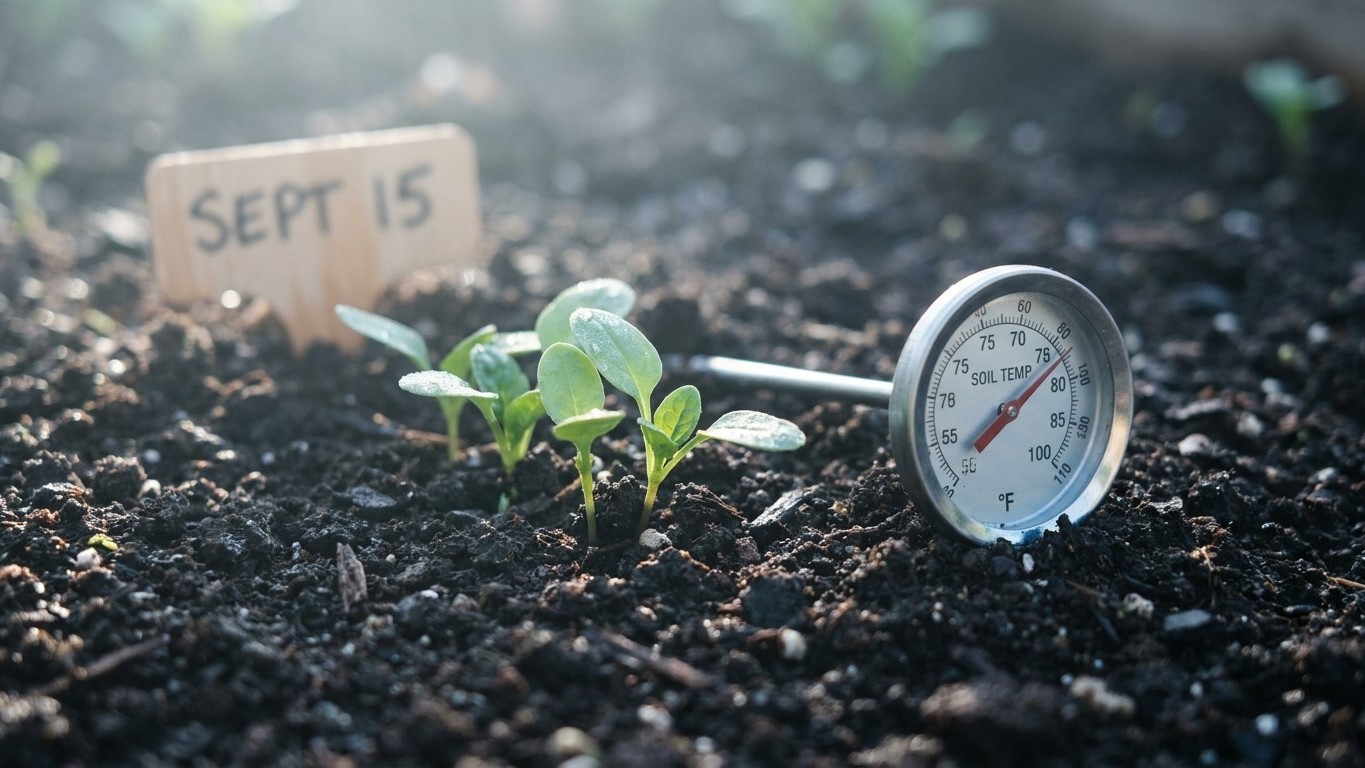

In most of Georgia, autumn spinach goes into the ground from mid-September through early October, once the soil has cooled enough to let seed germinate but still early enough to reach harvest before the season’s first hard frost. In the coldest north Georgia counties that window opens and closes about two weeks sooner; along the coastal plain it stretches later, sometimes past mid-October. Get the timing right, and the difference between a full bed of spinach and a patchy, bitter one comes down to a week or two.
The short answer
On the longest day of the year, the reference city used for Georgia’s climate normals gets 14 hours and 14 minutes of daylight. That’s not an extreme number by national standards, but it’s plenty to push spinach toward flowering. Bolting in spinach is triggered by long days working together with warm temperatures, and Georgia’s early summer delivers both at once. A cooler-than-average June here doesn’t change that math. The day length alone is enough to send the plant into flower, so a mild summer buys no extra weeks the way it might for other crops.
That’s the first piece of the puzzle, and it matters most for spring sowing timed too late. But once autumn is the question, day length actually starts working in the gardener’s favor: as the calendar moves past the equinox, days shorten, and the bolting pressure from long daylight fades. What doesn’t fade as quickly is the heat stored in the ground. Georgia’s reference station averages 35.8 days a year at 90°F or hotter, a heat load that keeps both air and soil running warm well past the point where the calendar says “fall.” Spinach grows best where temperatures stay under 75°F, and above that ceiling growth slows and leaves turn bitter.
So which is the real limit for a fall planting: day length or heat? Here, it’s heat. Day length is shrinking in the right direction through September and October, which helps rather than hurts. The obstacle is that Georgia’s soil and air are slow to cool off after a summer that regularly tops 90°F more than a month’s worth of days. Sow too early into that lingering warmth and germination suffers before the day-length advantage ever gets a chance to help. Sow too late, and the season runs out before frost. The autumn sowing date in Georgia is really a search for the narrow stretch where the ground has finally cooled but the first freeze is still weeks away.
How long the spring window really is
Spring is the harder season to work with in Georgia, and walking through the numbers in order shows why.
- The last spring frost at the reference station falls somewhere between March 11 and March 29, though north Georgia and the mountains typically see frost linger later into spring than that average suggests, while the coastal plain clears earlier.
- Spinach seed is meant to go in two to three weeks ahead of that last frost date, since the seedlings tolerate cold soil far better than the mature plant tolerates heat. That puts a realistic sowing window somewhere from late February into mid-March, depending on where in the state a garden sits.
- From there, the clock is already running against the crop. Spinach stops growing well once temperatures push past 75°F, and Georgia’s spring doesn’t take long to get there. With an average of 35.8 days a year reaching 90°F or higher, most of them clustered in the warmer months, the state’s spring-to-summer transition happens fast, and the mid-70s ceiling arrives well before the calendar reaches early summer.
- Add it up, and the usable spring window for spinach in Georgia runs only a matter of weeks between “soil finally workable and frost mostly past” and “afternoons too warm for good growth.” It’s short, and it doesn’t leave much room for a delayed sowing date to still produce a full harvest before bitterness and bolting set in.
That narrow spring window is exactly why the autumn crop matters so much in Georgia gardens. It isn’t a backup season, it’s often the more reliable one.
The autumn crop, and when the soil lets you sow
Working out an autumn sowing date starts from the other end of the calendar: pick a harvest date, then count backward. Utah State University Extension’s guidance for a fall crop is to sow 50 to 75 days before the date the gardener wants to be harvesting. In Georgia, the most useful target harvest date is the average first fall frost itself, since that’s the point where the season naturally winds down. That first frost falls between November 13 and December 1 at the reference station, and counting back 50 to 75 days from either end of that range lands sowing dates anywhere from late August through mid-October. That’s a wide spread, and it’s the soil, not the frost, that narrows it down.
Soil still too warm to germinate
Spinach seed germinates poorly once soil temperature climbs above 80°F, and Georgia’s soil holds onto summer heat for a long stretch after the calendar turns to September. With 35.8 days a year averaging 90°F or hotter, much of that heat concentrated in mid and late summer, the ground doesn’t drop back under that 80°F threshold quickly. Sowing in late August, at the earliest edge of the 50-to-75-day math, usually means fighting warm, unforgiving soil and a thin, uneven stand. That pushes the realistic start of the autumn sowing window later, generally into mid-to-late September once soil has had time to cool.
A handful of spinach varieties commonly discussed for garden planting include Bloomsdale, Melody, Teton, and Olympia. Days-to-maturity figures for these varieties aren’t published by the source used for this guidance, so no specific comparison between them can be made here, and no seed company is named. What matters more for Georgia timing is the sowing window itself, not the variety chosen.
The frost that ends the season
On the other side of the calendar, the first fall frost at the reference station lands between November 13 and December 1. That date is an average built from 1991-2020 climate normals, and it comes with real regional spread: north Georgia and the mountains typically see frost arrive several weeks earlier than that range, while the coastal plain tends to stay frost-free later. A gardener working from a colder county should shift the whole 50-to-75-day countdown earlier by a couple of weeks; a coastal plain gardener has a bit more room to sow later into fall.
Put the two obstacles together, soil that needs to cool below 80°F and a frost date that caps the far end of the season, and the practical sowing window across most of Georgia settles into mid-September through early October. Sow before that and germination struggles in warm ground; sow much after it and the plant runs out of season before reaching a full harvest.
Common questions
Can spinach handle a light frost in Georgia’s autumn garden?
The source used for this guidance doesn’t publish a separate frost-tolerance threshold for spinach, so no specific number can be given here beyond the average first frost date itself (November 13 to December 1 at the reference station).
Why not just sow spinach earlier in September to get a head start?
Because Georgia’s soil is still likely to be running above the 80°F germination threshold that early, given how many days a year the state spends at 90°F or hotter. An earlier sowing date usually trades a head start for a poor, uneven stand.
Does day length matter at all for the fall crop?
Less than in spring. Days are shortening through September and October, which works against bolting rather than for it. Heat, specifically warm soil, is the bigger obstacle for a Georgia fall planting.
Is the sowing window the same across the whole state?
No. The frost dates and heat load used here come from one reference station, and the source notes that north Georgia and the mountains freeze weeks earlier in fall while the coastal plain runs milder, so the sowing window shifts earlier or later depending on where in the state a garden sits.